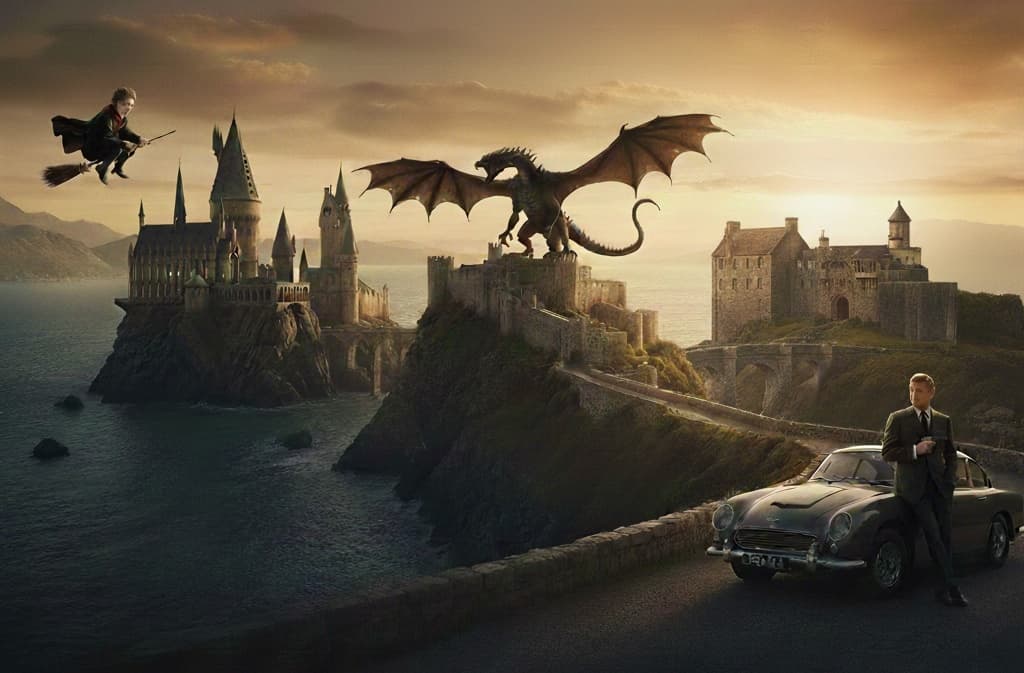
Ever found yourself watching a sprawling fantasy epic or a gritty historical drama and thinking, "I wonder if that place actually exists?" Well, more often than not, the answer is a resounding yes! While CGI has come a long way, there is simply no substitute for the cold, hard stone of a centuries-old fortress. These aren't just sets—they’re historical landmarks that breathe life, weight, and a bit of damp medieval reality into our favorite stories.
From the wizarding halls of England to the sun-drenched walls of Croatia, castles have become the ultimate A-list celebrities of the production world. They provide a sense of grandeur and authenticity that a green screen just can't replicate. Whether it's the sound of boots echoing on original flagstones or the way a sunset hits a real curtain wall, these locations turn a good scene into an iconic one. Let’s take a tour through the world's most famous fortresses—seen through the lens of the titles that made them legendary.
Harry Potter: the magic of Alnwick Castle
When you think of Hogwarts School of Witchcraft and Wizardry, your mind probably goes straight to the soaring spires of Alnwick Castle in Northumberland, England. This place is arguably the heavyweight champion of castles featured in movies. Remember Harry’s very first flying lesson, where Neville lost control of his broom? That was filmed right in the Outer Bailey of Alnwick!
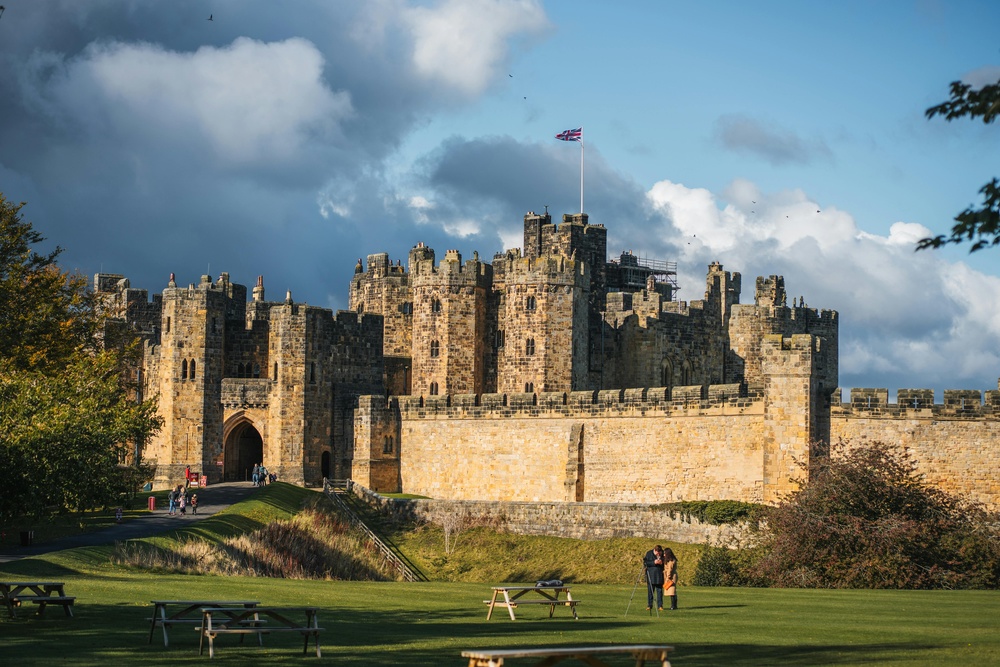
Built in the 11th century and still home to the Duke of Northumberland's family, Alnwick is one of the largest inhabited castles in the world. The producers chose it specifically because it looked exactly how millions of readers imagined Hogwarts should look. Today, the castle fully embraces its magical heritage, offering broomstick training lessons where visitors can recreate Harry’s first class.
-
Claim to fame: The backdrop for the first two Harry Potter films.
-
Versatility: You might also spot it in Downton Abbey (as Brancaster Castle) or Transformers: The Last Knight.
-
The impact: Visitor numbers doubled after the films, transforming this fortress into a global pilgrimage site.
Fun fact: Alnwick's film career didn't start with Harry Potter. The castle has appeared in Downton Abbey, Transformers: The Last Knight, and various Robin Hood adaptations, making it one of Britain's most versatile filming locations.
Game of Thrones: when an entire country became Westeros
When Game of Thrones needed a location for King's Landing, capital of the Seven Kingdoms, they found it in Dubrovnik, Croatia. This walled city on the Adriatic became synonymous with the show's political intrigue, its ancient fortifications and limestone streets providing the backdrop for television's most memorable drama.
The city walls themselves—nearly 2 kilometers of medieval fortifications—became the capital's outer defenses. Lovrijenac Fortress, perched on a cliff, served as the Red Keep where royals schemed and murdered. The Pile Gate was King's Landing's main entrance. Every location became instantly recognizable to millions of viewers worldwide.
The economic impact was staggering. Tourism increased by 90% during the show's eight-season run. Dubrovnik now offers numerous Game of Thrones walking tours, and fans photograph themselves on the exact steps where Cersei's Walk of Shame occurred or where Joffrey died at his wedding. The city implemented tourist limits because the influx was overwhelming the infrastructure.
"These walls defended against real warfare during the Croatian War of Independence in 1991-1992 before depicting fictional medieval battles. Some damage from that conflict remains visible today."
Meanwhile, in Northern Ireland, Castle Ward became Winterfell, the heart of the North. The estate's stable yard transformed into the Stark family courtyard, where Bran practiced archery, and Robert Baratheon arrived in the premiere. Castle Ward now offers "Winterfell Tours" with archery experiences and costume opportunities.
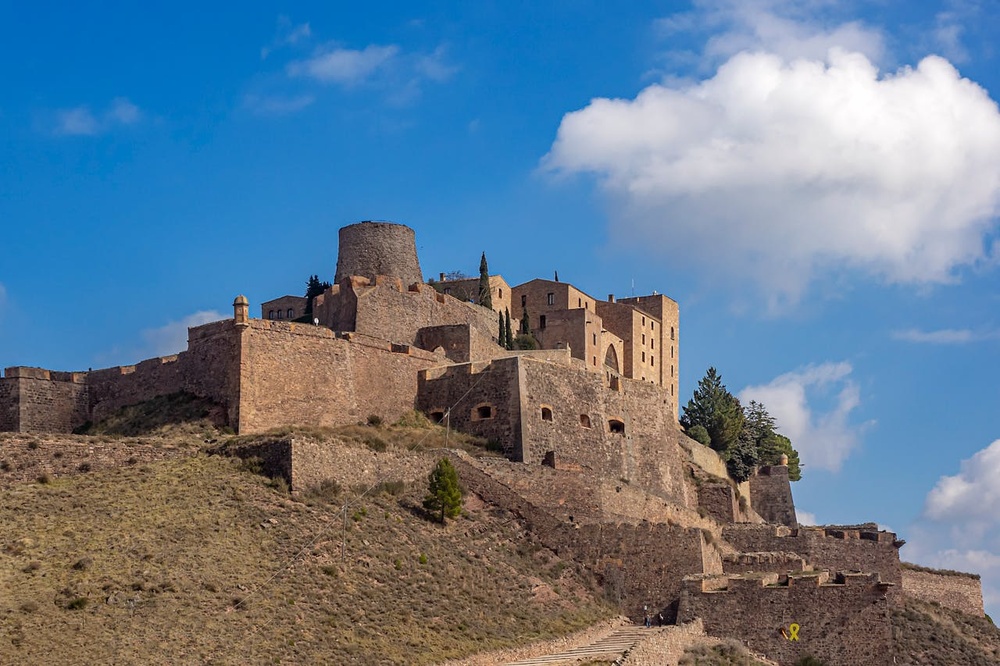
Northern Ireland provided numerous other locations: Doune Castle appeared as multiple castles throughout the series, while Castell de Cardona in Spain and various Croatian fortresses brought Westeros to life. The show's extensive use of real medieval architecture educated audiences about fortress design while creating unforgettable television.
Monty Python and the Holy Grail: the "silly" side of Scotland
We have to talk about Doune Castle in Scotland, because you can't discuss pop culture castles without mentioning Monty Python. This 14th-century fortress became a site of international pilgrimage for comedy fans thanks to one low-budget 1975 film.
Because the filmmakers couldn't get permission to film at multiple sites, they used different angles of Doune Castle to represent basically every castle in the movie! One minute it’s Camelot ("it’s only a model!"), the next it’s Castle Anthrax, then it’s the castle where the French taunter insults King Arthur. It proves that you can make the same pile of stones look like a holy sanctuary or a den of absurdity just by changing the camera angle and adding a few coconuts for sound effects.
Wait, there's more! Doune didn't stop with comedy. The castle later appeared as the original Winterfell in the Game of Thrones pilot and as Castle Leoch in Outlander.
Downton Abbey: the elegance of Highclere Castle
Moving away from the mud and blood of the Middle Ages, we have the sheer opulence of Highclere Castle in Hampshire. While technically a stately home in the Jacobethan style, its scale puts most fortresses to shame. As the primary filming location for Downton Abbey, Highclere became a global symbol of British aristocracy.
The Highclere interior is just as famous as its facade. The Library and the grand stone staircase are all real. When you see the Crawley family having dinner, they are sitting in a room that has hosted actual kings and queens for centuries. It’s the ultimate example of how a location can define the entire "vibe" of a show.
Beauty and the Beast: the French castle that inspired Disney
When Disney needed inspiration for the Beast's enchanted castle in the 2017 live-action Beauty and the Beast, they looked to Château de Chambord in France's Loire Valley. This Renaissance masterpiece, with its intricate spires and fairytale silhouette, provided the architectural foundation for one of cinema's most magical locations.
Built in the 16th century by King Francis I as a hunting lodge, Chambord features 440 rooms, 282 fireplaces, and 84 staircases. Its distinctive French Renaissance architecture—featuring elaborate towers, chimneys, and a famous double-helix staircase possibly designed by Leonardo da Vinci—creates the perfect backdrop for enchantment and transformation.
The castle's dramatic silhouette changes with the light throughout the day. Morning illumination softly highlights its Renaissance details, while sunset casts the spires in golden tones. This visual versatility made it an ideal inspiration for a castle that needed to feel both imposing and magical, ancient and enchanted.
Château de Chambord represents how real architecture influences fantasy. Disney's animators and production designers studied the castle extensively, incorporating its architectural vocabulary into their fictional creation. The result is a Beast's castle that feels rooted in European tradition while remaining fantastical enough for fairy tale romance.
Sleeping Beauty: the castle that became Disney's logo
Neuschwanstein Castle in Bavaria didn't just inspire one Disney film—it became the template for Disney’s entire corporate identity. Walt Disney visited this 19th-century palace and was so captivated that he used it as the primary inspiration for Sleeping Beauty’s Castle.
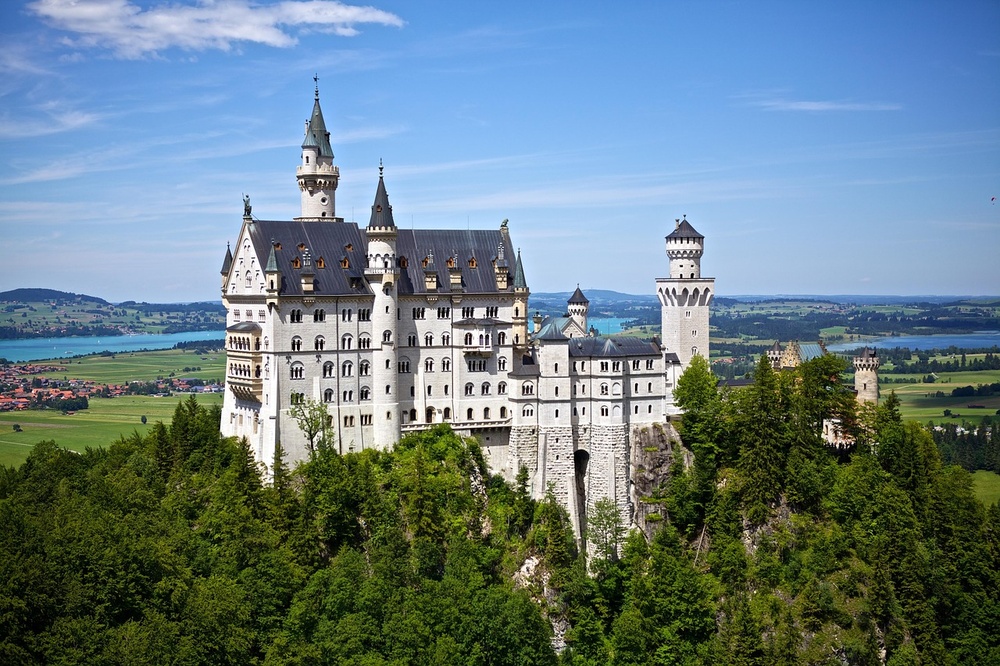
Here’s the twist: Neuschwanstein isn't actually a medieval fortress. It was commissioned in 1869 by King Ludwig II as a romantic fantasy—built during the same era as the Brooklyn Bridge! Yet, this "fake" medieval castle is now the most culturally influential fortress in history. Over 1.4 million people visit annually to see the fairytale proportions that sparked the Disney magic.
Highlander and James Bond: Scotland's most photogenic fortress
Eilean Donan Castle, dramatically situated where three sea lochs meet in the Scottish Highlands, has one of the most photographed locations in the world. This fortress has appeared in numerous films, but it's particularly famous for two very different productions: Highlander (1986) and the James Bond film The World Is Not Enough (1999).
In Highlander, Eilean Donan played the MacLeod clan stronghold where immortal warriors battled across centuries. The castle's dramatic island location provided the perfect backdrop for a story about Scottish warriors who couldn't die. The film cemented Eilean Donan's status as the quintessential Scottish castle in global popular culture.
Years later, James Bond arrived at the same location when The World Is Not Enough used Eilean Donan as MI6's Scottish headquarters. The castle's instantly recognizable silhouette made it valuable shorthand for "Scotland" without requiring explanation. Its stone bridge, tidal island setting, and mountain backdrop create cinematic gold from every angle.
What many visitors don't realize is that today's Eilean Donan is largely a 20th-century reconstruction. The original 13th-century castle was destroyed in 1719 during the Jacobite risings and lay in ruins for 200 years. Lieutenant Colonel John MacRae-Gilstrap bought the island in 1911 and spent two decades rebuilding based on historical records and creative interpretation.
This makes Eilean Donan another example of romantic fantasy that's become more culturally significant than authentic ruins. Over 300,000 visitors come annually, many specifically because they've seen it on screen. The island provides perfect cinematic drama that filmmakers simply can't resist.
Dracula and gothic horror: Bran Castle's dark tourism
No discussion of castles in popular culture would be complete without Bran Castle in Transylvania, Romania. Looming on a cliff edge, this medieval fortress has become synonymous with Count Dracula despite having virtually no historical connection to Vlad the Impaler, who inspired Bram Stoker's vampire.
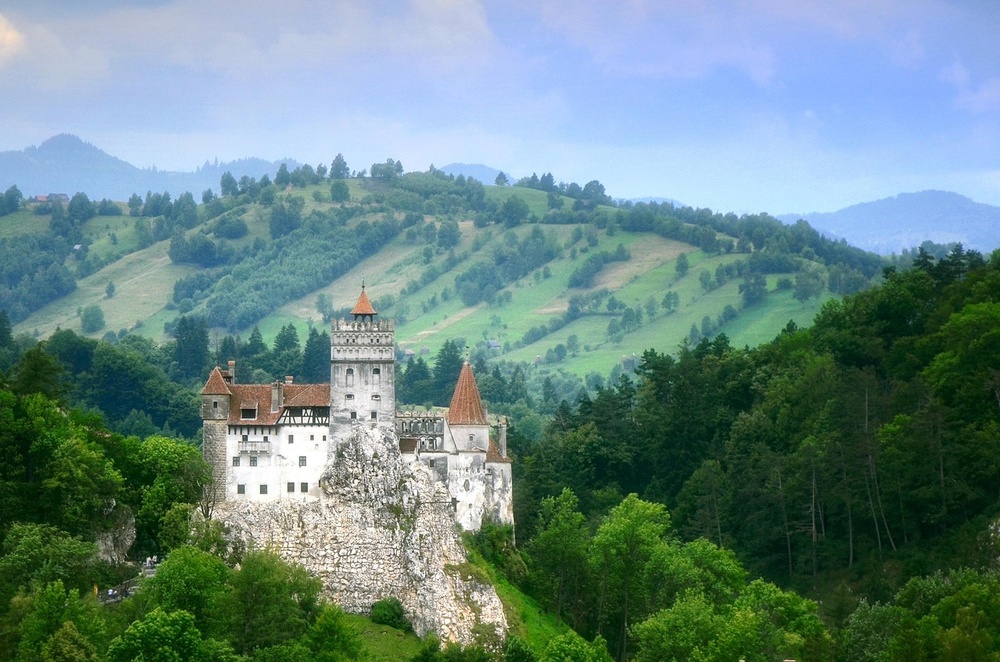
Built in 1377 as a customs point between Transylvania and Wallachia, Bran Castle may have briefly held Vlad after his capture. That's the extent of the connection. Bram Stoker never visited Romania, and his descriptions of Dracula's castle don't match Bran particularly well. Yet Romanian tourism has brilliantly marketed Bran as "Dracula's Castle," and visitors enthusiastically embrace the legend.
The castle has appeared in numerous vampire films and documentaries over the decades, each reinforcing the Dracula association. Most visitors don't come for medieval Transylvanian history—they want to experience vampire mythology. Bran delivers with Gothic decor, vampire exhibitions, and atmospheric tours that lean into the horror rather than fighting it.
This perfectly demonstrates how pop culture associations can completely overwhelm historical reality. The authentic medieval architecture—narrow winding staircases, small Gothic windows, mountaintop location—provides exactly what horror productions need. Whether Dracula actually stalked these halls doesn't matter. The atmosphere suggests he should have, and that's enough for both filmmakers and tourists seeking Gothic thrills.
Robin Hood: Carcassonne’s medieval perfection
La Cité de Carcassonne in southern France is Europe’s largest fortified city. It appeared in Robin Hood: Prince of Thieves (1991), standing in for Nottingham Castle. Its double walls and 52 towers look almost "too perfect," largely due to a massive 19th-century restoration. While some historians call the restoration "overly romantic," it made Carcassonne visually stunning and film-ready, drawing over 3 million visitors a year.
The Lord of the Rings: when New Zealand became Middle-earth
Peter Jackson's Lord of the Rings trilogy presents an interesting paradox: New Zealand had no medieval castles, yet the films created some of cinema's most iconic fortifications through a blend of real architectural inspiration and practical construction.
Helm's Deep drew from genuine European fortress design, particularly Château Gaillard in France and Alpine fortifications. The massive practical set, built in a quarry near Wellington, incorporated authentic defensive principles: layered walls, strategic positioning, and the imposing Deeping Wall. Production designers consulted historians to ensure the fortress functioned like a real medieval stronghold, which is why the battle feels tactically believable.
Edoras was built as a functional wooden structure on Mount Sunday in Poolburn, based on Anglo-Saxon and Viking longhouse architecture. Though entirely removed after filming, the location remains one of New Zealand's top film tourism destinations.
Minas Tirith, while primarily digital, was inspired by real architectural marvels. The production team studied Byzantine Constantinople's tiered walls and drew heavily from Mont Saint-Michel in France—the island abbey-fortress that provided the template for Gondor's layered white city rising from the plains.
The legacy: Lord of the Rings proved that understanding real castle architecture can create equally powerful results as filming in actual fortresses, while making New Zealand synonymous with epic fantasy landscapes.
The Last Samurai: Himeji Castle's Hollywood debut
When Hollywood needed an authentic Japanese castle for The Last Samurai (2003), they turned to Himeji Castle—Japan's most spectacular surviving feudal fortress. This UNESCO World Heritage site, nicknamed "White Heron Castle" for its brilliant white exterior and elegant wing-like rooflines, became the Imperial Palace in Tom Cruise's samurai epic.
Built in 1333 and expanded to its current form in the early 1600s, Himeji represents the pinnacle of Japanese castle architecture. Unlike European fortresses built for siege warfare, Japanese castles were designed as much for beauty as defense, combining military function with aesthetic grace. The complex maze of gates, walls, and paths was engineered to confuse invaders while showcasing architectural artistry.
The castle's appearance in The Last Samurai introduced global audiences to Japanese fortress design, which differs dramatically from Western castles. Where European castles emphasize thick stone walls and heavy fortifications, Himeji features wooden construction, curved rooflines, and a sophisticated defensive layout that turned the approach into a deadly labyrinth.
Himeji has since appeared in numerous productions, including the James Bond film You Only Live Twice (1967) and various samurai dramas. The castle receives over 2.8 million visitors annually, many drawn by its screen appearances that showcase Japan's feudal architectural heritage.
Why castles are the ultimate survivors
These famous castles prove that reality often beats imagination. From Alnwick's transformation into Hogwarts to Dubrovnik's role as King's Landing, from Neuschwanstein inspiring Disney to Doune Castle hosting Monty Python, real fortresses have become as famous for their screen roles as for their actual histories.
So, why do we keep putting these ancient buildings in our movies? It’s because castles represent a tangible connection to the past. For filmmakers they provide a sense of place that builds a world before a single line of dialogue is spoken. For us, they are portals to another world.
The relationship is symbiotic: films bring castles global attention and funding for preservation, while castles provide productions with textures and acoustics that CGI can't match. The next time you see a castle on screen, remember: those walls have outlived empires, and thanks to pop culture, they’ll live forever in our stories, too.