Chambord Castle
The Château de Chambord stands as one of the most iconic and celebrated castles in France and worldwide, located in the Loir-et-Cher department within the Centre-Val de Loire region. This magnificent château is nestled in the heart of the Loire Valley, a region renowned for its rich history, architectural heritage, and stunning landscapes. Chambord is not only a symbol of the French Renaissance but also a testament to the ambition and artistic vision of King Francis I, who initiated its construction in the early 16th century.
Situated in the historic province of Sologne, the Domaine National de Chambord is bordered by the gentle flow of the River Cosson. The château lies approximately 14 kilometers east of Blois, surrounded by the largest enclosed forest park in Europe, spanning about 5,500 hectares, of which around 1,000 hectares are accessible to the public. This vast parkland was originally designed as a royal hunting preserve, reflecting the château's primary function as a hunting lodge for the French monarchy.
Historical evolution from medieval fortress to Renaissance masterpiece
The origins of Chambord date back to the 10th century, when a fortified castle was established for the Counts of Blois. By the early 13th century, the castle came under the ownership of the House of Châtillon through the marriage of Mary of Avesnes, Countess of Blois, to Hugh I de Châtillon. Later, in 1397, the château passed under the protection of the Dukes of Orléans. When Louis d'Orléans ascended the throne as King Louis XII in 1498, Chambord became attached to the French crown.
Following his accession to the throne in 1515, King Francis I envisioned Chambord as part of a grand project to establish a new capital at Romorantin and to transform Chambord into a magnificent royal residence. In 1516, Francis I invited the Italian polymath Leonardo da Vinci to France, hoping to benefit from his genius. Although Leonardo died in 1519, the year construction began at Chambord, his influence is believed to have shaped key architectural features of the château, most notably the famous double helix staircase and the château's Greek cross floor plan.
Construction and architectural innovation
The building campaign at Chambord commenced in 1519 on the site of the former medieval fortress. The project was ambitious, aiming to create an enormous hunting lodge that combined traditional medieval defensive elements with the emerging Renaissance style. Construction was interrupted between 1525 and 1526 when Francis I was imprisoned in Madrid, which led to a simplification of the original plans. Despite the king spending only 72 nights at Chambord, the château's construction continued beyond his death in 1547, with work extending into the reigns of Henry II and Charles IX.
The château's design is a remarkable fusion of medieval fortress features—such as its imposing corner towers and massive walls—with Renaissance ornamentation and classical proportions. The foundations required innovative engineering solutions due to the wetland terrain of Sologne; oak pilings were driven up to ten meters deep to support the structure, while excavations have revealed limestone bedrock and remnants of the original 10th-century castle beneath.
Architectural attribution and style
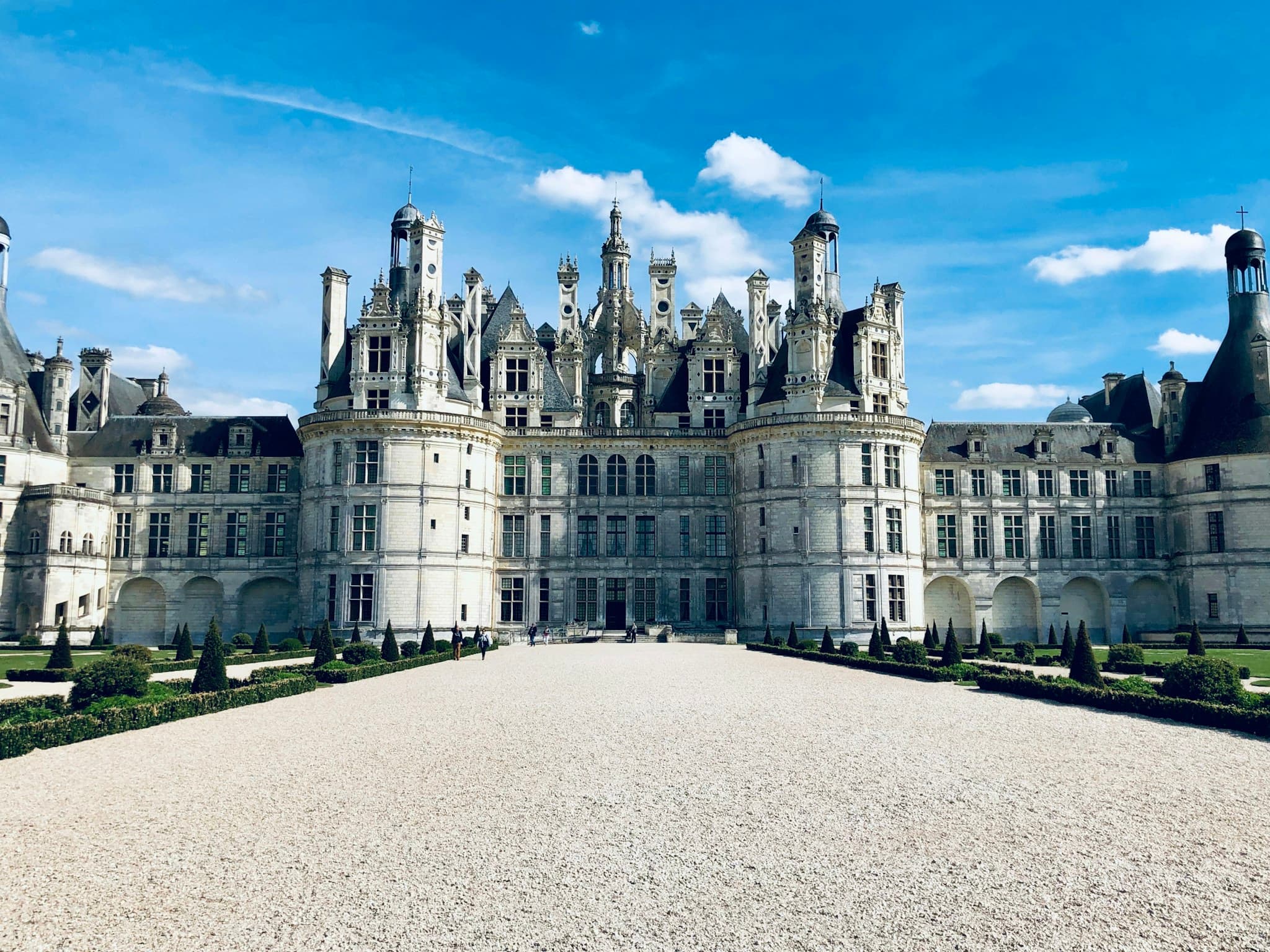
The design of Chambord is traditionally attributed to Domenico da Cortona, a Florentine architect who worked in France, though some scholars credit the influence of Philibert Delorme and even Leonardo da Vinci himself. The château exemplifies the French Renaissance style, blending medieval defensive architecture with classical Renaissance elements, such as symmetry, proportion, and decorative motifs. The château's distinctive silhouette, crowned with numerous chimneys, turrets, and the central lantern tower, creates a fairy-tale appearance that has captivated visitors for centuries.
Layout and key architectural features
The keep and the double helix staircase
The château is built on a square plan shaped like a Greek cross, with four massive towers oriented towards the cardinal points. The central keep, or "donjon," rises five stories and contains a series of apartments arranged around the central double helix staircase, which is one of Chambord's most celebrated architectural innovations. This staircase consists of two interwoven spirals that allow people to ascend and descend without crossing paths, a design often attributed to Leonardo da Vinci's influence.
Above the staircase, the terrace offers panoramic views of the surrounding forest park. The roofline is punctuated by over 80 chimneys and ornate lantern towers, creating a complex and visually stunning skyline that reflects the château's grandeur and the technical skill of its builders.
Wings and defensive features
Originally, Francis I planned to divert the Loire River to create a royal waterway leading directly to Chambord, but this ambitious plan was abandoned. Instead, the nearby Cosson River was rerouted to fill the château's moat. The château features two long wings extending from the central keep, including the east wing which housed the royal apartments. The overall design retains elements reminiscent of medieval fortresses, such as battlements and defensive walls, though Chambord was primarily intended as a luxurious hunting lodge rather than a military stronghold.
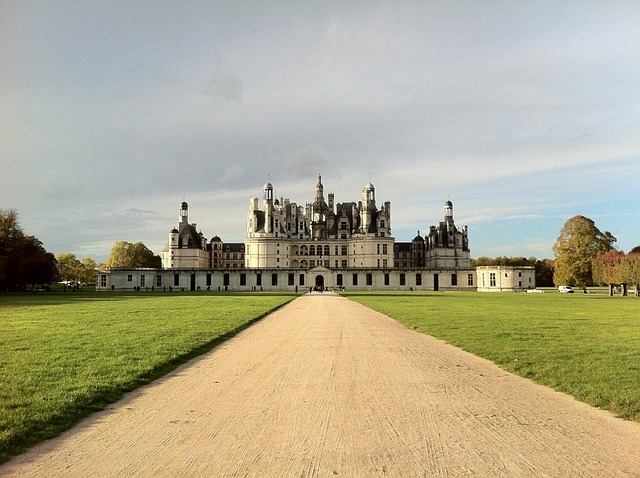
Photo by joelsau • Pixabay Content License
The royal hunting preserve and parkland
Chambord was conceived as a hunting retreat for Francis I, surrounded by a vast enclosed park designed to contain abundant game. The royal park originally covered approximately 2,500 hectares, later expanded to about 5,500 hectares, enclosed by a 31-kilometer-long wall to prevent game from escaping. The park remains one of the largest enclosed forest parks in Europe.
The park is home to iconic species such as the red deer (Cerf Elaphe) and wild boar, emblematic of Chambord's hunting heritage. It also supports a diverse range of wildlife, including Mediterranean sheep and numerous bird species like ospreys, booted eagles, gray woodpeckers, kingfishers, and nightjars. Since 1947, the park has been designated a National Hunting Reserve and a Wildlife Conservation Area, with additional protection under the European Natura 2000 ecological network since 2006.
Later history and cultural significance
Following the death of Francis I, Chambord saw intermittent royal use. During the reign of Louis XIII, the château was restored under the direction of Gaston d'Orléans between 1639 and 1642. King Louis XIV visited Chambord nine times between 1650 and 1685, often accompanied by cultural figures such as Molière and Jean-Baptiste Lully. Later, under Louis XV, the château was occupied by the exiled King Stanislas Leszczynski of Poland and subsequently given to Marshal Maurice of Saxony, who adapted parts of the château for military use.
By the early 20th century, Chambord was owned by the Duke of Parma before being acquired by the French state in 1930. During World War II, the château served as a refuge for treasures from French national museums, safeguarding priceless artworks from Nazi looting.
In 1981, the National Estate of Chambord was designated a UNESCO World Heritage Site, recognized for its outstanding universal value as a masterpiece of Renaissance architecture and cultural heritage.
Today, Chambord remains a symbol of French royal grandeur and architectural innovation. Its unique blend of medieval and Renaissance elements, its vast hunting park, and its historical associations with some of France's most notable monarchs make it a must-visit destination for those interested in history, architecture, and nature.
Frequently asked questions (FAQ)
- How do I get to Chambord Castle?
- Chambord Castle is located approximately 2 hours from Paris by car. You can also take a train to Blois and then a bus or taxi to the castle. There are ample signs directing visitors from the town to the castle.
- What is the historical significance of Chambord Castle?
- Chambord Castle is one of the most recognizable châteaux in the Loire Valley and exemplifies the French Renaissance architectural style. Built in the 16th century, it was commissioned by King Francis I and served as a hunting lodge. The castle reflects the grandeur of the French monarchy and is now a UNESCO World Heritage site.
- When was Chambord Castle built?
- Construction of Chambord Castle began in 1519 and continued for several decades, with various modifications made over the years. The castle was primarily completed in 1547, although work continued until the 17th century. Its architectural evolution showcases the transition from medieval to Renaissance styles.
- Can I take photographs inside Chambord Castle?
- Yes, photography is allowed inside Chambord Castle, but flash photography and tripods are prohibited to preserve the artwork and exhibits. Visitors are encouraged to capture the stunning architecture and rich interiors, making sure to respect the space and other guests.
- Why is Chambord Castle famous for its architecture?
- Chambord Castle is renowned for its distinctive French Renaissance architecture, featuring a blend of traditional medieval forms with classical Italian elements. The castle is particularly famous for its double-helix staircase, attributed to Leonardo da Vinci, which allows two people to ascend and descend without crossing paths. The intricate roofline adorned with numerous chimneys and towers adds to its fairy-tale charm.
- Is it possible to visit Chambord Castle year-round?
- Yes, Chambord Castle is open to visitors year-round, although hours may vary by season. During the peak tourist season, from April to October, the castle operates longer hours. It's advisable to check the official website for the most current opening times and any seasonal events.
- What are the ticket prices for Chambord Castle?
- Ticket prices for Chambord Castle vary depending on the type of visit and any additional activities. As of now, adult tickets are approximately €14, while discounts are available for students and children. It's recommended to purchase tickets online in advance to avoid long queues.
- When is the best time to visit Chambord Castle?
- The best time to visit Chambord Castle is during the spring (April to June) and fall (September to October) when the weather is mild and the gardens are in bloom. Summer can be crowded with tourists, while winter offers a quieter experience, albeit with cooler temperatures. Each season presents a unique charm, enhancing your visit.
- Are there any nearby attractions to Chambord Castle?
- Yes, there are several attractions near Chambord Castle, including the beautiful Chambord National Park, ideal for hiking and wildlife watching. The nearby Château de Cheverny and Château de Blois are also worth visiting for their stunning architecture and rich history. These sites can easily be combined into a day trip.
Photo gallery


Information
Website
Visit websiteFeatured in
Articles on the Castlopedia blog that feature Chambord Castle.
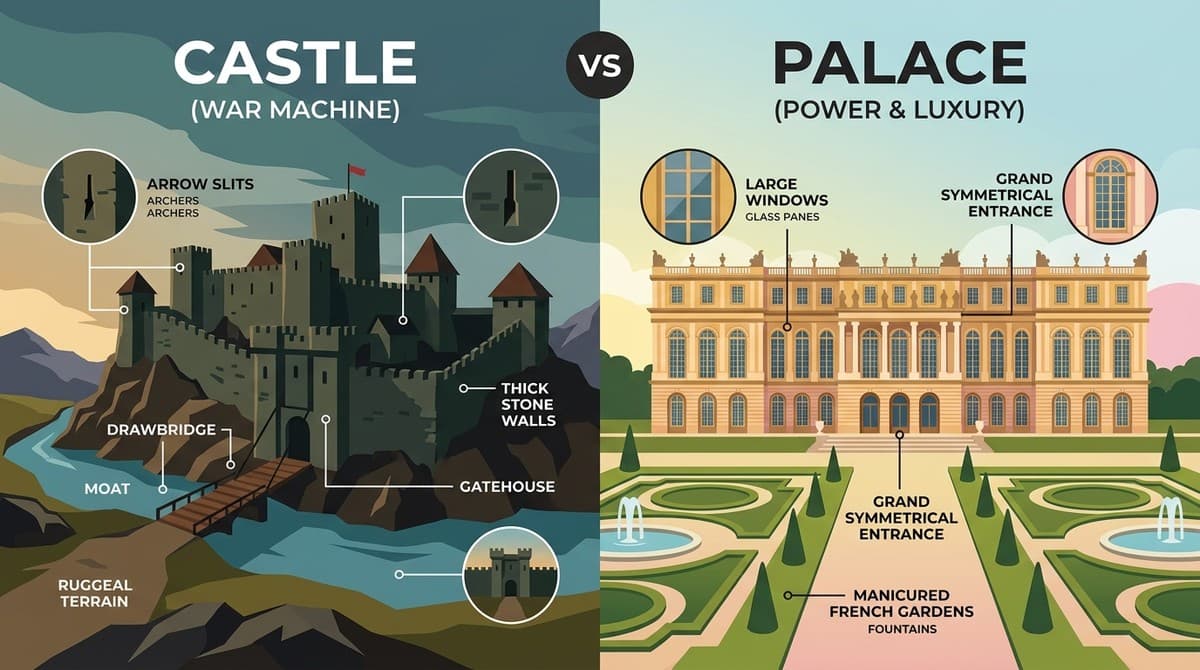
Castle or palace? An architect's guide to telling real fortresses from pretty pretenders
23-08-2026
Castles by country in 2026: which nations really rule the world of castles?
22-08-2026
Fairytale castles that are actually real: the true originals behind Disney's castles
19-07-2026
Loire Valley castles – a magical journey through the heart of renaissance France
21-03-2026
Sources & official resources
Verify the information above using these authoritative references.
Loading map...
Visitor reviews
No reviews yet. Been here? Write the first review and help other travelers!
Write the first reviewVisited this castle? Share your experience
Your review helps other travelers and adds first-hand knowledge to our encyclopedia.