Ask ten people which country has the most castles, and you'll probably get ten different answers. Some will say Germany, picturing Neuschwanstein rising out of the Bavarian mist. Others will swear it's Wales, because, well, everyone's heard that "Wales has more castles per square mile than anywhere else." A few history buffs might throw out France or Ireland. Here's the twist: depending on which dataset you trust, several of them could be right at once – and that's exactly why this topic is messier (and more fun) than it looks.
In 2026, the honest answer is that France leads the world with roughly 45,000 castles, but the real surprise is who's fighting for second and third – and it isn't who most casual "top 10" lists tell you it is. Let's set the record straight, country by country, with numbers checked against multiple independent heritage and research sources rather than a single ranking.
How many castles exist in the world right now?
Here's a fact that trips people up almost every time: nobody has an exact global count of castles. Not UNESCO, not any single government, not even the most dedicated castle-cataloguing researchers out there (and trust us, there are plenty). Cross-referencing multiple heritage databases and specialist research puts the global total somewhere between 80,000 and 100,000 surviving castles, once you add up every country's own domestic estimate.
"A castle was first and foremost a home."
– Marc Morris, Castle: A History of the Buildings that Shaped Medieval Britain (Hutchinson, 2003)
Narrow the definition to only structures with formal heritage protection, and the picture tightens considerably: around 46,000 heritage-protected castle properties exist across Europe alone, with France holding the largest share at roughly 19,122 protected sites. That gap – 100,000 versus 46,000 – is the whole story of this topic in miniature. The wider the definition, the bigger the number, and almost every "how many castles" debate online is really just two people using different definitions and shouting past each other.
Why does the range stay so wide even among serious researchers? Three reasons. First, definitions vary wildly – is a 15th-century Irish tower house a "castle," or just a fortified home? Is a 19th-century pseudo-medieval mansion built by a wealthy industrialist a real castle, or a themed country house? Second, record-keeping differs enormously by country. Germany's EBIDAT database at the University of Marburg tracks roughly 8,500 strictly medieval sites, while broader counts that include post-medieval palaces triple that figure. Third, castles disappear. Wars, fires, neglect, and – in Japan's case – a deliberate 19th-century demolition campaign have wiped thousands off the map, so any "current" total is a snapshot of what's left standing (or half-standing) today.
Castles by country 2026: the ranking
Here's the updated 2026 ranking of countries by number of castles, cross-checked against heritage databases, academic surveys, and specialist research (Castle Collector's insights division, EBIDAT, national heritage registers) rather than a single source. You'll notice this differs from some widely shared "top 10" tables floating around online – more on why in a moment.
| Rank | Country | Estimated Castles (broad definition) | Stricter / protected-tier figure |
|---|---|---|---|
| 1 | France | ~45,000 | 19,122 heritage-protected |
| 2 | Germany | ~25,000 | 8,500 strictly medieval (EBIDAT) |
| 3 | Ireland | 30,000+ (incl. tower houses) | 7,000+ surviving tower houses |
| 4 | Italy | ~20,000 | 3,000–8,600 protected |
| 5 | Spain | 10,000+ | 2,550 protected (BIC) |
| 6 | Poland | 5,224 protected | – |
| 7 | Scotland | 3,000+ surviving | 1,103 protected |
| 8 | Czech Republic | 3,000+ | NPÚ register |
| 9 | Belgium | 3,000+ surviving | – |
| 10 | England | ~3,000 broad | 1,712 protected (NHLE strict) |
| 11 | Austria | – | 1,507 protected |
| 12 | Hungary | ~700+ | – |
| 13 | Wales | 600 (incl. ruins, mottes) | 293 protected |
| 14 | Romania | – | ~493–500 protected |
| 15 | Switzerland | – | 500 recognised |
| 16 | Portugal | – | 310 protected |
| 17 | Slovakia | 180+ surviving | – |
| 18 | Denmark | – | 168 protected |
| 19 | Luxembourg | ~76 ruins | – |
| 20 | Lithuania | ~30 surviving | – |
Global total (broad definition, all countries): roughly 80,000–100,000 castles.
Notice something odd? Ireland technically outnumbers Germany – 30,000-plus fortified structures versus Germany's 25,000 – yet Ireland sits in third place, not second. That's not a mistake; it's a deliberate methodology call. Most of Ireland's count comes from surviving tower houses, a distinctly Irish form of compact fortified home that doesn't quite match the "castle" definition used elsewhere in Europe. Germany's Burg-and-Schloss tradition, by contrast, maps much more cleanly onto what most people picture when they hear the word "castle," so specialist rankings tend to rank Germany second despite the raw numbers favoring Ireland. It's a good early warning sign for the rest of this article: raw counts and "real" rankings often disagree, and both sides have a fair point.
France: the undisputed castle capital of the world
If castles were currency, France would be printing money. With an estimated 45,000 castles, châteaux, and fortified manor houses – and around half of all castles on Earth, by some estimates – France isn't just ahead, it's in a league of its own. Think about that number for a second: 45,000 is more than the population of some small towns. That's how deep France's castle-building tradition runs.
Why so many? Blame (or thank) centuries of feudal fragmentation. Before France consolidated into a unified kingdom, the territory was carved up among counts, dukes, and minor lords who each wanted their own fortified seat of power. Add the Hundred Years' War, constant border skirmishes with England and the Holy Roman Empire, and later the Renaissance obsession with turning defensive fortresses into showpieces of luxury (hello, Loire Valley), and you get a landscape absolutely littered with stone towers.
It also helps that the French word château is a broad umbrella term – it technically covers everything from a grim medieval keep to a 19th-century country villa with zero defensive history whatsoever. That's precisely why the "strict" heritage-protected figure (around 19,122 sites) is less than half the broad estimate. It's the same château word doing double duty for two very different kinds of buildings.
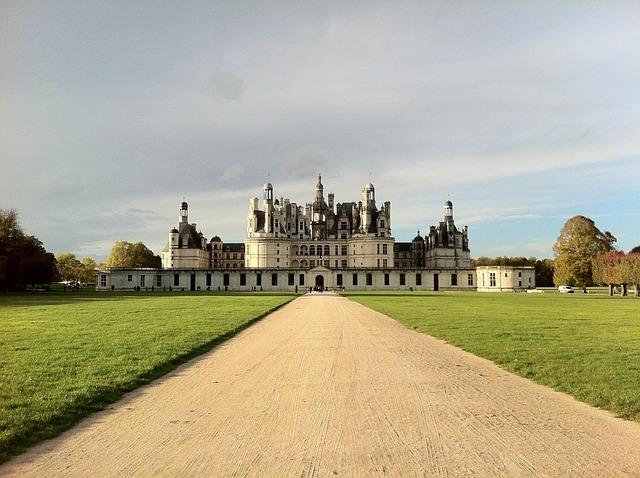
The Château de Chambord is the poster child of the fantasy side of that equation – a 400-room "weekend hunting lodge" built for King François I in 1519, with a double-helix staircase reportedly inspired by Leonardo da Vinci himself. Fun twist: François apparently found the whole thing a bit much and barely visited it during his own reign. Sometimes even kings can build something too extravagant even for them.
A quick list of what makes French castles stand out from the pack:
- Sheer density – the Loire Valley alone has hundreds of châteaux packed into a relatively small stretch of river valley.
- Architectural range – from grim medieval keeps to Renaissance pleasure palaces, France covers the entire evolutionary timeline of the castle.
- Preservation culture – France has invested heavily in restoring and maintaining its châteaux, many of which now double as museums, hotels, or wedding venues.
- Tourism infrastructure – most major châteaux are fully set up for visitors, with guided tours, light shows, and even costumed reenactments.
As one longtime heritage guide in the Loire Valley likes to tell visitors, "every château here has two histories – the one in the guidebook, and the one nobody wrote down." That's the kind of statement that sums up France's castle culture pretty well: there's always more beneath the surface than the official plaque tells you.
Germany's real number: why "second place" got miscounted for years
Here's where a lot of casual castle-ranking content online gets it wrong. You'll still find plenty of 2026 "top countries" lists quoting Germany at somewhere around 3,000–3,500 castles – a figure that, frankly, undersells the country badly. Cross-checking against the EBIDAT database at Philipps-Universität Marburg, multiple German tourism authorities, and independent heritage researchers, the real broad estimate lands at roughly 20,000 to 25,000 – putting Germany firmly in second place globally, not somewhere down the list.
The discrepancy comes down to Germany's three separate castle categories: Burg (medieval military fortress), Schloss (post-medieval palatial residence), and Festung (post-medieval star-fortress). The strict, medieval-only tally – just Burgen – sits around 8,500 sites. Widen the lens to include Schlösser and fortified manor houses, and the number climbs past 20,000. Rankings that quietly only count the "Burg" category, without saying so, end up making Germany look far smaller than it really is. That's a genuinely useful lesson for reading any castle statistic you come across: always ask which of Germany's three categories is actually being counted.
Why does Germany have so many to begin with? Blame political fragmentation taken to the extreme. For most of its history, "Germany" wasn't a country at all – it was a patchwork of hundreds of kingdoms, duchies, bishoprics, and free cities, each one jealously guarding its independence with its own fortress. That's exactly why the density feels so intense when you actually drive through Bavaria or the Rhine Valley: practically every hilltop has something poking out of the trees, and estimates suggest a castle roughly every 15 miles across the country.
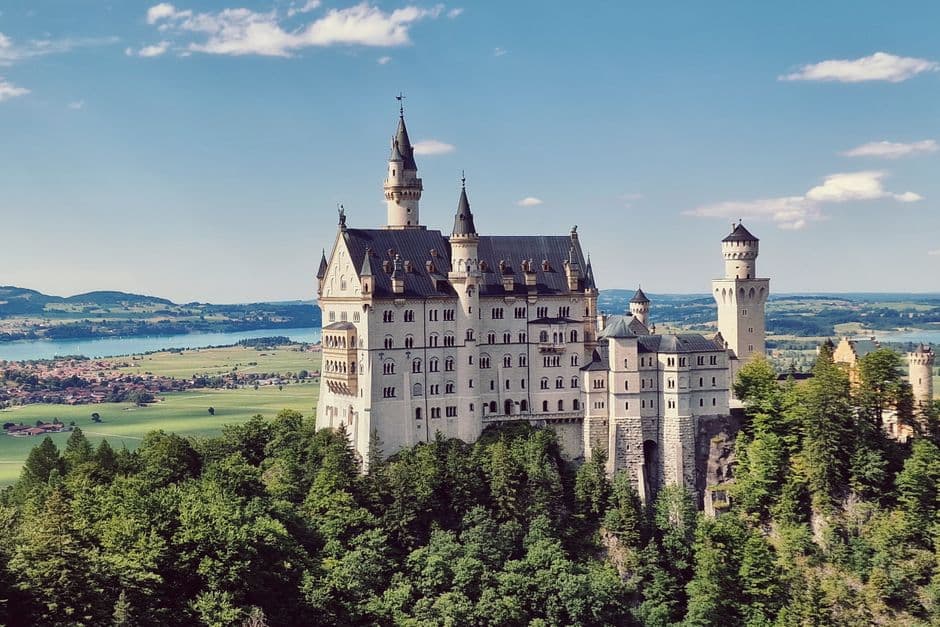
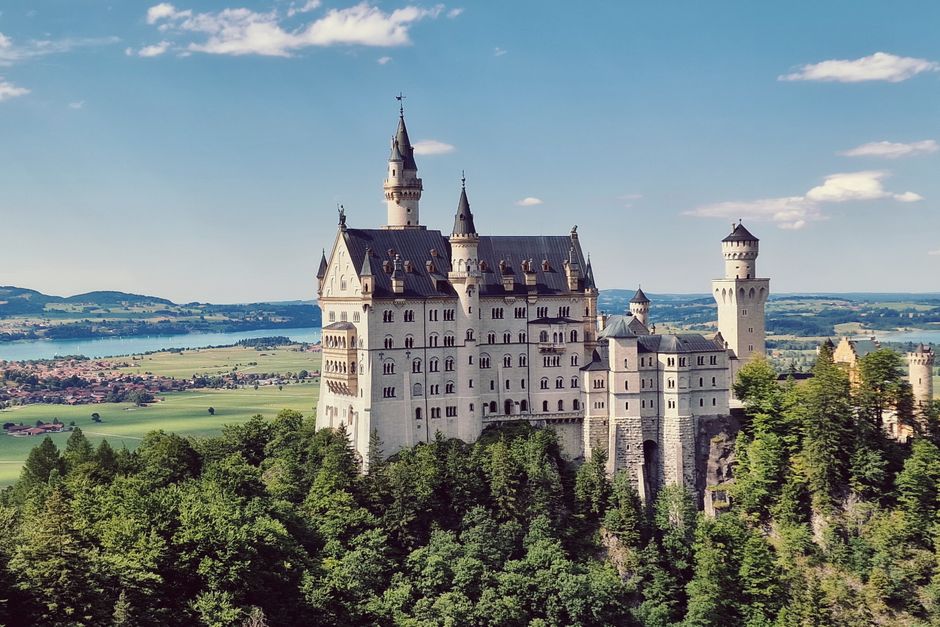
Germany's crown jewel is, of course, Neuschwanstein Castle, commissioned by King Ludwig II of Bavaria in 1868. Here's the detail most people don't know: Ludwig wasn't really building a fortress for defense – he was building a fantasy retreat, partly as a tribute to composer Richard Wagner's operas, whom Ludwig personally invited to live nearby when Wagner ran into financial trouble. It's a castle built out of pure romantic obsession rather than military necessity, and it later became the direct visual inspiration for Disney's Cinderella Castle. Talk about a legacy nobody saw coming – and today it alone pulls in well over a million visitors a year, a tiny fraction of Germany's total castle stock doing almost all of the tourism heavy lifting.
"A castle was never built for beauty. It was built as a statement of survival, wrapped in intimidation."
– Historical Preservation Journal
Ireland and Italy: the overlooked contenders
If Germany is the most undercounted country on this list, Ireland might be the most misunderstood. Ireland's raw total – more than 30,000 fortified structures when every surviving tower house is counted – technically outnumbers every country except France. The bulk of that figure comes from a specifically Irish architectural tradition: the compact, vertically-stacked fortified tower house, built by Anglo-Norman and Gaelic lords alike as a defensible family residence rather than a sprawling military fortress. Researchers have documented more than 7,000 of these surviving tower houses alone – arguably the densest concentration of late-medieval defensive residential architecture anywhere in Europe.
Italy, sitting at roughly 20,000 castles by broad estimate, earned its ranking through a completely different kind of chaos: centuries as a patchwork of city-states, republics, and papal territories. Venice, Florence, Milan, Naples, Sicily – each region essentially ran its own show for centuries, and each built its own fortifications to prove it. Add the influence of the Normans in the south, the Byzantines, and later Spanish and Austrian rulers, and you get castles reflecting an almost dizzying mix of architectural styles crammed into one country. Italy also splits its heritage categories finely – castello, rocca, torre, fortezza, cittadella, and palazzo fortificato are all tracked separately – which is exactly the kind of definitional splitting that makes cross-country comparisons so tricky in the first place.
Wales and the UK: the density champions
Here's where the story gets interesting again. England sits at around 1,700 to 3,000 castles depending on definition – respectable, but nowhere near the top five. Yet if you've ever heard someone say "Wales has the most castles per square mile of anywhere in the world," they're not exaggerating much.
Wales is tiny – about the size of Massachusetts – yet it's absolutely stuffed with fortifications. Around 600 castles, ruins, and fortified mansions survive there today, including roughly 293 with formal heritage protection. That density comes down to centuries of conflict between Welsh princes and English kings, especially Edward I's brutal "Ring of Iron" campaign in the late 1200s, which planted a chain of massive stone fortresses – Conwy, Caernarfon, Harlech, Beaumaris – around Wales specifically to keep it under English control.
As National Geographic put it when covering the region, Wales is genuinely "the true epicenter" of European castle-spotting – not the Loire, not Bavaria, but this small, rugged corner of Britain.
Scotland tells a similar, if slightly less dramatic, story: over 3,000 surviving castles, with Aberdeenshire's so-called "Castle Country" alone boasting around 300 castles, stately homes, and ruins packed into one region – among the highest concentrations anywhere in the UK.
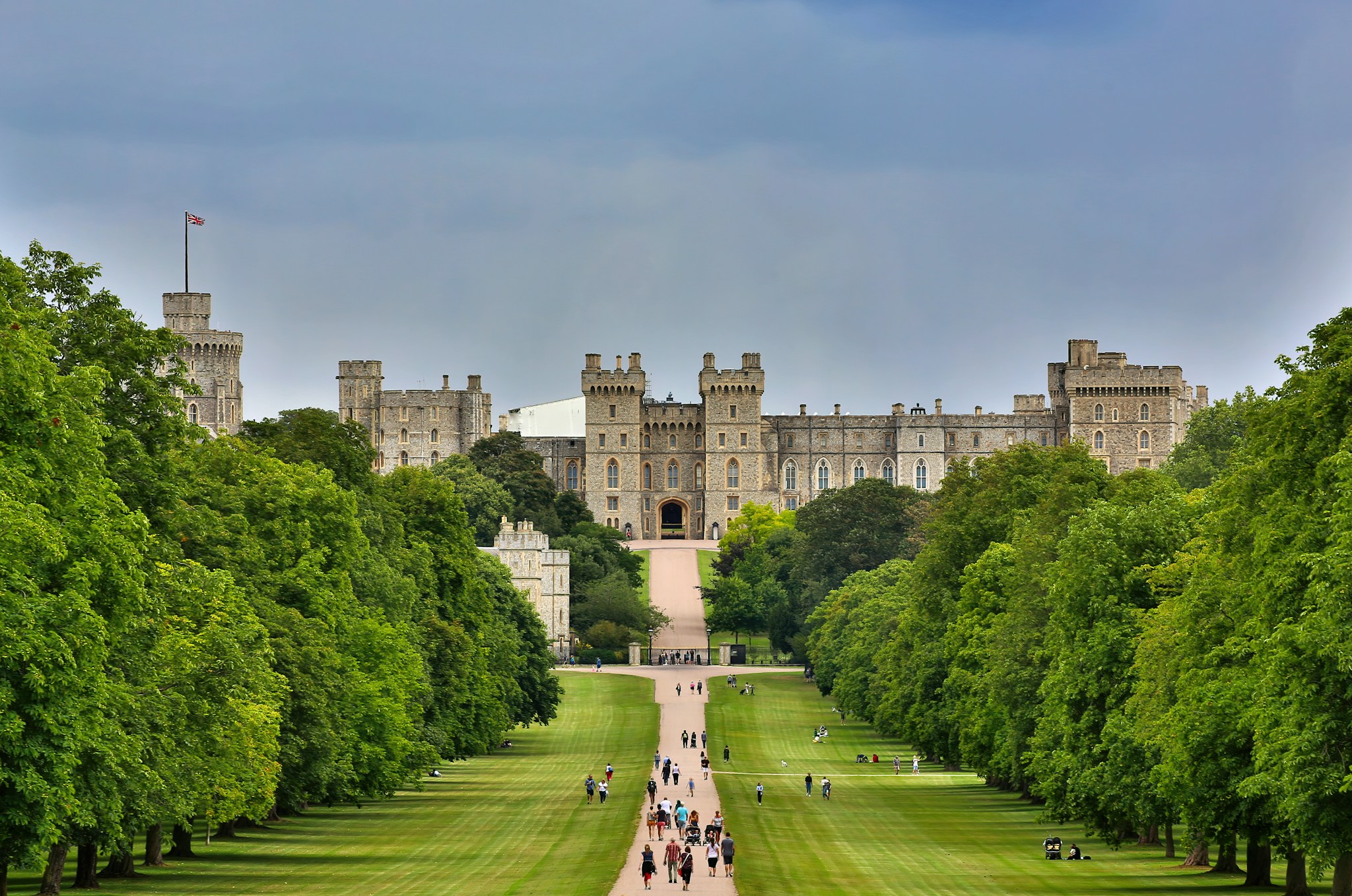
And then there's Windsor Castle in England – the world's oldest and largest continuously inhabited castle, occupied since William the Conqueror built it around 1070. It survived a devastating 1992 fire that gutted nearly 100 rooms, and it's still, to this day, an official residence of the British royal family. Not bad for a building pushing a thousand years old.
Beyond Europe: castles you probably didn't expect
It's tempting to think of castle-building as an exclusively European pastime – knights, moats, dragons, the whole medieval fantasy package. But that's a pretty Eurocentric blind spot, and the numbers prove it.
India is genuinely hard to pin down – estimates range from roughly 1,000 widely recognized forts up to more than 4,000 once every regional fortification, palace, and hill fort is catalogued district by district. Think of the massive hilltop forts of Rajasthan like Chittorgarh and Mehrangarh, built not by feudal European lords but by Rajput kings defending against Mughal expansion; Chittorgarh alone spans nearly 700 acres, making most European castles look modest by comparison.
Japan tells one of the most dramatic castle stories on the planet. Before the Meiji-era modernization campaigns of the late 1800s, Japan is estimated to have had around 5,000 castles – but the country underwent an intense, deliberate demolition campaign that treated feudal fortresses as symbols of a class system the new industrial nation wanted to leave behind. Today, only around 60 original castles survive. Matsumoto Castle, nicknamed "Crow Castle" for its black exterior, is one of the few, and it very nearly got demolished itself in 1872 before local residents fought to save it from the wrecking ball. Himeji Castle, a UNESCO World Heritage Site since 1993, is the best-preserved example of the wooden, multi-tiered tenshu (donjon) architecture that makes Japanese castles look so different from their stone European cousins.
Then there's a genuinely surprising entry: Fasil Ghebbi in Ethiopia, often nicknamed the "Camelot of Africa." Built by Emperor Fasilides starting in 1636, this fortress-city complex took heavy damage during World War II, sat in disrepair for decades, and was finally restored and named a UNESCO World Heritage Site in 1979. It's proof that impressive, defensible royal architecture wasn't some European invention – it developed independently across multiple continents, shaped by whatever local threats and building materials happened to be at hand.
Even the United States, a country without a medieval past, is home to an estimated 700 castellated properties – mostly Gilded Age mansions built by wealthy industrialists between 1880 and 1925 who wanted a taste of Old World grandeur. Hearst Castle in California and the Biltmore Estate in North Carolina are the most famous examples, alongside genuine Spanish colonial fortifications like Castillo de San Marcos in Florida.
Why the numbers never quite agree
If you've searched around this topic before landing here, you've probably already noticed something frustrating: every source gives a slightly different number, sometimes wildly so. One widely shared 2026 ranking puts Germany at roughly 3,500 castles; specialist heritage research puts it at 20,000-plus. So who's right?
Honestly – both, depending on definition, and this is worth sitting with for a second because it's the single biggest thing to understand about this whole topic. Here's the breakdown of why the discrepancies exist:
- Broad estimates tend to include every ruin, watchtower, fortified manor, and post-medieval palace that ever served a defensive or seigneurial function, even structures that are now just a pile of stones in a forest.
- Narrower, protected-tier counts restrict themselves to structures with formal heritage-register status – a name, a known construction date, documented protection status, and usually some remaining physical structure.
- Curated "significant castle" databases, like the Castlemap atlas, take yet another approach entirely: rather than counting everything, they catalog only the most historically notable sites worldwide – a little over 7,000 in their current dataset. In that curated set, interestingly, Spain edges out the field, narrowly ahead of Germany and France – a totally different podium than the raw-count ranking, because it's measuring fame and documentation rather than sheer volume.
- National categorization systems don't match. A tower house counts as a castle in Ireland but not in Germany. A château counts in France even without any defensive history at all. A rocca and a castello are tracked as separate categories in Italy. There is, quite simply, no single enforced definition of "castle" anywhere in the world.
So when someone insists "Ireland has the most castles" and someone else insists "no, Germany does," they're often both technically correct – they're just measuring different things. It's a bit like arguing about which country has the "most mountains" without agreeing on how tall something needs to be to count.
It's worth remembering, too, that even the most careful catalogers admit the count will never be final. The team behind the Castlemap atlas is upfront about this, noting plainly that "no one has counted them all" – and that's from people who've already logged over 7,000 sites by hand.
The best countries to visit if you're a castle hunter in 2026
If raw numbers aren't your thing and you just want to know where to actually go, here's a more practical way to slice this data. Different countries reward different kinds of castle trips:
- France – best for sheer volume and variety, especially the Loire Valley, where you can hit five or six châteaux in a single day trip.
- Germany – best for the classic "fairy-tale castle" aesthetic, particularly Bavaria's Romantic Road route.
- Ireland – best for atmospheric, off-the-beaten-path ruins and tower houses scattered across the countryside.
- Wales – best for density and dramatic coastal or mountain settings; you'll rarely go more than a short drive without spotting another ruin.
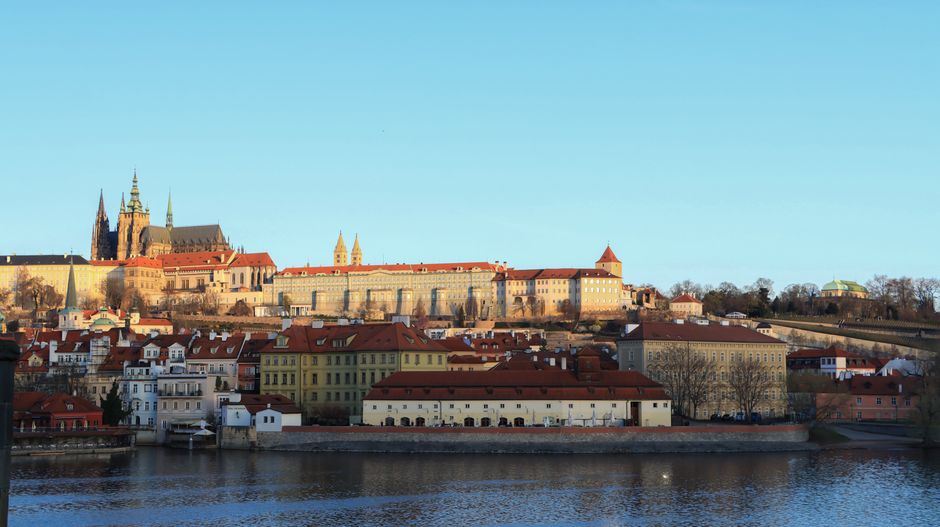
- Czech Republic – best for well-preserved medieval town-and-castle combinations, with Prague Castle and Karlštejn leading the pack.
- India – best for scale and drama, with massive hilltop forts that dwarf most European equivalents.
- Japan – best for a completely different architectural experience, with wooden, tiered castles unlike anything in the West.
Frequently asked questions about castles by country
Which country has the most castles in 2026? France holds the top spot with roughly 45,000 castles and châteaux, followed by Germany at around 25,000 and Ireland at more than 30,000 (though Ireland is typically ranked third due to methodology differences around tower houses).
Which country actually has the second most castles – Germany or Ireland? It depends entirely on definition. By raw count, Ireland's tower-house tradition edges out Germany. By the definition most heritage researchers use for "castle" in the European sense, Germany is generally placed second.
Which country has the highest density of castles per square mile? That title generally goes to Wales, which packs around 600 castles into a country roughly the size of Massachusetts – a legacy of centuries of Anglo-Welsh conflict.
How many castles are there in the world total? Nobody knows the exact figure, but cross-referenced broad estimates land at roughly 80,000 to 100,000, while the stricter, heritage-protected tier sits closer to 46,000 in Europe alone.
Are castle counts still changing in 2026? Yes – slowly. Restoration projects can bring long-forgotten ruins back into official registries, while neglect, natural disasters, and – historically, as in Japan – deliberate demolition campaigns continue to shape how many structures remain standing.
The bottom line
Counting castles turns out to be a lot like counting stars – the closer you look, the more you find, and the number keeps shifting depending on where you draw the line. France's roughly 45,000 castles make it the undisputed leader by volume, but the real fight for second place – Germany's fragmented feudal past versus Ireland's tower-house tradition – is far closer, and far more interesting, than most quick online rankings let on. Add Italy's chaotic city-state history, Wales's astonishing density, and the entirely separate castle-building traditions of India, Japan, and Ethiopia, and it becomes clear that castles were never a uniquely European habit. They're a nearly universal human response to the same basic question: how do you protect what you've built?
"Castles weren't just military buildings – they were opulent residences for pleasure-loving noblemen."
– John Goodall, "An Englishman's Castle Is His Home," The Oldie, 2 March 2022
Every country on this list answered that question a little differently – and honestly, that's what makes exploring them so endlessly interesting.
Sources:
- Castle Collector, "Which Country Has the Most Castles?" (updated July 2026) – castlecollector.com/resources/insights/castles-by-country
- EBIDAT (European Castle Database), Philipps-Universität Marburg
- McNeill, T. E., Castles in Ireland: Feudal Power in a Gaelic World, Routledge, 1997
- Adams, C. L., Castles of Ireland: Some Fortress Histories and Legends, Elliot Stock, London, 1904
- Goodall, J., The Castle: A History, Yale University Press, 2022
- Fenwick, H., The Chateaux of France, Robert Hale, London, 1976
- World Population Review, "Castles by Country 2026" – worldpopulationreview.com/country-rankings/castles-by-country
- Travelstride, "Which Country Has the Most Castles?"
- Multiple independent German heritage and tourism sources (EBI, Lingoda, GermanyinUSA, My Germany Vacation) cross-checked for the 20,000–25,000 German estimate
- National Geographic, feature coverage of Welsh castle density
- Archaeological Survey of India; Aniket Ankush Yadav, Forts & Palaces in India (catalog of 4,088 sites)
- Wikipedia, "List of Castles by Country"
Note: castle counts vary significantly by source depending on methodology and definitions used, and should be treated as informed, cross-checked estimates rather than exact figures.