Citadel of Carcassonne
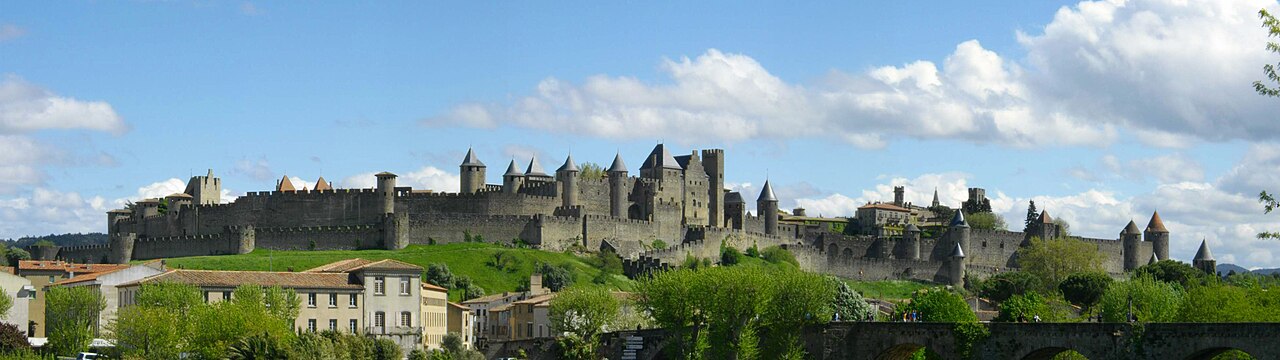
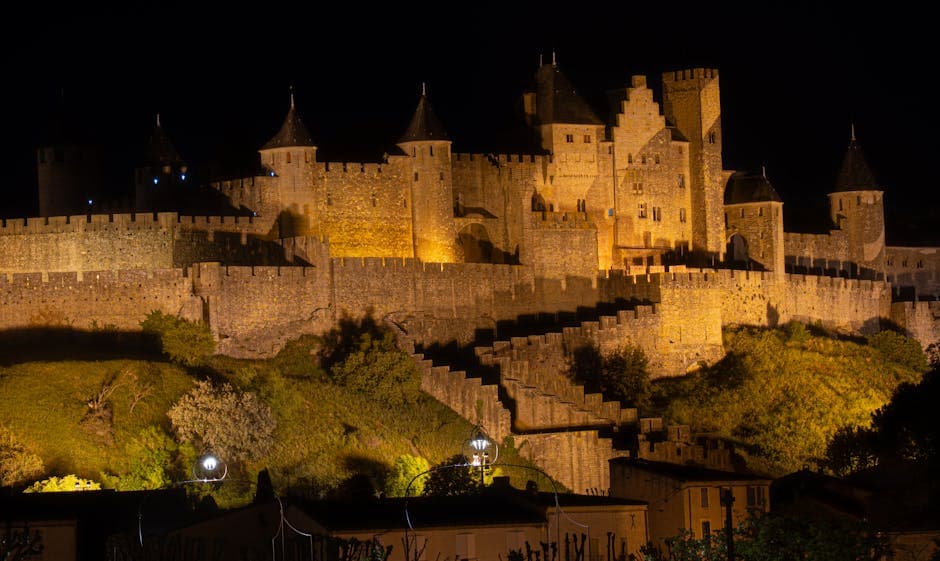
The Citadel of Carcassonne stands as one of the most extensive and best-preserved fortified complexes in Europe, showcasing a remarkable example of medieval military architecture. Located in the city of Carcassonne in southern France, this vast fortress is renowned for its imposing double surrounding walls stretching nearly 3 kilometers and featuring 52 defensive towers. Its strategic position on a hilltop overlooking the Aude River has made it a key stronghold for over two millennia.
The history of the citadel dates back to the 3rd century BCE when the site was first fortified by the Celtic tribe known as the Volques Tectosages. Following the Roman conquest in the 2nd century BCE, the settlement, then called Julia Carcaso, flourished due to its location along a major Roman road connecting Narbonne and Toulouse. The Romans constructed the first substantial fortifications in the 3rd and 4th centuries CE, including a 1,200-meter-long wall that largely survives today as the inner rampart.
Early medieval transformations and legend
After the fall of the Western Roman Empire, the citadel passed through the hands of various powers. The Visigoths controlled the site from the 5th to the early 8th century and reinforced the Roman walls, adapting them to the natural terrain. Briefly, the Umayyad Caliphate occupied the fortress between 725 and 759 CE before it was captured by the Franks under Pepin the Short.
The citadel's defense inspired the legendary tale of Dame Carcas, the city's patron saint. According to the legend, during a prolonged siege by the Franks led by Charlemagne, Dame Carcas cleverly ended the siege by feeding a pig with the last sack of wheat and then throwing it from the city walls. The besiegers, believing the city still had ample supplies, lifted the siege. The name "Carcassonne" is said to derive from the phrase "Carcas sonne" (Carcas rings), celebrating the victory.
Feudal expansion and the albigensian crusade
In the 11th century, the citadel became the seat of the powerful Trencavel family, viscounts of Albi and Nîmes. Bernard Aton IV Trencavel commissioned the construction of the Basilica of Saint-Nazaire, a masterpiece blending Romanesque and Gothic architectural styles. Around 1130, the palatium was built, which would later evolve into the Château Comtal, the fortified castle within the citadel.
The 12th century saw the rise of Catharism, a Christian movement deemed heretical by the Catholic Church. Carcassonne became a central stronghold for the Cathars during the Albigensian Crusade launched in 1209 by Pope Innocent III. The crusade led to the siege and capture of the citadel by Simon de Montfort, after which Carcassonne was incorporated into the French royal domain.
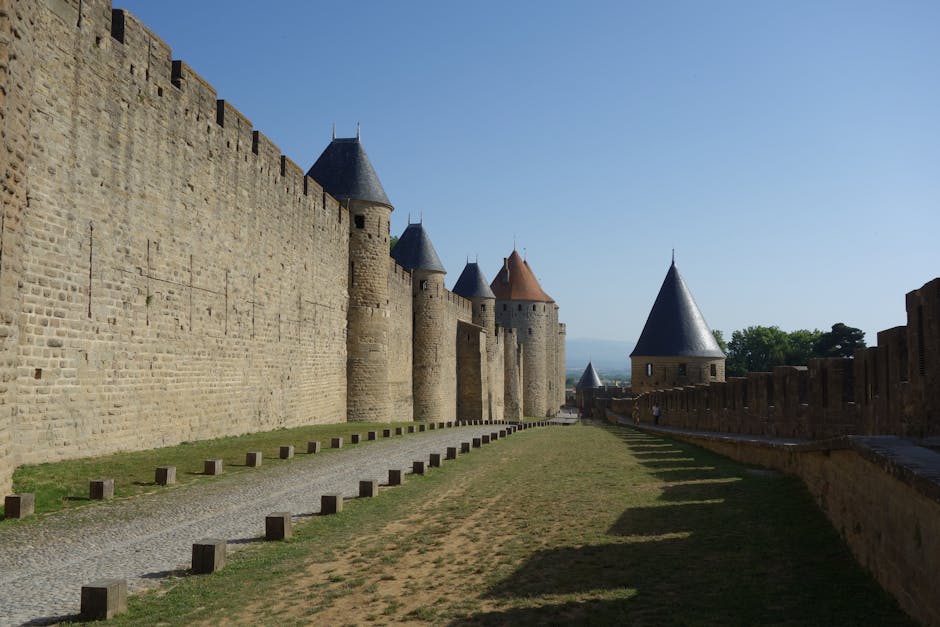
Photo by Liz Henderson
Medieval fortifications and royal enhancements
Following its incorporation into the French crown, Carcassonne was fortified to serve as a strategic border fortress against the Kingdom of Aragon. Kings Louis IX, Philip III, and Philip IV undertook significant fortification works in the 13th and early 14th centuries. A second outer wall, approximately 1,600 meters long, was constructed, doubling the original Gallo-Roman rampart and incorporating numerous round towers designed to withstand siege warfare.
The walls were equipped with machicolations for dropping projectiles on attackers, loopholes for crossbow fire, and a complex system of gates including the monumental Porte Narbonnaise. This gate, built around 1280, functioned as an independent fortification with multiple defensive layers such as double portcullises and a dry moat.
Château comtal: fortress within a fortress
The Château Comtal is a parallelogram-shaped castle attached to the inner western wall of the citadel. Initially constructed by Bernard Aton IV Trencavel in the early 12th century, it was remodeled extensively between 1228 and 1239. The castle is surrounded by a dry moat and features nine towers, including two of Visigothic origin. Its defensive architecture includes a barbican, crenellated parapets, machicolations, and a drawbridge operated by counterweights.
Within the castle courtyard, archaeological excavations have uncovered a large Roman mosaic floor, indicating the site's long history of occupation. The castle served as the residence of the local viscounts and later as a royal administrative center.
Decline and 19th-century restoration
After the Treaty of the Pyrenees in 1659, which shifted the border between France and Spain southward, Carcassonne lost its military importance. The citadel was gradually abandoned, its fortifications dismantled or sold off, and the population declined. The site was used as a prison and arsenal during this period of neglect.
In the mid-19th century, the citadel was rediscovered as a heritage monument thanks to the efforts of Jean-Pierre Cros-Mayrevieille and others. The renowned architect Eugène Viollet-le-Duc was commissioned to restore the fortress starting in 1853. His restoration, completed in 1911, was extensive, reconstructing walls, towers, and roofs, and adding features such as conical slate roofs on towers and wooden hoardings, some of which were imaginative interpretations rather than strictly historical.
Architectural features and preservation
The citadel’s double walls enclose about seven hectares and include 52 towers of various shapes and sizes. The inner wall, dating from the Roman and Visigothic periods, is constructed from local sandstone and molasse, with walls two to three meters thick. Seventeen original Roman towers survive, characterized by horseshoe-shaped exteriors and vaulted interiors.
The outer wall, built in the 13th century, features taller round towers without roofs to prevent attackers from sheltering. Between the walls lies the lices, a flat area historically used for military drills and public gatherings. The citadel’s four main gates align with the cardinal points, each with unique defensive mechanisms.
The Basilica of Saint-Nazaire is a highlight of the citadel, showcasing a harmonious blend of Romanesque and Gothic styles. Its stained glass windows, sculptural decorations, and slender transept are notable features. The basilica was restored early in Viollet-le-Duc’s project and remains a major cultural and religious monument.
Cultural significance and tourism
Today, the Citadel of Carcassonne is a UNESCO World Heritage Site, recognized for its exceptional testimony to medieval military architecture and urbanism. It attracts nearly four million visitors annually who come to explore its ramparts, towers, castle, and historic streets filled with shops and cafes.
The citadel offers panoramic views of the surrounding landscape, including the distant Pyrenees mountains. Nearby, the Bastide Saint-Louis on the left bank of the Aude River complements the medieval experience with its 13th-century planned layout.
The citadel stands as a testament to the layered history of southern France, preserving centuries of cultural, architectural, and military heritage within its formidable walls.
Frequently asked questions (FAQ)
- How do I get to the Citadel of Carcassonne?
- The Citadel of Carcassonne is easily accessible by various means of transportation. You can reach it by train, as the local station is just a short walk away, or by car, with ample parking available nearby. Additionally, the site is well-served by local buses and is within walking distance from the city center.
- What is the historical significance of the Citadel of Carcassonne?
- The Citadel of Carcassonne is one of the best-preserved medieval fortifications in Europe, recognized as a UNESCO World Heritage site. Its history dates back to the Gallo-Roman period, and it played a crucial role in the defense against invasions throughout the Middle Ages. The citadel showcases the architectural evolution of military structures over centuries.
- When was the Citadel of Carcassonne built?
- Construction of the Citadel of Carcassonne began in the 1st century BC, with significant expansions and renovations occurring in the 12th and 13th centuries. The impressive double walls and towers we see today were largely completed during the 1200s under the direction of the Viscount of Carcassonne. This long history contributes to its rich architectural character.
- Can I visit the Citadel of Carcassonne with children?
- Yes, the Citadel of Carcassonne is a family-friendly destination with plenty of activities for children. The site offers guided tours, and kids can explore the castle's towers and ramparts. There are also educational exhibits that provide insights into medieval life, making it an engaging experience for visitors of all ages.
- Why is the Citadel of Carcassonne a popular tourist attraction?
- The Citadel of Carcassonne attracts visitors due to its stunning architecture, rich history, and picturesque views of the surrounding landscape. Its fairy-tale appearance, with turrets and drawbridges, makes it a favorite among photographers and history enthusiasts alike. Additionally, the citadel hosts various cultural events and festivals throughout the year, enhancing its appeal.
- Is it possible to explore the Citadel of Carcassonne at night?
- Yes, the Citadel of Carcassonne occasionally offers guided night tours during the summer months, allowing visitors to experience the enchanting atmosphere of the castle under the stars. These tours provide a unique perspective on the citadel's history and architecture. However, it's advisable to check the official website for availability and timings.
- What are the opening hours for the Citadel of Carcassonne?
- The Citadel of Carcassonne is generally open year-round, with varying hours depending on the season. Typically, the opening hours are from 9:00 AM to 6:00 PM, extending until 7:00 PM during the peak summer months. It's best to confirm the current hours on the official website before your visit.
- What are the ticket prices for visiting the Citadel of Carcassonne?
- Ticket prices for the Citadel of Carcassonne vary depending on age and the type of visit. Generally, adult tickets cost around €9, while discounted rates are available for students and children. There may also be family packages and special prices for guided tours, so checking the official site for the latest pricing is recommended.
- What nearby attractions should I visit while in Carcassonne?
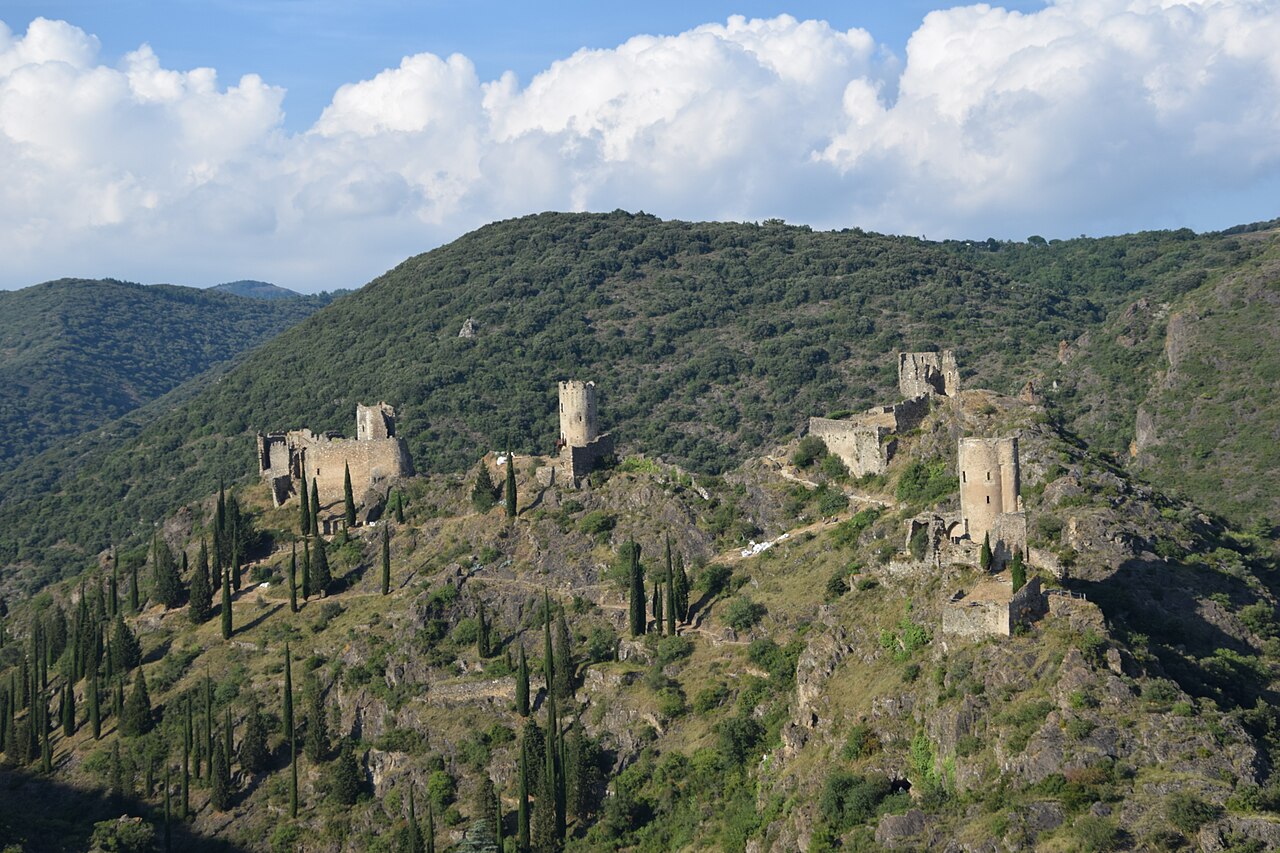
- While visiting the Citadel of Carcassonne, you should explore the charming streets of the medieval city, which are filled with shops and restaurants. Nearby, the Basilica of Saint-Nazaire offers stunning stained-glass windows and a rich history. You can also enjoy scenic walks along the Aude River or visit the nearby Château de Lastours, which features ancient ruins and beautiful landscapes.
Photo gallery

Photo by Carlo Giovanni Ghiardelli


Information
Website
Visit websiteFeatured in
Articles on the Castlopedia blog that feature Citadel of Carcassonne.
Sources & official resources
Verify the information above using these authoritative references.
Loading map...
Visitor reviews
No reviews yet. Been here? Write the first review and help other travelers!
Write the first reviewVisited this castle? Share your experience
Your review helps other travelers and adds first-hand knowledge to our encyclopedia.