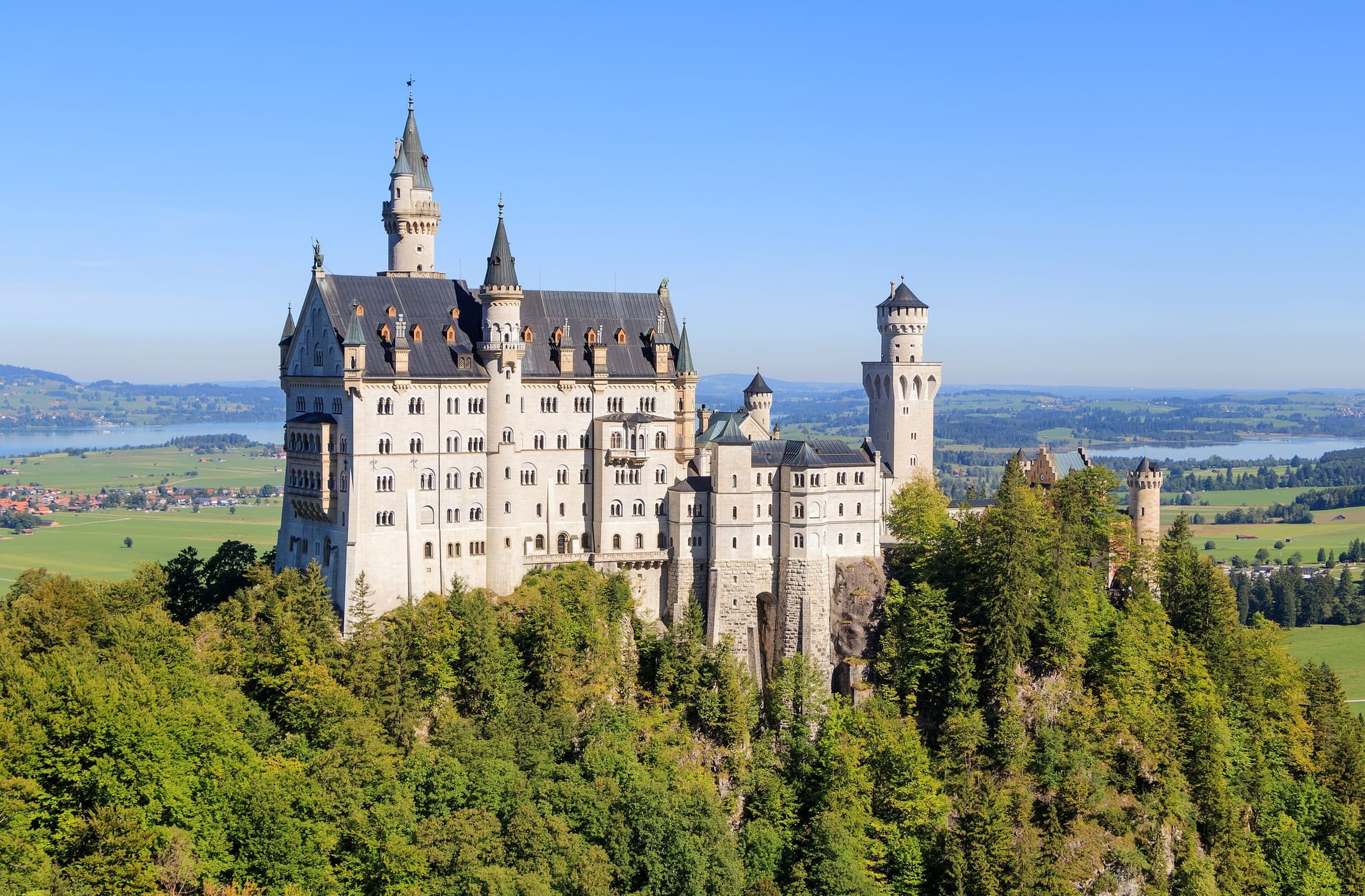
Neuschwanstein Castle
Neuschwanstein Castle stands as one of the most iconic and enchanting castles in Europe, renowned for its fairy-tale appearance and dramatic setting in the Bavarian Alps near Hohenschwangau, Germany. Built in the late 19th century, this Romantic Neo-Gothic hill castle was commissioned by King Ludwig II of Bavaria as a personal refuge and a tribute to the composer Richard Wagner. Its soaring towers, pristine white limestone walls, and picturesque alpine backdrop have made it a symbol of romanticism and architectural fantasy, attracting over a million visitors annually.
King Ludwig II and the vision behind Neuschwanstein
The castle was conceived by King Ludwig II, often called the "Fairy Tale King," who sought to create a retreat that reflected his passion for medieval legends and Wagnerian operas. A deeply artistic and reclusive monarch, Ludwig was inspired by the operas of Richard Wagner, whose themes of heroism, chivalry, and mythology resonated with his own romantic ideals. The castle was intended not only as a private residence but also as a monument to the cultural and artistic heritage Ludwig admired.
Ludwig’s fascination with the swan motif, a symbol prevalent in Wagner’s works such as "Lohengrin," is evident throughout the castle’s design and decoration. The king’s visit to the Wartburg Castle in 1867 further influenced the project, especially the Singers’ Hall, which inspired the grand Hall of the Singers at Neuschwanstein.
Location and construction challenges
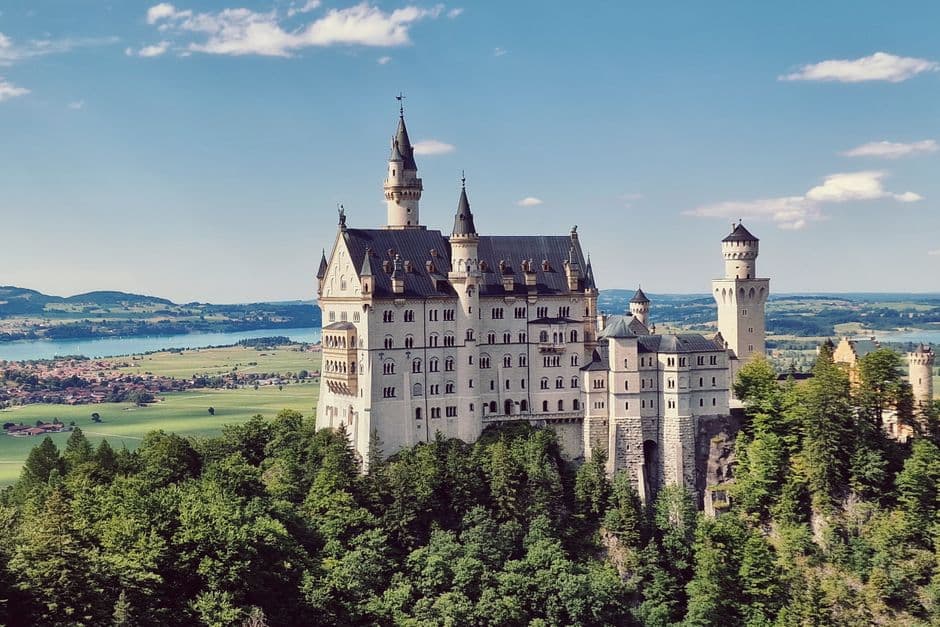
Neuschwanstein Castle is perched on a rugged hill overlooking the Pöllat Gorge, with commanding views of the Alpsee and Schwansee lakes. The site was chosen for its dramatic natural beauty and its proximity to Ludwig’s childhood home, Hohenschwangau Castle. Construction began in 1869 and presented significant logistical challenges due to the steep terrain and remote location.
Materials such as white limestone from nearby quarries, sandstone, and Untersberg marble were transported uphill using steam-powered cranes and innovative scaffolding techniques. The castle’s foundations were anchored into the rocky ridge, requiring advanced engineering solutions for the era. Ludwig personally oversaw the construction, frequently revising plans and adding elaborate details, which extended the building timeline and increased costs.
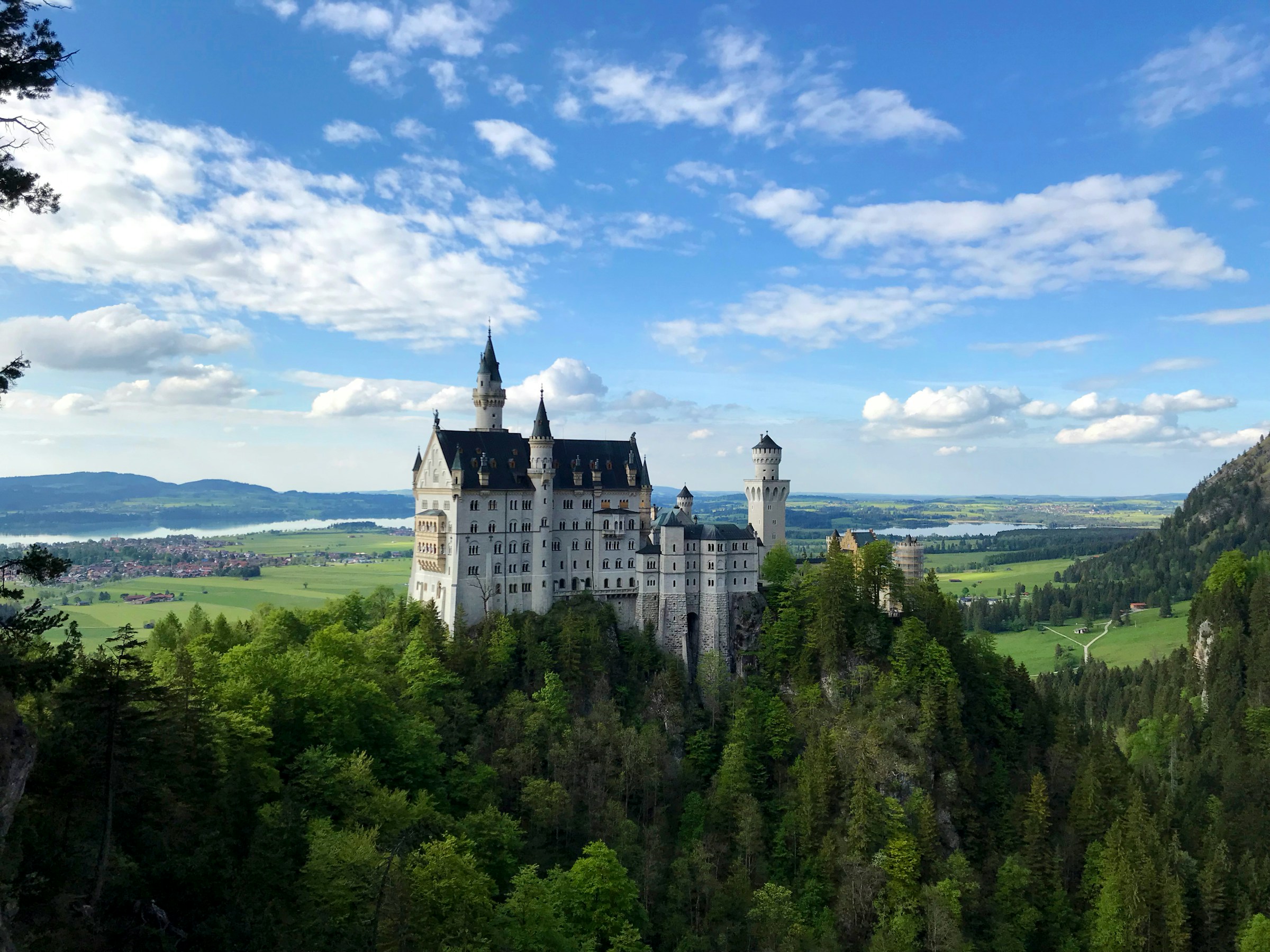
Photo by Joey Owst
Photo by Joey Owst
Architectural style and features
Neuschwanstein is a prime example of Romantic Neo-Gothic architecture, blending medieval castle motifs with 19th-century innovations. Its exterior is characterized by tall towers with conical roofs, ornate spires, and a white limestone façade accented with sandstone and marble elements. The castle complex includes a symmetrical gatehouse with two stair towers, a tall rectangular keep approximately 45 meters high, the Knights’ House, the Bower (ladies’ residence), and the main palace (Palas) which curves along the ridge.
The Palas features two stair towers, one rising to 65 meters, with roofs inspired by the French Château de Pierrefonds. Its façade includes balconies overlooking the Alpsee, decorative chimneys, turrets, and vividly colored frescoes. The castle’s courtyard is divided into two levels, with the lower courtyard enclosed by the gatehouse and tower base, and the upper courtyard nestled between the Knights’ House and the Bower.
Innovations in construction
The castle incorporated steel frameworks to support large rooms like the Throne Hall, a pioneering technique at the time. The combination of traditional brickwork covered with finely worked limestone, sandstone, and marble created a visually striking exterior that also ensured structural stability on the challenging site.
Interior design and artistic elements
The interior of Neuschwanstein Castle reflects Ludwig’s romantic imagination and devotion to Wagnerian themes. Although over 200 rooms were planned, only about 15 were completed and furnished by the time of Ludwig’s death in 1886. The interiors feature elaborate wood carvings, murals depicting scenes from Wagner’s operas and medieval legends, and richly decorated ceilings and walls.
The hall of the singers
The Hall of the Singers, located above the king’s living quarters, measures approximately 27 by 10 meters. It draws inspiration from the Wartburg Castle’s Singers’ Hall and includes a stage area (Sängerlaube) and a gallery for performers. The decoration celebrates the ideals of chivalry and heroic legends central to Wagner’s operas like "Lohengrin" and "Parzival."
The throne room
The Throne Room is a grand Byzantine-inspired hall occupying two floors and reaching 13 meters in height. It features a massive dome adorned with stars and a mosaic floor depicting the earth and its creatures. The room was intended to house a throne, which was never installed. The hall’s colorful arcades and religious murals echo the design of Munich’s Allerheiligen-Hofkirche.
The king’s private apartments
Ludwig’s private apartments span the third floor of the east wing and include eight main rooms decorated with murals and tapestries illustrating Wagnerian and medieval themes. Notable features include a drawing room with motifs from "Lohengrin," an artificial grotto with a waterfall and rainbow machine inspired by "Tannhäuser," a neo-Gothic chapel dedicated to Saint Louis, and a richly carved oak bed canopy in the bedroom.
Modern amenities and servants’ quarters
The castle was equipped with advanced 19th-century technologies such as central heating, running hot water, automatic-flushing toilets, a battery-powered bell system to summon servants, and telephone lines. Servants’ quarters were located in the basement, modestly furnished and separated from the main corridors by translucent glass, allowing discreet service.
Unfinished elements and later history
At Ludwig II’s death in 1886, Neuschwanstein was still incomplete. The gatehouse and Palas were nearly finished externally, while the rectangular tower and other structures remained scaffolded or simplified. Planned features such as a Moorish Hall, Knights’ Bath, bridal chamber, grand banquet hall, and terraced gardens were never realized.
Following Ludwig’s death, the castle was opened to the public to help repay debts. It remained under Wittelsbach family ownership until 1923, when it was transferred to the Bavarian Palace Department. During World War II, Neuschwanstein served as a storage site for art looted by the Nazis, surviving the war without damage. Postwar, parts of the castle were used as archives.
Neuschwanstein’s cultural impact and tourism
Today, Neuschwanstein Castle is one of the most visited castles in Europe, attracting over 1.4 million visitors annually. Its fairy-tale silhouette has inspired countless works of art, literature, and film, including the design of Disney’s Sleeping Beauty Castle. The castle’s blend of medieval romanticism and 19th-century innovation continues to captivate visitors worldwide, making it a symbol of artistic vision and architectural grandeur.
Its location near the village of Hohenschwangau offers visitors the opportunity to explore surrounding natural beauty, including alpine lakes and forests, as well as the nearby Hohenschwangau Castle, which contrasts with Neuschwanstein’s romantic style by reflecting the earlier neo-Gothic tastes of Ludwig’s father, King Maximilian II.
Architectural measurements and site layout
The castle complex extends along a rocky ridge approximately 150 meters long. The main rectangular tower rises about 45 meters, with stair towers reaching up to 65 meters. The site includes residential buildings such as the Knights’ House and the Bower, and service buildings arranged around two-tiered courtyards. Foundations of a never-built chapel and a planned 90-meter-high keep are marked in the courtyard paving, illustrating the ambitious scale of the original design.
Materials and craftsmanship
Construction materials were carefully selected for both durability and aesthetic appeal. White limestone from local quarries forms the primary exterior cladding, complemented by sandstone around windows and decorative elements. Untersberg marble was used structurally and decoratively, particularly in window frames and columns. The castle’s intricate frescoes were painted using the traditional Lüftlmalerei technique, adding vibrant color and narrative depth to the façades and interiors.
Legacy and preservation
Neuschwanstein Castle remains a testament to King Ludwig II’s visionary dream and the craftsmanship of 19th-century artisans and engineers. Despite never being fully completed, it stands as a remarkable fusion of fantasy, history, and technology. The castle is managed by the Bavarian Palace Department and is well preserved, with ongoing conservation efforts to maintain its structural integrity and artistic treasures for future generations.
Frequently asked questions (FAQ)
- When was Neuschwanstein Castle built and by whom?
- Neuschwanstein Castle was built starting in 1869 by King Ludwig II of Bavaria as a personal retreat and tribute to composer Richard Wagner.
- What architectural style is Neuschwanstein Castle?
- Neuschwanstein Castle is designed in the Romantic Neo-Gothic style, blending medieval motifs with 19th-century innovations.
- Is Neuschwanstein Castle open to the public?
- Yes, Neuschwanstein Castle has been open to the public since shortly after King Ludwig II's death in 1886, attracting over 1.4 million visitors annually.
- What are some notable interior features of Neuschwanstein Castle?
- Notable interior features include the Hall of the Singers inspired by Wartburg Castle, the Byzantine-style Throne Room, and richly decorated private apartments with Wagnerian themes.
- How does the castle's location enhance its appeal?
- Perched on a hill overlooking the Pöllat Gorge and alpine lakes, the castle offers breathtaking views and a dramatic fairy-tale setting in the Bavarian Alps.
Photo gallery


Information
Opening hours
9:00-18:00, daily
Ticket prices
€13 adult, €8 child
Current owner
Bavarian Palace Department
Website
Visit websiteFeatured in
Articles on the Castlopedia blog that feature Neuschwanstein Castle.
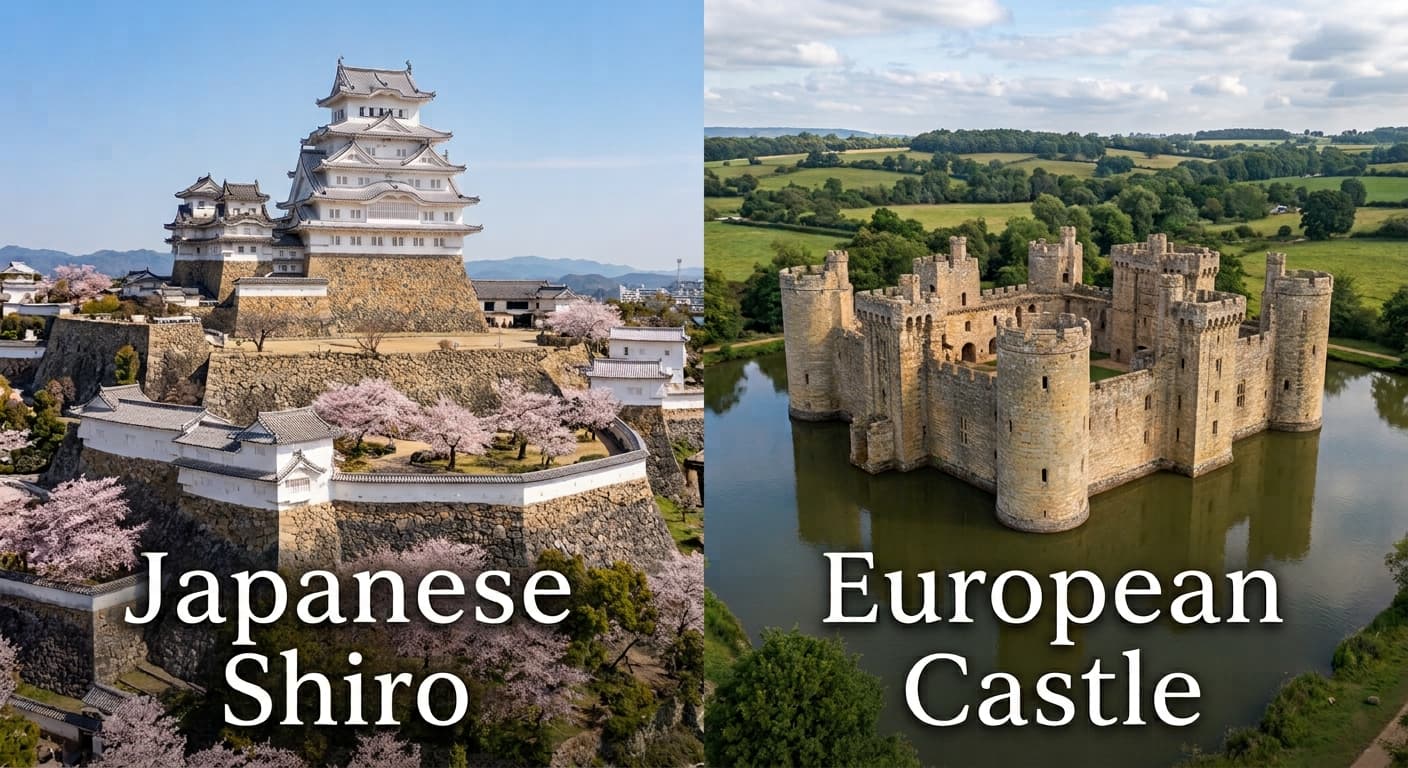
Samurai strongholds: how Japanese shiro differ from European castles
16-09-2026
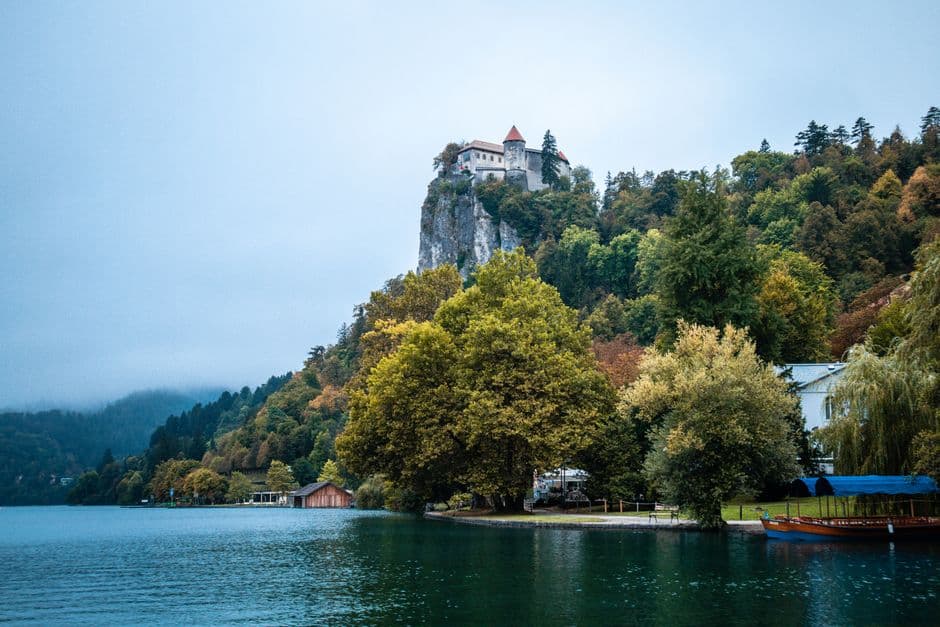
Castles built on impossible places: 12 fortresses perched on cliffs
03-09-2026
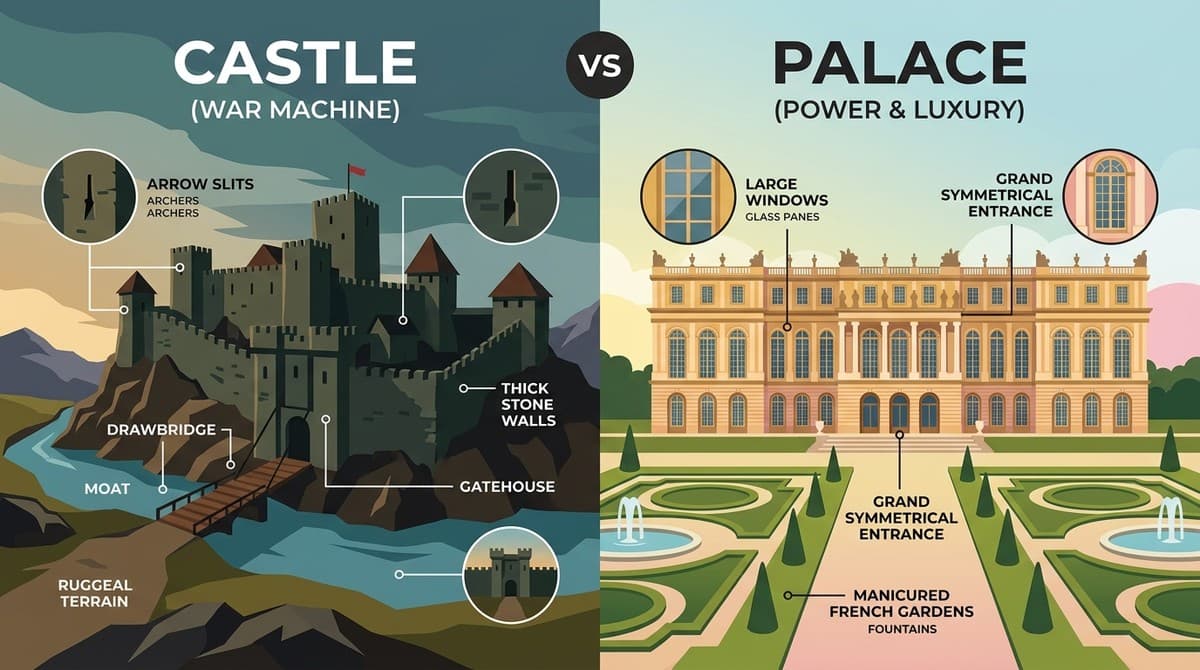
Castle or palace? An architect's guide to telling real fortresses from pretty pretenders
23-08-2026
Castles by country in 2026: which nations really rule the world of castles?
22-08-2026
Sources & official resources
Verify the information above using these authoritative references.
Loading map...
Visitor reviews
No reviews yet. Been here? Write the first review and help other travelers!
Write the first reviewVisited this castle? Share your experience
Your review helps other travelers and adds first-hand knowledge to our encyclopedia.


