Château-Gaillard
Château-Gaillard in Amboise is a notable late medieval royal residence and garden estate located in the Indre-et-Loire department of the Loire Valley. Despite sharing its name with the famous Norman fortress at Les Andelys, this Château-Gaillard is distinct and renowned for its pioneering role in the introduction of Italian Renaissance garden design and architectural influences to France during the late 15th and early 16th centuries.
The estate was established by King Charles VIII following his return from the first Italian War in 1496. Inspired by the Poggio Reale villa near Naples, Charles VIII sought to create a residence that reflected the new Renaissance ideals he encountered in Italy. The château is situated on a terrace at the foot of the southern flank of the Châteliers spur, adjacent to Clos Lucé, and overlooks a park of approximately fifteen hectares. This park was developed on former marshland known as the Amasse, demonstrating early landscape engineering efforts to transform the terrain.
Origins and royal patronage under Charles VIII
The construction of Château-Gaillard began as part of Charles VIII's ambition to bring the Renaissance aesthetic to the French royal residences. The château was conceived not only as a residence but also as a symbol of the king's cultural and political aspirations following his Italian campaigns. Its location near the royal Château d'Amboise allowed it to serve as an extension of the royal domain and a showcase of new architectural and horticultural trends.
Pacello da Mercogliano and the first French Renaissance gardens
From 1496, the Italian gardener Pacello da Mercogliano was commissioned to design and cultivate the gardens known as the "Jardins du Roy". Pacello is credited with introducing several groundbreaking elements to French garden design. He implemented the first axial garden perspective in France, a hallmark of Renaissance landscape architecture emphasizing symmetry and long sightlines. Additionally, he created the first French-style parterres—ornamental garden beds arranged in symmetrical patterns.
Pacello also established the first royal orangery in France at Château-Gaillard, which was essential for protecting delicate citrus trees during colder months. His horticultural expertise extended to acclimatising exotic plants such as citrus and peach trees, introducing species that were previously unknown or rare in France. Notably, he is associated with planting the first orange trees in the country, marking a significant advancement in French botanical history.
Architectural features and style
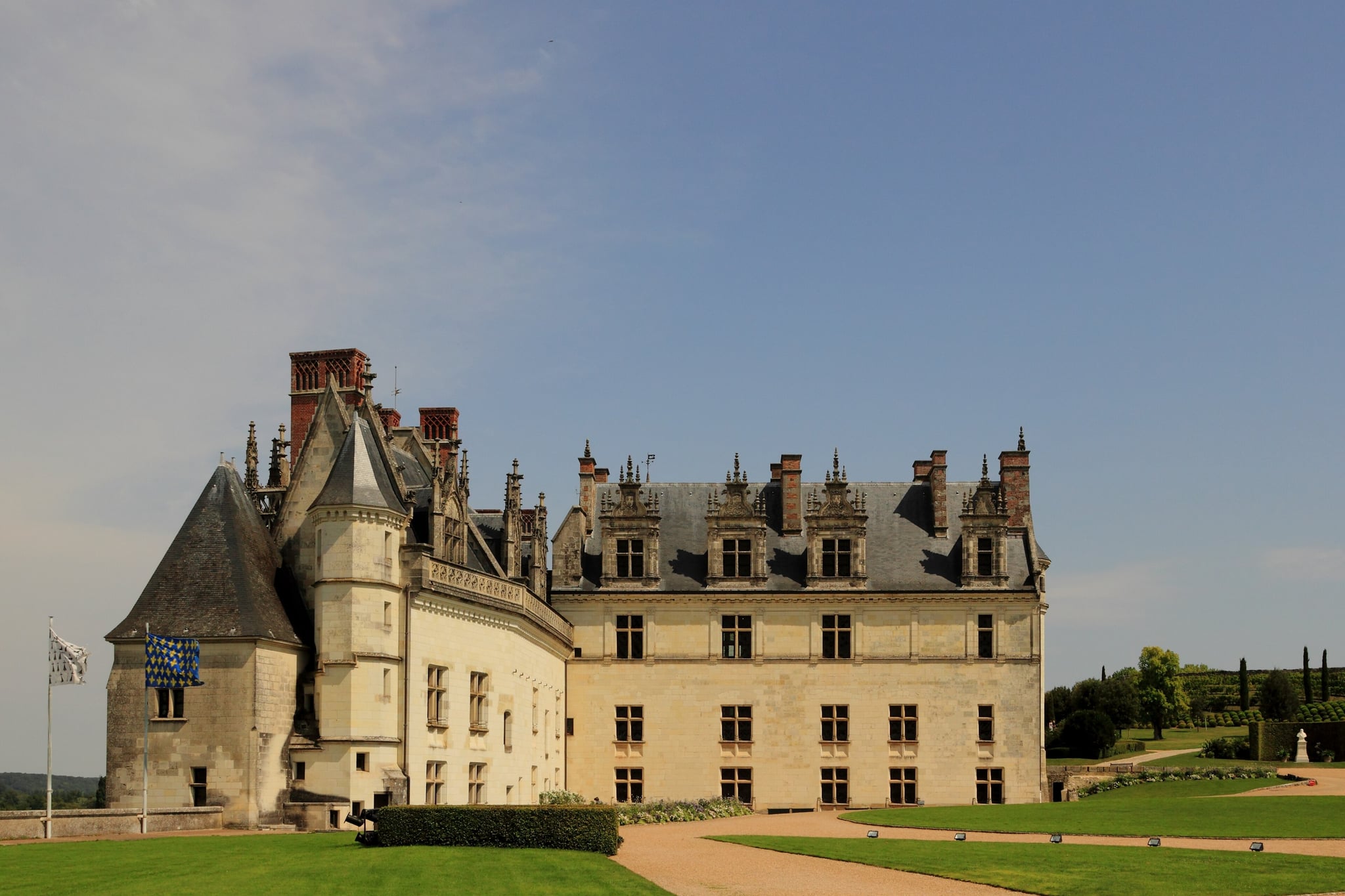
The architecture of Château-Gaillard represents a blend of late Gothic elements with emerging Italian Renaissance influences. The main royal lodging is constructed from white tuffeau stone, a characteristic building material of the Loire Valley that lends the structure its elegant and luminous appearance. A distinctive feature is the 15th-century octagonal stair turret, which combines functional design with decorative Gothic motifs.
In 1559, under the ownership of Charles de Guise-Lorraine, the château's façade was remodeled to reflect contemporary tastes. This renovation introduced more pronounced Renaissance stylistic details, further enhancing the château's architectural significance as a transitional monument between medieval and Renaissance design in France.
Later history and ownership
After Charles VIII's death, the estate passed to the Italian gardener Pacello da Mercogliano in 1505, who then sold it in 1510 to René de Savoie. The château continued to be a site of political and social importance. In 1559, it hosted critical discussions aimed at countering the Amboise conspiracy, a significant event in the French Wars of Religion.
Preservation and public access today
Today, Château-Gaillard stands as ruins but remains protected as a historic monument. The chapel and gardens were officially listed as monument historique in 1963, recognizing their cultural and architectural importance. The entire domain received further protection status in 2023, underscoring ongoing efforts to preserve this heritage site.
After extensive restoration work lasting five years, the château and its gardens were opened to the public in 2014. Visitors can explore the grounds at 29 allée du Pont-Moulin, experiencing the early Renaissance garden layout and the remnants of the royal lodging. The site offers valuable insight into the introduction of Renaissance art and architecture in France and the cultural exchanges between Italy and France during this transformative period.
Frequently asked questions (FAQ)
- What is the historical significance of Château-Gaillard?
- Château-Gaillard, located in Amboise, France, was built in the late 15th century and is renowned as a prime example of Renaissance architecture. It served as a royal residence and played a key role in the history of the French monarchy, particularly during the reign of King Charles VIII.
- When was Château-Gaillard constructed?
- Construction of Château-Gaillard began in 1496 and was completed in 1498. This swift build time reflects the urgency of creating a royal residence that could accommodate the needs of the court and showcase the power of the monarchy.
- What are the opening hours for Château-Gaillard?
- Château-Gaillard is typically open to visitors from 9:00 AM to 6:00 PM, with extended hours during the summer months. However, it's advisable to check the official website for any seasonal changes or special holiday hours before planning your visit.
- Can I access Château-Gaillard with a wheelchair?
- While efforts have been made to improve accessibility at Château-Gaillard, some areas may still pose challenges due to the castle's historic design and terrain. Visitors with mobility concerns are encouraged to contact the site in advance for detailed information on accessible routes and facilities.
- What is the ticket price for visiting Château-Gaillard?
- Tickets to Château-Gaillard are priced at approximately €10 for adults, with discounts available for students and children. Family tickets and group rates may also be available, so it's a good idea to check ahead for any current promotions or packages.
- When is the best time to visit Château-Gaillard?
- The best time to visit Château-Gaillard is during the spring and early autumn months when the weather is mild and the gardens are blooming. Additionally, visiting during weekdays can help you avoid the larger crowds typically present during weekends and peak tourist seasons.
- Are there any nearby attractions to Château-Gaillard?
- Yes, Château-Gaillard is located close to other notable attractions such as the Château d'Amboise and the beautiful gardens of Clos Lucé, the former residence of Leonardo da Vinci. Exploring these sites can enhance your experience of the rich history and culture of the region.
Photo gallery

Information
Address
29 allée du Pont-Moulin
Featured in
Articles on the Castlopedia blog that feature Château-Gaillard.

Loading map...
Visitor reviews
No reviews yet. Been here? Write the first review and help other travelers!
Write the first reviewVisited this castle? Share your experience
Your review helps other travelers and adds first-hand knowledge to our encyclopedia.