Have you ever stood in front of a building and felt like it stared back at you? That happens when you meet one of the world's oldest castles. These are not just piles of old stone. They hold centuries of blood, ambition, romance, and stubborn engineering. Some survived earthquakes. Others shrugged off cannon fire like rain. A few have housed people for nearly a thousand years straight. That puts our own moving day stress into perspective.
This guide covers 12 ancient fortresses across three continents. Here's a quick note before we start. "Oldest castle" is a slippery title. Some sites are ancient as fortified ground, but they were rebuilt long after the first stones went up. Other castles are truly medieval, just less famous than their photogenic cousins. We stayed upfront about which is which. A good list should be accurate and fun, not just one or the other.
Get a coffee, or a cup of mead if you like the theme. We are about to look at the stories and architecture behind the oldest castles standing on Earth today.
Why do ancient castles still capture our imagination?
A medieval fortress has a pull on us. Maybe it's the boldness of it. People centuries ago hauled tons of stone up a hill with no cranes and no power tools. They did it to keep enemies out. Sometimes they did it to show off, too. Either way, castles tap into something old in us: the need for shelter, the pull of conflict, and our fascination with power.
Think of a castle as a fortress and a flex at the same time. It said: I have men, I have stone, and you cannot touch me. That kind of confidence does not fade after six hundred years. It stays in the arrow slits and the thick walls. Walk through one today and you can feel the tension of a siege that happened long before your grandparents were born.
Citadel of Aleppo, Syria — a fortress older than recorded history
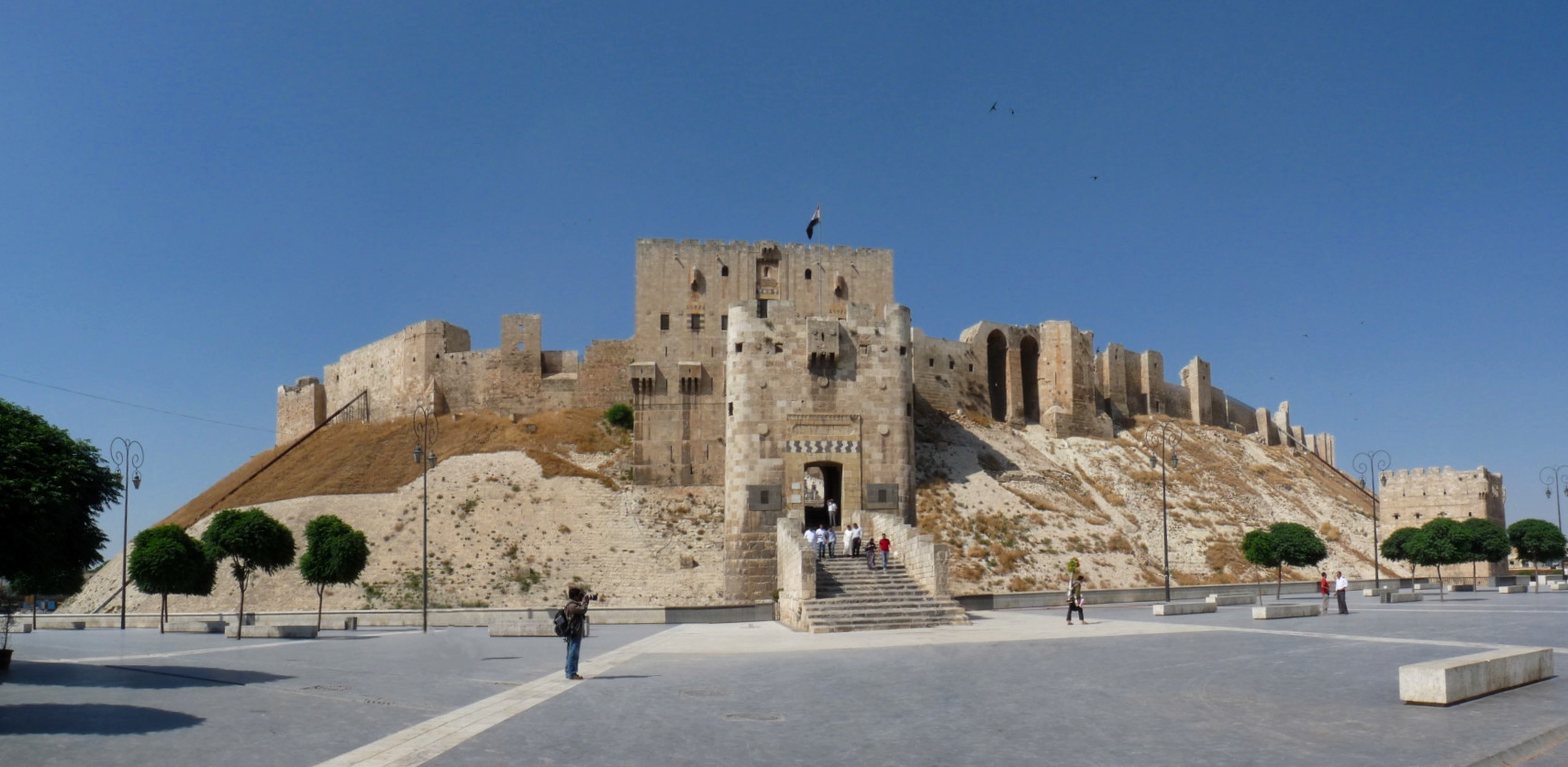
The Citadel of Aleppo ranks among the oldest fortified sites on Earth. Digs show the hill has held some kind of defense as far back as the third millennium BC. That's thousands of years earlier than Rome's founding as a village. Here's the key point: the building you walk through today is not that Bronze Age structure. The medieval citadel took its current shape under the Ayyubid sultan al-Zahir Ghazi, Saladin's son, who rebuilt and fortified it between about 1193 and 1215. So the castle itself is truly medieval. The hill below it has been defended for thousands of years.
What makes this citadel stand out is not just its age. It's how it survived. Hamdanids, Zengids, Ayyubids, and Mamluks each rebuilt and expanded it over time. During the Syrian civil war the citadel took serious damage, and news of it spread around the world. A 2023 earthquake caused more harm. Still, the citadel stands, a stubborn survivor in a place that has seen so much loss.
Historian Ross Burns, a former Australian ambassador to Syria, wrote at length about the city. He called the citadel one of the most dramatic surviving examples of a fortified enclosure in Islamic architecture. That's not a stretch. Walk the entrance ramp and you'll see why. It bends six times through a U-shape built to trap and expose attackers.
Picture that ramp for a moment. An attacking soldier had to climb it while turning six sharp corners, all under fire from above. That single design choice tells you everything about how seriously Aleppo took its defense.
Kyrenia Castle, Cyprus — guarding the Mediterranean since antiquity
Kyrenia Castle sits on the north coast of Cyprus. Byzantine builders likely raised it around the 7th century AD to guard against Arab raids. Venetian engineers thickened the walls in the 15th and 16th centuries to stand up to cannon fire.
Inside the castle sits a shipwreck museum, home to a Greek merchant ship from around 300 BC that divers found just offshore. One castle, two eras of history, side by side.
Prague Castle, Czech Republic — nearly 1,150 years of continuous history
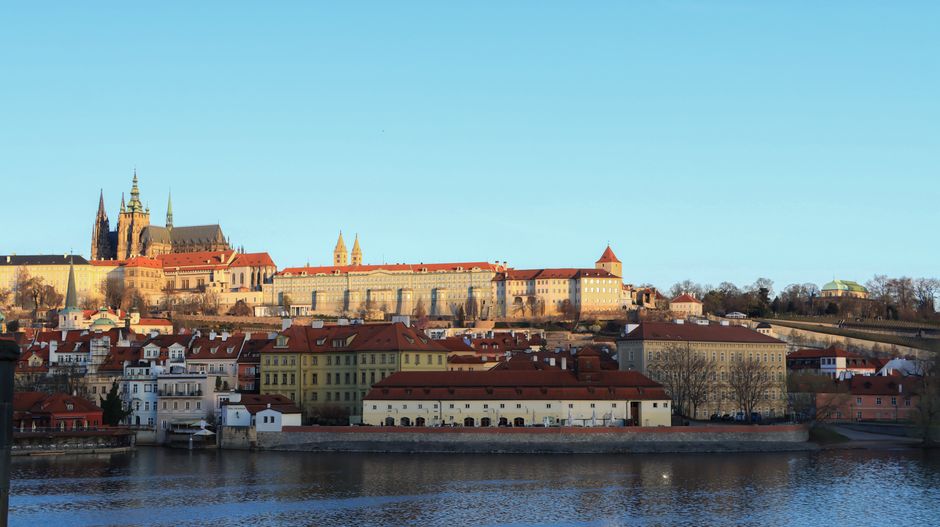
Prague Castle deserves more attention than it usually gets. Prince Bořivoj of the Přemyslid dynasty founded it around 880 AD, close to two hundred years before Windsor Castle. Guinness World Records lists it as the largest coherent ancient castle complex on Earth. The site covers nearly 70,000 square meters of palaces, courtyards, and churches.
The castle kept growing without really stopping. Romanesque foundations from the 10th century sit under Gothic work from the 14th century, built during the reign of Charles IV. Renaissance wings added later by the Habsburgs sit on top of both. Walk through it and you walk through several centuries stacked one on another.
The castle still works as a seat of government today. Bohemian kings lived there. Holy Roman Emperors lived there. From 1918 on, it has served as home to the President of the Czech Republic. Few buildings anywhere can claim eleven straight centuries of political use.
Wartburg Castle, Germany — where Martin Luther hid from the world
Wartburg Castle sits on a rocky ridge above the town of Eisenach in Germany. Count Ludwig der Springer reportedly founded it in 1067. Legend says he spotted the mountain during a hunting trip and declared it would become his castle. True or not, the early roots of the site are well documented, and UNESCO listed it as a World Heritage Site in 1999.
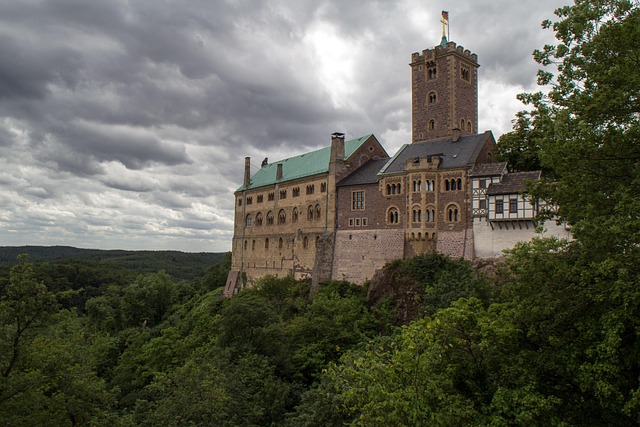
Its most famous chapter came centuries later. In 1521 Martin Luther hid here under a fake name after the church excommunicated him, and he translated the New Testament into German during his stay. One honest note here: much of the fairy-tale look visitors photograph today comes from a 19th-century restoration, not untouched medieval stone. Even the oldest castles are usually a patchwork built over many centuries, not one frozen moment in time.
Windsor Castle, England — the world's oldest continuously inhabited castle
Windsor Castle holds a different record than Prague. It's the oldest and largest castle still occupied today. William the Conqueror built it around 1070, and British monarchs have lived there for nearly a thousand years straight. Close to forty English and British sovereigns have called it home.
Windsor did not start as the grand stone palace tourists see now. It began as a motte-and-bailey fort, a wooden structure on a mound inside a fenced enclosure. Monarchs kept adding to it over time.
Henry II added stone walls. Edward IV built St George's Chapel. Georgian and Victorian rulers added lavish state rooms. Picture a house renovated across ten centuries by owners with an unlimited budget, and you get the idea.
The castle has weathered real disaster, too. A fire in 1992 tore through more than 100 rooms. Workers fully restored the damage within five years.
Windsor is not just a museum piece. The late Queen Elizabeth II spent many weekends there, and the castle still serves as an active royal home. Few buildings anywhere have hosted both medieval knights and modern royal weddings.
Rochester Castle, England — the keep that survived a siege and a king's fury
Rochester Castle in Kent holds one of the tallest and best kept Norman keeps in England. William de Corbeil, Archbishop of Canterbury, built it around 1127 under a grant from Henry I. English Heritage calls it the tallest keep of its kind to survive anywhere in Europe.
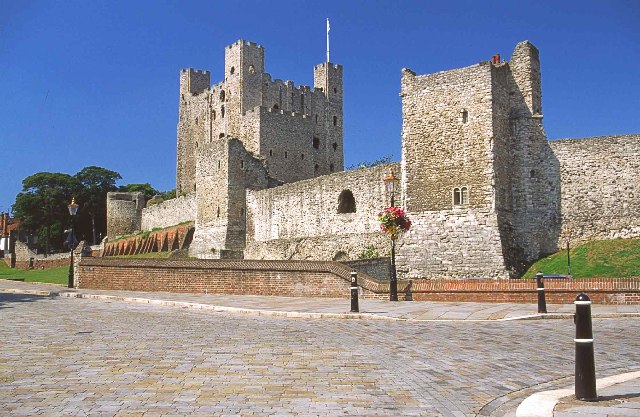
Its biggest moment came in 1215. King John laid siege to the castle during the First Barons' War. His engineers dug under one corner tower and burned the fat of forty pigs to fuel the fire that brought it down. Yes, pig fat as a demolition tool. History gets strange sometimes. As the Barnwell chronicler wrote at the time, "our age has not known a siege so hard pressed nor so strongly resisted."
Workers repaired the tower fast, and the castle stayed strong for centuries after. You can still see the rebuilt corner today. It's rounded, standing out clearly against the square Norman design around it, a lasting mark from one of medieval England's boldest sieges.
Malbork Castle, Poland — the largest brick castle ever built
Malbork Castle in northern Poland wins on scale. The Teutonic Knights began building it in 1274 as their headquarters, and it now stands as the largest castle on Earth by land area, plus the largest brick castle ever built. The complex spans roughly 21 hectares across a High Castle, Middle Castle, and Lower Castle, each ringed by walls, moats, and towers.
UNESCO listed the site, and walking through it feels like moving through one Gothic hall after another. Millions of individually fired red bricks went into the walls, and the sheer scale still stops visitors in their tracks.
Predjama Castle, Slovenia — the cave castle that defied gravity
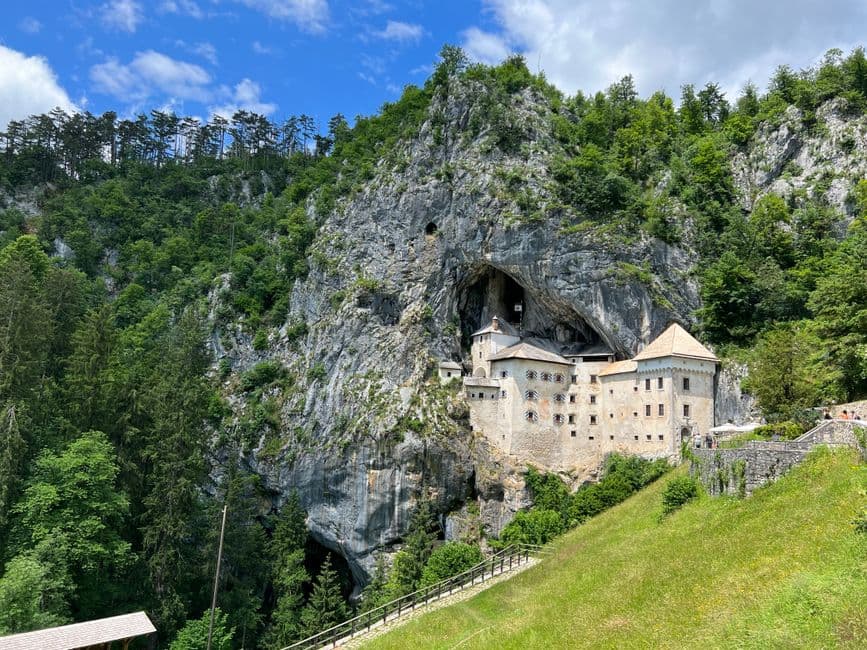
Predjama Castle is the most striking entry here, and it needs the clearest correction, too. Builders wedged it into a cave mouth halfway up a 123-meter cliff in southwest Slovenia. Records first mention it in 1274. But the Gothic fort from that year is not what stands there now.
An earthquake in 1511 badly damaged an earlier rebuild. Baron Philipp von Cobenzl then built the Renaissance castle you see today, starting in 1570. So the site holds nearly 750 years of documented history, but the actual stone building dates to the late 1500s.
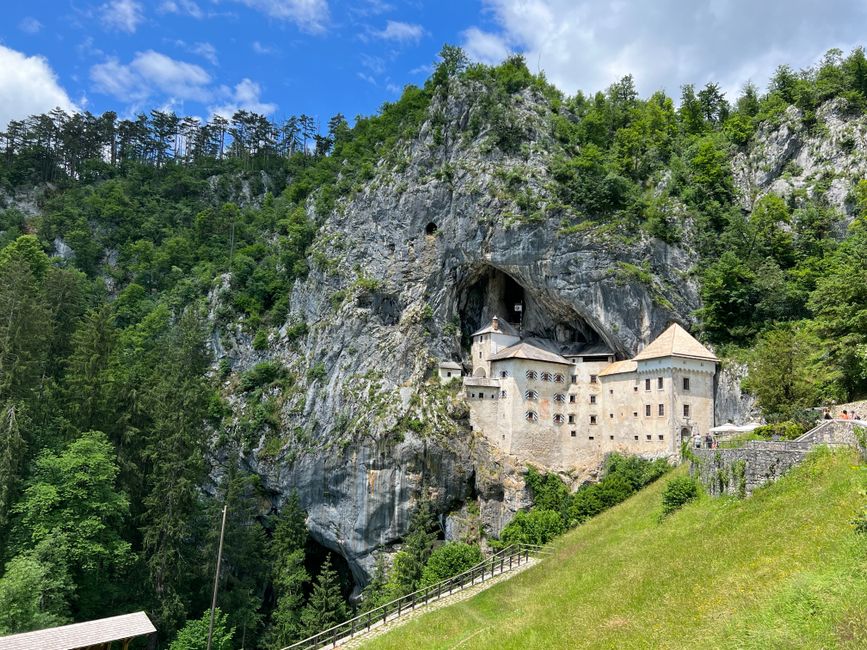
The cave location was not just for looks. Tunnels behind the earlier castle let defenders slip out unseen and bring in supplies during long sieges. That's how the robber baron Erazem Lueger held off Habsburg forces for roughly a year in the 1480s, legend says, by smuggling in fresh cherries. His enemies starved outside.
A servant reportedly sold his position for a bribe, and Erazem died soon after. That brings to mind an old line attributed to the Roman statesman Cicero:
"There is no castle so strong that it cannot be overthrown by money."
Talk about medieval irony. The castle that couldn't be starved out was undone, so the story goes, by a much older weakness.
Alcázar of Segovia, Spain — the fairy-tale fortress that inspired Disney
The Alcázar of Segovia in Spain looks familiar for a reason. Its ship's-bow shape and tall spires inspired the design of Cinderella's Castle at Disneyland. Builders raised it first as an Arab fort, then expanded it from the 12th century on into a favorite home of Castilian monarchs.
Over time it served as royal residence, state prison, and artillery college, and Isabella I of Castile was crowned queen there in 1474. Few buildings can claim to be both a fairy tale and a battlefield in the same century.
Edinburgh Castle, Scotland — perched on a volcanic rock for a thousand years
Edinburgh Castle sits on Castle Rock, an extinct volcanic plug that towers over the city. People lived on the site as far back as the Iron Age. The earliest recorded royal residence there dates to the 12th century, under David I.
The castle has taken an almost absurd number of attacks. Historians count at least 26 sieges across its history, making it one of the most fought-over places in Britain. St Margaret's Chapel, built around 1130, is the oldest building inside the castle and one of the oldest in Scotland.
The One O'Clock Gun still fires every day, and the sound still carries across the city. It's a small ritual, but it ties modern Edinburgh to a fortress that has stood guard for close to a thousand years.
Karak Castle, Jordan — a crusader stronghold carved into the desert
Karak Castle (Kerak Castle) rises from the dry hills of Jordan. Crusaders built this fortress between 1142 and 1170 along the King's Highway, an old trade route linking Egypt and Syria. Its position let it control both caravans and pilgrims moving through the region.

Raynald of Châtillon, a Crusader lord known for his brutal raids, ruled from here and provoked Saladin into major campaigns against the Crusader states. Karak fell to Saladin's forces in 1188 after a long siege. Walk its dark stone halls today and you can still see the vaulted rooms that once sheltered soldiers, horses, and supplies.
Dover Castle, England — the "key to England"
People call Dover Castle the "Key to England" for good reason. It guards the shortest sea crossing to mainland Europe, and its history goes back to the Iron Age. The stone castle mostly dates to Henry II's reign in the 12th century. Its Roman lighthouse, one of the oldest standing structures in Britain, predates the medieval castle by close to a thousand years. Builders raised it around 46 to 50 AD, shortly after the Roman invasion.
Dover's importance never faded. Secret tunnels beneath the castle served the Napoleonic Wars and, later, World War II, and army planners coordinated the Dunkirk evacuation from inside them. Few castles anywhere can claim relevance across nearly two thousand years.
What these ancient fortresses teach us about survival
What can twelve castles across three continents teach us about lasting power? Long life is not an accident. Every fortress on this list survived because someone cared enough to keep it standing, fix it up, or put it to new use instead of letting it fall apart. That lesson reaches past architecture. Things built with care and kept up over generations tend to last.
None of these castles stayed frozen in time, either. Windsor grew from a wooden fort into a royal palace. Prague Castle absorbed eleven centuries of Bohemian, Habsburg, and Czech history and never lost its role as a seat of power. Predjama got knocked down by an earthquake and simply rebuilt itself in a new style. Each one changed to survive, much like nations change to survive: not by staying still, but by growing while keeping its core intact.
History is not locked away in books. You can walk through it, touch stone laid down almost a thousand years ago, and feel close to the people who lived and fought to defend these walls. Fantasy author David Day wrote something true about this in his book Castles. He called a castle "the repository of power made real." That's the heart of it. These 12 ancient fortresses are more than stops on a tour. They are arguments about power and human drive, arguments that have somehow lasted for centuries. So on your next trip, skip the beach for once. Go stand in the shadow of a thousand-year-old wall. It feels different.