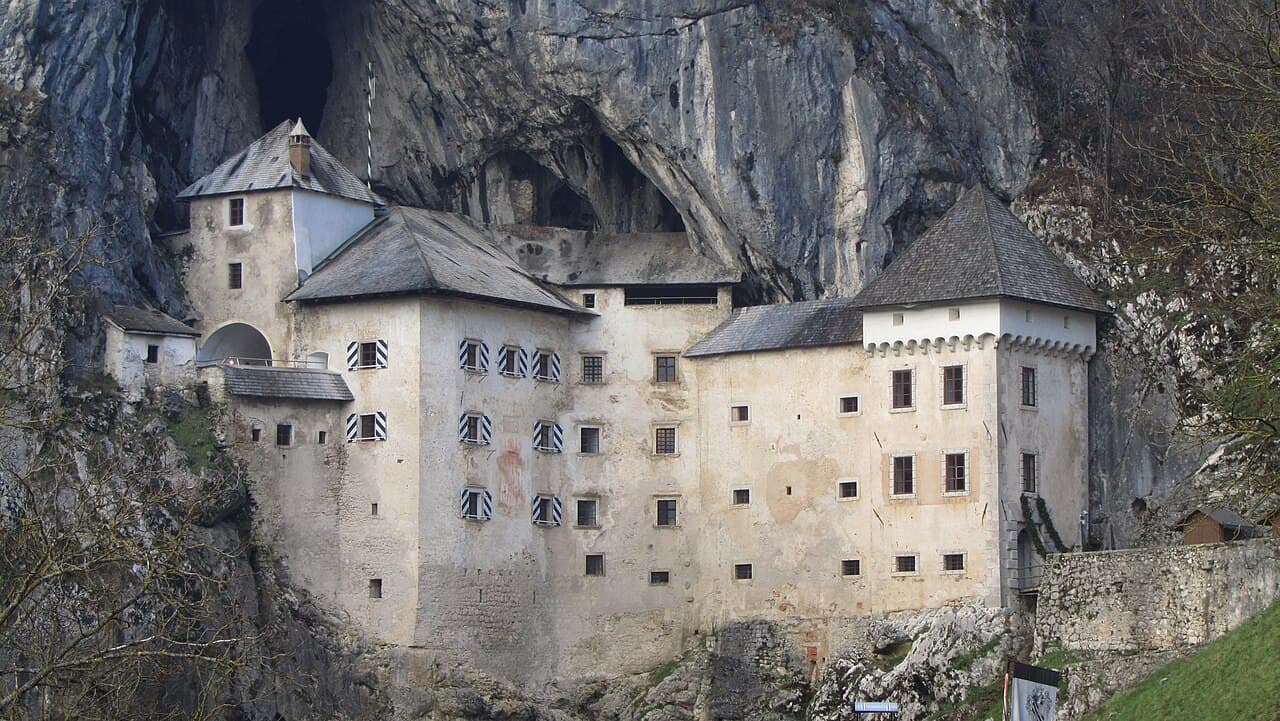
Predjama Castle
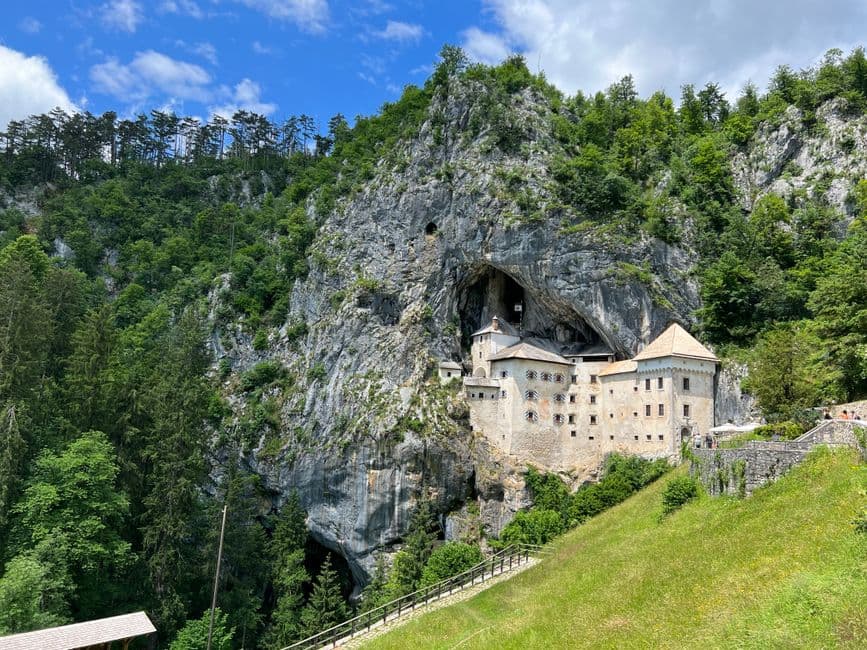
Predjama Castle, also known as Predjama Grad, is a remarkable hill castle uniquely integrated into a massive limestone cliff reaching 123 meters high, located in the village of Predjama northwest of Postojna, Slovenia. This fortress is renowned for its dramatic setting at the mouth of a natural cave, blending natural geology with medieval fortification. Its construction dates back to the 12th century, with the first written record appearing in the second half of the 13th century.
The castle's strategic position was chosen to maximize defense, built beneath a natural rocky arch that forms the cave entrance, making it nearly impregnable from the outside. Originally known as Jama Castle (meaning "cave"), it was built in a region contested by the Patriarchate of Aquileia and the Counts of Gorizia, reflecting the turbulent political landscape of the High Medieval period. Over centuries, the castle changed hands multiple times, including Austrian dukes in the mid-14th century and noble families such as the Lienz knights, who called it Luegg Castle.
Architectural evolution and defensive design
The castle's architecture is a fascinating blend of medieval Gothic origins and significant Renaissance modifications. The original fortress was constructed to utilize the natural cave and cliff formations as defensive walls, minimizing vulnerable exterior surfaces. The castle's interior is carved into the rock itself, with chambers, halls, and storage rooms built within the cave system.
In 1567, the castle underwent major reconstruction and enlargement under Hans Kobenzl, an Austrian knight from Carinthia. This renovation introduced Renaissance architectural elements, including the addition of an entrance tower in 1583, which remains a prominent feature today. The castle's layout includes multiple levels connected by narrow passages, battlements, and a courtyard that harmonizes with the cliff face.
The secret passage and siege history
One of the most intriguing features of Predjama Castle is the secret passageway that leads from the castle through the cave system to a concealed exit outside the cliff. This passage allowed the castle's most famous resident, knight Erasmus Lueger (also known as Erazem), to secretly receive supplies during a prolonged siege in the late 15th century. Erasmus was a notorious robber baron who defied the Holy Roman Emperor Frederick III after killing Marshall Pappenheim in 1483.
For over a year, imperial forces led by Gaspar Ravbar, Lord of Trieste, besieged the castle attempting to starve Erasmus into submission. However, thanks to the secret tunnel, Erasmus maintained an almost unlimited supply of food and provisions. The siege ended when a servant betrayed Erasmus by signaling his presence in the castle privy, allowing attackers to kill him with a cannonball. This dramatic episode has cemented the castle's legendary status.
Historical significance and ownership
Predjama Castle's history reflects the complex feudal and political struggles of the region. Initially under the Patriarchate of Aquileia, it was contested by various noble families and powers. After the siege and Erasmus's death, the castle passed to the Oberburg family, then suffered damage in a 1511 earthquake. Later, the Purgstall family built a second castle nearby, which was also damaged.
The castle was leased and then purchased by the Cobenzl family in the late 16th century, who transformed it into a Renaissance residence. The Cobenzls were influential Austrian statesmen and diplomats, and the castle became a favored summer residence. Ownership passed to the Coronini-Cronberg family in 1810 and later to the Windischgrätz family until World War II, after which it was nationalized and converted into a museum.
Natural environment and cave system
The castle is set within the karst landscape of Inner Carniola, a region known for its extensive cave systems. Beneath the castle, the Lokva stream disappears into the cave network, adding to the fortress's mystique. The castle incorporates natural caves used historically for stables and storage, emphasizing the integration of natural and man-made structures.
Visitors today can explore parts of the underground cave system through guided tours requiring special equipment. The castle's interior exhibits medieval life through original and reconstructed furnishings, including the richly decorated Knights' Hall and Renaissance hunting trophies from the last noble owners.
Cultural heritage and tourism
Predjama Castle is Slovenia's largest cave castle and one of its most popular tourist attractions. Its dramatic setting, rich history, and well-preserved Renaissance architecture make it a compelling destination for history enthusiasts and travelers. The castle's museum offers insights into medieval life, the legend of Erasmus, and the region's archaeological heritage, including Neolithic artifacts found in the caves.
The castle's unique blend of natural and architectural elements, combined with its storied past, contributes to its status as a cultural icon and symbol of resilience. Its preservation as a museum ensures that visitors can experience the fascinating history and architecture firsthand, making Predjama Castle a must-see landmark in Slovenia.
Frequently asked questions (FAQ)
- What is Predjama Castle known for?
- Predjama Castle is famous for its unique location built into a cliff and its rich history dating back to the 12th century. It is renowned as the largest cave castle in the world and is a stunning example of medieval architecture. The castle is also associated with the legendary knight Erazem of Predjama, who is celebrated for his heroic resistance against the Habsburgs.
- When was Predjama Castle built?
- Predjama Castle was originally constructed in the 12th century, with significant renovations occurring in the 16th century. The castle's unique design and integration with the surrounding cave system have made it a remarkable historical site. Over the centuries, it has been modified and expanded, preserving its medieval charm.
- Is it possible to visit Predjama Castle year-round?
- Yes, Predjama Castle is open to visitors throughout the year, although the hours may vary by season. It is advisable to check the official website for the most current opening times before planning your visit. The castle's stunning architecture and breathtaking views make it an attractive destination in any season.
- Can I take a guided tour of Predjama Castle?
- Yes, guided tours are available at Predjama Castle, providing visitors with in-depth insights into its history and architecture. The tours typically cover the castle’s fascinating rooms and the surrounding grounds, enriching your experience. Audio guides are also available for those who prefer to explore at their own pace.
- What are the ticket prices for Predjama Castle?
- Ticket prices for Predjama Castle vary depending on age and group size, with discounts available for children, students, and seniors. Family tickets are also offered, making it an affordable option for visitors. It's best to purchase tickets online in advance to secure your entry and avoid long queues.
- What is the best time to visit Predjama Castle?
- The best time to visit Predjama Castle is during the spring and early autumn months when the weather is mild and pleasant. This period allows you to fully enjoy the stunning scenery and surrounding nature. Additionally, visiting during weekdays can help you avoid larger crowds.
- Are there any nearby attractions to visit?
- Yes, the area surrounding Predjama Castle is rich with attractions, including the Postojna Cave, one of the largest and most visited show caves in Europe. Visitors can also explore the picturesque town of Postojna and its local museums. These nearby sites make it easy to plan a full day of exploration.
- How accessible is Predjama Castle for visitors with disabilities?
- Predjama Castle has made efforts to improve accessibility for visitors with disabilities. While some areas may be challenging due to the castle's historic structure and location, there are designated paths and facilities to accommodate those with mobility issues. It is recommended to contact the castle in advance for specific accessibility information.
Photo gallery

Information
Website
Visit websiteFeatured in
Articles on the Castlopedia blog that feature Predjama Castle.
Sources & official resources
Verify the information above using these authoritative references.
Loading map...
Visitor reviews
No reviews yet. Been here? Write the first review and help other travelers!
Write the first reviewVisited this castle? Share your experience
Your review helps other travelers and adds first-hand knowledge to our encyclopedia.


