Prague Castle
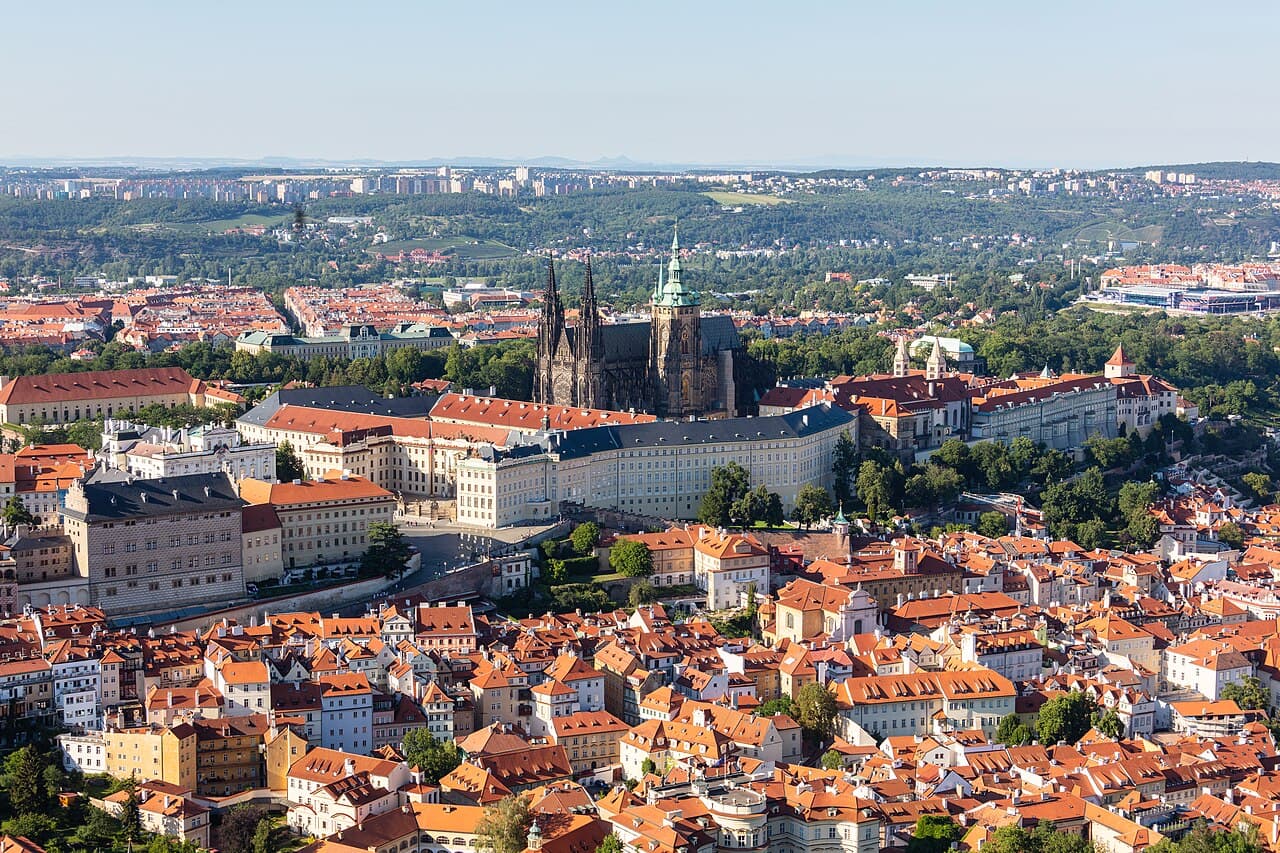
Prague Castle (Czech: Pražský hrad) stands as a monumental symbol of Czech history, culture, and statehood. Founded around 870 AD by Prince Bořivoj of the House of Přemysl, it is one of the oldest and largest castle complexes in the world, occupying nearly 70,000 square meters. Strategically perched on a rocky promontory overlooking the Vltava River in the heart of Prague, this hill castle has served as the seat of Czech princes, kings, Holy Roman emperors, and today, the president of the Czech Republic.
The castle complex is an architectural palimpsest reflecting over a millennium of European styles and historical epochs. It encompasses buildings and structures from the Romanesque, Gothic, Renaissance, and Baroque periods, alongside modern interventions that blend seamlessly into its historic fabric. The castle’s layered history is visible in its religious, defensive, and residential architecture, making it a unique repository of Bohemian heritage.
Early history and foundation
The origins of Prague Castle trace back to the late 9th century when early Slavic inhabitants established a fortified settlement known as a hradiště. Archaeological excavations have uncovered evidence of even earlier Neolithic settlements and a richly furnished warrior’s burial from the late 9th century, indicating the site’s long-standing strategic and cultural importance.
Prince Bořivoj I, the first historically documented ruler of Bohemia from the Přemyslid dynasty, is credited with founding the castle around 870 AD. The earliest stone building within the castle precinct was the Church of the Virgin Mary, although only fragments remain today. During the 10th century, significant religious structures were established, including the Basilica of St. George and the St. Vitus Rotunda, the latter eventually replaced by the grand St. Vitus Cathedral.
Medieval expansion and gothic grandeur
From the 10th century onward, Prague Castle became the political and ecclesiastical center of Bohemia. It served as the seat of the Bohemian princes and kings and was also the site of the bishopric. The castle’s fortifications and palatial buildings evolved significantly during the High and Late Middle Ages.
The reign of Charles IV (1346-1378), King of Bohemia and Holy Roman Emperor, marked one of the castle’s most illustrious periods. Under his patronage, the Royal Palace was rebuilt, the fortifications strengthened, and construction began on the St. Vitus Cathedral, inspired by the great French Gothic cathedrals of the time. This cathedral, with its soaring spires and intricate stained glass, remains the spiritual heart of the complex.
The castle also saw the addition of the Vladislav Hall around 1500, a vast vaulted space within the Royal Palace designed by architect Benedikt Rejt. The hall is renowned for its impressive ribbed vaulting without internal supports and the Knight’s Staircase, which allowed horses to enter the hall for ceremonial purposes.
Renaissance, baroque transformations and modern history
Following a devastating fire in 1541, Prague Castle underwent extensive reconstruction. The Habsburg dynasty introduced Renaissance architectural elements, including the construction of the Belvedere summer palace commissioned by Emperor Ferdinand I for his wife Anne. The castle flourished as a cultural center under Emperor Rudolf II, who established the northern wing and the Spanish Hall, which housed his renowned art collections.
The castle was damaged during the Thirty Years’ War and suffered looting during the Swedish invasion in 1648. However, it was restored in the Baroque style in the 18th century, notably under the direction of architect Niccolò Pacassi, who designed the elegant façades of the First Courtyard and other enhancements.
In the 20th century, the castle became the official residence of the president of Czechoslovakia and later the Czech Republic. Architect Jože Plečnik played a key role in modernizing the complex, redesigning courtyards, adding monumental colonnades, and creating harmonious connections between historic and modern elements. President Václav Havel further enhanced public access by opening areas such as the Deer Moat and commissioning contemporary architectural projects.
Architectural highlights and features
Religious buildings
The St. Vitus Cathedral dominates the skyline with its soaring spires and richly decorated interiors, including the St. Wenceslas Chapel adorned with semi-precious stones and royal tombs. The Romanesque Basilica of St. George, with its twin white towers, is one of the oldest surviving structures and served as the main church for centuries. Smaller chapels such as the Chapel of the Holy Cross and the Church of All Saints add to the castle’s spiritual dimension.
Defensive structures
Prague Castle was heavily fortified with multiple towers, gates, and a deep moat. Notable defensive features include the Black Tower, White Tower, Daliborka Tower (later used as a prison), and the Powder Tower (Mihulka), which stored gunpowder. The moat, approximately 30 meters deep and 24 meters wide, provided formidable protection against sieges.
Secular and residential spaces
The Royal Palace complex includes the Old Royal Palace, the New Royal Palace, and the Ferdinand’s Palace. The Vladislav Hall is a masterpiece of late Gothic architecture and engineering, used for royal ceremonies and banquets. The Golden Lane, a narrow street lined with small houses once inhabited by castle guards and artisans, preserves the atmosphere of medieval life within the fortress.
The Royal Garden and the Belvedere summer palace showcase Renaissance and Baroque garden design. The Spanish Hall features lavish gilded stucco decorations and was used for court festivities and exhibitions.
Historical events and cultural significance
Prague Castle has been the stage for numerous pivotal events in European history. The Second Defenestration of Prague in 1618, when Protestant nobles threw Catholic officials out of a castle window, ignited the Thirty Years’ War, a devastating conflict that reshaped the continent.
During World War II, the castle served as the headquarters of Reinhard Heydrich, the Nazi Reich Protector of Bohemia and Moravia. His assassination in 1942 by Czech resistance fighters marked a significant moment in the resistance against Nazi occupation.
In the post-war era, the castle became a symbol of democratic change during the Velvet Revolution, with figures like Alexander Dubček and Václav Havel playing key roles in Czechoslovakia’s transition from communism to democracy.
Visitor experience and public access
Today, Prague Castle is a major tourist attraction, welcoming millions of visitors annually. The complex houses several museums, including the National Gallery collections of Bohemian Baroque and Mannerism art, a Toy Museum, and exhibitions dedicated to Czech history and culture.
The Deer Moat (Jelení příkop), once a royal hunting ground and part of the castle’s fortifications, is now a public park featuring shaded paths, lawns, and a pedestrian tunnel designed by architect Josef Pleskot. This tunnel allows visitors to explore the extended castle grounds more easily.
Regular cultural events such as the Summer Shakespeare Festival take place in the courtyard of the Burgrave Palace, enhancing the castle’s role as a living cultural center.
Prague castle today
As the official residence of the Czech president, Prague Castle continues to function as the political heart of the nation. It preserves invaluable cultural treasures, including the Bohemian Crown Jewels kept in a secret chamber, and serves as a symbol of Czech national identity and resilience.
The castle’s vast and varied architecture, its historical significance, and its role in Czech and European history make it a unique monument and a must-visit destination for those interested in medieval and modern heritage.
Frequently asked questions (FAQ)
- When was Prague Castle founded?
- Prague Castle was founded around 870 AD by Prince Bořivoj of the Přemyslid dynasty, marking the beginning of its long history.
- What architectural styles are present in Prague Castle?
- Prague Castle showcases a mix of architectural styles including Romanesque, Gothic, Renaissance, and Baroque, reflecting its development over more than a millennium.
- Is Prague Castle open to the public?
- Yes, Prague Castle is open to the public and offers access to its museums, gardens, and historic buildings throughout the year.
- What is the significance of the Deer Moat at Prague Castle?
- The Deer Moat, originally part of the castle's fortifications and later a royal hunting ground, is now a public park with walking paths and a pedestrian tunnel.
- What important historical events took place at Prague Castle?
- Prague Castle was the site of the Second Defenestration of Prague in 1618, which triggered the Thirty Years’ War, and it also served as Nazi headquarters during World War II.
Photo gallery

Information
Featured in
Articles on the Castlopedia blog that feature Prague Castle.
Sources & official resources
Verify the information above using these authoritative references.
Loading map...
Visitor reviews
No reviews yet. Been here? Write the first review and help other travelers!
Write the first reviewVisited this castle? Share your experience
Your review helps other travelers and adds first-hand knowledge to our encyclopedia.