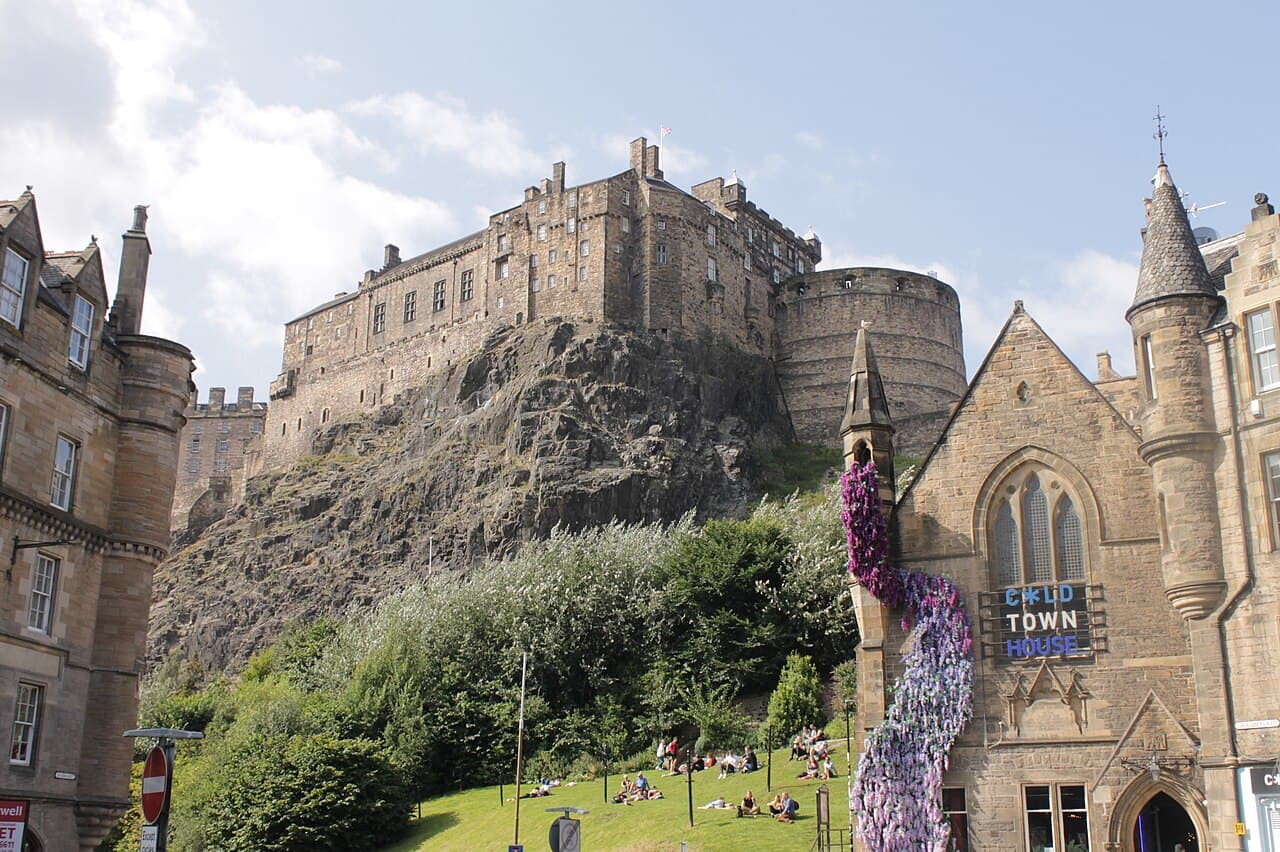
Edinburgh Castle
Edinburgh Castle stands as a majestic symbol of Scotland's rich heritage, dominating the skyline of the capital city from its strategic perch on Castle Rock, an ancient volcanic plug. This historic fortress, one of the oldest fortified sites in Europe, has played a pivotal role in Scotland's royal and military history for over a millennium. Its commanding position offers breathtaking views of Edinburgh, making it not only a significant cultural landmark but also a popular tourist destination.
The castle's origins trace back to prehistoric times, with archaeological evidence confirming human occupation since at least the Iron Age. Over the centuries, Edinburgh Castle evolved from a royal residence to a formidable military stronghold, witnessing numerous sieges and battles that shaped Scottish history. Known as the "Defender of the nation," the castle has housed kings and queens, served as a prison, and safeguarded the treasured Honours of Scotland, the nation's crown jewels and regalia.
Early history and royal significance
The strategic importance of Castle Rock was recognized early, with a royal castle established during the reign of David I in the 12th century. The castle became the principal royal residence and administrative center for Scottish monarchs until the early 17th century. One of the castle's most enduring features is St Margaret's Chapel, built in the early 12th century in honor of Queen Margaret (later canonized as Saint Margaret), who died there in 1093. This chapel is the oldest surviving building in Edinburgh and remains a site for weddings and christenings.
The castle was the birthplace of King James VI in 1566, who later united the crowns of Scotland and England in 1603. During this period, the castle also housed the Honours of Scotland, including the crown, scepter, and sword of state, first used together at the coronation of Mary, Queen of Scots in 1543. The Royal Palace within the castle complex contains the Laich Hall and the Birth Chamber of James VI, underscoring its importance as a royal residence.
Military role and architectural evolution
Following the Union of the Crowns in 1603, Edinburgh Castle's role as a royal residence diminished, transitioning primarily into a military garrison. Its defenses were continually upgraded in response to evolving military technology and threats, particularly during the Wars of Scottish Independence and the Jacobite Risings of the late 17th and early 18th centuries.
The castle endured at least 26 recorded sieges, making it the most besieged fortress in Britain and one of the most attacked in the world. The Lang Siege (1571–1573) was particularly destructive, leading to the near-total destruction of medieval defenses by artillery bombardment. Subsequent rebuilding introduced new fortifications such as the Half Moon Battery, constructed between 1573 and 1588, which remains a distinctive curved rampart on the castle's profile.
One of the castle's most famous artillery pieces is Mons Meg, a massive 15th-century siege cannon gifted to King James II in 1457. Although it has not been operational since the 17th century, Mons Meg is prominently displayed on a terrace near St Margaret's Chapel, symbolizing the castle's military heritage.
Defensive structures and military facilities
The castle's natural defenses are enhanced by steep cliffs on three sides, with access controlled through a series of gates on the east side, including the Portcullis Gate and the Argyle Tower, named after a nobleman once imprisoned there. The Esplanade, established in the 18th century, serves as a parade ground and hosts military ceremonies.
Military buildings from the 18th century, such as the New Barracks (1799) and the Queen Anne Building (1708), accommodate soldiers and officers and now house regimental museums. The castle also includes a former military prison, expanded in the 19th century and used until 1923, and a munitions store converted into the National War Museum of Scotland.
Cultural significance and modern use
Edinburgh Castle remains a vibrant symbol of Scottish identity and heritage. It hosts the annual Edinburgh Military Tattoo during the Edinburgh International Festival, attracting visitors worldwide. The castle's One O'Clock Gun, fired daily since 1861, continues a long-standing tradition as a time signal for ships in Edinburgh's harbor.
The castle is managed by Historic Environment Scotland and protected as a Scheduled Ancient Monument, with numerous listed buildings reflecting its architectural and historical importance. It is Scotland's most-visited paid tourist attraction, drawing over 1.4 million visitors annually.
Crown Square, laid out in the 15th century, is the heart of the castle complex, surrounded by the Royal Palace, Great Hall, Queen Anne Building, and the Scottish National War Memorial. The Great Hall, completed in 1511 by King James IV, features one of Scotland's two surviving medieval hammerbeam roofs and was used for grand banquets and state events.
The Scottish National War Memorial, built in the 1920s on the site of a demolished medieval church, honors Scottish soldiers who died in World Wars and later conflicts. It is adorned with stained glass and sculptural decorations, adding to the castle's cultural depth.
Prison history and notable events
During the late 18th and early 19th centuries, Edinburgh Castle served as Scotland's most secure prison, housing hundreds of prisoners of war, especially from the Napoleonic Wars. A notable event occurred in 1811 when forty-nine French prisoners escaped by cutting through the castle walls and descending the southern crag using ropes.
In World War II, the castle played a secretive role by hiding the Honours of Scotland in David's Tower, concealed in a medieval latrine closet to protect them from enemy forces.
Architectural styles and preservation
Edinburgh Castle's architecture is a rich tapestry reflecting its long history and varied functions. The complex incorporates elements from the High Medieval period through the Renaissance and later military architectural styles. The castle's structures have undergone extensive restoration, especially from the 19th century onward, to preserve its historic fabric while accommodating modern visitor needs.
The oldest surviving structure, St Margaret's Chapel, exemplifies early medieval ecclesiastical architecture with its simple yet enduring design. The Great Hall showcases Renaissance influences with its grand scale and decorative hammerbeam roof.
Military fortifications like the Half Moon Battery and Argyle Battery demonstrate advancements in artillery defense from the 16th and 17th centuries. The New Barracks and other 18th-century buildings reflect Georgian military architecture, blending functionality with imposing presence.
Visitor experience and significance
Visitors to Edinburgh Castle can explore a wealth of historic buildings, museums, and exhibitions that narrate Scotland's turbulent past and cultural achievements. The castle's elevated position provides panoramic views of Edinburgh's Old and New Towns, both part of a UNESCO World Heritage Site since 1995.
The castle's blend of royal history, military heritage, and cultural significance makes it an essential destination for those interested in Scotland's national story. Its ongoing military presence, combined with public access and educational programs, ensures that Edinburgh Castle remains a living monument bridging past and present.
Frequently asked questions (FAQ)
- What is the historical significance of Edinburgh Castle?
- Edinburgh Castle is a symbol of Scotland's national identity and has played a pivotal role in the country's history. It has served as a royal residence, military stronghold, and a site of numerous battles throughout the centuries, making it one of the most important historical landmarks in Scotland.
- When was Edinburgh Castle built?
- The origins of Edinburgh Castle date back to at least the 12th century, with significant developments occurring over the centuries. The castle has been expanded and renovated multiple times, reflecting the architectural styles of different eras, particularly during the medieval period.
- Can I visit Edinburgh Castle year-round?
- Yes, Edinburgh Castle is open to visitors throughout the year, although opening hours may vary by season. It is advisable to check the official website for the most current visiting hours and any special closures that may occur during holidays or events.
- What are the ticket prices for Edinburgh Castle?
- Ticket prices for Edinburgh Castle vary depending on age and whether you book in advance. Discounts are available for children, students, and seniors, and it's recommended to purchase tickets online to save time and ensure entry, especially during peak tourist seasons.
- Is it possible to access Edinburgh Castle with a wheelchair?
- Yes, Edinburgh Castle is accessible for visitors with mobility impairments, featuring ramps and designated routes. However, some areas may be challenging due to the castle's historical architecture, so it's best to check accessibility options in advance.
- What is the best time to visit Edinburgh Castle?
- The best time to visit Edinburgh Castle is during the shoulder seasons of spring (April to June) and autumn (September to October), when the weather is mild and crowds are smaller. Summer is the peak tourist season, attracting larger crowds, but offers vibrant festivals and events.
- Are there any nearby attractions to Edinburgh Castle?
- Yes, there are several attractions near Edinburgh Castle, including the historic Royal Mile, St. Giles' Cathedral, and the Palace of Holyroodhouse. These sites provide a rich context for understanding Edinburgh's history and culture, making them great additions to your visit.
- What architectural styles are represented in Edinburgh Castle?
- Edinburgh Castle showcases a mix of architectural styles, including medieval, Gothic, and Renaissance influences. Key structures, such as the Crown Room and St. Margaret's Chapel, exemplify these styles and contribute to the castle's unique character and historical narrative.
Photo gallery

Information
Website
Visit websiteFeatured in
Articles on the Castlopedia blog that feature Edinburgh Castle.
Sources & official resources
Verify the information above using these authoritative references.
Loading map...
Visitor reviews
No reviews yet. Been here? Write the first review and help other travelers!
Write the first reviewVisited this castle? Share your experience
Your review helps other travelers and adds first-hand knowledge to our encyclopedia.



