Ask people to name a great medieval castle and they describe towers, banners and a moat. That picture is fine. It says little about power.
A castle held ground. It housed soldiers, stored food, collected taxes and locked up prisoners. It told every farmer nearby who was in charge.
The eight castles below did that job better than most. One stopped an invasion. One cost a king his duchy. One ran a whole state. One played a part in the Second World War.
What makes a castle powerful?
Power is hard to measure, so I used four tests:
- position: did the castle sit on a river, a pass, a port or a border that others had to cross?
- siege record: did it hold when someone attacked?
- political job: did it help a ruler keep land, collect money or show authority?
- design: did the builders try something new?
Size did not count. A huge castle in a useless spot is an expensive building. A small one on the only road through a valley can stop an army.
Eight castles that shaped medieval history
Dover Castle, England
Dover Castle sits on the cliffs at the narrowest part of the English Channel. Anyone crossing from France lands near its walls. Hubert de Burgh, who defended the castle in 1216, called it the “key to England,” according to the chronicler Matthew Paris.
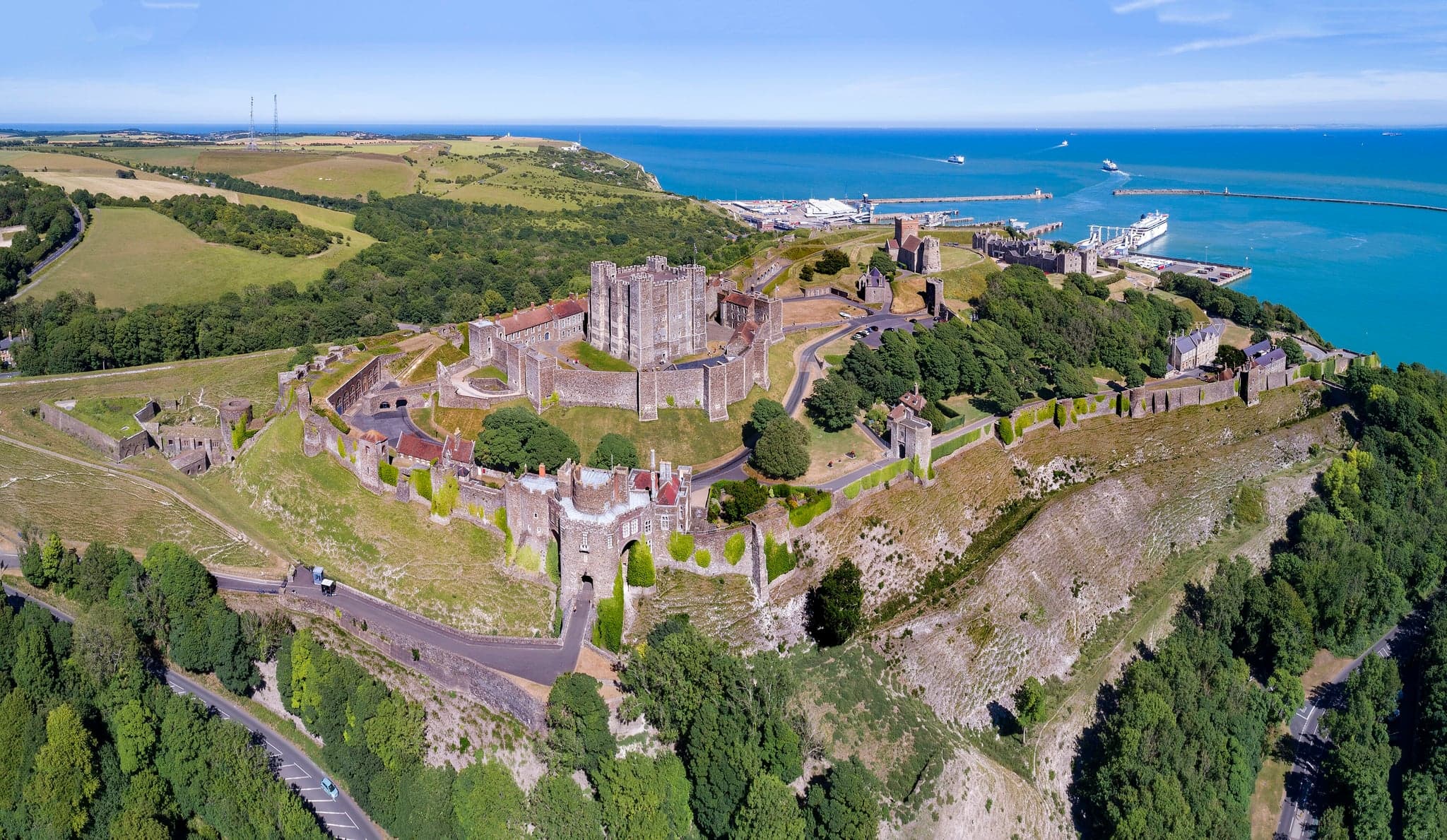
Henry II built the present castle between 1179 and 1189 and spent more than £6,500 on it. His Great Tower stands about 25 meters high, and its walls reach up to 6.4 meters thick.
Prince Louis of France landed in Kent in May 1216 at the invitation of rebel barons. He took Canterbury, Rochester and London, then besieged Dover in July. De Burgh held it with about 140 knights. Louis’s miners brought down the eastern tower of the north gate, but the garrison threw back the assault. On 14 October Louis agreed to a truce and withdrew to London.
He came back on 12 May 1217 with a large trebuchet, the first recorded in England, and the garrison held again. That August a fleet under de Burgh destroyed French reinforcements off Sandwich. The rebel cause collapsed.
The castle mattered again in 1940. Tunnels in the cliffs beneath it housed the headquarters of Vice-Admiral Bertram Ramsay. From there he directed Operation Dynamo, the Dunkirk evacuation, between 26 May and 4 June. More than 330,000 troops came home. Seven centuries after Hubert de Burgh, the same cliff was running a war.
Krak des Chevaliers, Syria
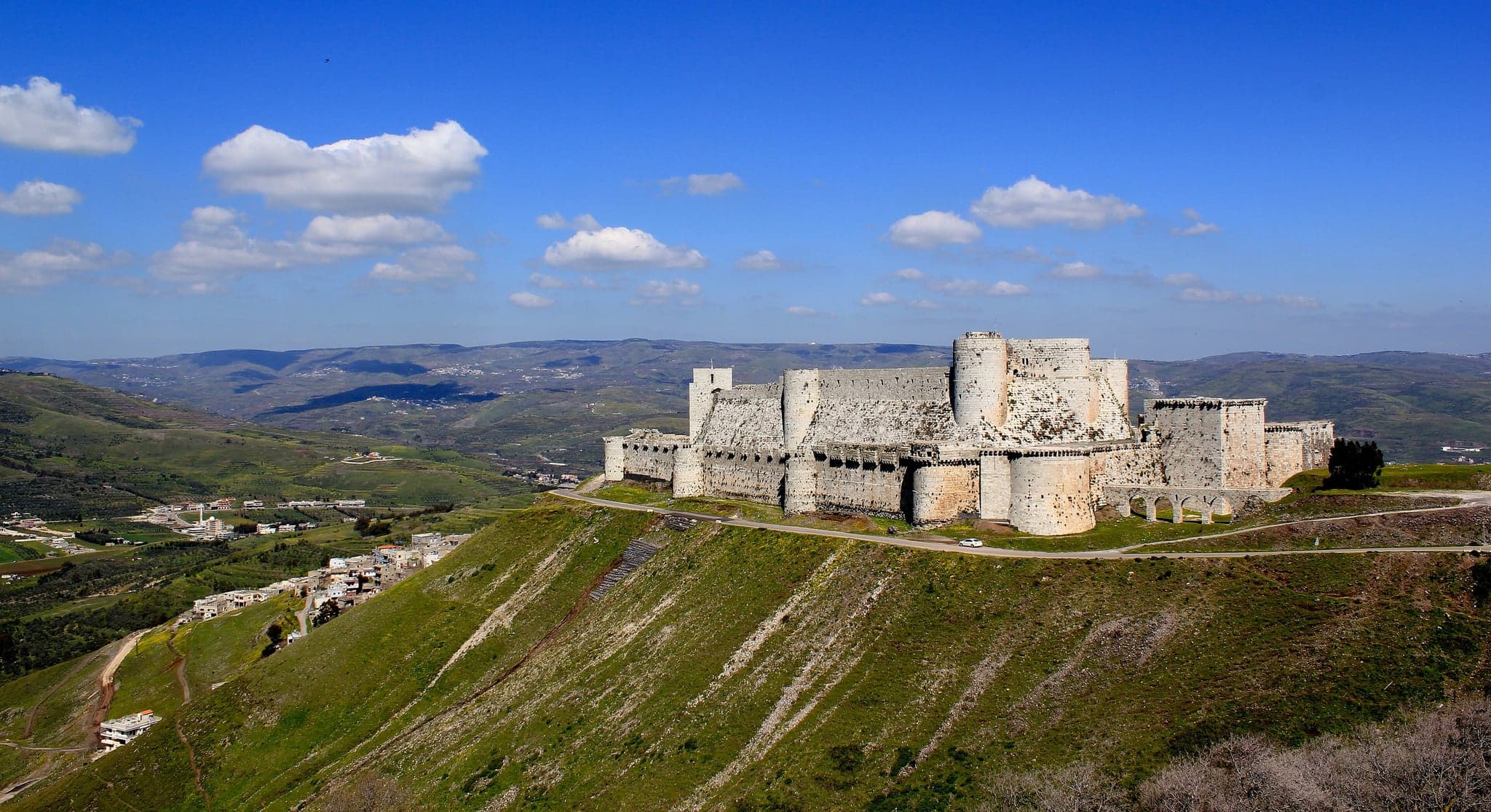
Krak des Chevaliers sits on a spur above the Homs Gap, the natural corridor between inland Syria and the Mediterranean coast. A Kurdish garrison held the site first, which gave it the Arabic name Hisn al-Akrad, “Castle of the Kurds.” In 1142 Raymond II, Count of Tripoli, handed it to the Knights Hospitaller.
The Hospitallers rebuilt it between the 1140s and about 1170, and an earthquake damaged the work that year. In the 13th century they added a second ring of walls and a wide moat. An attacker who broke the outer wall still faced an inner ward on higher ground. Historians estimate the garrison at around 2,000 men at its peak.
Saladin marched up to the walls in 1188, fresh from winning at Hattin and retaking Jerusalem. He studied the defenses and left without taking the castle.
The end came in 1271. The Mamluk sultan Baibars arrived on 3 March, and his sappers breached the outer walls. The knights fell back to the inner ward. According to the traditional account, a forged letter persuaded the garrison to surrender on 8 April. Sources disagree on who the letter claimed to come from, but the surrender itself is certain. T. E. Lawrence visited as a student in 1909 and later gave his verdict:
“...perhaps the best preserved and most wholly admirable castle in the world.”
T. E. Lawrence, Crusader Castles (written as an Oxford thesis in 1910, first published 1936)
Carcassonne, France
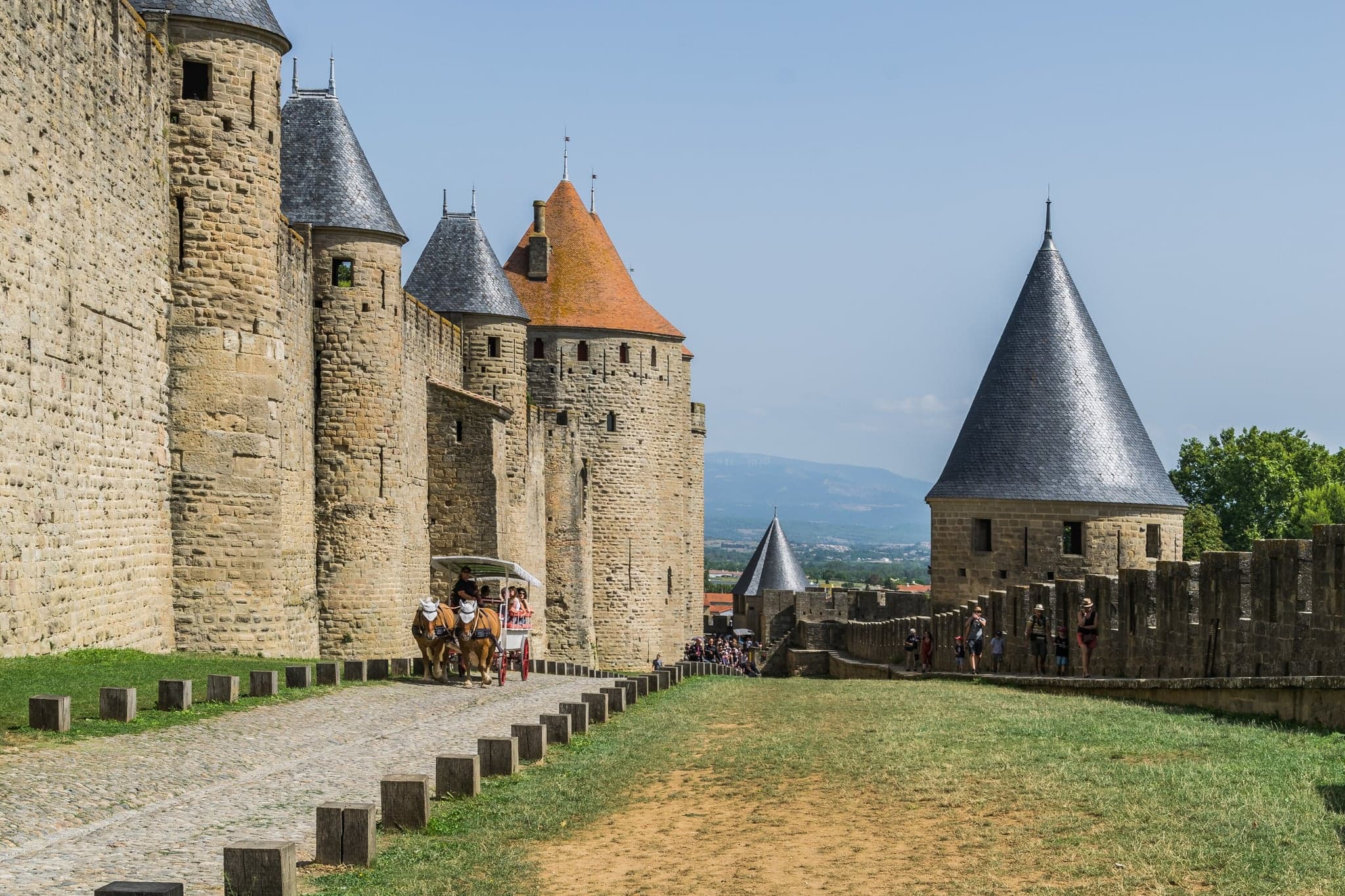
Carcassonne is a walled city, not just a castle. The Cité stands on a hill above the River Aude and dates to the Gallo-Roman period. Its double walls run about 3 kilometers and carry 52 towers. Attackers who crossed the outer wall still faced the inner one, and inside sits the Château Comtal, a castle within the city.
The Albigensian Crusade reached it in August 1209. The crusading army took the city after a short siege and ended the Trencavel family’s rule. Simon de Montfort took control, and Carcassonne later became the seat of a royal seneschal. Carcassonne lost its purpose in 1659, when the Treaty of the Pyrenees moved the French border south. The fortifications were abandoned and the Cité decayed until Eugène Viollet-le-Duc began restoring it in 1853. Critics objected during his lifetime to features such as the steep slate roofs, which suit northern France better than the south. UNESCO listed the site in 1997.
Malbork Castle, Poland
Malbork Castle, called Marienburg in German, is the largest castle in the world by land area, at roughly 143,000 square meters. It is also the largest brick building in Europe. The Teutonic Order finished the main complex in 1406.
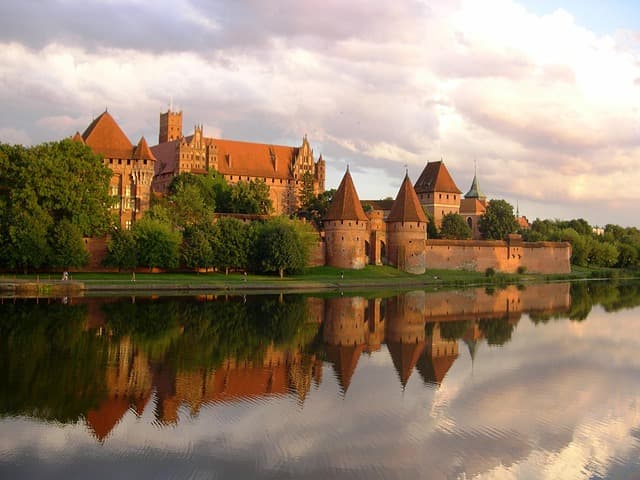
In 1309 Grand Master Siegfried von Feuchtwangen moved the Order’s headquarters here from Venice. From then on the castle housed the Grand Master and served as the capital of the Teutonic state on the Baltic coast.
A Polish and Lithuanian army crushed the Order at Grunwald on 15 July 1410, and the victors marched on Malbork. Heinrich von Plauen, who had not fought at Grunwald, reached the castle first and organized its defense. The siege failed and the army withdrew.
Malbork fell by purchase, not assault. During the Thirteen Years’ War the Order owed its Bohemian mercenaries so much pay that they sold the castle to King Casimir IV Jagiellon, who entered it in 1457. The Second World War left it badly damaged, and a new restoration finished in April 2016.
Château Gaillard, France
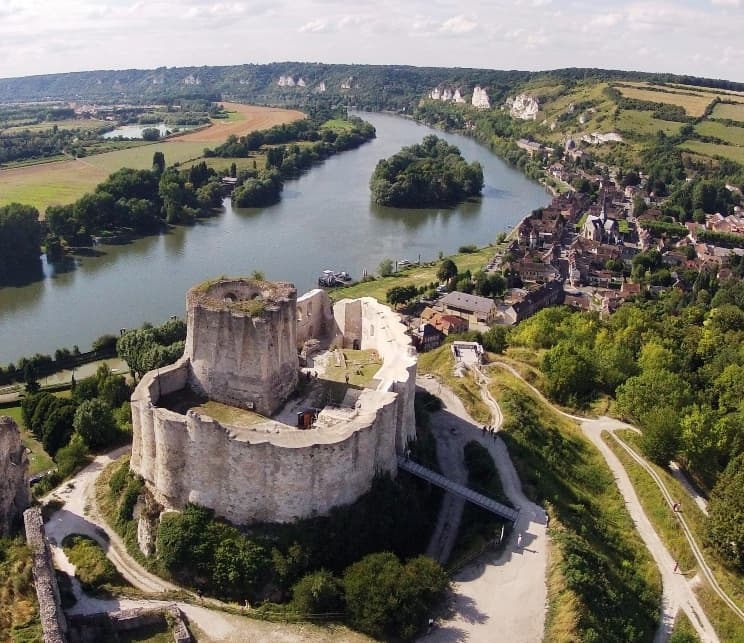
Richard the Lionheart built Château Gaillard between 1196 and 1198 on a cliff above the Seine at Les Andelys. Its job was to cover Rouen and the Norman heartland against Philip II of France. The land belonged to the archbishop of Rouen. Richard took it anyway, and the Church objected. The castle cost an estimated £12,000, more than the roughly £7,000 he spent on castles in England during his whole reign.
Richard died on 6 April 1199 from an arrow wound at Châlus. His brother John then failed to hold Normandy. Philip besieged Gaillard from September 1203, and John made no real attempt to relieve it. The castle fell in March 1204. The chronicler Roger of Wendover wrote decades later about the French sappers:
“...had undermined and knocked down a great part of the walls.”
Roger of Wendover, Flowers of History, trans. J. A. Giles (1849), vol. 2, entry for 1203
The main source for the siege is William the Breton, Philip’s chaplain, so the account leans French.
Rouen surrendered on 24 June 1204, and Norman independence ended. Gaillard served later as a prison. In 1314 two daughters-in-law of Philip IV, Marguerite and Blanche of Burgundy, were locked up there after the Tour de Nesle scandal.
Edinburgh Castle, Scotland
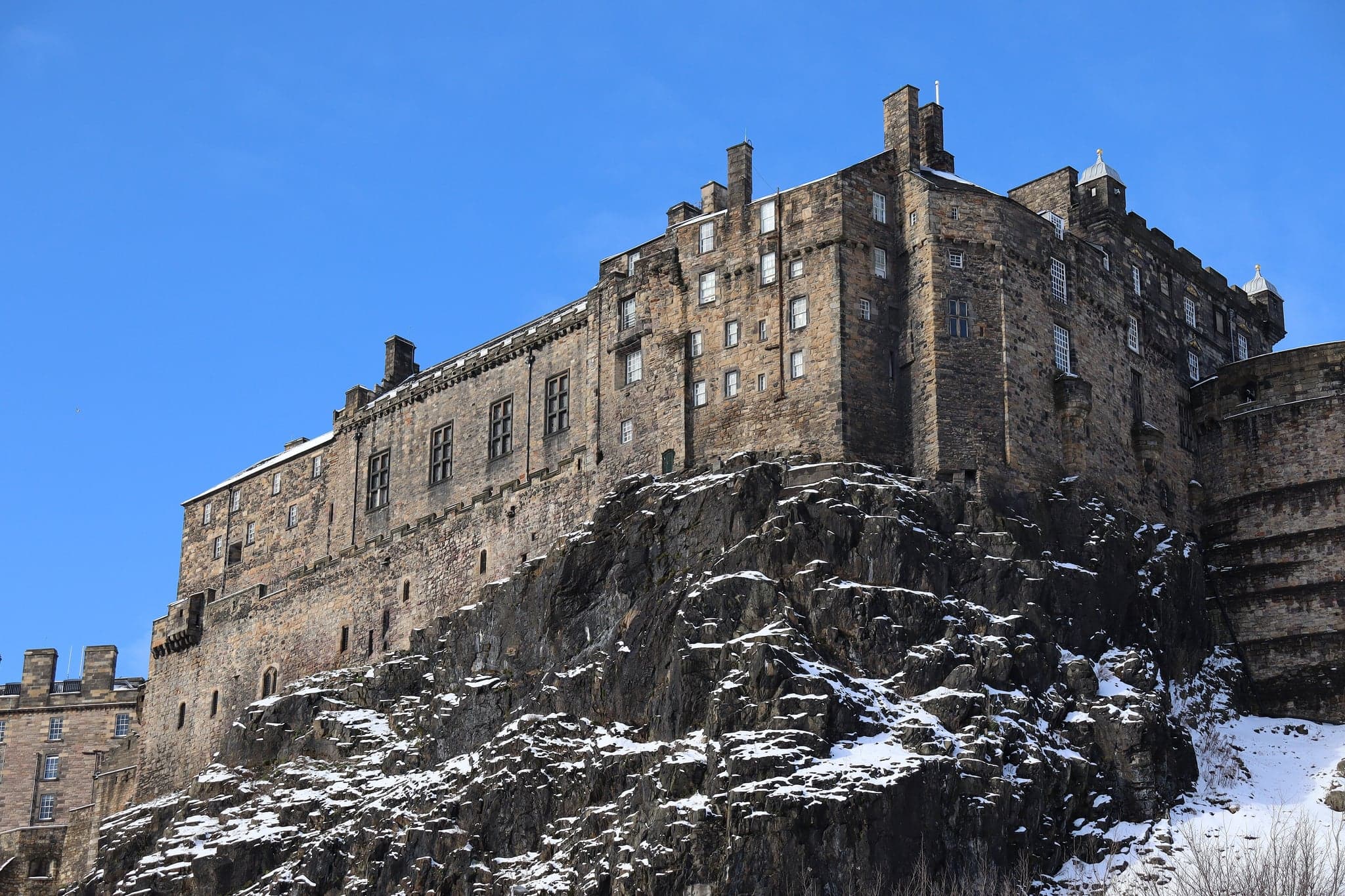
Edinburgh Castle stands on Castle Rock, the remains of a volcanic pipe that formed about 350 million years ago. Steep cliffs guard most of the rock. Edward I of England captured the castle after a three-day siege in March 1296, and English garrisons held it for 18 years.
Thomas Randolph, Earl of Moray and nephew of Robert the Bruce, took it back in March 1314. According to the poet John Barbour, who wrote in the 1370s, Randolph led about 30 men up the north face of the rock at night. A man named William Francis guided them. He had used the route to visit a sweetheart in the town. Bruce then had the defenses torn down so the English could not reuse the castle.
The Lang Siege ran from 1571 to 1573. Supporters of Mary, Queen of Scots, under Sir William Kirkcaldy, held the castle against forces loyal to her infant son James VI. English artillery arrived in 1573 and bombarded it for about eleven days. David’s Tower collapsed, and Kirkcaldy surrendered on 28 May. He was later executed.
Conwy Castle, Wales
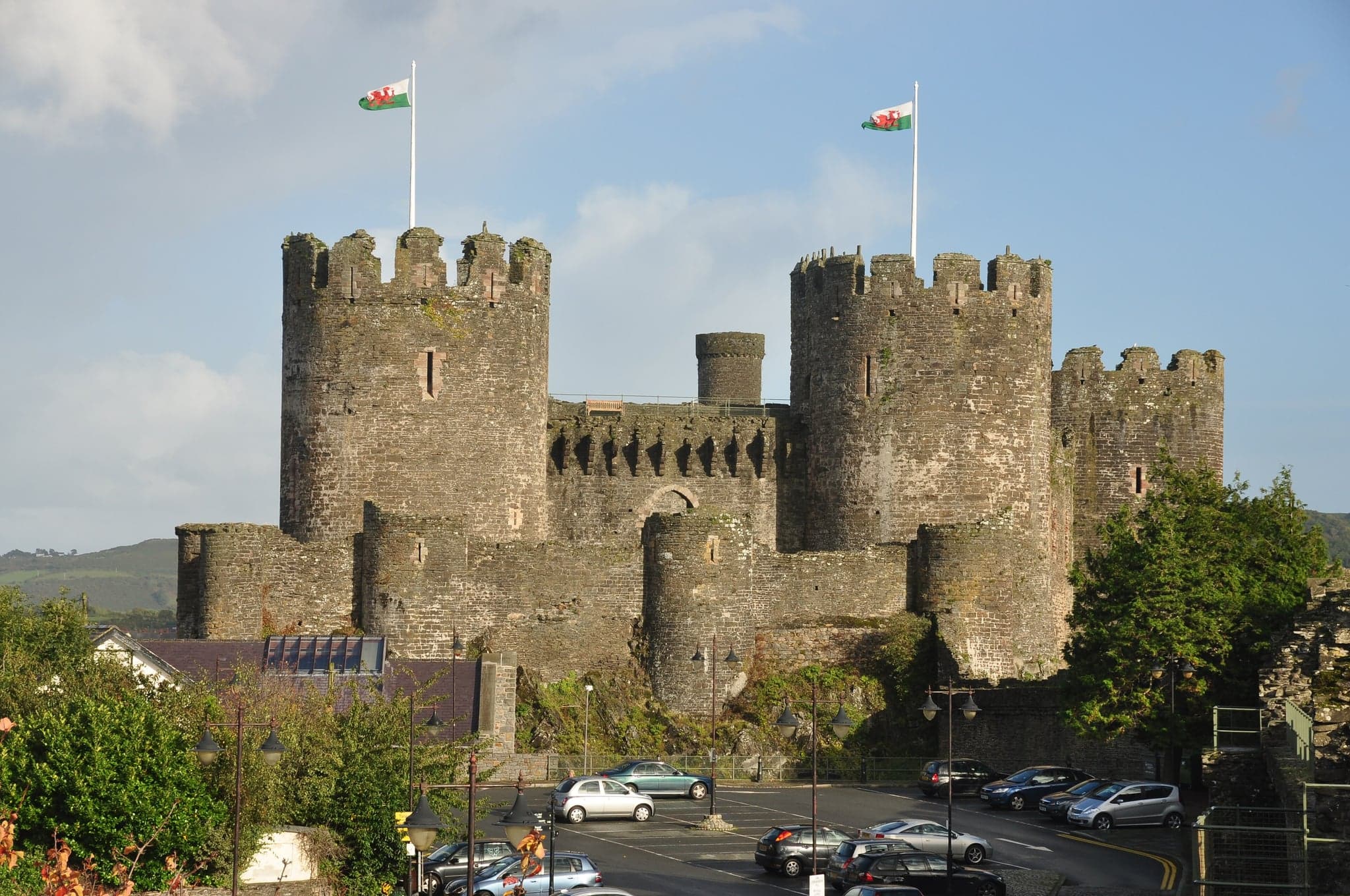
After defeating Llywelyn ap Gruffudd in 1282, Edward I built a chain of castles across North Wales. Conwy Castle, begun in March 1283, is among the best. Master James of St George, a mason from Savoy, directed the work. Eight round towers, each about 21 meters high, line the curtain wall. A town wall with 21 towers and three gates runs alongside it. The two defenses together cost around £15,000, a huge sum for the time.
Madog ap Llywelyn’s rebellion tested it in 1294. The rebels took Caernarfon and other royal castles. Edward himself fell back to Conwy and was besieged there from December 1294 into early 1295. Ships supplied the castle by sea until relief arrived.
The castle kept mattering. Richard II took refuge there in 1399, and supporters of Owain Glyndŵr held it for several months in 1401.
Caernarfon Castle, Wales
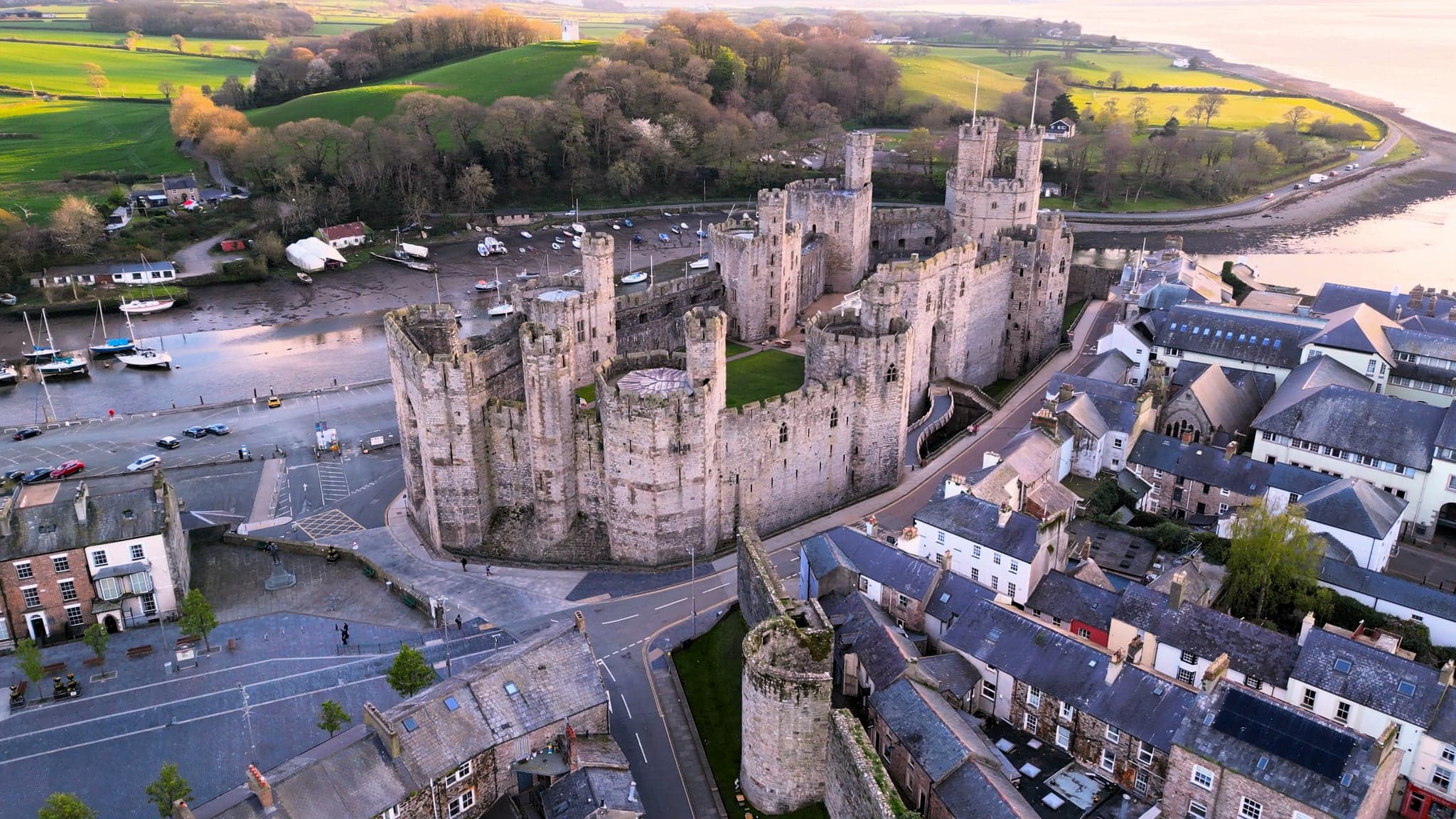
Edward I began Caernarfon in 1283 as the administrative center of North Wales. It has polygonal towers and bands of different colored stone. Historians note the resemblance to the Theodosian Walls of Constantinople and suggest the link was deliberate. That tied Edward’s new castle to imperial Rome. Tradition holds that his son, the future Edward II, was born there on 25 April 1284. Edward I made him Prince of Wales in 1301.
The rebels captured Caernarfon Castle in 1294. Work continued for decades afterward, and the castle was never fully finished. Its political role outlasted its military one. Prince Edward, the future Edward VIII, was invested as Prince of Wales there in 1911, and Prince Charles followed on 1 July 1969. The 1969 ceremony drew opposition in Wales.
What these castles have in common
Look across the eight and a few patterns show up:
- location came first. Each castle sat on a river, a pass, a coast or a crossing,
- layers beat single walls. Krak, Gaillard, Dover and Carcassonne all gave attackers more than one line to break,
- supply decided sieges. Conwy held because ships could reach it. Gaillard fell after a siege of roughly six months,
- not every loss was a fight. Krak ended in a surrender, and Malbork was sold.
Politics gave these castles their weight. Malbork housed a state. Caernarfon announced a conquest. Edinburgh anchored a kingdom and changed hands several times. Strip that away and a castle is a pile of stone.