
Switzerland
Historical background and medieval period
Switzerland’s castle heritage reflects its complex history as a crossroads of European cultures and political powers. During the medieval period, the region was fragmented into numerous territories controlled by local lords, bishops, and emerging city-states. The construction of castles and fortifications was both a response to ongoing military conflicts and a symbol of feudal authority.
From the 10th century onward, many castles were built to oversee trade routes, protect strategic passes, and serve as administrative centers. The growth of the Swiss Confederacy in the late medieval period also influenced castle construction, as fortifications adapted to changing political and military needs. These developments created a rich tapestry of fortification types across the Swiss landscape.
Continue reading below — scroll for the full article.
Castles in Switzerland
Discover 74 magnificent castles across the country








Types of fortifications
Castles and fortified residences
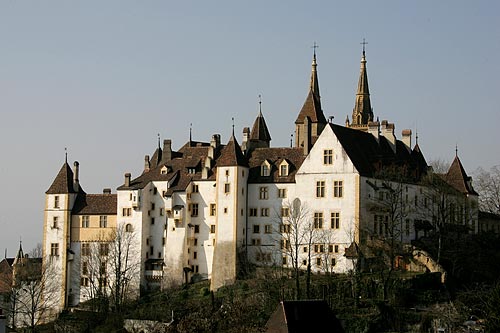
Castles in Switzerland generally served as noble residences fortified for defense. Many were built on hilltops or rocky outcrops, leveraging natural terrain for protection. These structures combined residential elements with defensive features such as curtain walls, towers, and moats. For example, Chillon Castle on Lake Geneva is a prime example of a lakeside fortress that evolved into a luxurious residence while maintaining strong defensive capabilities.
Fortresses and military installations
In addition to medieval castles, Switzerland boasts numerous fortresses designed for more extensive military defense. These include larger complexes built to guard borders and strategic points, particularly during the early modern period and later. The fortifications around the Jura Mountains and the Alpine passes illustrate Switzerland’s commitment to controlling its challenging terrain.
Defensive walls and town fortifications
Many Swiss towns were protected by defensive walls and ramparts, which often included gates, towers, and bastions. Cities like Bern and Lucerne retain significant portions of these fortifications, showcasing urban defensive strategies. These walls were crucial for controlling access and defending against sieges, reflecting the importance of fortified towns in Swiss history.
Architectural styles and influences
Swiss castle architecture exhibits a blend of regional and international styles, shaped by the country’s geographical position and political interactions. Early medieval castles were primarily Romanesque in style, characterized by thick walls, small windows, and rounded arches. Over time, Gothic influences introduced more verticality, larger windows, and decorative elements.
The Renaissance and Baroque periods brought new architectural treatments to some castles, emphasizing comfort and aesthetics alongside defense. Habsburg Castle, for instance, illustrates a transition from purely military construction to a residence reflecting evolving tastes. Swiss fortifications also integrated innovations in artillery defense during the 15th and 16th centuries, such as angled bastions and reinforced curtain walls.
Regional variations
The alpine region
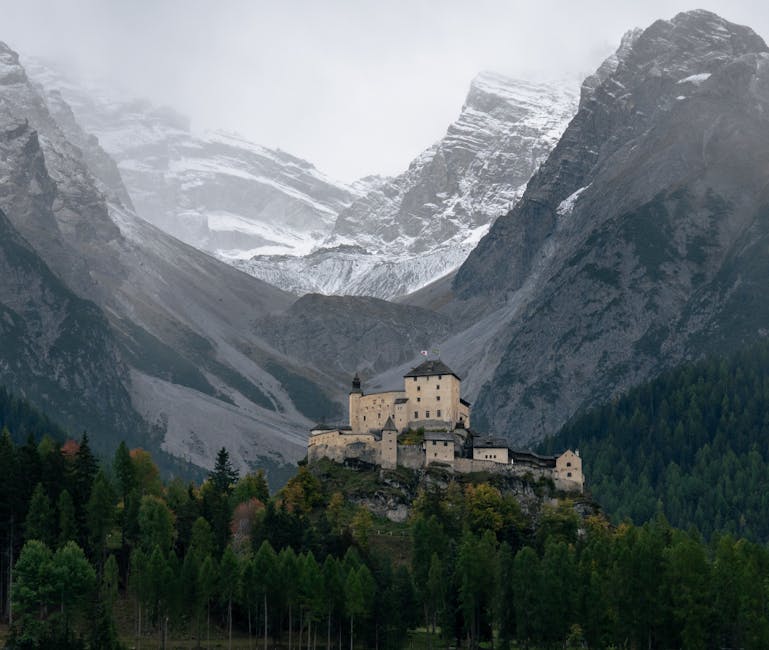
The Alpine region’s castles commonly took advantage of mountainous terrain, often perched on cliffs or near mountain passes. Their design prioritized defense against incursions through narrow valleys and difficult landscapes. Fortresses in areas like the Valais canton guarded important transit routes and controlled access to alpine resources.
The plateau and lake regions
In the Swiss Plateau and around the major lakes, castles and fortifications frequently served to oversee trade and communication corridors. The proximity to water influenced construction techniques and defensive strategies. Chillon Castle exemplifies the integration of a lakeside location into both defense and residential comfort, using water as a natural moat.
The Jura and northern border areas
Along the Jura Mountains and northern borders, fortifications often took the form of extensive fortresses and fortified towns. These areas experienced varied military pressures, prompting the development of robust defensive networks. Town walls in Bern and other cities reflect the region’s need for sustained urban defense against external threats.
Notable periods of castle construction
The initial wave of castle construction in Switzerland began in the 10th and 11th centuries, coinciding with the rise of feudal lords and territorial consolidation. Most early castles were simple hilltops or motte-and-bailey types, gradually replaced or enhanced by stone structures.
The 13th and 14th centuries marked a significant expansion in castle building, reflecting increased political fragmentation and warfare. This period saw the construction of many enduring stone castles, such as Habsburg Castle, which played a key role in the region’s power dynamics.
The late medieval period introduced adaptations to artillery and siege warfare, prompting modifications to existing castles and new fortifications designed to withstand cannon fire. Some castles were converted into palatial residences, balancing defense with comfort and status.
Preservation and current state
Many of Switzerland’s castles and fortifications remain remarkably well-preserved, thanks to concerted conservation efforts and the country’s respect for its heritage. Some, like Chillon Castle, are fully restored and open to the public, serving as museums and cultural landmarks. Others survive as picturesque ruins, offering insights into medieval construction and regional history.
Preservation challenges include environmental wear, tourism impact, and balancing modern use with historical integrity. Swiss authorities and heritage organizations actively manage these sites, employing modern techniques to stabilize and restore structures while maintaining historical authenticity.
Castle tourism and accessibility
Switzerland’s castles are popular tourist destinations, attracting visitors interested in history, architecture, and scenic beauty. Many castles are easily accessible by public transportation or hiking trails, often integrated into broader cultural itineraries. Chillon Castle is among the most visited, renowned for its picturesque setting and well-preserved interiors.
Guided tours, exhibitions, and reenactments enhance visitor experience, providing educational opportunities about medieval life and fortification techniques. Castle tourism contributes significantly to local economies and promotes awareness of Switzerland’s rich heritage.
Cultural significance and heritage
Castles in Switzerland hold deep cultural significance as symbols of regional identity, historical continuity, and architectural achievement. They embody the country’s medieval legacy and its evolution through centuries of political change. The fortifications are frequently featured in literature, art, and folklore, reinforcing their role in Swiss cultural memory.
Heritage programs emphasize the importance of these sites not only as relics but as living monuments that connect the past with present communities. The preservation and celebration of castles support national pride and international recognition of Switzerland’s unique contributions to medieval and military architecture.
Castle Locations in Switzerland
Explore all castle locations on an interactive map
Loading castle locations...