Baillival Castle
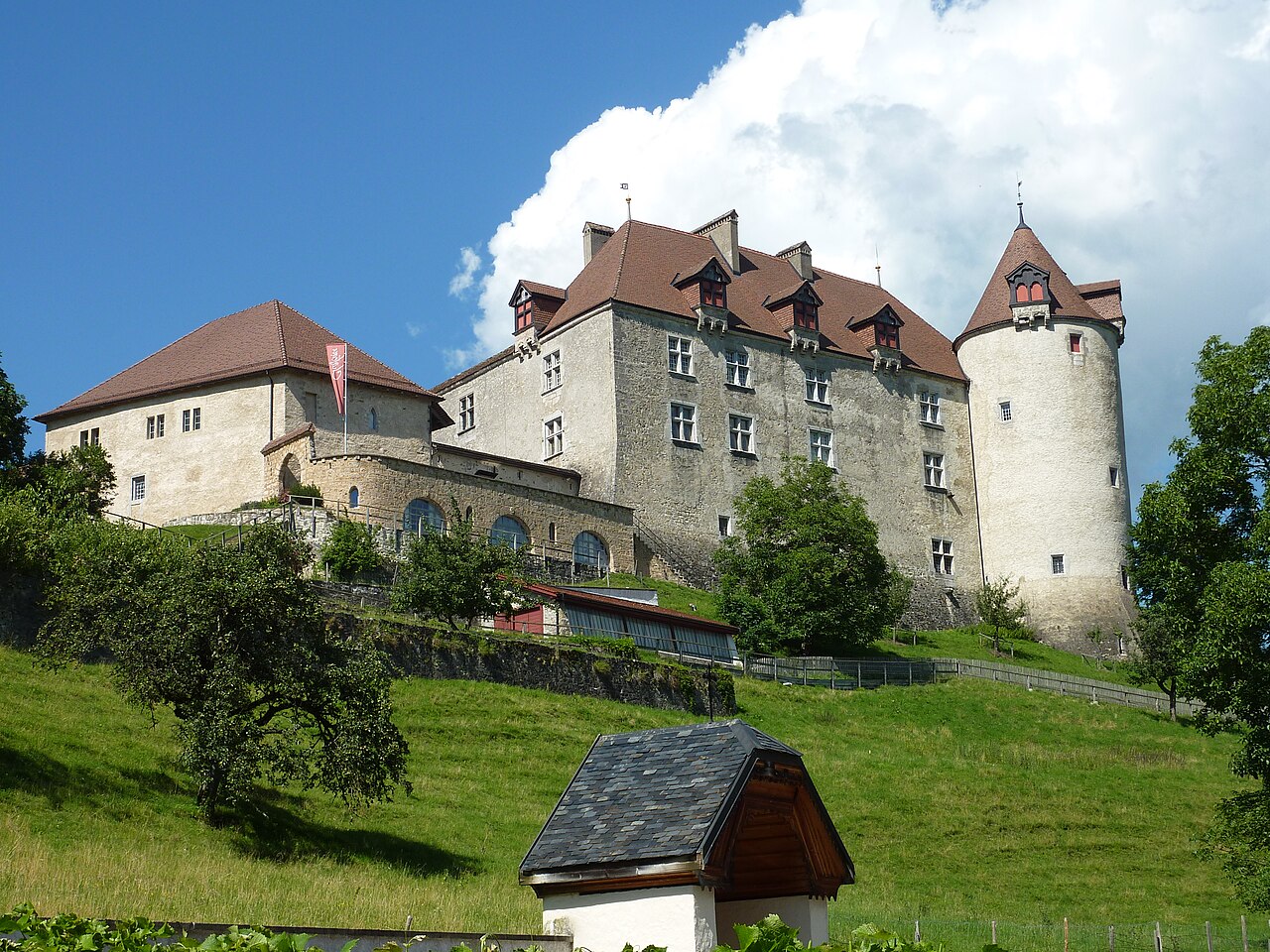
Baillival Castle stands as a prominent late-medieval hill castle in the municipality of Bulle, within the Canton of Fribourg, Switzerland. Recognized as a Swiss heritage site of national significance, this fortress exemplifies the architectural and historical legacy of the region. Constructed primarily in the 14th century, the castle reflects the strategic and administrative importance it held through centuries of regional power shifts.
The origins of the town of Bulle are closely tied to its ecclesiastical roots, with the local church serving as a significant religious center in the 9th century. The initial construction of Baillival Castle began under the episcopate of Bishop Boniface (1231-1239), marking the establishment of a fortified residence to assert episcopal control. Over time, the castle evolved into a symbol of authority, especially after the town's annexation by the city of Fribourg in the 16th century.
Historical context and development
Early foundations and episcopal control
Baillival Castle was built between 1291 and 1331 under the auspices of the bishops of Lausanne. Its location on the south side of Bulle’s market square was strategic, serving as both a defensive stronghold and a residence for the bishops. The castle's construction was influenced by the architectural styles of the House of Savoy, despite ongoing territorial disputes between the bishops and the Savoy family since 1239. Evidence such as a discovered Savoy coat of arms during renovations suggests the possibility of an earlier Savoyard fortification on the site.
Transition to bailiff residence and administrative center
In 1476, during the Burgundian Wars, Baillival Castle escaped destruction by aligning with the city of Fribourg, which protected it from looting. The political landscape shifted further in 1536 when Bern conquered the Vaud region, leading to Fribourg's control over Bulle. Subsequently, the castle was repurposed as the residence of the bailiff, the official administrator of the district. This role was formalized in 1614 through agreements with the bishop of Lausanne, cementing the castle's administrative function.
Renovations and continued use
Between 1763 and 1768, Baillival Castle underwent significant renovations that modernized the bailiff’s living quarters and the audience hall, reflecting changing tastes and administrative needs. The castle's role as a seat of local government continued through the turbulent period of the French invasion in 1798, when local citizens expelled the governor. Afterward, the castle served as the district's administrative center, adapting to the evolving political context.
From 1854, the addition of prison cells marked a new chapter in the castle's functional history, emphasizing its role in law enforcement and governance. Despite several devastating fires in Bulle, notably in 1447 and 1805, Baillival Castle remarkably survived intact, preserving its historical and architectural integrity. A comprehensive restoration from 1921 to 1930 ensured the castle's preservation for future generations.
Architectural features and layout
Overall design and fortifications
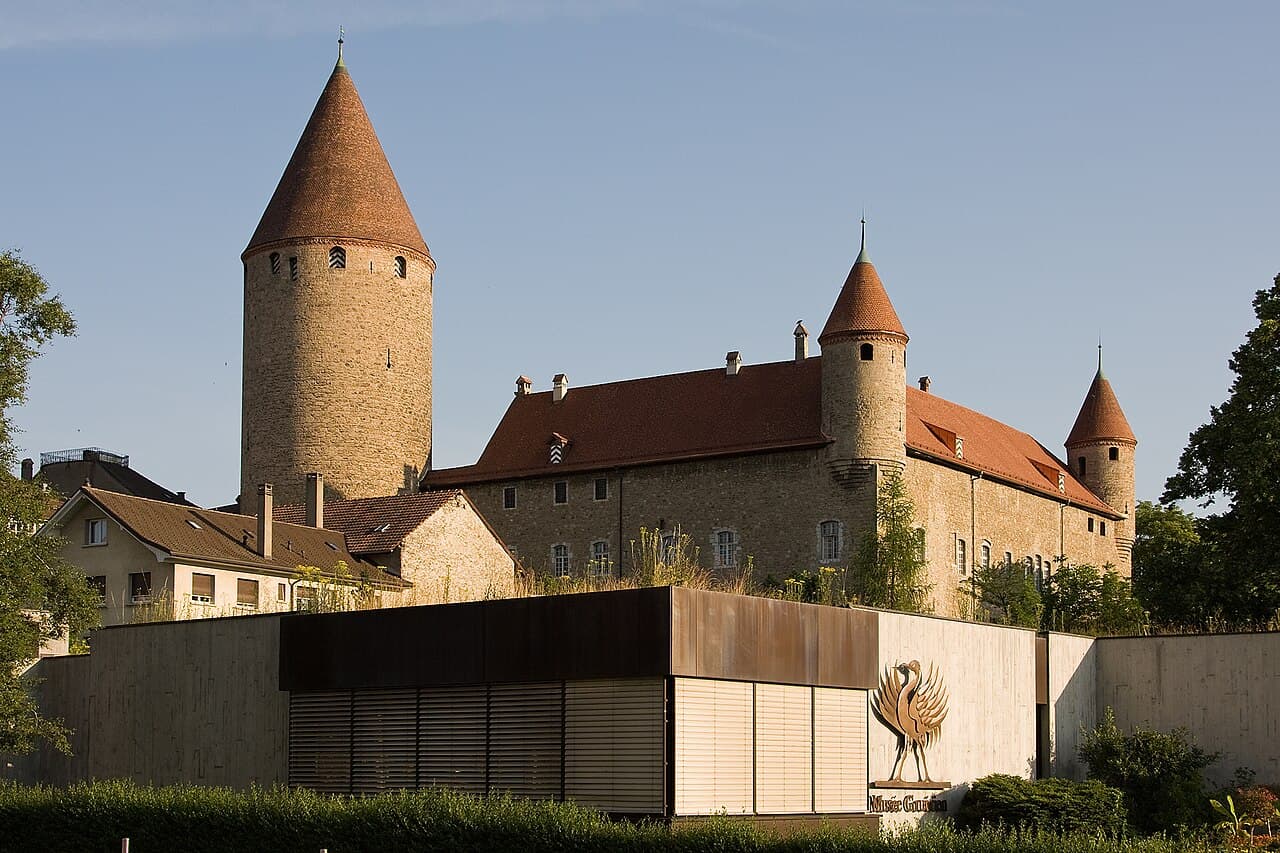
The castle exhibits a nearly square plan measuring approximately 41 by 44 meters. It is constructed around an inner courtyard enclosed by buildings on three sides, forming a quadrilateral. The design draws heavily on Savoyard castle architecture, evident in the placement of small towers at the four corners and the robust defensive features.
The main tower and corner turrets
The southwest corner is dominated by a massive keep or bergfried, standing 33 meters tall with walls over 2 meters thick at the base. This imposing tower is separated from the main courtyard by a small outer court. Its original entrance is elevated at about 9.7 meters above ground, a defensive feature common in medieval fortifications to hinder attackers.
The other three corners feature smaller turrets known locally as "Pfefferbühchsen" or "pepper pots." These turrets are characterized by their conical roofs, rows of windows, and decorative friezes. They include arrow slits shaped like crosses and keys, designed to optimize defensive coverage and protection.
Moat and entrance structures
Originally, the castle was surrounded by a wide moat approximately 17 meters across, which was filled with water diverted from the Les Usiniers canal. Over time, parts of the moat were filled or built over, especially by the 18th century. The main entrance on the north side once featured a wooden drawbridge, later replaced by a stone bridge. Remnants of the drawbridge's anchoring mechanisms remain visible today.
The north entrance is notable for its Gothic portal topped with the coat of arms of Bulle, symbolizing the castle's civic importance. A secondary arched entrance exists on the east side, providing additional access. Inside the courtyard, several Romanesque portals lead to cellars and other internal areas. A stair tower near the gate and a well within the courtyard add to the castle's functional features.
Walls, roofs, and defensive elements
The castle's walls rise to about 25 meters in height and include dormer windows and chimneys added during Baroque-era renovations. Some original Gothic windows remain, particularly in the northeast corner. Defensive features are prominent, with numerous arrow slits on the main tower and turrets, combining cross and key shapes to maximize defense.
Cultural significance and preservation
Baillival Castle is a rare example of a medieval administrative fortress that has retained much of its original structure and character despite centuries of political change and urban development. Its survival through multiple fires that devastated Bulle underscores its robust construction and the value placed on it by local authorities.
Today, the castle continues to serve as the seat of the Greyerz district administration, housing offices such as the Prefecture, the court, the state police, and prison facilities. This ongoing use highlights the castle's adaptability and enduring importance in regional governance.
Careful restoration efforts, especially those in the early 20th century, have preserved the castle's medieval and Baroque architectural elements, making it a significant cultural landmark. Its designation as a Swiss heritage site of national significance reflects its importance in Swiss history and architecture.
Visitor information and accessibility
While primarily an administrative building, Baillival Castle's historical and architectural significance attracts visitors interested in medieval fortifications and Swiss heritage. The castle's location in the center of Bulle makes it accessible for tourists exploring the region.
Visitors can appreciate the castle's imposing keep, the distinctive pepper pot turrets, and the well-preserved Gothic and Baroque features. Although public access to interior administrative areas may be limited, the exterior and courtyard offer valuable insights into medieval castle design.
Frequently asked questions (FAQ)
- How do I get to Baillival Castle?
- Baillival Castle is located in Bulle, Switzerland, and is easily accessible by public transport. You can take a train to Bulle station and then a short walk will lead you to the castle, or you can drive and find parking nearby.
- What is the historical significance of Baillival Castle?
- Baillival Castle dates back to the 13th century and served as a residence for the local nobility. Its strategic location and impressive architecture reflect the rich history of the region and its role in medieval Swiss governance.
- When was Baillival Castle built?
- Baillival Castle was constructed in the early 13th century, with significant renovations occurring over the centuries. The castle has preserved many of its medieval features, making it a fascinating site for history enthusiasts.
- Can I take guided tours of Baillival Castle?
- Yes, guided tours are available at Baillival Castle, providing visitors with insightful information about its history and architecture. It’s advisable to check the castle’s official website for tour schedules and group bookings.
- Why is Baillival Castle considered an architectural gem?
- Baillival Castle showcases a blend of Gothic and medieval architectural styles, characterized by its impressive towers and defensive structures. The careful preservation of its original features allows visitors to experience the grandeur of medieval architecture.
- Is it possible to host events at Baillival Castle?
- Yes, Baillival Castle is available for private events, such as weddings and corporate gatherings. The unique setting and historical ambiance make it a memorable venue for special occasions.
- What are the opening hours for Baillival Castle?
- Baillival Castle is typically open to visitors from Tuesday to Sunday, with varying hours depending on the season. It’s recommended to check the official website for the most up-to-date information on opening hours.
- What are the ticket prices for visiting Baillival Castle?
- Ticket prices for Baillival Castle are generally affordable, with discounts available for students and seniors. Children under a certain age may enter for free, making it an accessible destination for families.
- When is the best time to visit Baillival Castle?
- The best time to visit Baillival Castle is during the spring and early autumn months, when the weather is mild and the surrounding scenery is particularly beautiful. This period also coincides with fewer crowds, allowing for a more enjoyable experience.
- Are there any nearby attractions to visit along with Baillival Castle?
- Yes, nearby attractions include the charming town of Bulle, with its vibrant markets and local cuisine, as well as the stunning Gruyères region known for its cheese and picturesque landscapes. Exploring these areas can enhance your visit to Baillival Castle.
Photo gallery

Information
Website
Visit websiteSources & official resources
Verify the information above using these authoritative references.
Loading map...
Visitor reviews
No reviews yet. Been here? Write the first review and help other travelers!
Write the first reviewVisited this castle? Share your experience
Your review helps other travelers and adds first-hand knowledge to our encyclopedia.