Biberstein Castle
Biberstein Castle stands as a remarkable example of a high medieval hill castle in Switzerland, with origins dating back to the late 13th century. Perched upon a commanding tuff rock hill overlooking the Aare river, the castle's strategic location underscores its historical military and administrative significance. Initially constructed for the Counts of Habsburg-Laufenburg, a noble lineage intertwined with the influential Habsburg dynasty, the castle first appears in historical records in 1280. This early documentation highlights its importance as a feudal stronghold and territorial center in the region.
Throughout its long history, Biberstein Castle has witnessed a series of pivotal ownership changes and architectural transformations. In 1335, the castle and its adjacent town were sold by the Habsburgs to the Knights Hospitaller, a prominent religious and military order. The Knights established a commandry at Biberstein, which became a focal point of their regional authority. The fortified town, protected by a ring wall likely completed by 1399, reflected the growing strategic and defensive needs of the era.
Medieval origins and early history
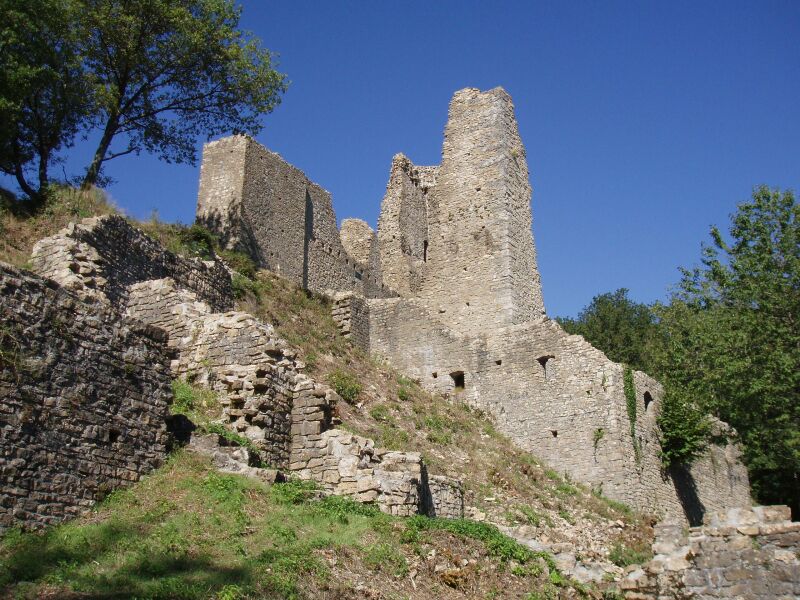
The castle's initial construction in the late 13th century was typical of hill castles designed to exploit natural topography for defense. The site’s steep tuff hill provided a natural vantage point, while terraced walls and a moat enhanced its protective capabilities. The castle's layout included a bergfried, a tall defensive tower characteristic of medieval fortifications, which originally dominated the silhouette of Biberstein. Although the bergfried was partially dismantled around 1670 due to stability concerns, its lower walls and foundations remain visible, offering tangible links to the castle's high medieval origins.
During the 14th century, the castle served as a center of power for the Knights Hospitaller. In 1368, the Habsburgs attempted to regain control through covert means, but the Knights resisted any exchange or sale. This period highlights the castle's role as both a military and religious stronghold. The fortified town's ring wall further emphasized the importance of defense and control in a turbulent medieval landscape.
Bernese control and the reformation era
The early 15th century brought significant political shifts. In 1415, the city-state of Bern occupied the surrounding region of Aargau, including Biberstein. Despite Bern's military presence, the Knights Hospitaller retained legal ownership and administrative rights over the castle and town. This dual authority persisted until the Swabian War of 1499, when Bernese troops took direct control of the castle to secure their northern frontier.
The Protestant Reformation profoundly altered the castle's status. Bern's adoption of Protestantism in 1527 led to the suppression of monasteries and religious orders within its territories. By 1528, a Bernese vogt was installed at Biberstein Castle, marking the beginning of direct secular governance. The Knights' protests culminated in the forced sale of the castle to Bern in 1535, after which Biberstein became the seat of one of Bern's smallest vogtei, or administrative districts.
The vogtei administration
Between 1535 and 1798, Biberstein Castle served as the residence and administrative center for a succession of 51 vogts. Despite its official status, the vogtei was one of the smallest and poorest in the Canton of Bern, leading many officeholders to seek other appointments quickly. The castle's role during this era was primarily administrative rather than military, reflecting broader political and religious changes brought by the Reformation.
Fires and reconstruction
The castle's history includes dramatic episodes such as the devastating fire of 1587. This blaze gutted the castle, and local legend attributes its cause to Elsa Schiblerin, a woman accused of witchcraft who was subsequently executed by burning. The fire necessitated extensive rebuilding efforts led by the city of Bern, which transformed the castle into a more comfortable residence for the vogt, blending defensive features with residential needs.
During the reconstruction, decorative elements were added, including the painting of the Biberstein coat of arms above the main gate in 1627, and the Bernese coat of arms on the tower in 1643. These heraldic symbols reinforced the castle's identity and political allegiance. A later fire in 1784 caused limited damage to the roof, but the castle remained structurally intact.
Political upheaval and modern adaptations
The French invasion of 1798 and the establishment of the Helvetic Republic dismantled the vogtei system, ending Bern's administrative control. The 1803 Act of Mediation created the Canton of Aargau, which absorbed Biberstein Castle and its surrounding villages into a single municipality. This political reorganization marked a new chapter in the castle's history.
In the 19th century, the castle's function shifted away from feudal administration. It briefly served as a home for the prominent Swiss historian and reformer Heinrich Zschokke and operated as a municipal school until 1835. Subsequently, the castle entered private ownership before undergoing renovation in 1889 to become a children's home. Since 1987, it has functioned as a residential and work facility for adults with mental handicaps, demonstrating the castle's ongoing adaptation to social needs.
Architectural features and remnants
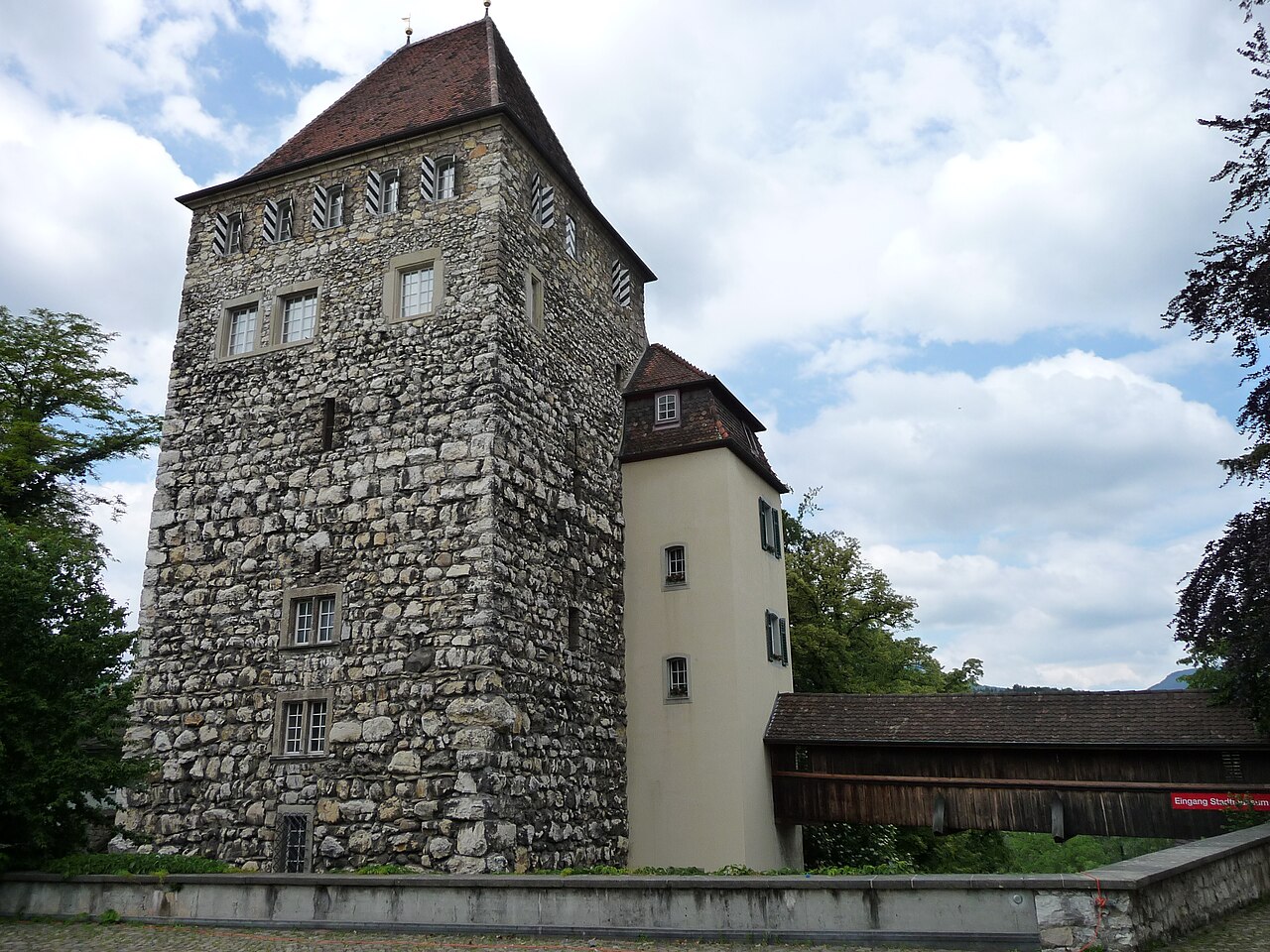
Biberstein Castle retains significant architectural elements from its medieval and post-medieval phases. The castle's irregular octagonal main building is topped by a multi-hipped roof, a feature reflecting its reconstruction and later renovations. The outer defensive structures include terraced walls that conform to the natural contours of the tuff hill, enhancing its defensive posture.
The approach to the castle is marked by a 10-meter covered wooden bridge leading to a round-arched entrance gate. This entrance opens into the Zwinger, an outer defensive courtyard designed to trap and expose attackers between walls, exemplifying medieval military architecture's layered defense strategies.
Surviving sections of the original outer wall and the foundations of the bergfried provide valuable insights into the castle's initial defensive design. The castle's exterior walls are coated with plaster applied in a late Gothic style, contributing to its distinctive historic appearance. Inside, the entrance hall features a star vault ceiling, showcasing skilled craftsmanship and stylistic trends from the post-medieval period.
The painted coats of arms on the main gate and tower serve as enduring symbols of the castle's historical allegiances to the Biberstein family and the city of Bern, respectively. These elements, combined with the castle's layered architectural fabric, illustrate its evolution from a medieval fortress to a comfortable administrative residence and ultimately a facility with social functions.
Today, Biberstein Castle stands as a well-preserved monument encapsulating centuries of Swiss history, architectural innovation, and adaptive reuse. Its strategic location, rich heritage, and architectural features make it a significant cultural landmark within the Canton of Aargau.
Frequently asked questions (FAQ)
- How do I get to Biberstein Castle?
- Biberstein Castle is located in the picturesque village of Biberstein, Switzerland. The easiest way to reach the castle is by car, with ample parking available nearby. Public transport options include trains and buses that connect to the nearest town, followed by a short walk to the castle.
- What is the historical significance of Biberstein Castle?
- Biberstein Castle dates back to the 12th century and played a crucial role in the region's defense and governance. It has witnessed numerous historical events, including battles and treaties, that shaped the local culture. Today, it stands as a monument to the medieval architecture and history of Switzerland.
- When was Biberstein Castle built?
- Biberstein Castle was constructed in the early 12th century, making it one of the oldest castles in the region. Over the centuries, it has undergone several renovations, preserving its historical charm while enhancing its structural integrity. The castle's layered history reflects the changing architectural styles of its time.
- Can I visit Biberstein Castle year-round?
- Yes, Biberstein Castle is open to visitors throughout the year, although some areas may be restricted during inclement weather. It is advisable to check the castle's official website for any seasonal closures or special events that might affect visiting hours. Guided tours are available to enhance your experience.
- Why is Biberstein Castle considered an architectural gem?
- Biberstein Castle is renowned for its well-preserved medieval architecture, featuring stunning stonework, fortified walls, and impressive towers. The castle's design showcases the defensive strategies of its time, blending functionality with aesthetic appeal. Its architectural beauty attracts both history enthusiasts and casual visitors alike.
- Is it possible to book guided tours of Biberstein Castle?
- Absolutely! Guided tours of Biberstein Castle can be booked in advance through the castle's official website or at the visitor center. These tours provide a deeper insight into the castle's history, architecture, and the surrounding landscape, making your visit even more enriching.
- What are the ticket prices for visiting Biberstein Castle?
- Ticket prices for Biberstein Castle are quite reasonable, with discounts available for children, students, and seniors. Adult tickets typically range from CHF 10 to CHF 15, while family passes offer additional savings. It's best to check the official website for the most current pricing and any special offers.
- What are the opening hours for Biberstein Castle?
- Biberstein Castle generally opens daily from 9 AM to 5 PM, though hours may vary during holidays or special events. It is recommended to visit the castle's official website for the latest information regarding opening hours before planning your trip. Early morning visits can offer a quieter experience.
- What nearby attractions can I visit while at Biberstein Castle?
- While visiting Biberstein Castle, you can also explore the charming village of Biberstein, known for its scenic views and local shops. Nearby attractions include hiking trails, other historical sites, and cultural landmarks that showcase the rich heritage of the region. Make a day of it by enjoying a leisurely stroll through the surrounding countryside.
Information
Website
Visit websiteSources & official resources
Verify the information above using these authoritative references.
Loading map...
Visitor reviews
No reviews yet. Been here? Write the first review and help other travelers!
Write the first reviewVisited this castle? Share your experience
Your review helps other travelers and adds first-hand knowledge to our encyclopedia.