
Netherlands
Historical background and medieval period
The castle heritage of the Netherlands reflects a complex history shaped by its strategic location in Northwestern Europe. Throughout the medieval period, the region was a patchwork of feudal territories, principalities, and bishoprics, each requiring defensive structures to assert control and protect against rival powers. Castles and fortifications served as administrative centers, military bases, and symbols of authority during a time of frequent local conflicts and external threats.
During the Middle Ages, from the 12th to the 15th centuries, many castles were constructed primarily for defense but also as residences for nobility. The low-lying geography of the Netherlands, with its rivers and marshlands, influenced the design and placement of these fortifications. Water defenses and moats were commonly integrated into castle complexes to leverage the natural landscape for protection.
Continue reading below — scroll for the full article.
Castles in Netherlands
Discover 35 magnificent castles across the country






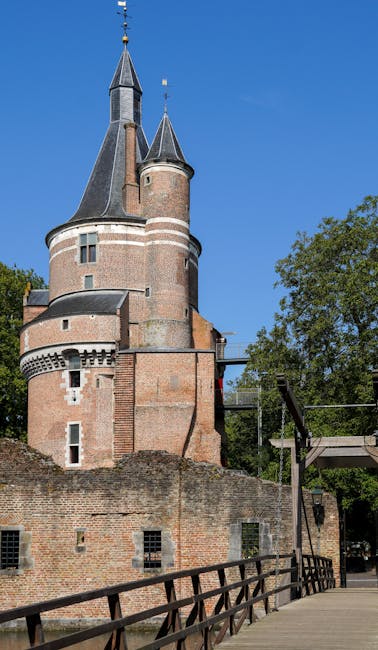

Types of fortifications in the Netherlands
The diversity of fortifications in the Netherlands goes beyond traditional castles. The country's unique geography necessitated various defensive solutions, including:
- Castles: Primarily medieval stone structures designed for defense and residence.
- Fortresses: Larger, often star-shaped fortifications built from the Renaissance onward to withstand artillery attacks.
- Defensive walls and city ramparts: Many Dutch cities developed extensive walls and moats to protect urban centers.
- Water defenses: Ingenious use of dikes, canals, and controlled flooding (inundations) to hinder enemy movement.
Among the best-known examples is Muiderslot, a well-preserved medieval castle near Amsterdam, which combines a moat and stone walls, characteristic of early Dutch fortifications. Moving into the early modern period, the star fort design became prevalent, exemplified by structures such as the fortress of Naarden.
Architectural styles and influences
The architecture of Dutch castles and fortifications shows a blend of indigenous traditions and external influences. Early medieval castles in the Netherlands were primarily constructed with brick and local stone, adopting the motte-and-bailey design from neighboring regions, then evolving into more robust stone keeps and curtain walls.
Medieval gothic and renaissance elements
During the late medieval period, Gothic architectural features became prominent, with pointed arches, vaulted ceilings, and decorative stonework appearing in castle chapels and halls. The Renaissance introduced more symmetrical layouts, larger windows, and ornamental facades, signaling a shift from purely military to residential comfort and prestige.
Doorwerth Castle, situated in the province of Gelderland, illustrates this evolution. Originally a medieval fortress, it was expanded in the Renaissance style, combining defensive elements with elegant residential quarters.
Star forts and bastion fortifications
From the 16th century onward, Dutch fortress architecture adapted to the widespread use of gunpowder artillery. The star fort or bastion fort design featured angled walls to deflect cannon fire and provided overlapping fields of fire. These fortifications often included earthen ramparts faced with brick or stone and extensive moats.
The fortress town of Naarden remains one of the most outstanding examples of this style in Europe, with its well-preserved star-shaped layout and comprehensive defensive works.
Regional variations in castle heritage
The Netherlands' regional diversity is reflected in its castle heritage, shaped by local geography, political history, and available materials.
Eastern provinces
In the eastern provinces such as Gelderland and Overijssel, castles often served as strongholds against neighboring territories and invaders from the east. These castles were typically built of brick and stone, with robust towers and fortified walls. Doorwerth Castle is a prime example from this region, showcasing a blend of medieval fortification and later residential additions.
Western lowlands
The western provinces, including Holland and Utrecht, feature castles integrated closely with water management systems. The use of moats, canals, and controlled flooding was essential in these lowland areas. Muiderslot is emblematic of this approach, positioned strategically near the IJsselmeer to control trade routes and water access.
Southern Limburg
In the south, the more hilly terrain of Limburg influenced castle construction, with some fortifications built on elevated ground for better defense. These castles tended to have more varied architectural styles, reflecting the influence of neighboring regions such as Belgium and Germany.
Notable periods of castle construction
The history of castle building in the Netherlands is marked by several key phases. The earliest castles date from the 11th and 12th centuries, coinciding with the rise of feudalism and local lords asserting control over their domains.
The 13th and 14th centuries saw a proliferation of stone castles replacing earlier wooden structures. Many of these were fortified manor houses rather than large military strongholds, as internal conflicts emphasized localized defense.
The 16th century ushered in a new era influenced by the introduction of artillery. This period saw the development of star forts and bastion fortifications, adapting to the changing nature of warfare. Many medieval castles were either upgraded or replaced by these modern fortresses.
During the Eighty Years' War (1568–1648), fortifications were crucial for controlling territory amid the Dutch struggle for independence from Spain. This conflict accelerated the construction and reinforcement of castles and fortresses across the country.
Preservation and current state of dutch castles
Many Dutch castles have survived in various states of preservation, ranging from well-maintained museums to romantic ruins. Preservation efforts have been significant, particularly since the 19th and 20th centuries, with a focus on restoring historical accuracy and making heritage accessible to the public.
Muiderslot is among the most extensively restored castles, functioning as a museum that showcases medieval life and architecture. Similarly, Doorwerth Castle has undergone careful restoration and is open to visitors, offering insights into both medieval and Renaissance periods.
Some fortresses, such as the star fortifications of Naarden, have been preserved as cultural monuments and integrated into urban parks. These sites not only protect architectural heritage but also contribute to environmental and recreational value.
Castle tourism and accessibility
Castle tourism plays an important role in the Netherlands' cultural sector. Many castles are open to the public, providing guided tours, exhibitions, and events that highlight their historical significance. These sites attract both domestic and international visitors interested in medieval history and heritage architecture.
Facilities and accessibility have improved in recent decades, with several castles offering multilingual information, educational programs, and interactive experiences. For example, Muiderslot hosts medieval reenactments and workshops, engaging visitors of all ages.
Castle tourism also benefits local economies by promoting regional crafts, hospitality, and cultural festivals linked to historical heritage.
Cultural significance and heritage
The cultural significance of castles in the Netherlands extends beyond their architectural and military functions. They represent the historical evolution of Dutch society, politics, and identity. Castles embody stories of feudal power, regional struggles, and the resilience of communities over centuries.
In modern times, these fortifications are symbols of national heritage, reflecting the Netherlands' unique relationship with water management, defense, and urban development. They inspire artistic and literary works, contributing to a shared cultural memory.
Preserving these sites ensures that future generations can explore the complexities of Dutch history and appreciate the ingenuity behind their construction and adaptation. The continued study and conservation of castles remain vital to understanding Europe’s broader historical landscape.
Castle Locations in Netherlands
Explore all castle locations on an interactive map
Loading castle locations...