Breda Castle
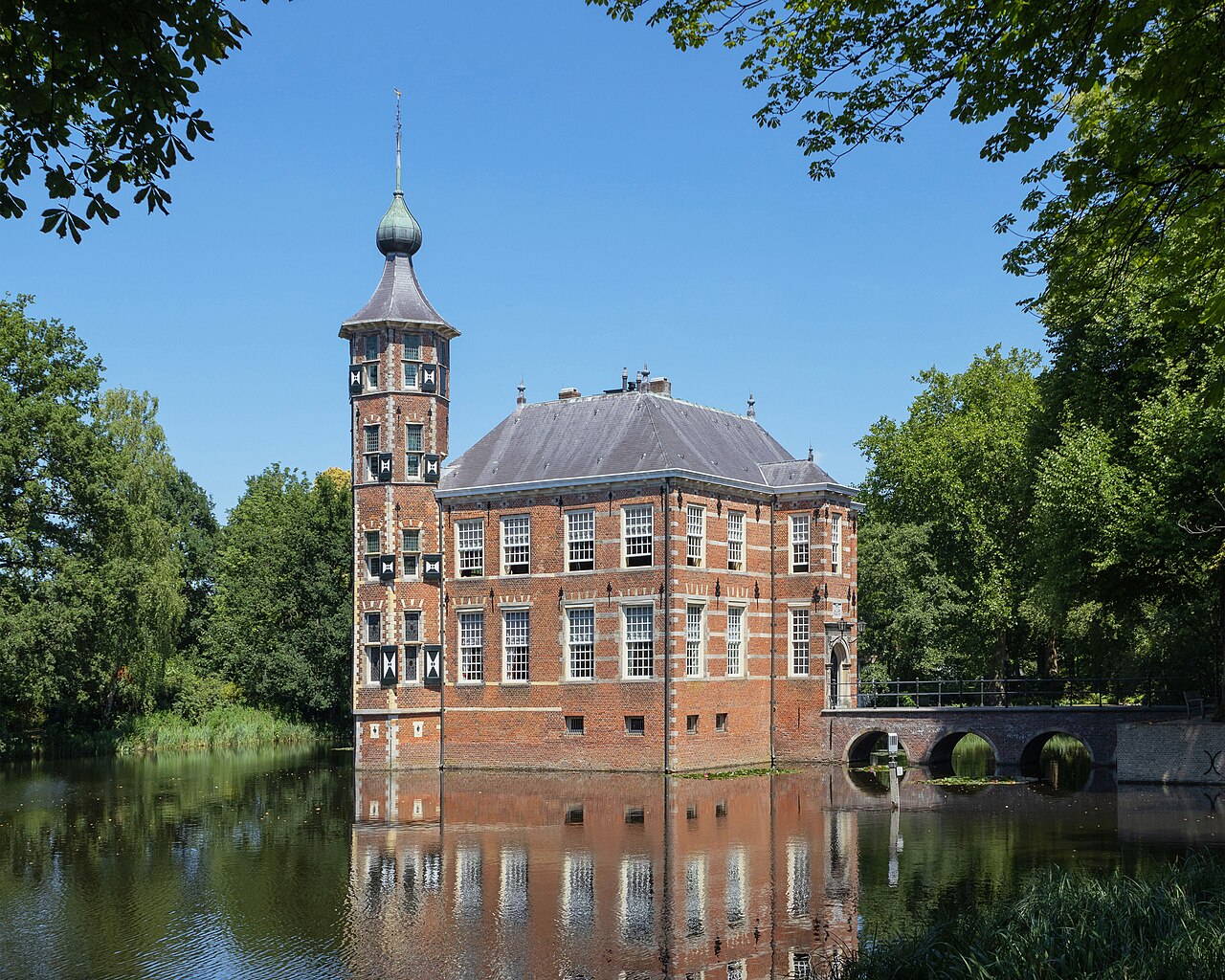
Breda Castle, located in the city of Breda in the Netherlands, is a remarkable example of a fortress that evolved through the centuries from a medieval stronghold into a Renaissance palace. Its origins date back to the 12th century when a fortress stood on the site, around which the city of Breda eventually developed. The castle's strategic importance and architectural transformations reflect the turbulent history and cultural shifts of the region.
The early fortress and medieval expansions
The first known fortification at Breda was established in the 12th century as a defensive stronghold. By the mid-14th century, specifically around 1350, the castle was significantly reinforced by Jan II of Polanen, the Baron of Breda. He added four corner towers and a surrounding water-filled moat, integrating the castle into the city's defensive network. This fortification served as a military and administrative center, vital for controlling the surrounding territory.
In 1403, the castle and lordship passed into the hands of the House of Nassau through the marriage of Johanna of Polanen to Engelbert I of Nassau-Siegen. This union marked the beginning of the Nassau family's long association with Breda and the Netherlands. Their son, Jan IV of Nassau, expanded the castle further around the mid-15th century, adding the prominent Nassau Tower and an accounting chamber. These additions enhanced the castle’s administrative functions and fortified its defenses.
Transformation into a Renaissance palace
The castle underwent a profound transformation in the 16th century under Henry III of Nassau-Breda, who began converting it into a Renaissance-style palace in 1536. This renovation reflected the broader European shift from purely military fortifications to more comfortable and representative noble residences. Henry III's son, René of Châlon, completed the work by 1540, including the construction of the Hofkapel or court chapel, which became a significant religious and ceremonial space within the castle.
After René died without heirs, the castle passed to his cousin, William I of Orange, a key figure in Dutch history. William used Breda Castle as a military base during the Dutch Revolt against Spanish rule, reaffirming its strategic importance.
Political and military significance in the 17th and 18th centuries
Breda Castle was the site of the signing of the Treaty of Breda in 1667, which ended the Second Anglo-Dutch War. Representatives from England, France, and the Dutch Republic convened at the castle to finalize the treaty, underscoring its diplomatic importance.
Between 1686 and 1695, Stadtholder-King William III expanded and renovated the castle, renaming it Prinsenhof or "Prince's Court." Despite these enhancements, William III and his successors rarely used the castle as a residence.
During the late 18th century, under French occupation, the castle was repurposed as a military barracks and hospital, reflecting the changing military needs of the era. Between 1746 and 1748, the castle hosted the Breda Peace Talks between Britain and France during the War of the Austrian Succession, which laid the groundwork for the Treaty of Aix-la-Chapelle.
19th-century military academy and restorations
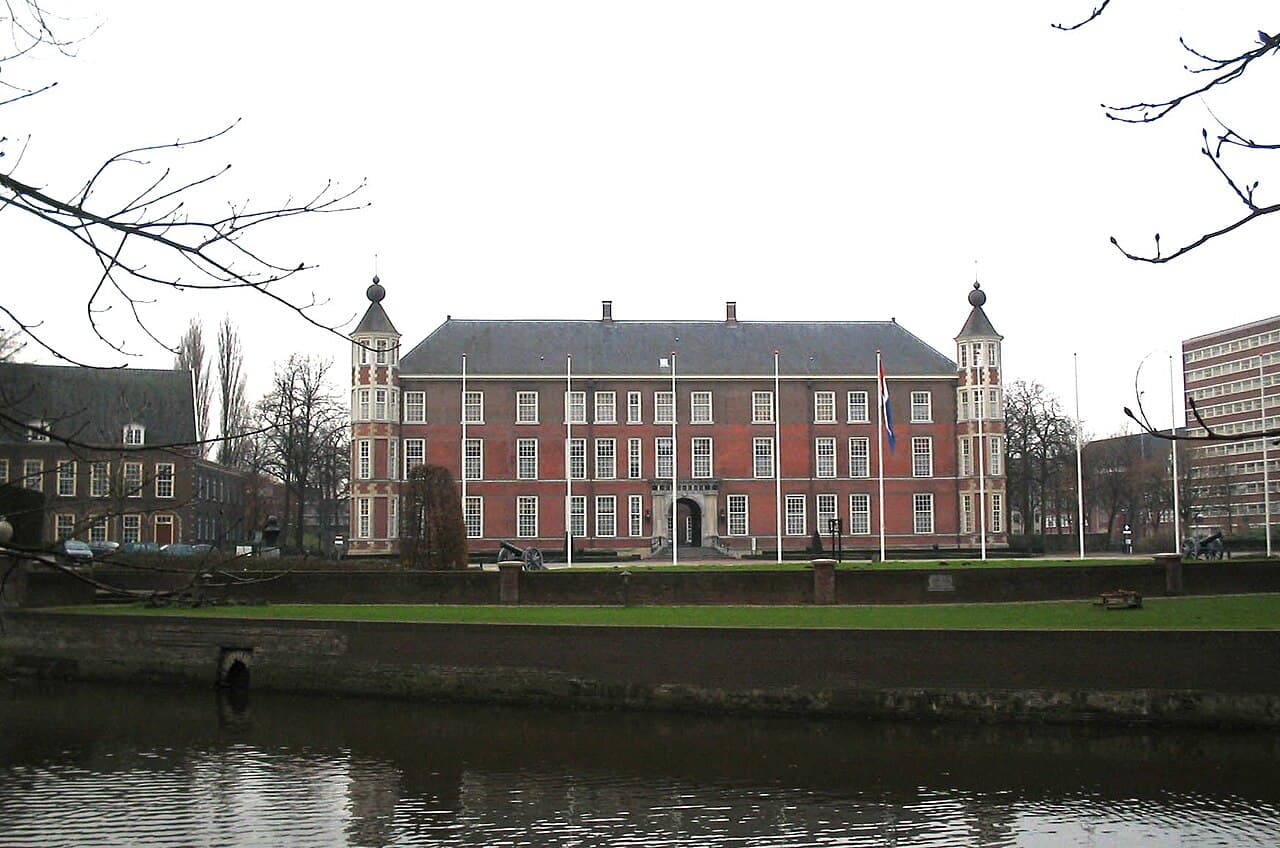
In 1826, King William I of the Netherlands assigned the castle to the Koninklijke Militaire Academie (Royal Military Academy). The academy began training cadets there in 1828, marking the castle’s transition into an educational institution. Architect Thomas Vincidor contributed to the construction of three wings, with a fourth wing added later by William II, further shaping the castle’s current layout.
Restoration efforts around the turn of the 20th century focused on preserving key architectural elements such as the Nassau Tower, the southern forebuilding, and the Spanjaardsgat gate with its distinctive heptagonal towers, the Duiventoren (Dove Tower) and Granaattoren (Grenade Tower). These restorations helped maintain the castle's historical integrity and defensive features.
The Huis van Brecht section was reopened in 1993 after extensive restoration, and its cellar now hosts exhibitions of archaeological finds, illuminating the castle’s rich history and the lives of its former inhabitants.
Architectural features and layout
Breda Castle exemplifies a blend of medieval military architecture and Renaissance palace design. The original layout included a water moat and four corner towers, integral to the city’s defenses. The Nassau Tower stands as a testament to the 15th-century expansions, notable for its robust construction and historical significance.
The Hofkapel remains a key Renaissance feature, highlighting the castle’s shift towards residential and ceremonial functions. The Spanjaardsgat gate with its heptagonal towers is one of the few surviving medieval defensive structures, showcasing the castle's strategic design.
Other notable architectural elements include the restored Duiventoren and Granaattoren, which preserve the castle’s military heritage. The castle’s wings, added during the 19th century, reflect the adaptation of the site for educational and military training purposes.
Current status and cultural significance
Today, Breda Castle serves as the home of the Koninklijke Militaire Academie, the service academy for the Dutch Army and Air Force. While public access is limited, special events and guided tours occasionally allow visitors to explore its historic features.
Since 1990, the castle has been recognized as a protected cultural heritage site and is listed among the Top 100 monuments by the Dutch Rijksdienst voor de Monumentenzorg. Its preservation reflects its importance as a symbol of Dutch history, military heritage, and architectural evolution from medieval fortress to Renaissance palace and modern military academy.
Frequently asked questions (FAQ)
- How do I get to Breda Castle?
- Breda Castle is easily accessible by public transport, with the nearest train station located just a short walk away. If you prefer to drive, there are several parking options nearby, making it convenient for visitors coming from different regions.
- What is the historical significance of Breda Castle?
- Breda Castle has a rich history that dates back to the 13th century, originally built as a fortress. It played a crucial role in various historical events, including the Eighty Years' War, and has served as a royal residence, showcasing the evolution of Dutch history.
- When was Breda Castle built?
- The initial construction of Breda Castle began in the 13th century, with significant expansions and renovations occurring in the following centuries. Today, the castle features elements from various architectural styles, reflecting its long and storied past.
- Can I take a guided tour of Breda Castle?
- Yes, guided tours are available at Breda Castle, allowing visitors to explore its rich history and learn about its architectural features. These tours are led by knowledgeable guides who provide insights into the castle's significance and the stories behind its walls.
- Why is the architecture of Breda Castle unique?
- Breda Castle showcases a blend of Gothic and Renaissance architectural styles, which is quite unique among Dutch castles. Its distinctive round towers and beautifully landscaped grounds make it a striking example of medieval military architecture.
- Is it possible to host events at Breda Castle?
- Yes, Breda Castle can be rented for private events, including weddings and corporate gatherings. The picturesque setting combined with its historical ambiance creates a memorable backdrop for any occasion.
- What are the opening hours for Breda Castle?
- Breda Castle is open to the public on weekdays from 10 AM to 5 PM and on weekends from 11 AM to 5 PM. It's advisable to check the official website or contact the castle for any seasonal variations in hours.
- What are the ticket prices for visiting Breda Castle?
- Tickets for Breda Castle are priced at €10 for adults, with discounted rates available for students and seniors. Children under 12 can enter for free, making it an affordable destination for families.
- When is the best time to visit Breda Castle?
- The best time to visit Breda Castle is during the spring and early autumn when the weather is pleasant and the gardens are in full bloom. Additionally, visiting during weekdays can help you avoid larger crowds and enjoy a more peaceful experience.
- What nearby attractions can I explore after visiting Breda Castle?
- After visiting Breda Castle, you can explore the beautiful city park, Valkenberg Park, located just a short walk away. The city center of Breda also offers a variety of shops, cafes, and historical sites, allowing for a full day of exploration.
Photo gallery

Information
Website
Visit websiteSources & official resources
Verify the information above using these authoritative references.
Loading map...
Visitor reviews
No reviews yet. Been here? Write the first review and help other travelers!
Write the first reviewVisited this castle? Share your experience
Your review helps other travelers and adds first-hand knowledge to our encyclopedia.