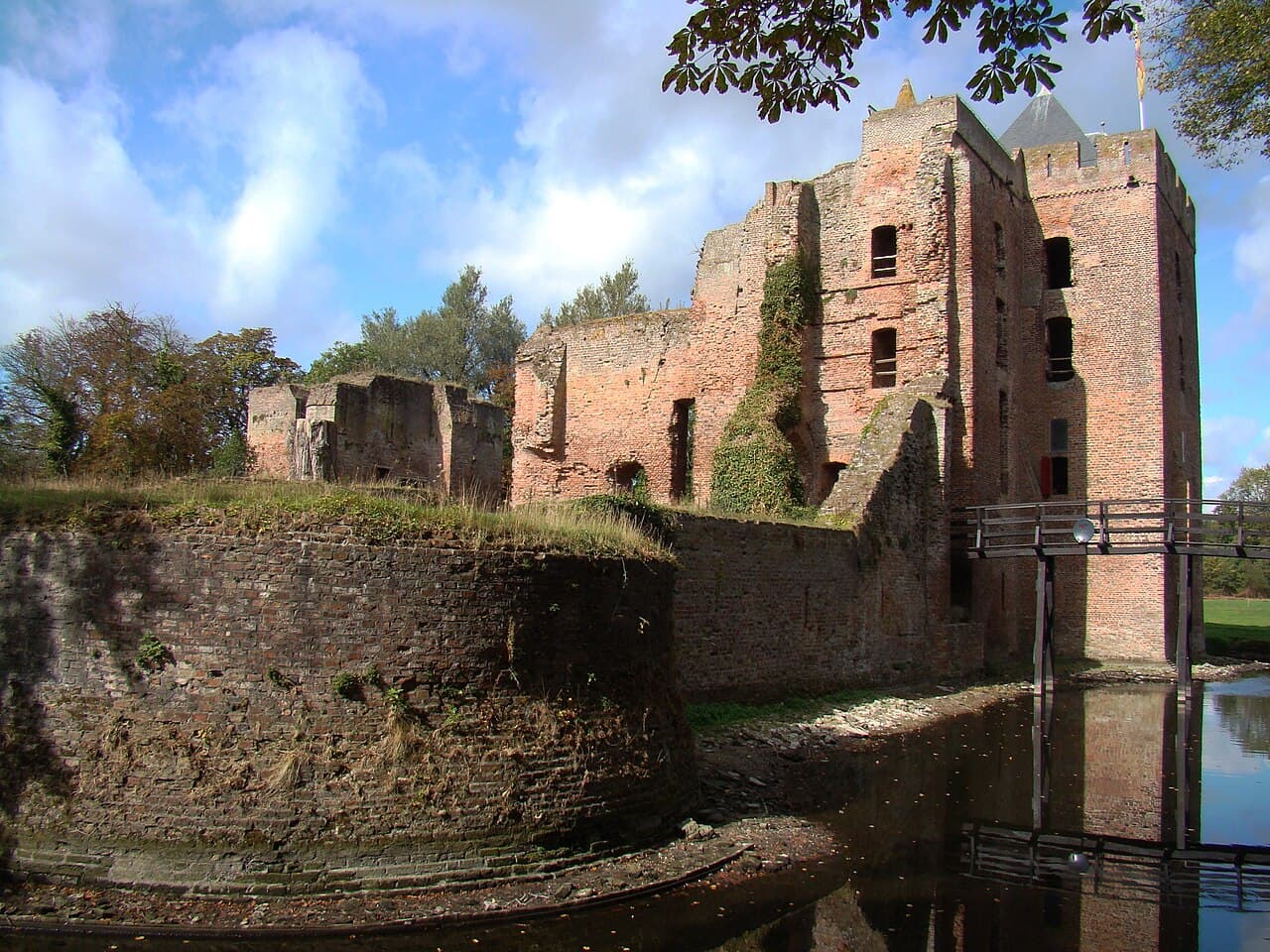
Brederode Castle — Netherlands castle

Brederode Castle

Brederode Castle: historic medieval ruins in Noord-Holland, Netherlands
Santpoort-Zuid, Noord-Holland, Netherlands
High Medieval (11th–13th c.)
Ruins

Brederode Castle, locally known as Kasteel van Brederode, is a significant medieval fortress located in the dunes and woodlands northwest of Santpoort village, within the province of Noord-Holland, Netherlands. Founded in the late 13th century, this castle holds a prominent place in Dutch history as the ancestral seat of the noble House of Brederode, descendants of the Lords of Teylingen and related to the Counts of Holland. The castle's strategic location was intended to control the vital through road to the Kennemerland region, underscoring its military and political importance during the High Medieval period.

Founding and early construction

The castle was originally built around 1282 by Willem van Brederode, initially comprising a simple tower or keep, which likely stood where the present-day courtyard is located. This early structure served as a fortified residence and a defensive stronghold. Around the year 1300, the castle underwent significant expansion under the direction of Dirk II van Brederode, who replaced the original tower with a more substantial square castle featuring four corner towers—three square and one round—reflecting typical High Medieval military architecture. The castle's design included a bailey and a fortified keep, essential for defense and control.

Role in the hook and cod wars

Brederode Castle played a pivotal role during the turbulent Hook and Cod wars, a series of conflicts in the 14th century between rival factions vying for control in Holland. The Brederode family supported the Hook faction, loyal to Margaret of Bavaria, while their opponents, the Cod faction, were led by figures such as Gijsbrecht van Nijenrode. In 1351, the castle was besieged and severely damaged by Cod forces under Nijenrode's command. Following its surrender, the castle was largely demolished due to the extent of the damage.

Reconstruction and later medieval history

After a reconciliation between the Brederode family and the Counts of Holland in 1354, the castle was rebuilt on its original foundations over the following decades, with restoration completed by 1426. Despite the restoration, the castle's defensive capabilities were compromised after the southern part was destroyed by the people of Haarlem during the siege of Haarlem in 1426, an event tied to ongoing factional conflicts. The Lords of Brederode continued to reside there until they moved to Batestein Castle in Vianen, acquired through marriage.

Decline and damage in the late medieval period

By 1464, the northern part of the castle, which had sustained less damage, was restored and adapted into a more comfortable residence rather than a fortress. However, in 1491, the castle was plundered by German mercenaries during the "Rise of the cheese and bread people," marking a significant downturn in its fortunes. The castle gradually fell into disuse and decay thereafter.

Destruction during the eighty years' war and subsequent ruin

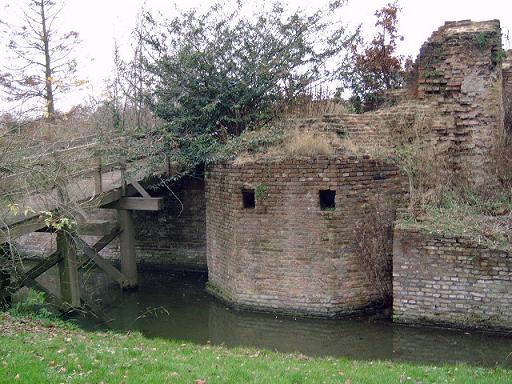
In 1573, during the Eighty Years' War and shortly after the siege of Haarlem, Spanish troops set fire to Brederode Castle, causing the collapse of the north wall of the kitchen wing into the moat. The debris from this collapse now forms a small overgrown island within the moat, a visible reminder of the castle's violent history. Following this event, only the buildings on the bailey remained habitable, but these too fell into ruin by the early 17th century.

Ownership changes and preservation efforts

After the death of Wolfert van Brederode in 1679, the last lord of the Brederode line, the fiefdom and castle ruins passed to the States of Holland. Over the next two and a half centuries, from 1600 to 1862, the ruins were gradually engulfed by shifting dune sands, leaving only small fragments of walls visible above ground.

Excavation and restoration

The castle ruins were first excavated and researched extensively between 1862 and 1903, marking one of the earliest state-led archaeological efforts in the Netherlands. Further research into the castle's construction history was conducted between 1986 and 1988, providing deeper insight into its architectural evolution. Today, Brederode Castle is recognized as the first national monument of the Netherlands to be restored by the state, reflecting its cultural and historical significance.

Architectural features and castle layout

Brederode Castle exemplifies a typical High Medieval hill castle with a square plan fortified by multiple towers, including three square and one round tower at the corners. The castle's bailey and keep were central to its defensive strategy. The moat surrounding the castle added an extra layer of protection, while the kitchen wing and residential quarters reveal the dual military and domestic functions of the structure. Despite its ruined state, the castle's layout and remaining walls provide valuable insights into medieval castle construction in the Netherlands.

Cultural significance and visitor experience

Today, Brederode Castle is a popular historic site open to the public for a fee. Visitors can explore the atmospheric ruins, which evoke the castle's rich and tumultuous history. The site offers a glimpse into medieval Dutch nobility, military architecture, and the complex political struggles of the region. Its location amidst dunes and woodlands enhances the visitor experience, providing a scenic and contemplative environment for learning about the past.

Access and amenities

The castle is situated at Velserenderlaan 2 in Santpoort-Zuid, easily accessible from Amsterdam and nearby towns. While the ruins are primarily preserved as an archaeological site, informational signage and guided tours help visitors understand the castle's historical context and architectural features. The surrounding natural landscape of dunes and forests complements the visit, making Brederode Castle a unique destination for history enthusiasts and tourists alike.

Frequently asked questions (FAQ)

What is the historical significance of Brederode Castle?
Brederode Castle, built in the 13th century, is a notable example of medieval architecture in the Netherlands. It served as a stronghold for the noble family of Brederode and played a significant role in regional power struggles during its time.
When was Brederode Castle built?
Construction of Brederode Castle began around 1280, making it one of the oldest castles in the region. Over the centuries, it has undergone various renovations and restorations to preserve its historical integrity.
Can I visit Brederode Castle?
Yes, Brederode Castle is open to visitors, allowing you to explore its rich history and stunning architecture. Guided tours and information panels enhance the experience, making it suitable for history enthusiasts and casual visitors alike.
What are the opening hours of Brederode Castle?
Brederode Castle typically opens from 10 AM to 5 PM during the tourist season, which runs from April to October. It’s advisable to check the official website for any seasonal changes or special events that may affect visiting hours.
Is there an entrance fee to Brederode Castle?
Yes, there is a small entrance fee to visit Brederode Castle, which helps maintain the site and its facilities. Discounts are often available for children, students, and senior citizens, so be sure to inquire at the ticket office.
What is the best time to visit Brederode Castle?
The best time to visit Brederode Castle is during the spring and early autumn months when the weather is pleasant and the gardens are in bloom. These seasons also tend to be less crowded compared to the peak summer months.
Is Brederode Castle accessible for visitors with disabilities?
Brederode Castle strives to be accessible to all visitors, though some areas may present challenges due to its historical structure. It’s recommended to contact the castle’s administration in advance to inquire about specific accessibility options and accommodations.
What nearby attractions can I visit while at Brederode Castle?
While visiting Brederode Castle, you can also explore the beautiful surrounding nature reserves, such as the Zuid-Kennemerland National Park. Additionally, the charming village of Santpoort-Zuid offers quaint shops and cafes for a pleasant experience.

Photo gallery

Brederode Castle
Click to view

Photo by Arch•Public domain

1 photo • Click any image to view in full screen

Information

Hill Castle

Address

Velserenderlaan 2, Netherlands

Sources & official resources

Verify the information above using these authoritative references.

Loading map...

Visitor reviews

No reviews yet. Been here? Write the first review and help other travelers!

Write the first review

Visited this castle? Share your experience

Your review helps other travelers and adds first-hand knowledge to our encyclopedia.
Write a review

(5/5)

0/2000 characters

Your review will be visible after admin approval

Nearby castles

3.4 km
Kleef Castle Ruins — Netherlands castle

Kleef Castle Ruins

Haarlem, Netherlands

Kleef Castle, also known as Huis ter Kleef, stands as a significant medieval site in Haarlem, Netherlands. Constructed likely in the late 13th century, this hill castle served both defensive and residential purposes during its active years. Its strategic location within Haarlem made it a focal point during key historical events, particularly the Siege of Haarlem in 1572. Early history and construction The origins of Huis ter Kleef trace back to the high medieval period, with architectural elements typical of 13th-century castle design. The castle was built as a fortified residence, featuring defensive walls and towers suitable for the era's military needs. While much of the original structure has not survived intact, archaeological research has uncovered foundational stones that suggest phases of construction and rebuilding, particularly after damage sustained in the 16th century. Ownership and naming In 1403, the castle was granted to Margaret of Cleves (c.1375-1411), a noblewoman whose family name became permanently associated with the castle. This transfer marked a significant chapter in the castle's history, as it retained the name "Kleef" in honor of its distinguished owner. The castle remained a symbol of noble authority in the region for several centuries. Role in the siege of haarlem Kleef Castle played a pivotal role during the Siege of Haarlem in 1572, when it was used as the headquarters for the Spanish army under the command of the Duke of Alva. This siege was part of the larger conflict of the Eighty Years' War, where Dutch forces sought independence from Spanish rule. The castle's strategic position allowed the Spanish to coordinate their military operations effectively. However, in 1573, the castle was deliberately blown up, resulting in severe damage that left it in ruins. The destruction was so extensive that the rubble was later repurposed for the expansion of Haarlem city, effectively ending the castle's military and residential functions. Architectural remains and the kaatsbaan Today, the most visible surviving structure related to the castle is the Kaatsbaan, a nearby house with a distinctive tower. Historically, this building was believed to be the only part of the castle that remained standing after the explosion. However, recent archaeological investigations indicate that the foundations beneath the Kaatsbaan contain older stones, suggesting that the building may have been reconstructed following the castle's destruction. The Kaatsbaan served various purposes over the centuries, including as a residence for former owners of the estate. In modern times, it has been integrated into the city gardens of Haarlem and is used for administrative and cultural functions. Post-destruction history and preservation After the castle's destruction, the property changed hands multiple times until it was acquired by the city of Haarlem in 1713. Since then, efforts have been made to preserve the remaining ruins and incorporate them into the urban landscape. Stones from the central castle ruins were reused in nearby buildings, a common practice reflecting the practical reuse of materials during that period. Currently, the ruins of Kleef Castle are located within the city gardens of Haarlem, offering visitors a glimpse into the medieval past amidst a landscaped setting. The site serves as a cultural and historical landmark, connecting present-day Haarlem with its rich medieval heritage. Archaeological insights and cultural significance Recent archaeological research has enhanced understanding of the castle's layout and construction phases. Excavations have revealed the castle's foundation walls and other structural elements, shedding light on the architectural techniques used during the high medieval period. These findings contribute to the broader knowledge of medieval fortifications in the Netherlands. Kleef Castle holds cultural significance as a symbol of Haarlem's medieval history and its role in the turbulent conflicts of the 16th century. The site attracts historians, archaeologists, and tourists interested in medieval architecture and Dutch history.

High Medieval (11th–13th c.)
Details
5.4 km
Fort bij IJmuiden — Netherlands castle

Fort bij IJmuiden

IJmuiden, Netherlands

Fort bij IJmuiden is a historic bastioned fortress located in IJmuiden, North Holland, Netherlands. It was strategically constructed to protect the vital entrance to the North Sea Canal, a crucial maritime route connecting the North Sea to the port of Amsterdam. The fort's position was originally on the northern bank of the canal, but later engineering works created a new canal branch, transforming the site into an island and enhancing its defensive capabilities. Historical context and strategic importance The fort was built in the late 19th century as part of the Dutch coastal defense system, designed to guard against naval threats and secure the entrance to one of the Netherlands' most important waterways. Its location near the North Sea made it a key point of defense against potential invasions or blockades aimed at Amsterdam and the surrounding region. Throughout its operational history, Fort bij IJmuiden played an essential role in military defense, particularly during the turbulent periods of the early 20th century. The fort's strategic position allowed it to control access to the canal and monitor maritime traffic effectively. Architectural design and features The fort exemplifies the bastioned fortress design, characterized by angular bastions projecting from the main walls to provide overlapping fields of fire and eliminate blind spots. This design was typical of late 19th-century military architecture, emphasizing improved artillery defense and protection against modern siege tactics. One of the fort's most notable architectural features is a rare armored emplacement that housed five heavy guns. This emplacement was designed to withstand enemy fire while allowing the fort's artillery to cover a wide defensive perimeter. The fort's walls, ramparts, and moats were constructed using robust materials intended to resist bombardment and provide secure positions for the garrison. Additional World War II fortifications were added to the site, reflecting the evolving military technologies and threats of the 20th century. Many of these structures remain preserved, offering insight into the fort's continued military use during the war. Preservation and current use Today, Fort bij IJmuiden is recognized as a heritage site, preserving much of its original structure alongside the later wartime additions. The site serves as a cultural and historical landmark, hosting events and educational activities that highlight the region's military history. The fort's transformation into an island due to canal modifications adds to its unique character and historical narrative. Visitors can explore the well-preserved bastions, armored gun emplacements, and other military installations that illustrate the fort's defensive role over more than a century. Architectural significance and legacy As a bastioned fortress, Fort bij IJmuiden represents an important phase in the evolution of military architecture, bridging traditional fortification concepts with adaptations for modern artillery and naval warfare. Its combination of 19th-century design and 20th-century wartime modifications provides a tangible record of changing defense strategies in the Netherlands. The preservation of the fort allows for detailed study of its construction techniques, defensive layout, and armament, contributing valuable knowledge to the fields of military history and castle architecture. Visitor information The fort is accessible to the public as a heritage site and event location. Visitors can experience the historical atmosphere of the fortifications, view the armored gun emplacements, and learn about the site's role in Dutch coastal defense. Its location near IJmuiden makes it a notable attraction for those interested in military history and historic fortifications.

Post-Renaissance (17th–18th c.)
Details
9.3 km
Fort Vijfhuizen — Netherlands castle

Fort Vijfhuizen

Vijfhuizen, Netherlands

Fort Vijfhuizen is an important component of the Defense Line of Amsterdam (Dutch: Stelling van Amsterdam), a UNESCO World Heritage Site comprising forty-two forts forming a ring of defense around the city. Situated in the town of Vijfhuizen along the ringvaart canal that encircles the Haarlemmermeer polder, the fort occupies a strategic position on a raised artificial hill surrounded by a moat. Its construction dates back to 1889-1890, when it was built using sand excavated during the creation of a new sluice-gate complex in IJmuiden. Architectural design and military function Designed as a bastioned fortress, Fort Vijfhuizen exemplifies late 19th-century Dutch military engineering. The fortress features characteristic bastions—angular projections from the main walls—that allowed defenders to cover adjacent walls with gunfire, minimizing blind spots. The fort's moat enhanced its defensive capabilities by creating a water barrier against attackers. The elevated position on an artificial hill improved visibility over the surrounding polder and the ringvaart, enabling early detection of enemy movements. The fort was part of a larger defensive network intended to protect Amsterdam by controlling water levels and flooding the surrounding lands if necessary. This strategy, known as waterline defense, made the fort a critical element in the region's military infrastructure. Historical events and significance During its active military use, Fort Vijfhuizen served primarily as a defensive stronghold within the ring of forts around Amsterdam. A notable event in its history occurred on 3 May 1943, when an American Ventura bomber crashed into the fort's moat, marking a dramatic moment during World War II. While the fort never saw direct combat, its presence contributed to the deterrence of enemy advances into the Dutch heartland. Transformation into a cultural and artistic venue In recent decades, Fort Vijfhuizen has been repurposed from a military installation into a vibrant center for contemporary art and cultural experimentation. The site is maintained by the charitable foundation Kunstfort Vijfhuizen, which leases space for twelve artist studios and operates a restaurant within the historic structure. The fort's unique architectural and historical setting provides a distinctive backdrop for artistic projects that explore themes of military heritage, ecology, and future scenarios. Exhibitions hosted at Kunstfort Vijfhuizen have included solo shows such as Rachel de Joode's Flat Nature / Surface Bodies (2017) and Daan Roosegaarde's temporary light monument Levenslicht (2020). Group exhibitions have engaged with ecological philosophy and art history, featuring works by influential figures like Joseph Beuys in The Prophecy of Bees (2016). More recent programming includes The Hero, the Villain, and the Truth (2024) by Folkert de Jong and the installation Elite Exodus by Christoph and Sebastian Mügge, presented in Shame of the Shuffled Cards (2025). These exhibitions critically examine social themes such as privilege, protection, and survival ethics, using the fort's military past as a conceptual framework. Surrounding landscape and related fortifications Fort Vijfhuizen is surrounded by water and green space, with its moat and hilltop location preserved to maintain historical authenticity. South of the main fort lies the first fore position, which has been integrated into a golf course, illustrating adaptive reuse of military land. Further south along the ringvaart is Fort Cruquius, another fortification that forms part of the Defense Line and is located near the Cruquius Museum. The fort remains accessible to the public during designated opening hours, allowing visitors to explore both its historical architecture and contemporary art exhibitions. Its combination of military heritage and cultural innovation makes Fort Vijfhuizen a unique destination in the Netherlands.

Post-Renaissance (17th–18th c.)
Details