Born Castle
Born Castle, locally known as Kasteel Born, is a historic hill castle located in the town of Born in the province of Limburg, Netherlands. Its origins date back to the medieval period, with the first recorded mention in 1154. Though the appearance of the original medieval fortress is unknown, it served as the seat of the Van Born family before passing through several noble lineages over the centuries.
Medieval origins and early history
The earliest documented lord associated with the site was Gozewijn I of Born, who owned the castle around 1150. Shortly thereafter, the castle was sold to Hendrik van Leyen, the prince-bishop of Liège, linking the site to powerful ecclesiastical authorities. Over the following centuries, control of the castle shifted between prominent families including the Valkenburg-Heinsberg and Salm families.
A dark chapter in the castle's history occurred in 1309 during the Poor Crusade, when under the protection of Reinoud van Valkenburg, a violent pogrom took place. A group of 110 Jewish people from nearby towns were massacred, and the castle was set on fire, reflecting the intense religious and social conflicts of the early 14th century.
Transition and destruction in the late medieval period
By 1400, the castle and its lands were acquired by Willem III, Duke of Jülich and Guelders, who took possession from the Van Salm family. During the 16th century, the castle underwent significant changes: in 1538, the original medieval castle was dismantled, and its stones were repurposed to reinforce the city walls of Sittard. The remaining structures were destroyed in 1542 by the troops of René van Châlon, Prince of Orange, marking the end of the medieval fortress.
Construction of the current castle in the 17th century
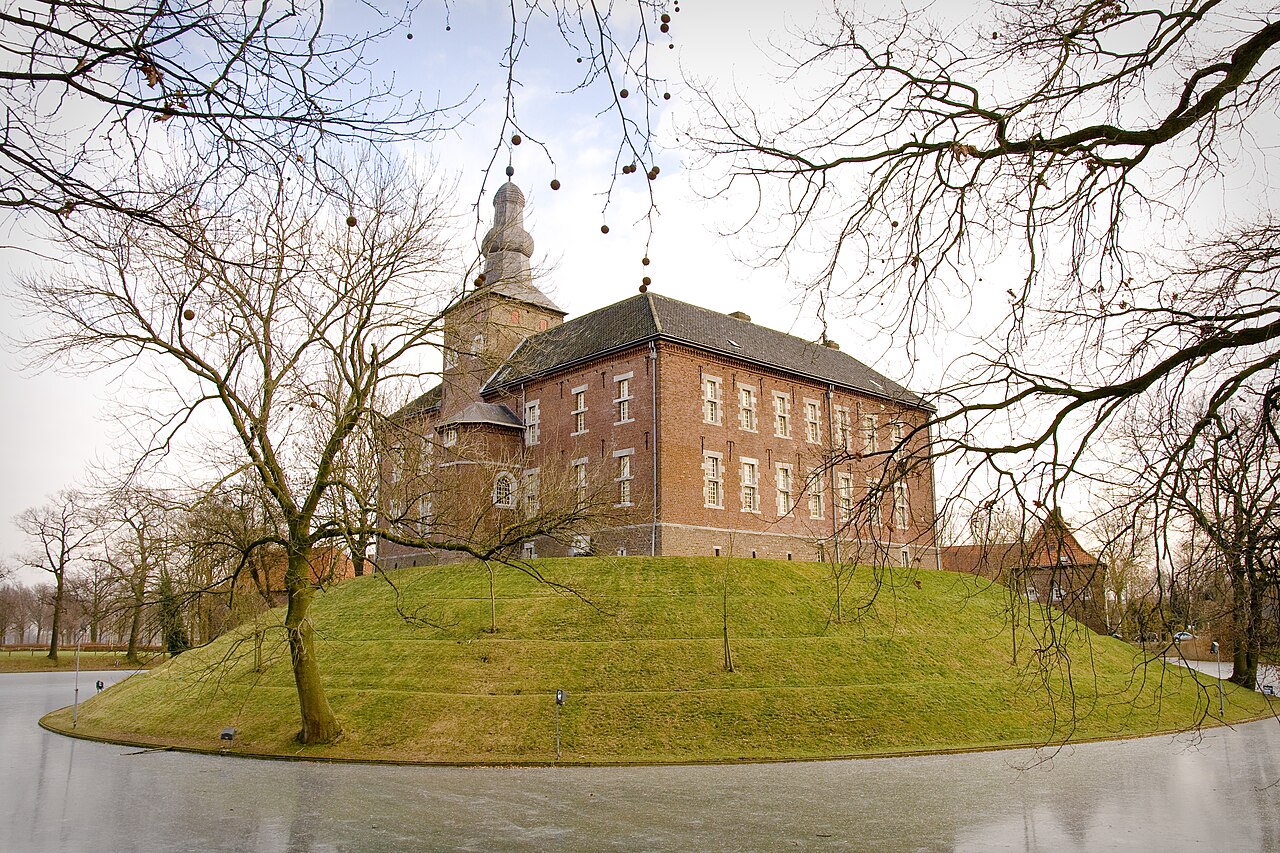
In 1647, the ruined site was sold to Jan Arnoldt de Leerodt, a nobleman from Heinsberg, Germany. Between 1662 and 1666, he commissioned the construction of the present Born Castle, establishing a new summer residence near the original medieval foundations. This new castle was built in a style reflecting the Maasland Renaissance and Liège-Aachen Baroque architectural traditions, characterized by brick walls, blue stone window frames, and marl stone pilasters.
The castle formed a rectangular complex with four corner towers surrounded by a double moat fed by the nearby Hondsbeek stream. The main building featured a sloping foundation typical of 17th-century regional architecture, with block-like corner pilasters and small windows. The upper floors were later modified in the 18th century, altering some original Renaissance elements.
Ownership and cultural significance through the centuries
The Van Lerode family maintained ownership for several generations. The last baron, Frans Adam van Lerode, was the final noble resident holding the imperial count title. The feudal privileges associated with the castle ended in 1795 with the arrival of French forces, and traditional lordships were replaced by modern municipalities by 1800.
In 1813, the estate was sold to Lodewijk Matheus Gilissen, a merchant from Maastricht, marking the first time the castle was owned by a non-noble. Subsequent owners included the de Cramer family and the Barbou family, who managed the property into the 20th century.
Jan Arnold van Lerode, the 17th-century builder, was known as an avid art collector, reputed to have amassed around 600 paintings. The castle also housed a distinctive carillon of 35 half-spherical bells, which was donated in 1941 but whose current whereabouts remain unknown.
Fire, decline, and preservation efforts
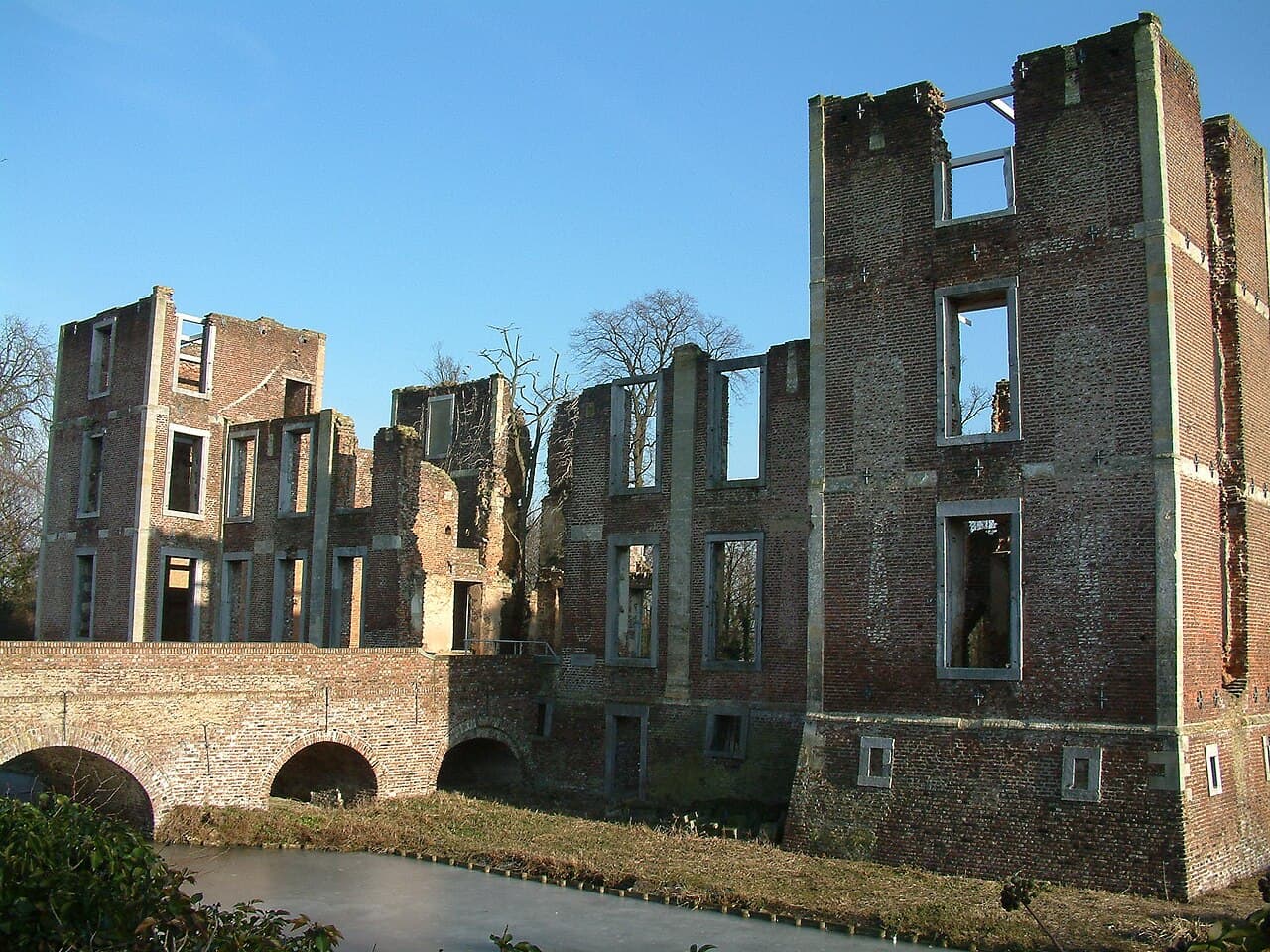
In 1930, a devastating fire destroyed much of the castle's main building and interior, including original furnishings, chapel decorations, Louis XVI style salons, stucco panels, and marble fireplaces bearing the Van Lerode coat of arms. Only a few valuable items survived, such as an antique cabinet.
After the fire, plans to rebuild were abandoned. Demolition of the fire-damaged sections began in 1937, during which archaeological finds were uncovered, including a well cover dated 1553. The rubble was reused to pave a driveway for a new villa on the site.
In 1955, the castle ruins were sold to the municipality of Born. Recognized for their historical importance, the ruins were designated a national monument in 1969. Restoration efforts in the late 20th century focused on the outer bailey and castle farm, which were repurposed for municipal use.
To prevent further deterioration, a preservation project began in 2000. Today, the castle ruins remain a protected heritage site, with the adjacent bailey buildings used as offices.
Architectural features and surviving structures
The surviving remains of Born Castle form a rectangular complex mainly dating from the 17th century. The four corner towers and the double moat are key defensive features. The walls are constructed of brick, with blue stone window frames and marl stone pilasters at the corners. The original pediment was lost in the 1930 fire, along with stucco decorations.
The main building’s base showcases a sloping foundation typical of the Maasland Renaissance, with block-like pilasters and small windows. Modifications in the 18th century removed some Renaissance elements such as small window openings and string courses, though marl stone bands still separate the floors.
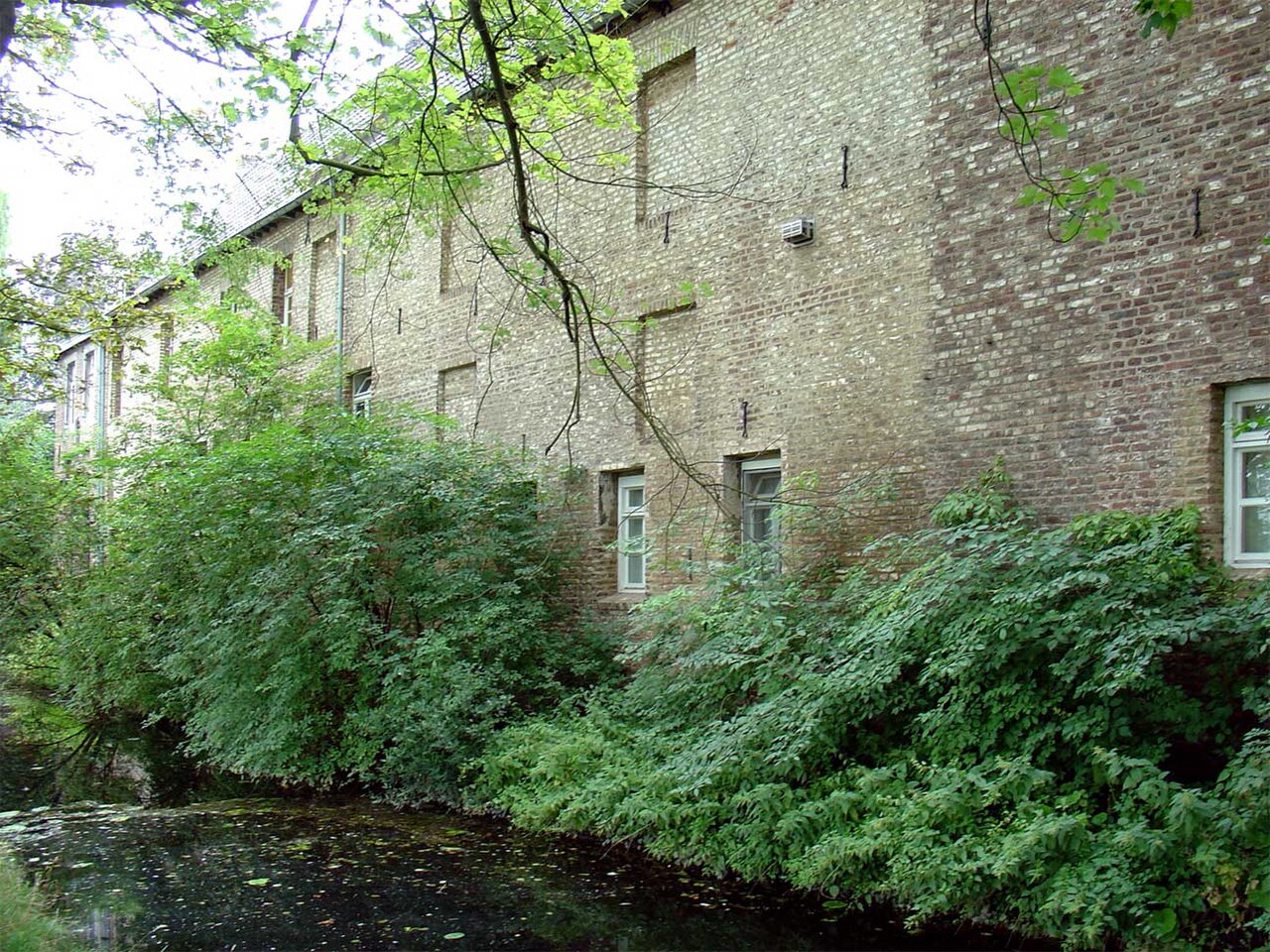
The outer bailey originally consisted of three wings arranged around a courtyard. The northern wing housed stables, the central wing contained stables and barns but was demolished in the 18th century and replaced with a modern building during 1989 renovations, and the southern wing included a coach house, tithe barn, and horse stable.
The steward’s house, built in 1784, features white-painted brickwork and a hipped roof with decorative finials. It historically served as the gardener’s residence. The castle farm near the bailey survived the 1930 fire intact, adding to the estate's historical fabric.
Castle park and surrounding landscape
Behind the ruins lies Castle Park Born, created in 1970 as a walking and animal park. The park preserves remnants of the castle’s former ornamental gardens and includes features such as an amphitheater and an ice cellar. The ice cellar, once used for ice storage before refrigeration, has collapsed and now serves as a shelter for lynxes cared for within the park’s animal collection.
The park’s terrain is divided by an old retaining wall designed to protect the gardens from flooding by the Hondsbeek stream. This landscaped area complements the castle ruins and contributes to the site's cultural and natural heritage.
Visiting born castle today
Visitors to Born Castle can view the castle ruins from the bailey, which is accessible from the side. The ruins themselves are generally not open to public access except possibly during heritage days. The castle can also be seen from the nearby small zoo, originally the castle park, though the zoo charges an entrance fee.
The castle remains a beautiful and evocative ruin, offering insights into the region’s medieval and early modern history, noble heritage, and architectural evolution. Its protected status ensures ongoing preservation for future generations to appreciate.
Frequently asked questions (FAQ)
- When was Born Castle originally built and who were its first owners?
- Born Castle was first mentioned in 1154 and was originally the seat of the Van Born family. The earliest documented lord was Gozewijn I of Born around 1150.
- What happened to Born Castle during the 16th century?
- In 1538, the original medieval castle was dismantled and its stones were used to strengthen the city walls of Sittard. The remaining parts were destroyed in 1542 by troops of René van Châlon, Prince of Orange.
- Who built the current Born Castle and when?
- The current Born Castle was built between 1662 and 1666 by Jan Arnoldt de Leerodt, who constructed a new summer residence near the original medieval site.
- Can visitors access the castle ruins?
- The castle ruins are generally not open to the public, except possibly during heritage days. Visitors can view the ruins from the bailey and nearby zoo, though the zoo charges an entrance fee.
- What architectural styles characterize Born Castle?
- Born Castle exhibits a mix of Maasland Renaissance and Liège-Aachen Baroque styles, with brick walls, blue stone window frames, marl stone pilasters, and a double moat with four corner towers.
- What efforts have been made to preserve Born Castle?
- The castle ruins were designated a national monument in 1969. Restoration efforts in the late 20th century focused on the bailey and farm buildings, and a preservation project began in 2000 to protect the ruins.
Photo gallery

Information
Sources & official resources
Verify the information above using these authoritative references.
Loading map...
Visitor reviews
No reviews yet. Been here? Write the first review and help other travelers!
Write the first reviewVisited this castle? Share your experience
Your review helps other travelers and adds first-hand knowledge to our encyclopedia.