Batenburg Castle
Batenburg Castle, located in the village of Batenburg in the Gelderland province of the Netherlands, is a remarkable example of a high medieval hill castle with a complex history spanning several centuries. The castle stands on an artificial motte, a defensive earthwork mound, surrounded by a moat, characteristic of medieval fortifications designed to provide strategic advantage and protection.
While local traditions suggest origins dating back to a Batavian warrior prince named Bato or even a Roman temple dedicated to Mars Victor, these claims lack archaeological evidence. More reliably, the castle’s origins trace to the 12th century, when a stone keep on a motte likely existed, marking the site as a feudal stronghold. The earliest documented noble family associated with Batenburg dates to around 1080, with the castle evolving through various ownerships and reconstructions.
Medieval origins and architectural evolution
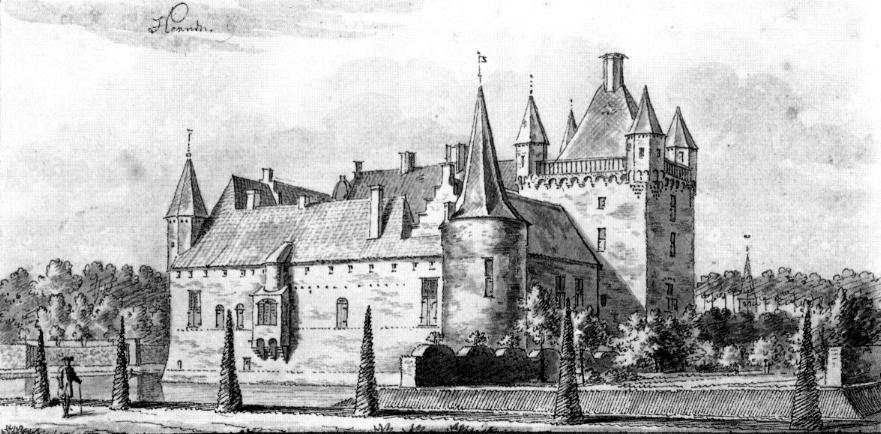
The initial significant construction phase is attributed to a member of the Van Bronckhorst-Batenburg family around 1300. This phase likely saw the erection of a stone shell keep and the development of a circular defensive rampart approximately 40 meters in diameter. The castle’s layout was compact, combining residential and defensive functions within the enclosure.
In the late 15th and early 16th centuries, Batenburg Castle endured multiple sieges and partial destructions. In 1497, forces under Albert III, Duke of Saxony, partially destroyed the castle. It was subsequently restored with strengthened circular ramparts, an entrance gate flanked by two watchtowers, and three residential towers positioned to the cardinal points. The courtyard was enclosed by three residential wings opposite the gatehouse, emphasizing the castle’s role as both a fortress and noble residence.
Sieges and destruction
The castle faced further assaults in 1503 by Charles II, Duke of Guelders, and again in 1540 by troops from Nijmegen. In 1568, bombardment by Philip of Hohenlohe-Neuenstein’s forces caused the collapse of the oldest castle sections. Each attack led to rebuilding efforts, reflecting the castle’s strategic importance and the turbulent political landscape of the region.
Rebirth and decline in the early modern period
By around 1600, Maximilaan van Bronckhorst undertook a significant reconstruction, rebuilding the castle on the foundations of the earlier medieval structure. This restoration maintained the castle’s defensive features while enhancing residential comfort, aligning with the evolving needs of noble households in the early modern era.
Later, under Count Johan van Horne, the castle was further restored and lavishly furnished, symbolizing its status as a noble seat. However, by 1700, after passing to the Counts of Bentheim-Steinfurt, the castle ceased to be permanently inhabited, marking the beginning of its decline.
Final destruction and ruin
The castle’s fate was sealed in 1795 during the French revolutionary wars. French troops deliberately filled the castle’s rooms with hay, destroyed the water pump, and set it ablaze, resulting in a devastating fire that left the castle in ruins. It was never rebuilt, and the ruins gradually became a quarry for building materials.
By the early 19th century, the standing remains were more extensive than today. However, the owner, Count Van Bentheim-Steinfurt, began demolishing parts of the ruin. Further damage occurred in 1922 due to gunfire. Post-World War II, the Dutch state confiscated the property and in 1953 sold it to the "Friends of the Castles of Gelderland" foundation, which has since undertaken consolidation and preservation efforts.
Architectural features and surviving elements
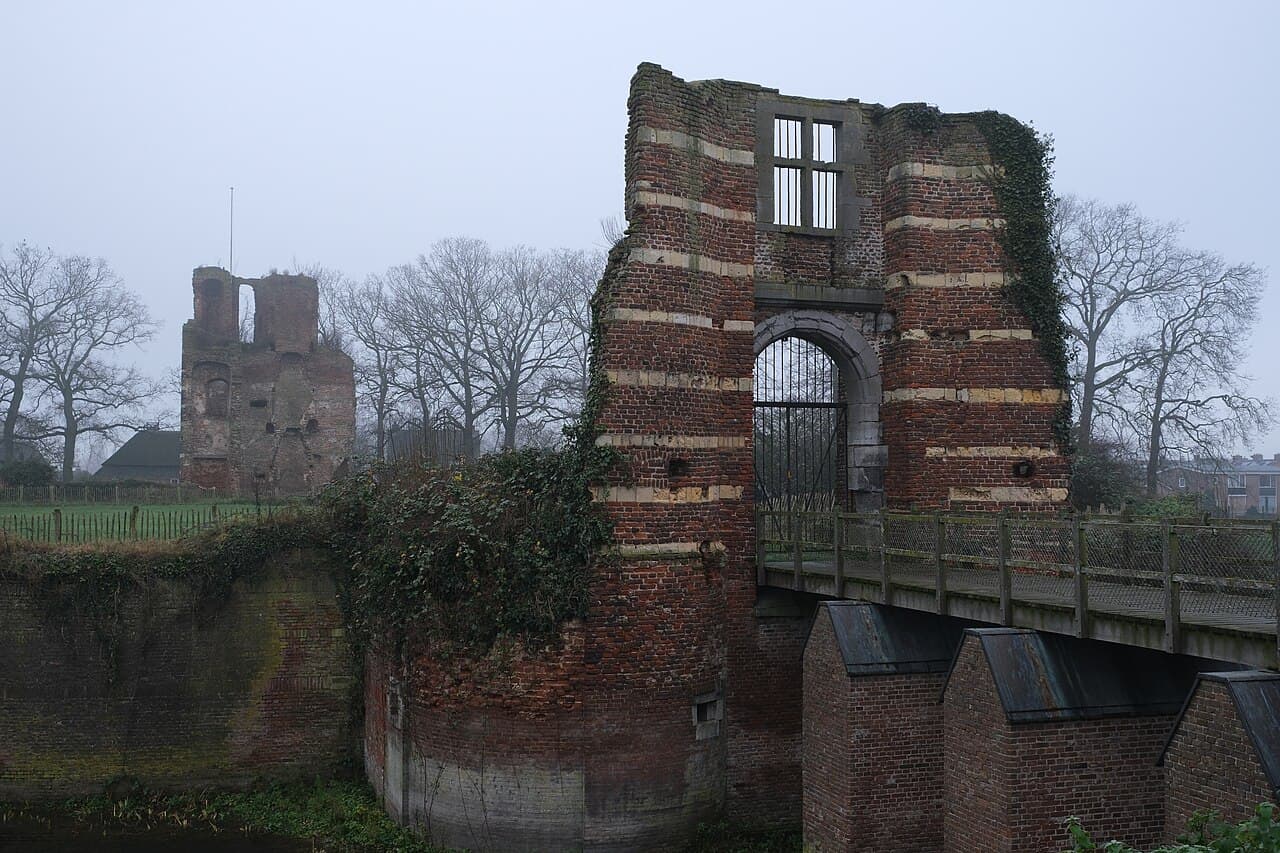
Batenburg Castle’s ruins today include significant portions of its curtain walls and several round towers constructed of alternating bands of red brick and marlstone, a sedimentary rock native to the region. The gatehouse remains partially intact, flanked by semicircular towers that once guarded the entrance.
The castle’s circular rampart and bastions reflect medieval defensive strategies adapted over centuries. The three residential wings that once enclosed a courtyard opposite the gatehouse highlight the castle’s dual role as a fortress and noble residence. Within the ruins, a large round tower contains remnants of chimneys and cross frames, indicating domestic use and architectural sophistication.
Historically, a well near the entrance was famed for its spring water, believed to have healing properties. Gatekeepers sold this water to visitors, linking the site’s earlier sacred associations to its medieval function.
Cultural significance and preservation
Today, Batenburg Castle stands as a romantic ruin embodying centuries of Dutch feudal history, military conflict, and architectural evolution. Though not accessible to the public, the site remains a poignant reminder of the region’s medieval heritage and the complex interplay of power, religion, and warfare that shaped its development.
The castle’s preservation by the "Friends of the Castles of Gelderland" foundation ensures that this historic monument endures as a valuable cultural landmark. Its ruins offer insights into medieval defensive architecture, early modern noble residences, and the impact of warfare on heritage sites.
Frequently asked questions (FAQ)
- How do I visit Batenburg Castle?
- Batenburg Castle is a ruin and is not accessible to the public. Visitors can view the site from nearby public areas but cannot enter the castle grounds.
- What is the historical significance of Batenburg Castle?
- Batenburg Castle is one of the oldest castles in Gelderland, with origins dating back to the 12th century. It played a key role in regional medieval conflicts and noble power struggles.
- When was Batenburg Castle destroyed?
- The castle was destroyed by fire in 1795 during the French revolutionary wars and was never rebuilt.
- What architectural features remain at Batenburg Castle?
- The ruins include curtain walls, several round towers with distinctive brick and marlstone bands, and a partially preserved gatehouse flanked by semicircular towers.
- Is Batenburg Castle accessible for tours?
- No, Batenburg Castle is not open for tours due to its ruinous condition and private ownership.
Photo gallery

Information
Sources & official resources
Verify the information above using these authoritative references.
Loading map...
Visitor reviews
No reviews yet. Been here? Write the first review and help other travelers!
Write the first reviewVisited this castle? Share your experience
Your review helps other travelers and adds first-hand knowledge to our encyclopedia.