Egmond Castle
Egmond Castle, locally known as "Slot op den Hoef," stands as a significant medieval hill castle ruin in the village of Egmond aan den Hoef, in the province of North Holland, Netherlands. This historic site offers a fascinating glimpse into the evolution of Dutch noble residences from the early Middle Ages through the late medieval period. Although much of the castle lies in ruins today, its layout and remnants reveal a complex history of construction, destruction, and restoration spanning several centuries.
The castle's origins trace back to a fortified manor established in the 11th or early 12th century, serving as the ancestral seat of the noble Egmond family. The earliest known structure was a wooden stronghold, evidenced by archaeological findings of charred oak piles and palisade traces beneath later masonry. Around 1203, Wouter, Lord of Egmont, replaced this with a circular stone castle featuring a strong keep and a curtain wall with a wall-walk supported by arches. This round water castle, measuring approximately 27 meters in diameter, primarily functioned as a refuge during times of conflict rather than a residential palace.
Medieval construction phases and architectural evolution
The first stone castle and early defensive features
The circular castle built in the early 13th century was a pioneering example of water castle design in the Netherlands. Its curtain wall was reinforced with internal stone buttresses spaced regularly to support a continuous walkway, allowing defenders to patrol the perimeter efficiently. The strong keep on the south side served as a final defensive refuge. Surrounding the castle was an outer ward protected by a wooden palisade, where residential and service buildings were located.
Transition to a square castle and outer ward expansions
By the late 13th century, the original round castle had become obsolete, and around 1285, Willem II, Lord of Egmont, initiated the construction of a new square castle on the eastern side of the outer ward. This new phase included a rectangular outer ward to the west, expanding the castle's defensive and residential capacity. After destruction by Frisian forces in 1321, the castle was rebuilt by John I, Lord of Egmond. The 14th century saw further enhancements, including the digging of a canal to Alkmaar around 1400, which improved access by boat and led to the construction of a harbor at the northeastern side.
Late medieval enlargement and embellishment
The 15th century marked the castle's zenith under John III, the first Count of Egmond and a counselor to Mary of Burgundy. He undertook extensive renovations and expansions, transforming Egmond Castle into one of the largest and most impressive fortresses in Holland. The moat separating the main castle from the outer ward became known as "the Pond," enclosed by water gates on the north and south. The outer ward was fortified with an imposing gatehouse flanked by four corner towers, designed to function as a standalone fortress. A great hall with a portrait gallery of the Egmond family was added, reflecting the castle's dual role as a noble residence and military stronghold.
Destruction and decline during the dutch revolt
Egmond Castle's strategic importance made it a target during the Dutch Revolt against Spanish rule. In 1573, on the orders of William the Silent, troops led by Diederik Sonoy set fire to the castle to prevent its capture by Spanish forces. This deliberate destruction marked the beginning of the castle's decline. Following the fire, the castle was abandoned and fell into ruin. By the late 18th century, most of the structure had been demolished, with only fragments such as the "Rentmeester" tower remaining until it too was largely dismantled in 1832.
Archaeological rediscovery and preservation efforts
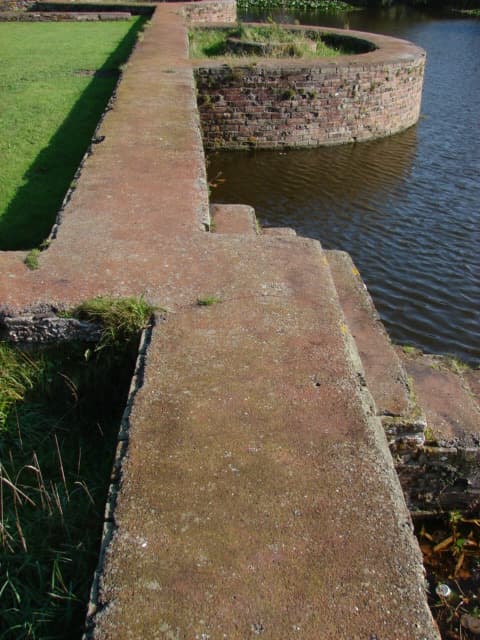
In the 1930s, archaeological excavations uncovered the foundations of the original circular castle and subsequent square castle phases. These excavations, part of unemployment relief efforts, revealed important artifacts including stone ornaments, iron and copper weapons, and pottery, although some details were lost due to the hurried nature of the work. The foundations were raised above ground level using stones found on site to preserve the remains. Today, the castle's layout is clearly recognizable, with the ruins accessible to the public as an open-air historical site.
Historical significance and legacy
Egmond Castle holds a prominent place in Dutch medieval history as the ancestral home of the Egmond family, who rose to become influential counts and princes in the region. Its layered architectural history reflects the evolution of medieval fortification techniques and noble residential architecture in the Netherlands. The castle's destruction during the Dutch Revolt symbolizes the turbulent political and military struggles of the era. Modern archaeological efforts and heritage awareness have preserved the site's legacy, allowing visitors to explore its historical footprint and appreciate its role in Dutch cultural heritage.
Current state and visitor information
Today, Egmond Castle remains a ruin with partial preservation of its foundations and a few structural fragments. The site is freely accessible and set within a park, offering visitors the opportunity to walk the grounds and visualize the castle's former grandeur. Although the castle is not extensively restored, its clear layout and historical markers provide valuable insight into medieval castle architecture and the noble history of the Egmond family.
A statue honoring Lamoraal I of Egmond, a notable family member, was erected near the site in 1997, further commemorating the castle's historical importance. Discussions about restoration have occurred, but no major reconstruction has taken place, preserving the site as an evocative ruin and archaeological landmark.
Frequently asked questions (FAQ)
- How do I get to Egmond Castle?
- Egmond Castle is located at Slotweg 19 in Egmond aan den Hoef, North Holland. It is accessible by car and public transport, with parking available nearby. The site is within walking distance from the village center.
- What is the historical significance of Egmond Castle?
- Egmond Castle was the ancestral home of the noble Egmond family and played a key role in medieval Dutch history. Its successive construction phases reflect the evolution of castle architecture and the political dynamics of the region.
- Can I visit the ruins of Egmond Castle?
- Yes, the ruins of Egmond Castle are freely accessible to the public. Visitors can explore the foundations and remnants of the castle within the park setting. There are no entrance fees or guided tours regularly available on site.
- When was Egmond Castle destroyed?
- The castle was deliberately set on fire in 1573 by troops under Diederik Sonoy on orders from William the Silent during the Dutch Revolt to prevent Spanish capture.
- What remains of Egmond Castle today?
- Today, only the bricked-up foundations of the castle and fragments of the Rentmeester tower remain. The site has been preserved as an archaeological ruin with visible layout and some structural remnants.
Photo gallery

Photo by Arch•Public domain
Information
Sources & official resources
Verify the information above using these authoritative references.
Loading map...
Visitor reviews
No reviews yet. Been here? Write the first review and help other travelers!
Write the first reviewVisited this castle? Share your experience
Your review helps other travelers and adds first-hand knowledge to our encyclopedia.