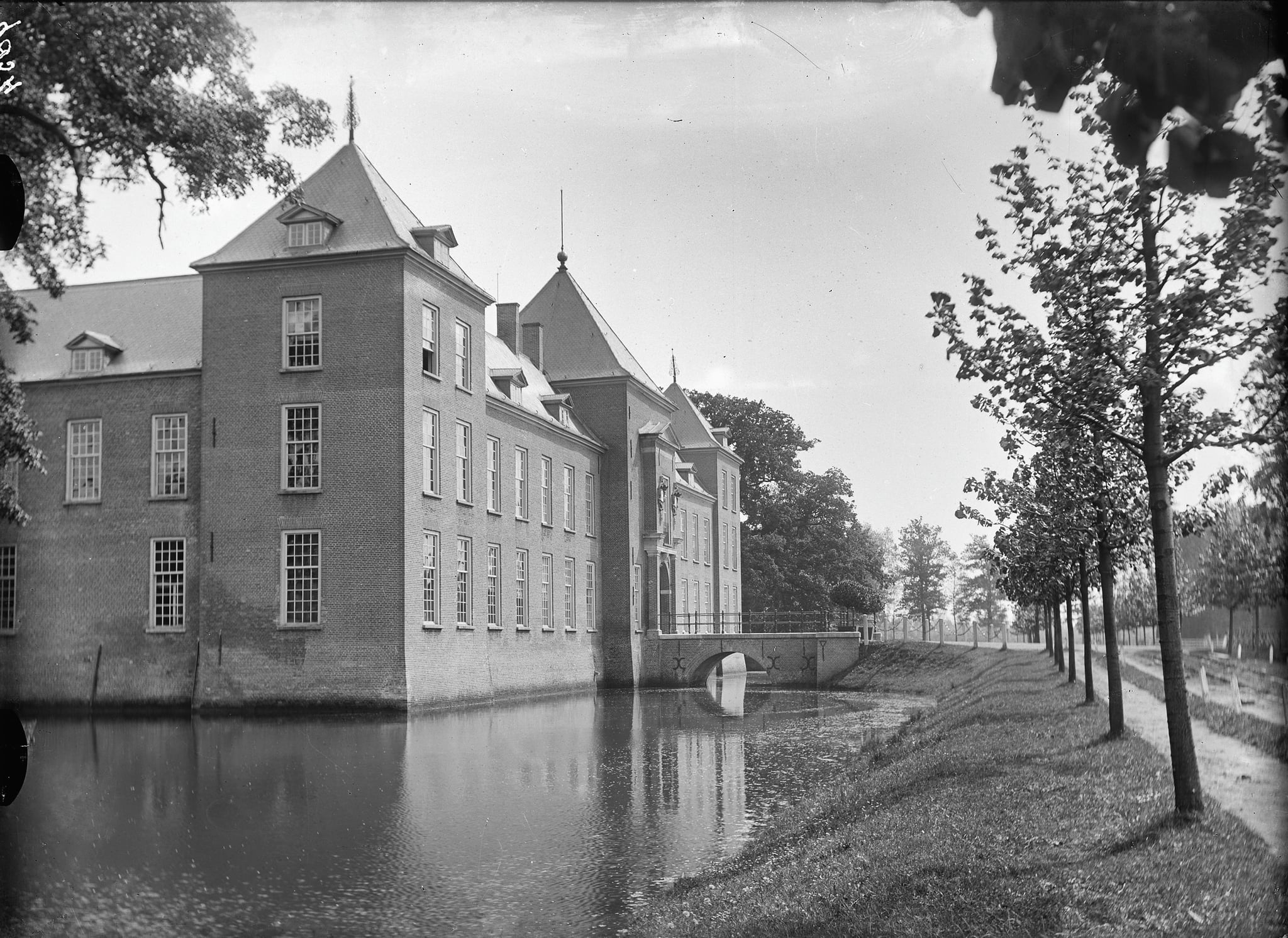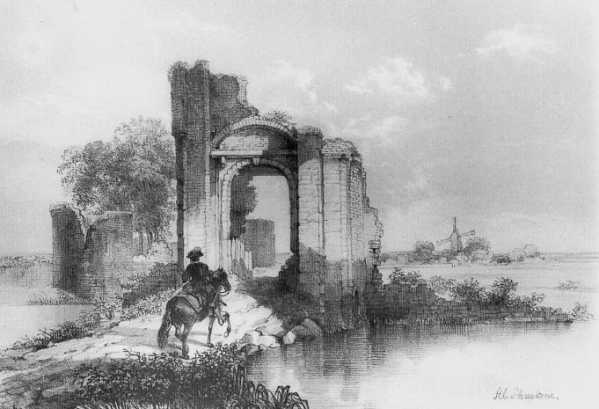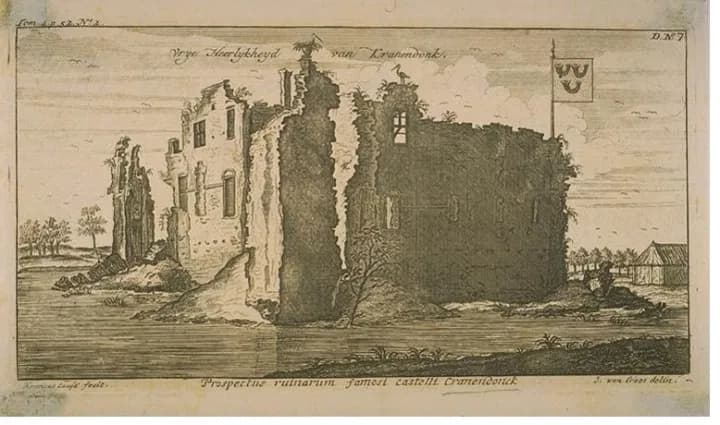
Cranendonck Castle
Cranendonck Castle stands as a significant historical site in the province of North Brabant, Netherlands, reflecting the rich medieval heritage of the region. Although no visible structures remain today, the castle's legacy endures through detailed archaeological studies and the preservation of its footprint within a protected landscape park. Originally constructed around 1250, Cranendonck Castle was a hill castle strategically positioned on elevated terrain near the Buulder Aa stream, taking advantage of the natural topography in a typically marshy environment.
The castle's name derives from the Dutch words "kraan" (crane) and "donk" (hill), symbolizing its location amidst wetlands frequented by migratory cranes. This etymology highlights the close relationship between the castle and its surrounding landscape, nestled between the villages of Soerendonk and Maarheeze.
Founding and noble lineage
Engelbert van Horne is credited with establishing Cranendonck Castle circa 1250 on land he inherited in 1242. His son, Willem I van Cranendonck, became the first to adopt the name associated with the castle, also serving as lord of Eindhoven. Over subsequent centuries, the castle passed through several noble families, including the Van Sevenborn, Van Milberg, Van Schoonvorst, Van Horne, and Van Egmond lineages, reflecting the complex feudal and dynastic shifts common in medieval Europe.
In 1551, ownership transferred to Anna van Egmont, Countess of Buren and Leerdam, who brought Cranendonck Castle into the possession of the House of Orange-Nassau through her marriage to William I, Prince of Orange. The castle thereafter remained under the House of Orange's ownership until the political upheavals of the French Revolution and the end of the Ancien Régime.
Castle function and management
The lords of Cranendonck Castle rarely resided on the premises, instead appointing a drossaard (a steward or bailiff) to manage the estate and oversee daily operations. This official lived at the castle and was responsible for its maintenance and administration, ensuring the estate's economic productivity and defense readiness.
Destruction and decline
During the Franco-Dutch War in 1673, French troops destroyed Cranendonck Castle, leaving it in ruins. Following its destruction, the castle was abandoned and gradually fell into disrepair. Despite this, the estate remained under the ownership of the House of Orange until feudal rights were abolished around 1798.
By 1820, the castle ruins were sold to a private owner who removed all remaining above-ground structures. The site thus lost its medieval architectural presence, and subsequent buildings on the estate, including a villa constructed in the late 19th century, do not reflect the original castle's medieval fabric.
Modern developments and preservation
In 1899, the farm associated with the castle was demolished and replaced by a villa, which was later modified with a turret in the early 20th century, giving it a pseudo-castellated appearance. This villa served various administrative roles, including functioning as the town hall of Maarheeze from 1938 until the municipality's merger in 1997, and briefly again between 2013 and 2014.
Archaeological excavations in 1996 revealed the castle's foundations near the Buulder Aa stream, enabling the precise mapping of its original layout. By 2008, the castle's contours were marked above ground, allowing visitors to visualize its historic footprint despite the absence of standing structures.
Archaeological findings and site features
Excavations uncovered the castle's perimeter and foundational remains, confirming its status as a typical hill castle adapted to a wetland environment. The site lacks surviving architectural details such as gatehouses, staircases, or decorative elements, and no significant artifacts have been reported from the digs.
The current landscape park surrounding the site spans approximately 400 hectares, integrating natural beauty with cultural heritage. It offers recreational opportunities like cycling, walking, and mountain biking, all set within a context that honors the castle's historical significance.
Cultural and historical significance
While Cranendonck Castle no longer stands, its historical importance endures through its connection to prominent noble families and the House of Orange-Nassau. The title Baron of Cranendonck remains part of the Dutch monarch's formal titles, linking the site to the nation's royal heritage.
The castle's story illustrates broader themes in Dutch and European history, including feudal lordship, dynastic marriages, military conflict, and the transformation of medieval estates in the modern era. Its preserved footprint and the surrounding protected park serve as a tangible reminder of these layered histories.
Visitors to the site today can explore the marked castle outline and enjoy the natural surroundings, gaining insight into the medieval past embedded within the contemporary Dutch landscape.
Frequently asked questions (FAQ)
- What is the historical significance of Cranendonck Castle?
- Cranendonck Castle was a medieval hill castle built around 1250, associated with noble families including the House of Orange-Nassau, and reflects feudal and military history in the Netherlands.
- Can I visit the remains of Cranendonck Castle today?
- While no above-ground structures remain, the castle's footprint is marked on-site within a protected landscape park, accessible for walking and cycling.
- When was Cranendonck Castle destroyed and why?
- The castle was destroyed in 1673 by French troops during the Franco-Dutch War, leaving it in ruins.
- Are there any original architectural features visible at Cranendonck Castle?
- No original medieval architectural features survive above ground; archaeological excavations have revealed the castle's foundations and layout.
- What activities are available around the Cranendonck Castle site?
- The surrounding 400-hectare landscape park offers cycling, walking, and mountain biking, allowing visitors to enjoy nature and the historical context.
Photo gallery

Photo by Unknown authorUnknown author "... us Lansé fecit I van Croes delineavit"•Public domain
Information
Address
Next to Van Hornelaan, Netherlands
Loading map...
Visitor reviews
No reviews yet. Been here? Write the first review and help other travelers!
Write the first reviewVisited this castle? Share your experience
Your review helps other travelers and adds first-hand knowledge to our encyclopedia.