When someone asks you about the largest castle in the world, Neuschwanstein probably pops into your head – those fairy-tale towers, that Disney postcard silhouette. And that would be a completely wrong answer. By the standards of truly massive fortresses, Neuschwanstein is tiny – a romantic decoration, not a real fortress. The genuine record-holders are structures that most people have never heard of, or know only by name. And that's exactly what this article is about.
But before we dive into the details, we need to clear something up – what exactly are we measuring when we talk about the "largest castle in the world"? It's not as simple as it sounds. Guinness World Records puts a different castle at the top than most rankings based on satellite measurements. Everything depends on methodology: are we measuring built-up floor area, the land enclosed within outer walls, the total length of ramparts, or the entire estate including gardens? Each approach gives a different answer.
In this article, we look at all these criteria and present the castles that dominate in each category. I guarantee that after reading this, you'll never look at the word "castle" quite the same way again.
Malbork – the world's largest castle by built-up area
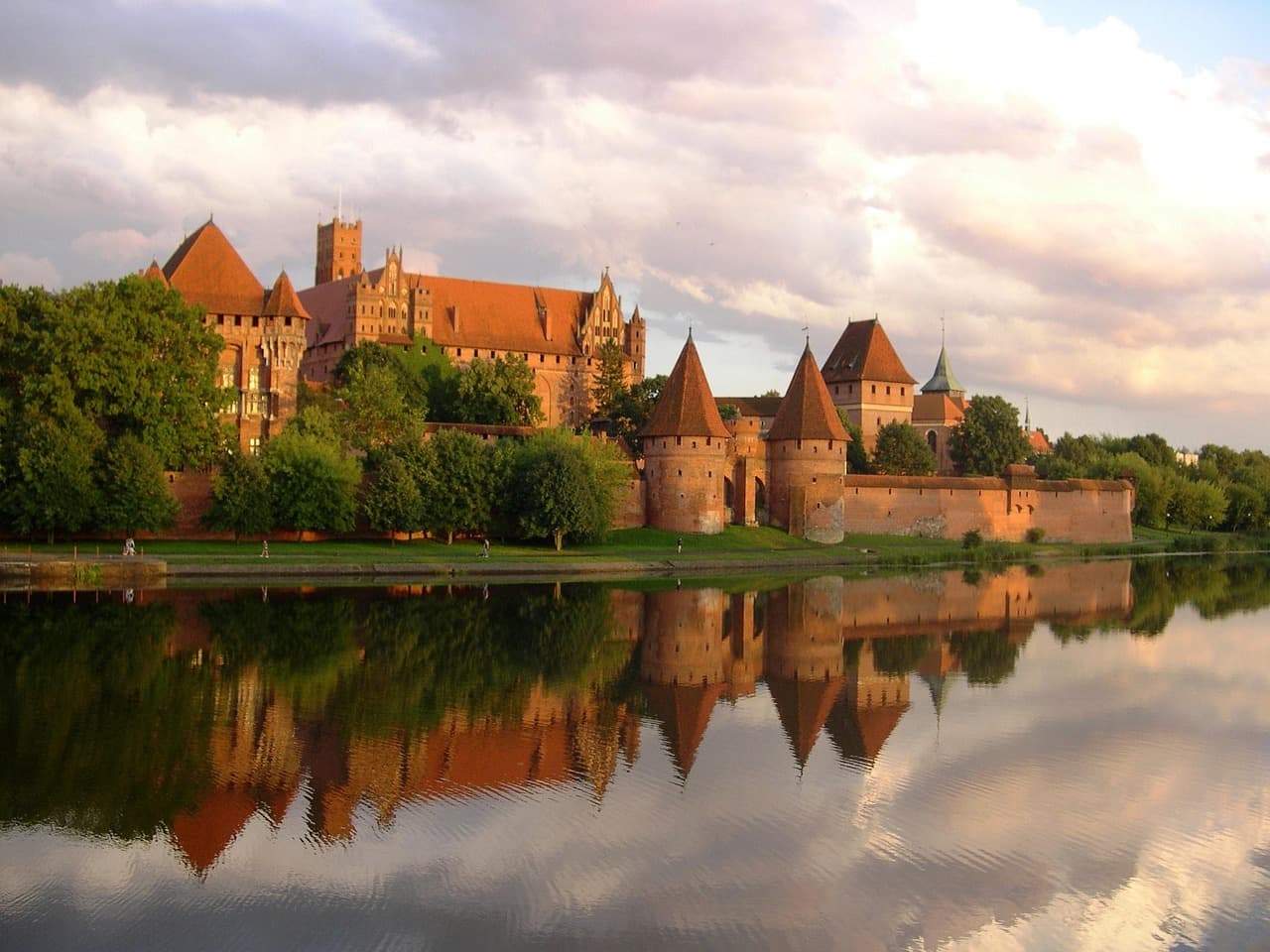
Let's start with the record-holder sitting on Polish soil – a place far better known abroad than it is at home. Malbork Castle, officially known as the Castle of the Teutonic Order in Malbork, is according to UNESCO measurements and most major rankings the largest castle in the world by built-up area – a staggering 143,591 square meters, or nearly 21 hectares.
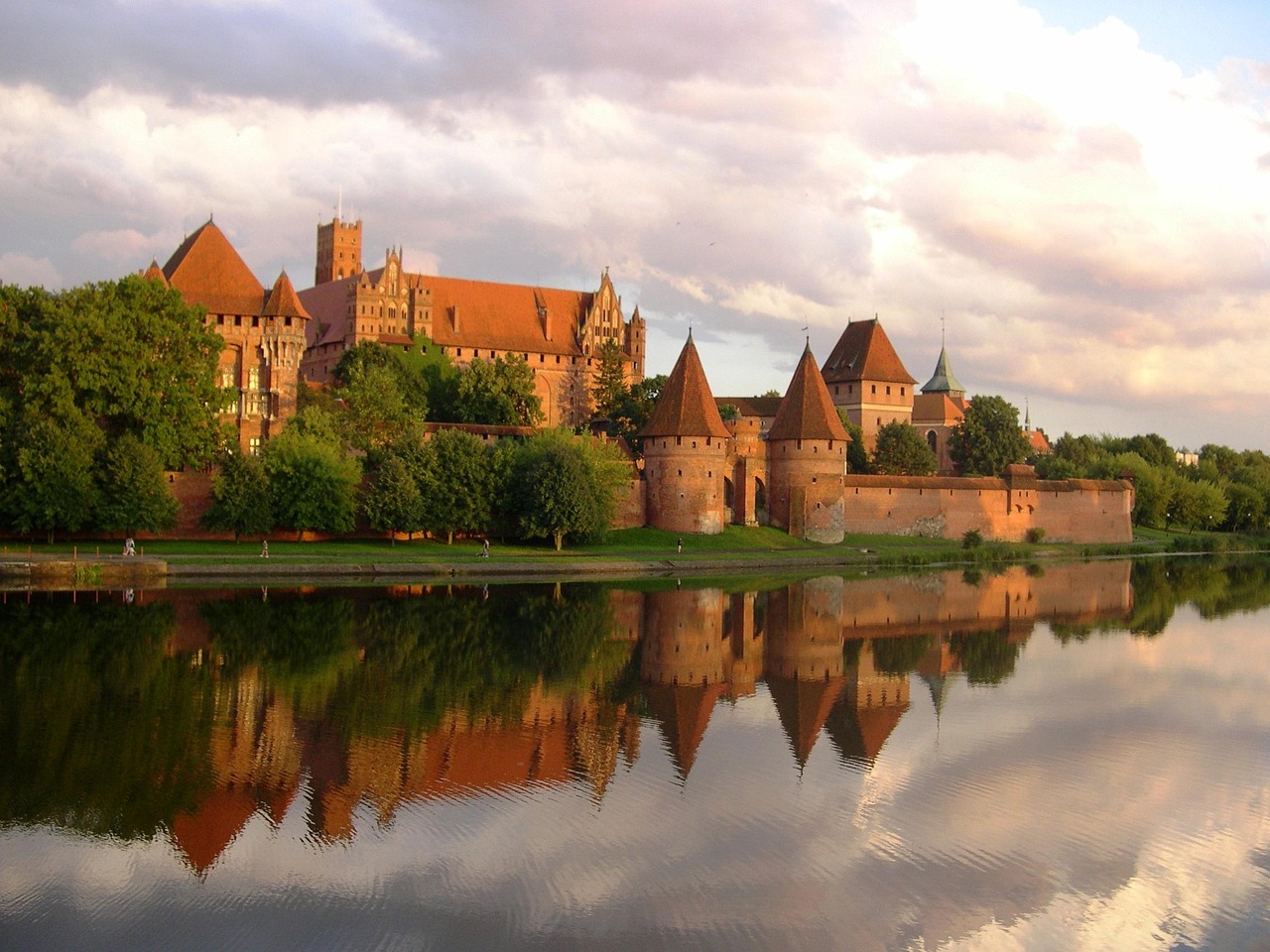
To put that in perspective – 21 hectares is the equivalent of 30 full-size football pitches laid side by side. Or think of it this way: if you walked at a normal pace along the outer walls of Malbork, it would take a good 40 minutes before you returned to your starting point. This isn't a castle – it's a walled city.
Construction was begun by the Teutonic Knights in 1274 as a modest monastic convent on the banks of the Nogat River. But the scale of expansion that followed over the next 150 years exceeded all expectations. When the Grand Master of the Order moved his headquarters here from Venice in 1309, Malbork became the political, military and economic hub of an empire stretching from the Baltic Sea to what is now Estonia. And yes – an empire needs a suitably large seat of power.
The complex is divided into three distinct castles: the High Castle (the spiritual heart, with the Chapel of the Virgin Mary and the refectory), the Middle Castle (the administrative centre, where banquets were held and ambassadors received), and the Outer Castle – an enormous service courtyard housing workshops, stables, a brewery and granaries. Each section is surrounded by its own walls and moat, which meant that an enemy who breached the first line of defence still faced another, and then another.
Malbork's history is a story of fall and rebirth in equal measure. After the defeat at the Battle of Grunwald in 1410 and a years-long siege by Polish forces, the castle finally passed into the hands of the Kingdom of Poland in 1457. It was then mortgaged, sold off, converted into a warehouse, ransacked by Napoleonic troops, and – perhaps most damningly – came within a whisker of being demolished for bricks to build local roads in the early 19th century. It was saved by Prussian conservator Johannes Quast, who initiated the first restoration works in 1817. But the real catastrophe came later: the fighting in 1945 reduced over 50 percent of the castle to rubble.
What we see today is the result of decades of painstaking work by Polish conservators and art historians, who rebuilt Malbork brick by brick, room by room. In 1997 the castle was inscribed on the UNESCO World Heritage List, and today it welcomes over half a million visitors a year.
"Malbork is not a relic of the past – it is a living monument to human determination in the face of destruction. Its reconstruction after the war stands as one of the greatest conservation achievements in European history." – excerpt from a scholarly publication of the Malbork Castle Museum, 2019
If one place in Poland deserves the label "must-see" – and I mean this completely seriously – it is Malbork. Not because it's pretty. Because it's enormous, authentic, and historically profound beyond measure.
Prague Castle (Hradčany) – the world's largest ancient castle complex according to Guinness
Now we move into the territory of official records. Guinness World Records awards the title of "largest ancient castle in the world" to Prague Castle (Hradčany), which covers 70,000 square meters of the core complex alone (and with gardens, stables and auxiliary buildings – up to 450,000 square meters, or 45 hectares).
How can Malbork have 143,000 m² while Guinness gives the record to Prague at 70,000 m²? This is precisely the methodological trap I mentioned at the start. Guinness measures a coherent, unified complex of buildings, not the total area of an entire estate. In that category, Hradčany wins as one continuous, integrated architectural organism. Malbork does have a larger total land area, but it is divided into separate, distinct sections.
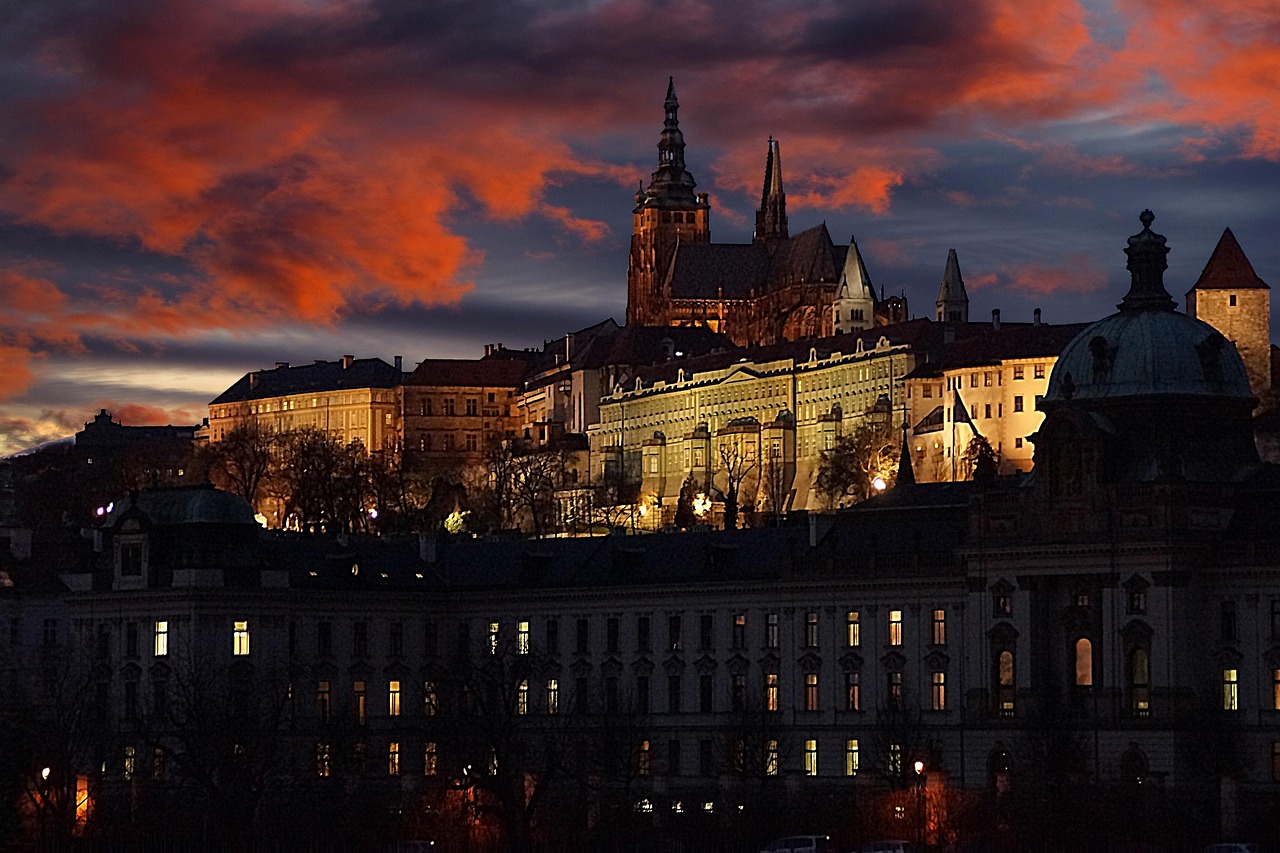
Hradčany forms an elongated irregular polygon measuring 570 meters in length and an average of 128 meters in width. Inside you'll find several palaces, three churches, a former music school, museums, galleries, gardens and much more. You're starting to see why this place feels more like a small town than a castle, aren't you?
The history of the complex dates back to the 9th century, when Prince Bořivoj I of the Přemyslid dynasty built the first fortifications here. For over a thousand years, every successive ruler of Bohemia and the Holy Roman Empire added a new layer – Romanesque, Gothic, Renaissance, Baroque. The result? Hradčany is a living encyclopaedia of a thousand years of European architecture, where different styles sit side by side in a way that feels entirely natural.
At the heart of the complex stands St. Vitus Cathedral – a Gothic giant whose construction began in 1344 and wasn't completed until 1929 – nearly six centuries! Inside it holds the Crown Jewels of the Kingdom of Bohemia, locked behind seven locks (literally – the treasury door can only be opened by simultaneously using seven keys held by seven different people).
It's also worth noting that Hradčany today serves as the official residence of the President of the Czech Republic – making it one of the very few castles in the world that still performs an active political function. Some buildings are closed to the public for this reason, but even the accessible areas are more than enough to fill an entire day of exploration.
Mehrangarh in Jodhpur – India's largest fortress and a marvel of cliff architecture
If Malbork and Hradčany impress with their horizontal scale, Mehrangarh Fort in Jodhpur (Rajasthan, India) wins the categories of "hardest to conquer" and "most dramatic setting." It stands on a sheer vertical rock rising 122 meters above the city and spreads across an area exceeding 80,000 square meters.
Mehrangarh is the largest and best-preserved fortress in India, with walls that in places reach a thickness of 36 meters – roughly the width of a ten-story building. Seven gates lead into the fort, each one historically serving as the last line of defence before the next courtyard. The architects of Mehrangarh designed it so that an attacker who broke through the first gate would immediately come under fire from the flanking walls and be forced to change direction – effectively having to restart the assault from scratch, every single time.
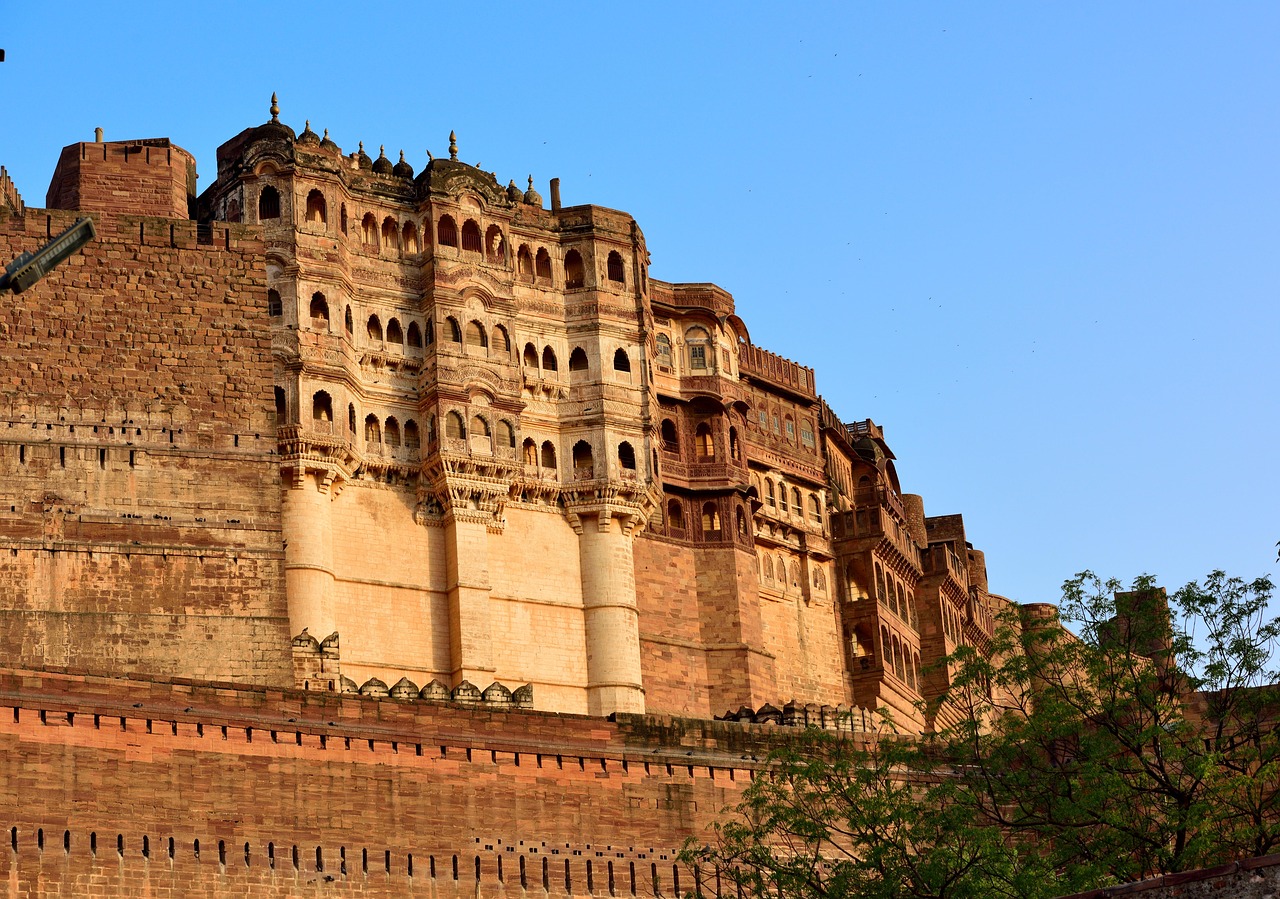
Founded in 1459 by Rao Jodha – a man who had just relocated his capital and needed a new, impregnable seat of power – the fortress was expanded over centuries. Inside the complex you'll find intricately decorated chambers with walls covered in sandstone carvings, jali windows – delicate stone lattices that simultaneously provide privacy and air circulation – and vast ceremonial courtyards.
Mehrangarh also houses one of the finest regional museums in Asia. Collections of palanquins, Rajasthani miniature paintings, antique weaponry, textiles and musical instruments are genuinely world-class.
"Standing at the base of Mehrangarh and looking up, you understand why the Rathore dynasty was considered unconquerable for centuries. This is not a building – it is a geological extension of the rock it stands on." – historian William Dalrymple, in an interview for the BBC, 2017
The view over Jodhpur – the Blue City – from the fort's terraces at sunset is one of those experiences you simply don't forget. The blue of the houses against the red sandstone of the walls and the gold of the sky is genuinely something special.
Spiš Castle in Slovakia – a giant ruin in the heart of Central Europe
Not all great castles have survived intact. Spiš Castle (Slovak: Spišský hrad) in eastern Slovakia is the finest example of this – as one of the largest castle ruins in Europe, spreading across more than 40,000 square meters, it impresses even in its state of collapse.
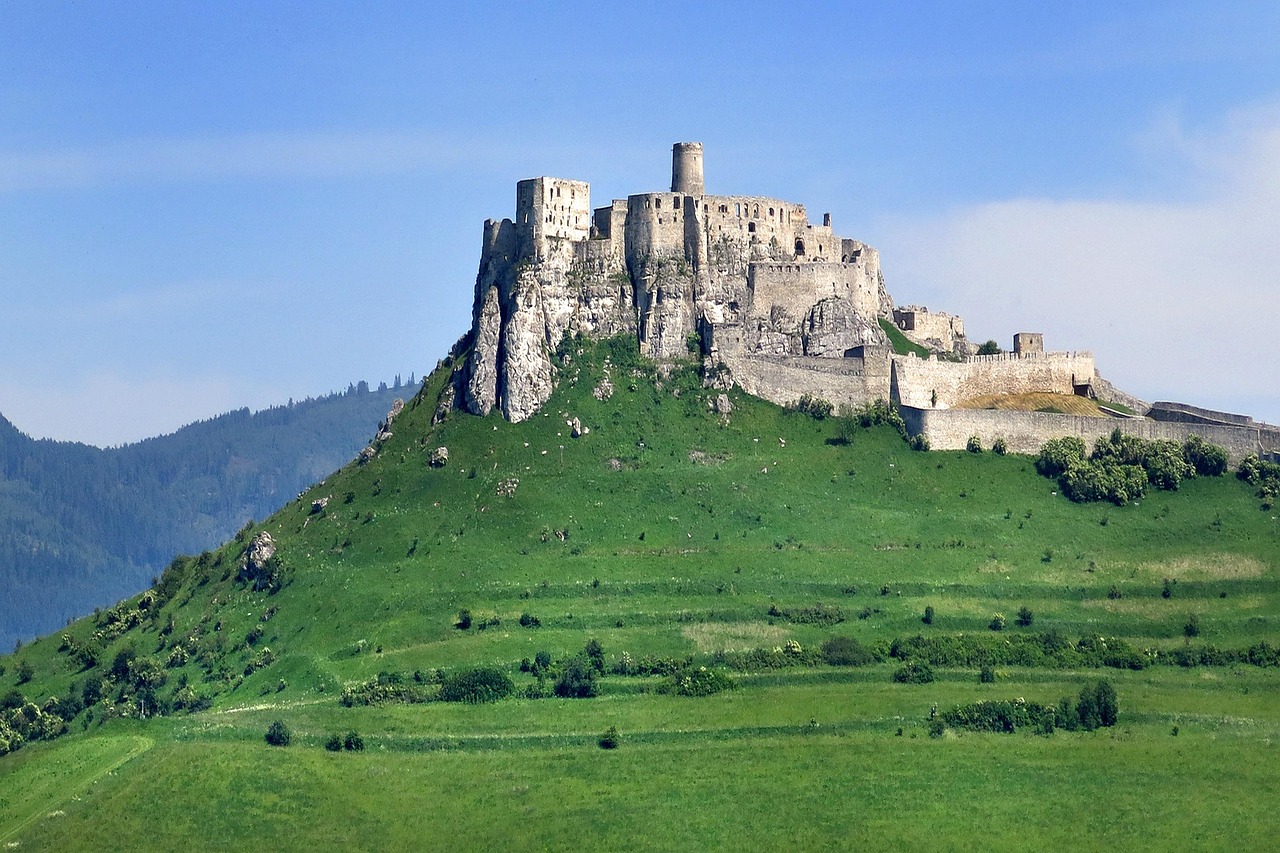
Originally built in the 12th century on a travertine hill 634 meters above sea level, Spiš served as a key administrative, military and judicial centre for the vast Spiš region (today straddling the Slovak-Polish border). Over the centuries it was the seat of successive aristocratic families, and it went through all the phases of a typical European castle's career: construction, expansion, sieges, rebuilding, fire. It was that fire in 1780 that ended the castle's active life, leaving it as a monumental ruin ever since.
Inscribed on the UNESCO World Heritage List in 1993 alongside the nearby Spiš Chapter and the town of Levoča, Spiš is today one of the most dramatic ruins in Europe. As you approach from the town of Spišské Podhradie, the massive silhouette rises above the landscape like a stone crown – walls still standing over 10 meters high in places, cylindrical towers jutting skyward as if time had frozen. It's no surprise that Spiš appeared as a film location in Dragonheart (1996) and The Last Legion (2006).
If you're in Poland and planning a trip – Spiš is barely 100 kilometers from Zakopane. It's genuinely worth the detour.
Himeji – Japan's largest and best-preserved castle
Time to leave Europe and look east. Japan has its own tradition of castle architecture, entirely different from the European model – and its own giants. Among all Japanese castles, in terms of the scale of the complex and the state of preservation, Himeji Castle in Hyōgo Prefecture stands in a class of its own.
The Himeji complex encompasses 83 buildings spread across more than 107,000 square meters of built area (and including gardens and surrounding grounds – over 100 hectares in total). Japanese castles differ from European ones in their defensive philosophy: the point is not the thickness of the wall, but the labyrinthine layout of the space, which disorients attackers and leads them into traps. Himeji is a masterclass in this strategy – courtyards, gates and corridors form a complex network in which it's easy to get lost and nearly impossible to find a direct route to the main keep.
Built originally in 1333, and expanded to its current form in the early 17th century, Himeji is called Shirasagi-jō – the White Heron Castle – because of its brilliant white exterior. That white has a practical purpose: the plaster of lime and sand protects the wooden structure from fire and moisture. Looking at that elegant, white silhouette against the mountains, it's hard to believe it conceals such militarily sophisticated engineering.
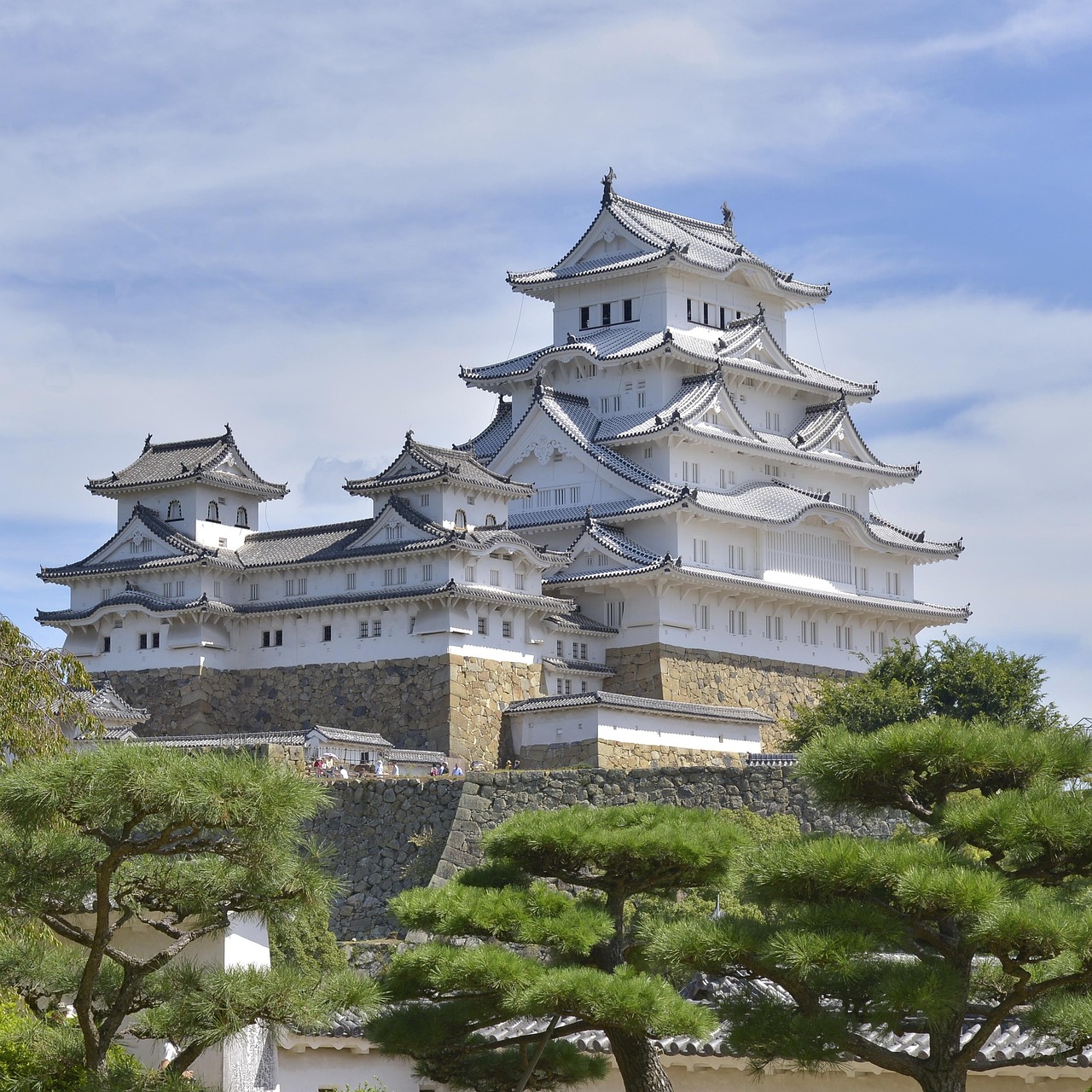
Himeji is inscribed on the UNESCO World Heritage List and is regarded by the Japanese as a "national treasure of the first rank." It draws close to 3 million visitors a year – proof that genuine defensive architecture can be just as captivating as any fairy-tale palace.
Windsor Castle – the world's largest inhabited castle
When Guinness World Records looks for the largest inhabited castle in the world, the answer is Windsor Castle in England, about 35 kilometers west of London. It covers more than 52,000 square meters of built-up area and for nearly 1,000 years has served as the uninterrupted residence of the English, and later British, royal family.
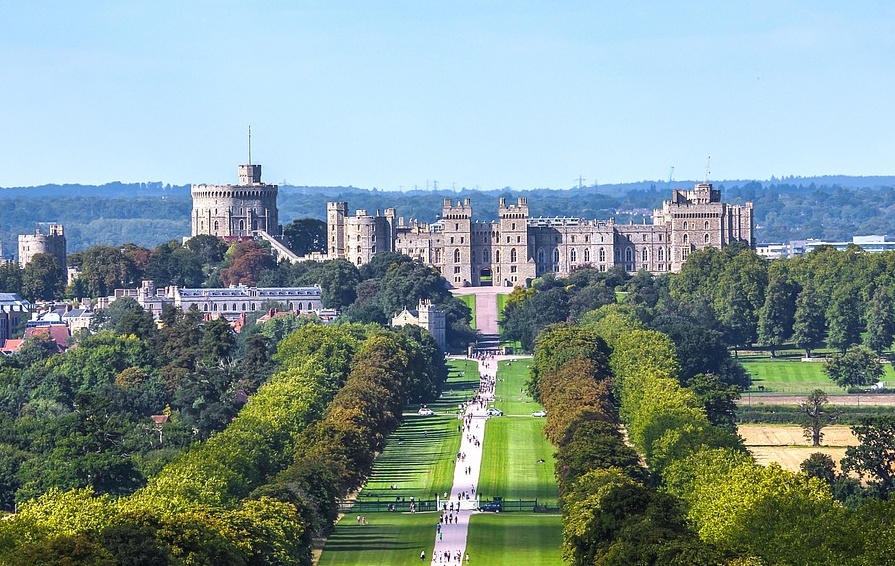
Windsor is unique for one simple reason: it is not a museum. It is a real, actively used palace where King Charles III and the royal family regularly stay, where state banquets and audiences are held, and where services are held in St George's Chapel every Sunday. When you walk through Windsor's gate, you're not entering an exhibition – you're entering a place where history is still happening.
The castle's origins go back to William the Conqueror, who after the Norman Conquest of 1066 chose this hill above the Thames as an ideal point to control the river crossings. Over the following centuries every monarch added something of their own: Henry I, Henry II, Edward III, Henry VIII, Charles II, Victoria – Windsor reads like an architectural diary of a thousand years of British history. What's more, St George's Chapel is the burial place of, among others, Henry VIII, Charles I and Elizabeth II – making it simultaneously a fortress, a palace and a mausoleum.
Burghausen – the world's longest castle
So far we've been talking mostly about area. But there is a castle that wins in an entirely different category: length. Burghausen Castle in Bavaria, Germany, stretches over 1,051 meters – a confirmed Guinness World Record as the world's longest castle.
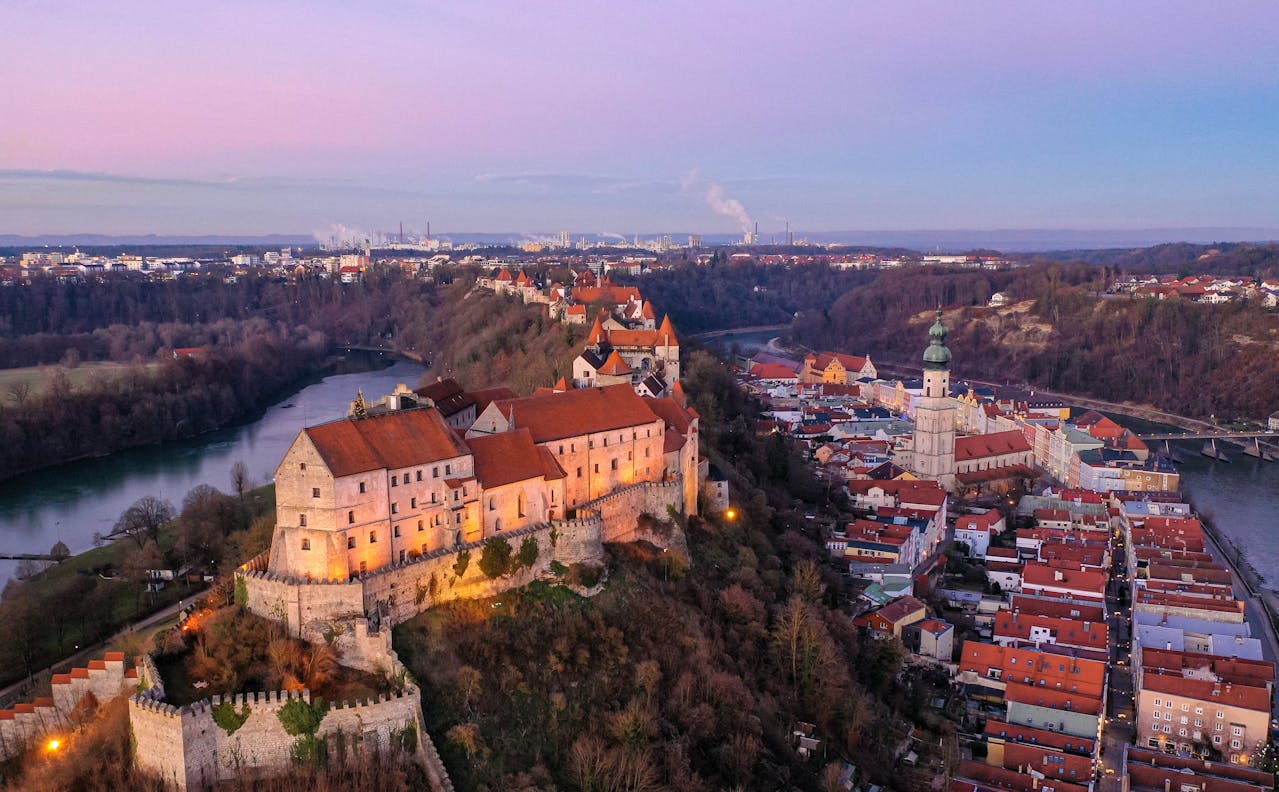
Built along a narrow rocky ridge above the Salzach River, Burghausen extends for over a kilometer like a stone ribbon. The complex consists of six courtyards connected by a narrow rocky corridor – each successive courtyard was an additional line of defence. To reach the main residential keep, an attacker had to storm all six gates and pass through all six courtyards under constant fire. Defensive architecture in its purest, most linear form.
The castle existed before 1025, and took its final form mainly in the 14th to 16th centuries under the Bavarian Wittelsbachs. Today it's one of Bavaria's top attractions, and summer concerts held in its inner courtyards draw thousands of music lovers – because what better backdrop for a string quartet than 12th-century Gothic walls?
The Citadel of Aleppo – 8,000 years of history in one place
No discussion of the world's largest castles is complete without mentioning one of the oldest – the Citadel of Aleppo in Syria. Its hill, surrounded by a moat and walls, covers more than 66,000 square meters, and traces of human settlement on this spot date back to the third millennium BC.
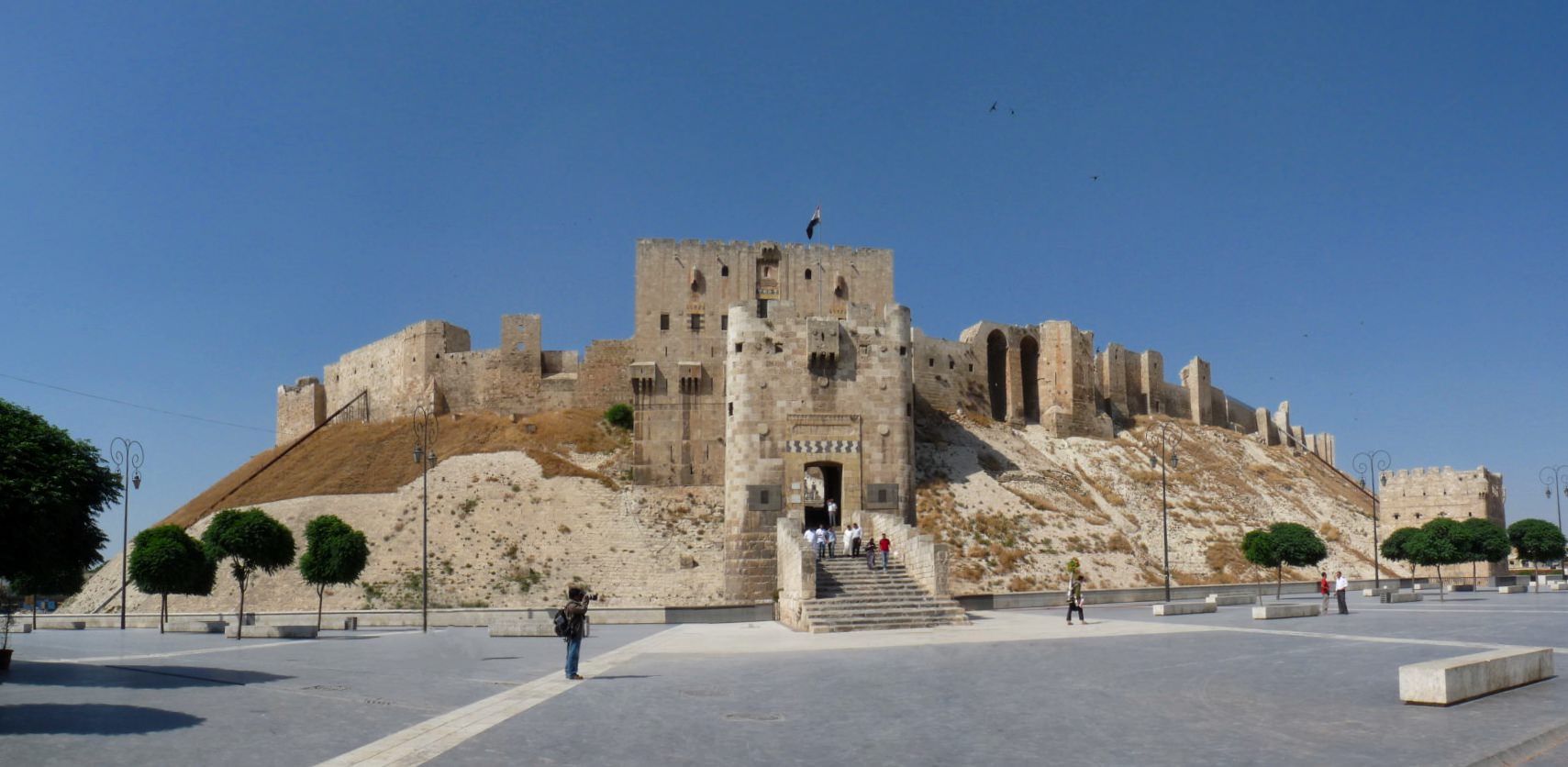
In its current form the citadel dates mainly from the Ayyubid period (12th–13th centuries), when Sultan Ghazi, son of the famous Saladin, carried out a comprehensive expansion of the earlier fortifications. The result was an impressive arched bridge leading to a monumental gate tower, labyrinthine interior chambers and a system of underground cisterns. The citadel has seen Alexander the Great, the Crusaders, the Mongols of Hulagu Khan and the armies of Timur – and outlasted them all.
Sadly, the 21st century has not been kind to it. The Syrian civil war after 2011 brought serious damage – the citadel was placed on UNESCO's endangered heritage list. Restoration work is ongoing, however, and the citadel is slowly coming back to life as a symbol of Aleppo's resilience.
"The Citadel of Aleppo is a palimpsest of human history – every era left its mark here, every empire tried to conquer or destroy it, and it still stands." – archaeologist Ross Burns, Monuments of Syria, 2009
Rankings summary: which castle is really the largest?
Since I've been saying throughout this article that the criterion matters – here's a concrete breakdown. This is how the rankings look depending on the measurement used:
Largest by total built-up area: Malbork, Poland – 143,591 m²
Largest according to Guinness World Records (coherent ancient complex): Prague Castle (Hradčany), Czech Republic – 70,000 m² (45 ha with gardens)
World's longest castle (Guinness World Record): Burghausen, Germany – 1,051 meters in length
World's largest inhabited castle: Windsor Castle, England – over 52,000 m²
Largest fortress in India: Mehrangarh, Jodhpur – over 80,000 m²
Largest Japanese castle (complex with grounds): Himeji – over 100 hectares in total
Largest castle ruin in Central Europe: Spiš Castle, Slovakia – over 40,000 m²
As you can see, no single castle wins in every category. And that's exactly what's most beautiful about this architecture: each of these giants is the largest in its own unique, irreplaceable way.
Stone more durable than empires
The castles described in this article have outlived the empires that built them. Malbork has stood for 500 years since the fall of the Teutonic Order. Hradčany has endured for centuries after the death of the last King of Bohemia. The Citadel of Aleppo is older than most of today's nation-states. Windsor has a history longer than English-language literature itself.
Why do we keep returning to these places? Because stone preserves time differently than paper. When you touch the walls of Malbork, you touch something that the hands of builders, knights and travellers have touched for seven centuries. That connection to the past cannot be replicated by any film or video game.
The world's largest castles are not monuments – they are still-living organisms that answer our questions with the silence of their walls. And that is precisely why we want to visit them, photograph them, and read about them. Because somewhere inside each of us is someone who wants to peer around the next gate and see what lies on the other side.