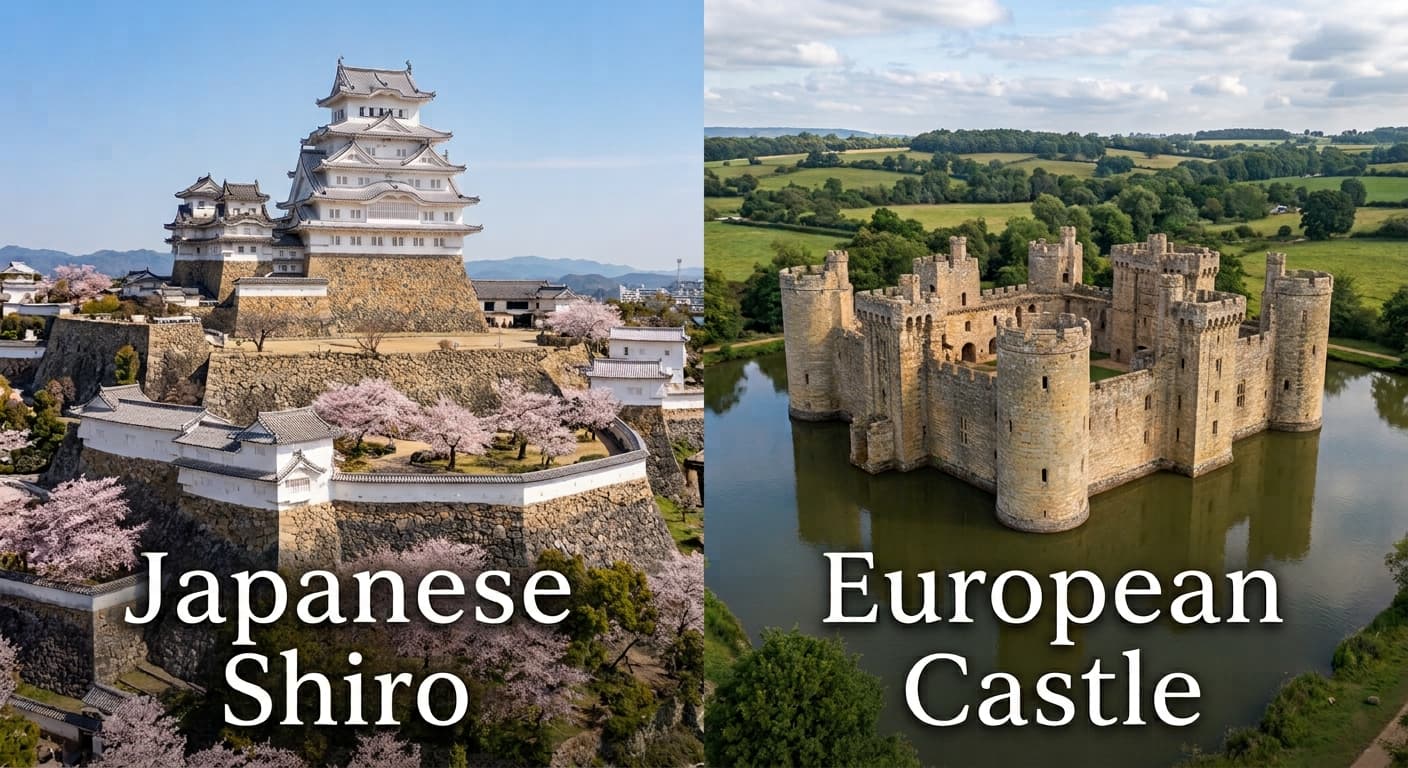
Picture two fortresses in your head. One is a hulking grey mass of stone, squatting on a hilltop with a moat wrapped around it like a scarf. The other is a graceful tower of white plaster and dark wood, its roofline curling upward like something out of a folktale, perched on walls of massive, irregular stone blocks. Both are called "castles" in English. Both were built to keep armies out and lords safe inside. And yet, if you actually walked through either one, you'd swear they belonged to two completely different universes of thinking about war, power, and architecture.
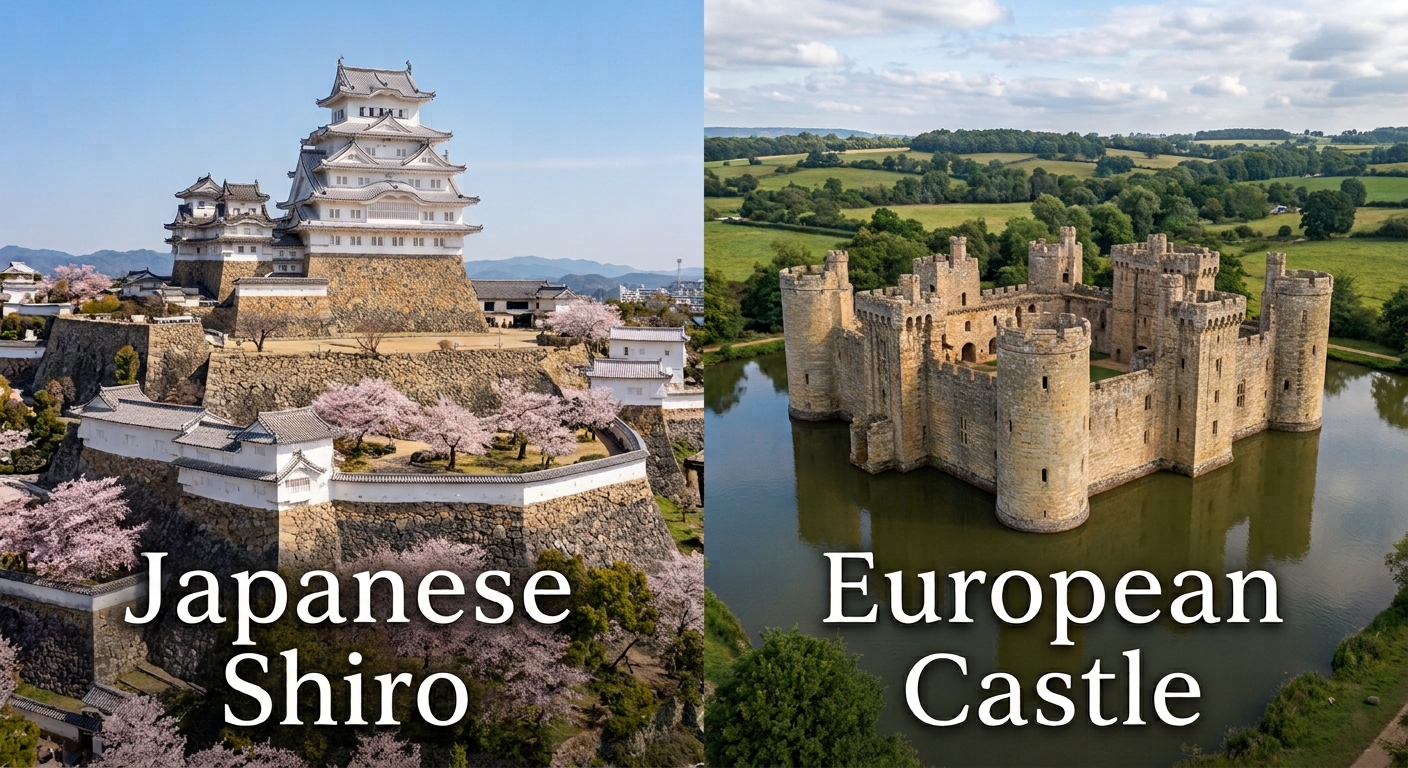
That's the thing about Japanese shiro and European castles — they solved the exact same problem (how do you protect a ruler and project authority over a territory?) with almost opposite toolkits. One leaned on stone masonry, siege engines, and centuries of trial-and-error against battering rams. The other leaned on wood, earth, deception, and terrain, treating the landscape itself as a weapon. So let's actually dig into what makes these two fortress traditions tick, why they look and feel so different, and why understanding that difference tells you a lot about the cultures that built them.
What Exactly Is a Shiro, Anyway?
The word shiro (城) simply means "castle" in Japanese, but that translation flattens a lot of nuance. Early shiro weren't stone keeps at all — they were yamashiro, or mountain castles, which were really just fortified hilltops with wooden palisades, ditches, and earthworks carved into the terrain. Think less "fairy-tale fortress" and more "a really well-defended campsite with attitude." The whole point wasn't to build an indestructible box; it was to make the mountain itself do most of the defensive work.
By the time you get to the Sengoku period — Japan's brutal "Warring States" era, roughly the 15th through early 17th centuries — shiro construction had evolved dramatically. Daimyo (regional lords) started building hirajiro (flatland castles) and hirayamajiro (hill-and-plain castles) because controlling trade routes and towns mattered as much as controlling a defensible peak. That's when you start seeing the iconic elements most people picture today: massive sloped stone bases called ishigaki, multiple concentric baileys, and the tall central tower known as the tenshu, or keep.
Here's the kicker, though: even at their most sophisticated, shiro rarely used stone for the actual living structures. The keep itself — the part that looks so solid and permanent in photos of Himeji or Matsumoto Castle — is almost always timber framing on top of those stone foundations, coated in plaster and roofed with tile. Why? Japan sits on some of the most seismically active real estate on the planet. A rigid stone tower would crack and collapse in a serious earthquake; a flexible wooden frame can sway and survive. That single environmental fact shaped an entire architectural philosophy.
European castles: built to outlast a siege
Now flip to Europe, and the priorities look almost reversed. Medieval European castles emerged out of a different set of pressures — Viking raids, feudal power struggles, and, crucially, the rise of increasingly sophisticated siege warfare. Early motte-and-bailey castles (a wooden tower on an earthen mound, surrounded by a fenced enclosure) were quick to build but embarrassingly easy to burn. So European builders did what Europeans tend to do when something keeps failing: they threw a lot of stone at the problem.
By the 12th and 13th centuries, castles across France, England, Germany, and the Iberian Peninsula had transformed into full-blown stone fortresses — concentric walls, thick curtain walls, drum towers designed to deflect projectiles, and increasingly elaborate gatehouses bristling with murder holes and portcullises. The goal was brutally straightforward: outlast the enemy. A well-provisioned stone castle could survive a siege for months, sometimes years, simply by being too tough and too well-stocked to starve or batter into submission.
And unlike shiro, European castles were built with the explicit assumption that they'd be attacked by professional siege engineers wielding trebuchets, battering rams, and eventually cannons. That arms race between offense and defense is basically the entire story of medieval military architecture — walls got thicker, towers got rounder (harder for mining and battering), and moats got wider, all in direct response to whatever the last siege had exposed as a weakness. It's a beautifully adversarial, almost Darwinian process, honestly.
Materials matter: wood vs. stone tells you everything
If there's one detail that captures the whole East-West split, it's materials. European castle builders had access to enormous quarries and a long Roman engineering legacy to draw from, and they used stone almost exclusively for anything meant to last. Wood was for scaffolding, doors, and roofs — not the structural bones of the building.
Japanese builders, on the other hand, treated stone as a foundation, not a building material for living spaces. The ishigaki stone bases you see at places like Osaka Castle are genuinely massive — some individual blocks weigh dozens of tons — but they exist to support and elevate a wooden structure above them, not to be the structure itself. This isn't a lack of skill; Japanese stonemasons were extraordinarily good at what they did, fitting irregular boulders together without mortar in a technique so precise that many of these walls have survived multiple centuries and countless earthquakes.
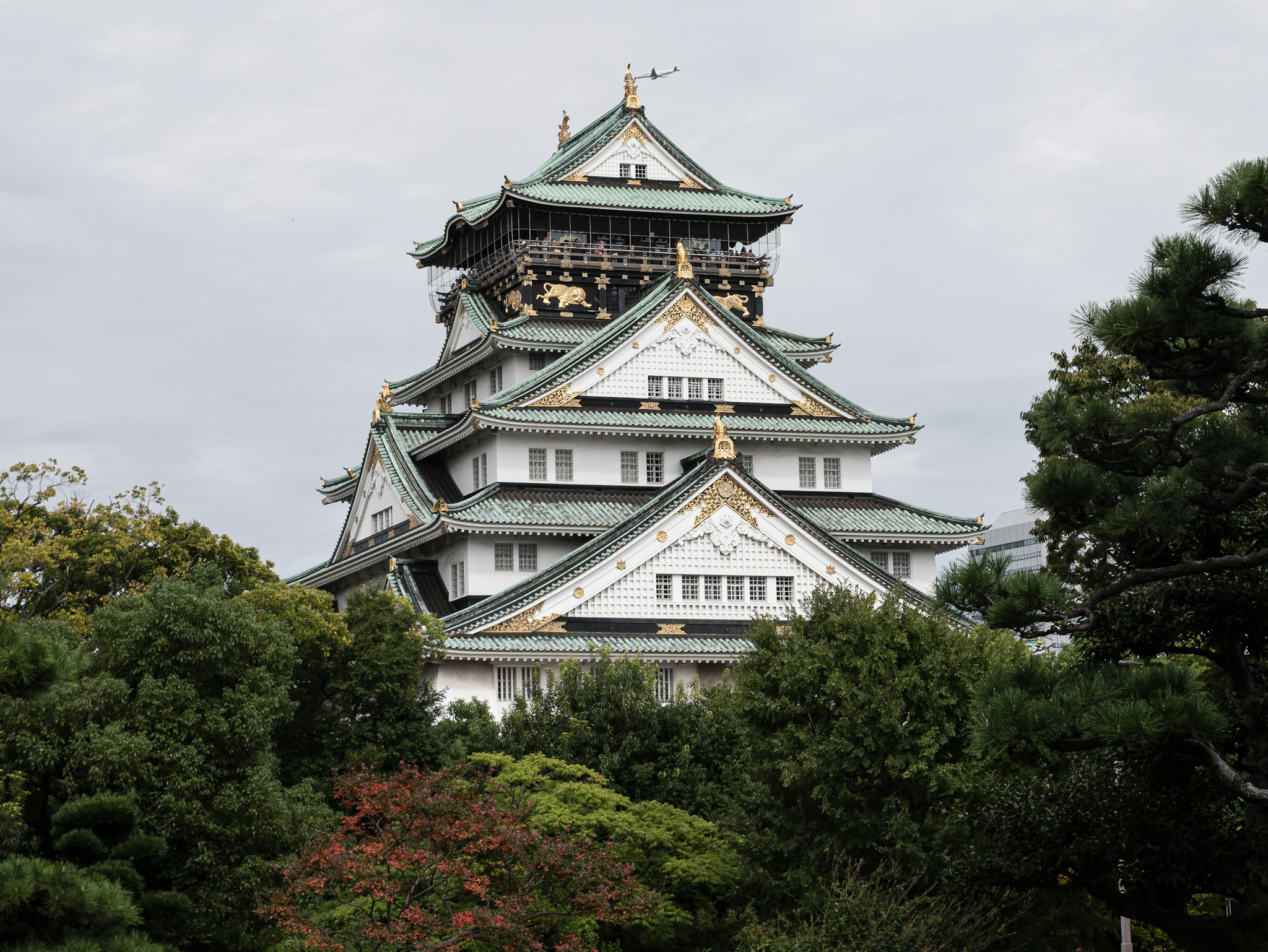
Here's a great way to think about it, courtesy of historian Stephen Turnbull, who has spent a career studying Japanese military architecture. He describes Japanese castle keeps as:
"fantastic creations of white wood and blue tiles ornamented with gold"
— Stephen Turnbull, historian, "Tagajo and Sendai," Current World Archaeology
sitting atop those imposing stone bases — a description that couldn't be further from the grim, weathered image most of us carry of a European fortress.
And speaking of that image, there's actually a wonderful literary line that nails the European stereotype dead-on. Shakespeare, through the character Hotspur, dismisses a shabby fortress as a
"worm-eaten hold of ragged stone"
— William Shakespeare, Henry IV, Part 1
— and honestly, that phrase alone tells you almost everything about how Europeans thought of their fortifications: grim, weathered, utilitarian, built to survive rather than to dazzle.
Defense philosophy: the maze vs. the wall
Okay, so materials are one piece of the puzzle. But the strategy behind the defenses is arguably even more interesting. European castles generally relied on layered, brute-force defense: concentric rings of walls, each one taller and tougher than the last, forcing attackers to fight through gate after gate under constant fire from arrow slits and murder holes above. It's linear, methodical, and honestly kind of predictable once you know the playbook — which is exactly why siege warfare became such a specialized science on both sides.
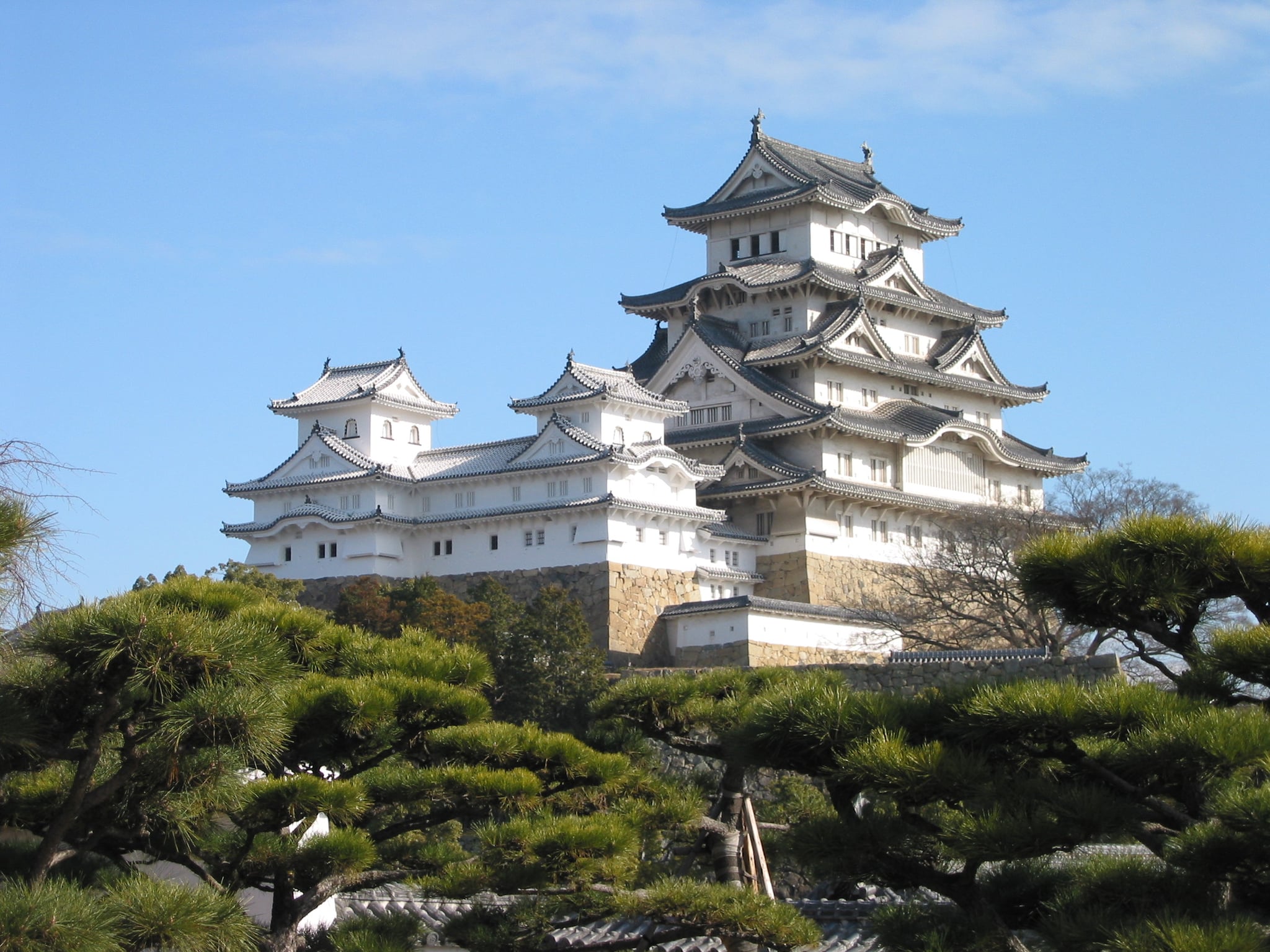
Shiro defense, especially in its mature Sengoku-era form, leaned much harder into psychological warfare and disorientation. Castle compounds like Himeji Castle were deliberately designed as labyrinths — narrow, winding paths between baileys, dead ends disguised as through-routes, gates positioned at odd angles so attackers couldn't build momentum or see what was coming next. An invading force wouldn't just be fighting defenders; they'd be fighting confusion itself, bottlenecked into narrow kill-zones where a handful of archers could hold off a much larger force.
Isn't that a wild contrast? One tradition says "make the walls so thick they simply cannot be broken". The other says "make the path so confusing that the enemy never even reaches the walls in fighting shape." Neither approach is objectively superior — they're just answers to different questions. European castles often needed to hold out against prolonged, well-resourced sieges from rival kingdoms with serious siege trains. Japanese shiro, especially in the fragmented, fast-moving warfare of the Sengoku period, often needed to survive rapid assaults and buy time rather than endure a months-long blockade.
A few concrete design tricks worth knowing, since they really show the difference in mindset:
- Masugata gates – square defensive courtyards at shiro entrances that trap attackers in a box surrounded by walls on all sides, exposed to fire from above before they can even reach the next gate.
- Machicolations and arrow loops – European features allowing defenders to drop projectiles or boiling substances straight down onto attackers pressed against the base of a wall.
- Uneven stone paving inside shiro courtyards – deliberately irregular steps and surfaces to slow down armored attackers who don't know the terrain, while defenders who live there move freely.
- Concentric moats – used by both traditions, but European moats were usually water-filled for a straightforward physical barrier, while Japanese moats (both wet and dry) often worked together with steep earthen scarps to make climbing nearly impossible even after crossing.
The tenshu vs. the keep: two hearts, two purposes
Every European castle has a keep — the great tower, sometimes called a donjon, where the lord's family and treasury sheltered during the worst of a siege. It's the last line of defense, built thick and windowless on the lower floors, functional above everything else. Nobody was throwing a garden party in a Norman keep; it was a bunker with delusions of grandeur.
The Japanese tenshu technically served a similar last-resort defensive role, but in practice it became something much more symbolic. Most daimyo didn't actually live in the tenshu day-to-day — that's what the surrounding palace buildings (goten) were for. The tenshu was a statement piece, a visible declaration of a lord's wealth, taste, and military might, visible for miles around the castle town. Himeji Castle's tenshu, nicknamed the "White Heron Castle" for its brilliant white plaster walls, is basically medieval Japan's version of a skyscraper flexing on the skyline.
That's a genuinely fascinating divergence, if you think about it: European keeps prioritized function over form almost entirely, while Japanese tenshu deliberately blended defensive necessity with theatrical display. Both towers say "don't mess with me," sure — but one says it through sheer grim mass, and the other says it through elegant, unmistakable presence. Different languages, same message.
Gunpowder changed the rules for both traditions
Here's something people often forget: neither shiro nor European castles stayed frozen in time. Both traditions had to grapple with the same disruptive technology eventually — gunpowder — and both adapted in ways that reveal, once again, just how differently these two cultures approached fortification.
In Europe, cannons basically ended the age of the tall, thin medieval wall. A vertical stone curtain that shrugged off a trebuchet stone could be shattered by cannon fire in hours, not months. So castle design shifted dramatically toward star forts — low, thick, angled bastions designed to deflect cannonballs and give defenders overlapping fields of fire. It's a completely different silhouette from the romantic turreted castle most of us picture, honestly, and it marks the point where "castle" as a concept basically evolves into "fort."
Japan encountered firearms a bit later, largely through Portuguese traders in the mid-16th century, and the arquebus (tanegashima) spread through the archipelago astonishingly fast. Shiro builders responded not by flattening their walls as the Europeans did, but by thickening and lowering the stone bases while adding more numerous, better-placed loopholes and firing positions for their own matchlock gunners. The steep, curving ishigaki actually turned out to be pretty resilient against early cannon fire simply because of their mass and slope — round shots tended to skip or deflect rather than punch straight through, the way they would against a flat European wall.
What's genuinely striking is that Japan's last great castle-building boom actually happened after firearms arrived, during the early Edo period, when peace under the Tokugawa shogunate allowed daimyo to build increasingly grand, symbolic fortresses without much fear of actually having to defend them from a serious siege. Europe's stone castles, by contrast, mostly stopped being genuinely built as serious military fortifications around the same era, sliding instead into either ruin or reinvention as manor houses and palaces. Funny how that works — the fortress outlived the war it was built for on both sides of the world, just in very different ways.
Life inside the walls: not as glamorous as you'd think
Here's where both traditions actually converge a bit — daily life inside either kind of fortress was rarely comfortable. European castles, especially before later Renaissance-era remodeling, were often cold, damp, and smoky, with narrow windows built for defense rather than daylight. Servants, soldiers, and sometimes livestock lived cheek-by-jowl within the bailey walls, and sanitation was, let's just say, a work in progress.
Shiro compounds functioned more like small fortified towns than single buildings. Around the tenshu you'd find barracks, stables, storehouses, wells, and administrative buildings, all organized within concentric baileys separated by those maze-like gates we mentioned earlier. Samurai retainers and their families often lived within the outer baileys, while merchants and craftsmen serving the castle economy clustered in the jokamachi, the castle town growing up just outside the walls. In peacetime, a shiro functioned less like a besieged fortress and more like the administrative and economic heart of an entire province.
One thing that surprises a lot of people: neither shiro nor European castles were primarily built for comfort, and both housed a surprisingly wide social cross-section — not just nobles and soldiers, but the servants, craftsmen, and laborers who kept the whole operation running. If you've ever romanticized castle life from a movie, well, the reality involved a whole lot more mud, smoke, and grunt work than sword fights and banquets.
Famous examples worth knowing
If you want to actually see these differences rather than just read about them, a handful of surviving structures make the case better than any paragraph could:
- Himeji Castle (Japan) – Widely considered the finest surviving example of Japanese castle architecture, with its dazzling white plaster exterior and genuinely maze-like defensive layout still intact today.
- Matsumoto Castle (Japan) – Nicknamed the "Crow Castle" for its striking black exterior, and one of the oldest original wooden keeps still standing in Japan.
- Neuschwanstein Castle (Germany) – Technically a 19th-century romantic reimagining rather than a genuine medieval fortress, but it shows how deeply the "stone tower on a hill" image is baked into European castle iconography.
- Caernarfon Castle (Wales) – A textbook example of concentric English castle design, built under Edward I with imposing polygonal towers meant to intimidate as much as defend.
- Osaka Castle (Japan) – Famous for its colossal ishigaki stone walls, some of the largest hand-placed stone blocks in the world, supporting a rebuilt tenshu above.
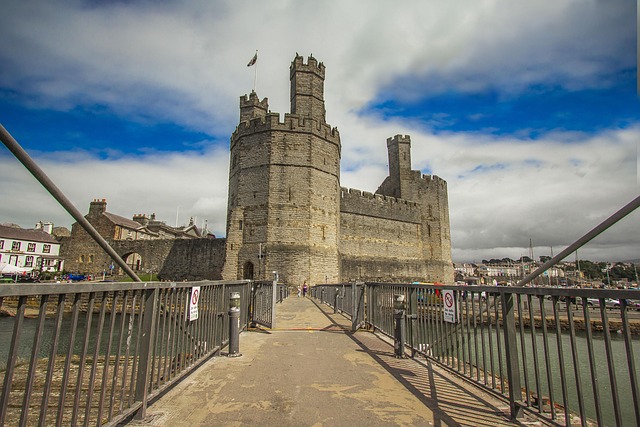
Why these differences still matter today
You might be thinking, okay, this is neat trivia, but does any of it actually matter now? Honestly, yes — and not just for history buffs. These structures shaped how their respective cultures thought about space, hierarchy, and power for centuries afterward, and that influence hasn't fully disappeared. Japanese urban planning still shows echoes of the castle-town model, with commercial districts historically organized around a central seat of authority. European city centers, meanwhile, still frequently orbit around a stone castle or cathedral that dominated the medieval skyline the same way a tenshu once did over a Japanese province.
There's also just something genuinely valuable in seeing how two sophisticated civilizations, facing broadly similar problems, arrived at such different solutions based on their environment, resources, and threats. It's a reminder that "the way we've always done it" is never really the only way — it's just the way that made sense given the specific pressures a culture was under. Earthquakes pushed Japan toward flexible wood-and-stone hybrids and psychological maze-defenses; siege warfare pushed Europe toward massive, unyielding stone. Neither is "better" in some universal sense. They're both brilliant answers to different exam questions.
Tourism tells its own version of this story, too. Millions of visitors climb the steep stone ramps of Himeji or wander the misty ruins of a Scottish border keep every single year, and what they're really responding to, whether they realize it or not, is that lingering sense of authority written into stone and wood. A castle — of either kind — was never just a defensive structure. It was propaganda you could live in. It told everyone within sight of it exactly who was in charge, and that message clearly still lands, centuries later, even on tourists who've never picked up a sword or fired a matchlock in their lives.
And honestly, preservation efforts on both sides reflect the same underlying philosophies that built these places in the first place. European restoration tends to prioritize keeping original stone intact wherever humanly possible, patching rather than replacing. Japanese preservation, particularly for wooden tenshu, often embraces rebuilding with traditional techniques — Osaka Castle's current keep, for instance, is a 20th-century reconstruction, and nobody in Japan considers that any less "authentic," because the wooden tradition always assumed renewal rather than permanence. That's a genuinely different relationship with the past, and it's baked right into how each culture chooses to keep its castles alive today.
Wrapping it up
So, next time you see a photo of a gleaming white Japanese tenshu next to a grim stone European keep, you'll know it's not just an aesthetic difference — it's the fingerprint of two entirely different approaches to survival, power, and architecture. One is built to bend without breaking, the other to stand without flinching. Both, in their own way, absolutely got the job done, and both still leave visitors speechless centuries after the last siege ever mattered.
Whether you're more drawn to the elegant, layered mystery of a Japanese shiro or the blunt, defiant weight of a European stone keep, there's no denying either tradition earns its place in the history books. Go visit one if you ever get the chance — photos really don't do either justice.
And if you ever find yourself standing at the base of one, whether it's a snow-white tenshu catching the afternoon sun or a moss-covered ruin overlooking a foggy valley, take a second to really look at the walls. Every stone, every beam, every oddly angled gate was placed there by people solving a life-or-death problem with the tools, materials, and knowledge their world gave them. That's really the whole story of Samurai strongholds versus European castles in a nutshell — two brilliant, battle-tested answers to the same eternal question of how to keep the people you're responsible for safe.