Mehrangarh Fortress
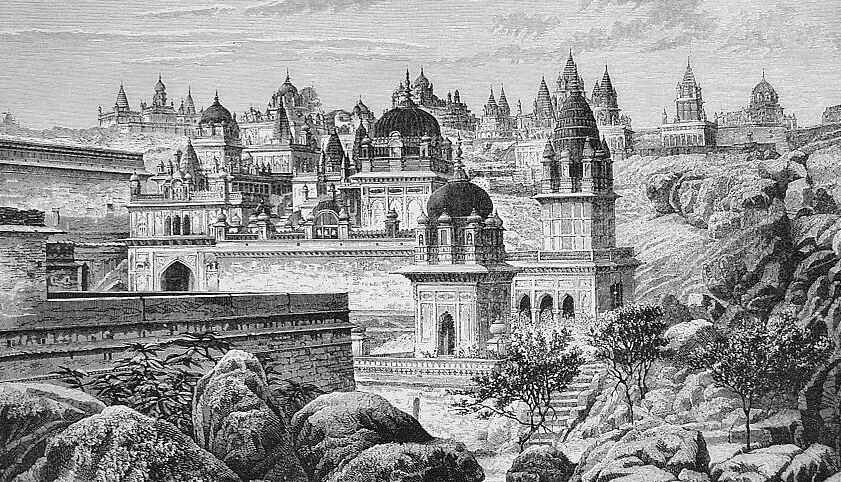
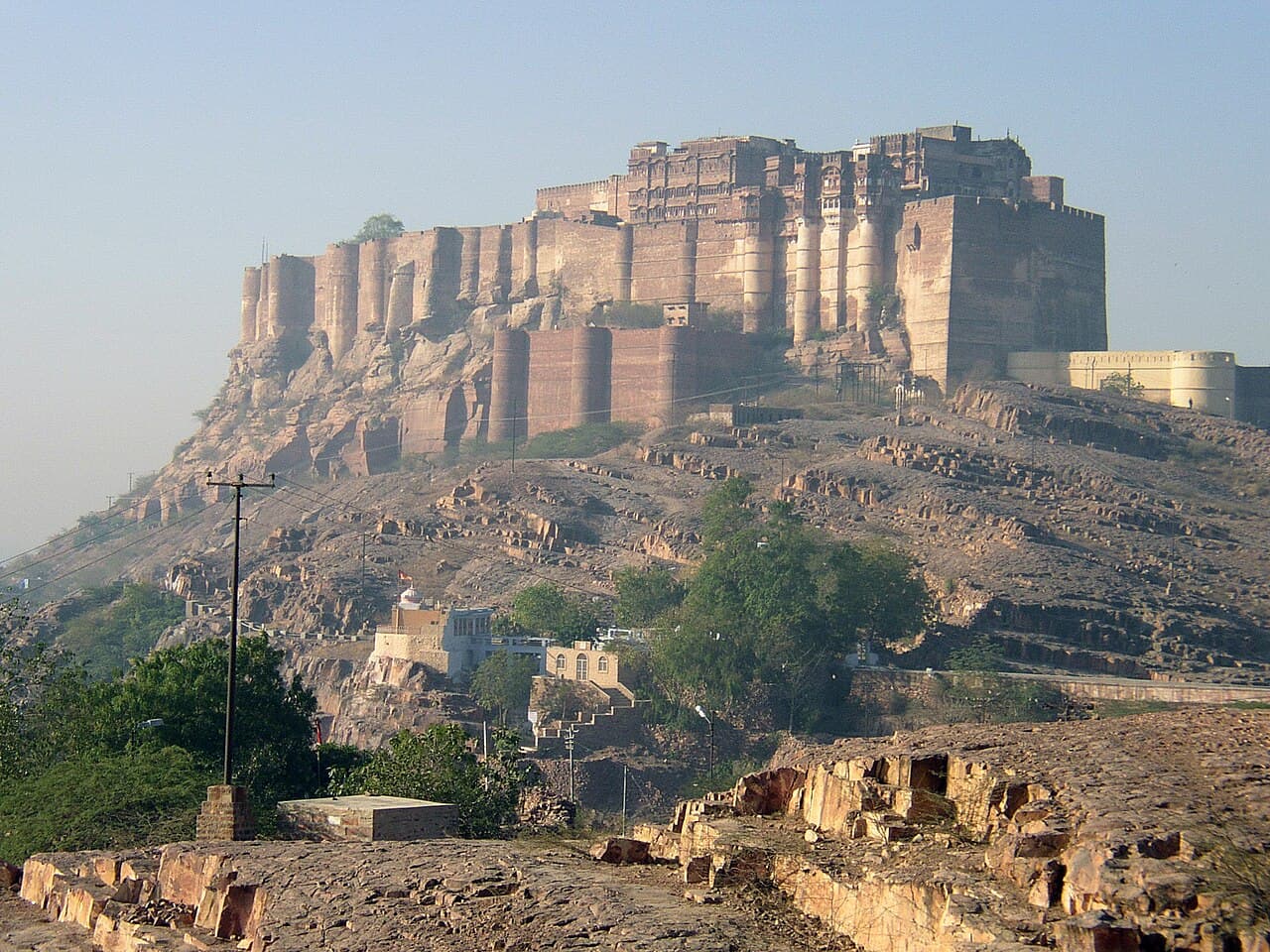
Mehrangarh fortress, towering over the city of Jodhpur in Rajasthan, India, is one of the most magnificent and well-preserved forts in the country. Situated on a hill approximately 150 meters above the surrounding landscape, this imposing fortress commands spectacular views of the old city, renowned for its distinctive blue-painted houses. The name "Mehrangarh" translates to "majestic fort," a fitting description for this colossal structure that dominates the skyline and serves as a symbol of the region's rich heritage and martial history.
The fort's origins date back to 1459, when it was founded by Rao Jodha, the ruler who shifted his capital from Mandore to Jodhpur. While the initial construction began in the mid-15th century, much of the existing fortifications and palatial structures were developed during the 17th century under the reign of Jaswant Singh. Mehrangarh's architecture reflects the evolving styles and needs of Rajput fortifications over several centuries, blending defensive military features with lavish royal residences.
Legend and foundation myths
Like many historic forts of Rajasthan, Mehrangarh is steeped in local legends. One popular tale recounts the story of a sage who lived on the hill where the fort was to be built. The sage was forcibly evicted to make way for the fortress, and in his anger, he cursed the fort, predicting water scarcity. To appease the curse and ensure the fort's stability, a man is said to have sacrificed himself by being buried alive within the foundation. This legend underscores the fort's mystical aura and the importance of ritual in Rajput construction practices.
Architectural features and fortifications
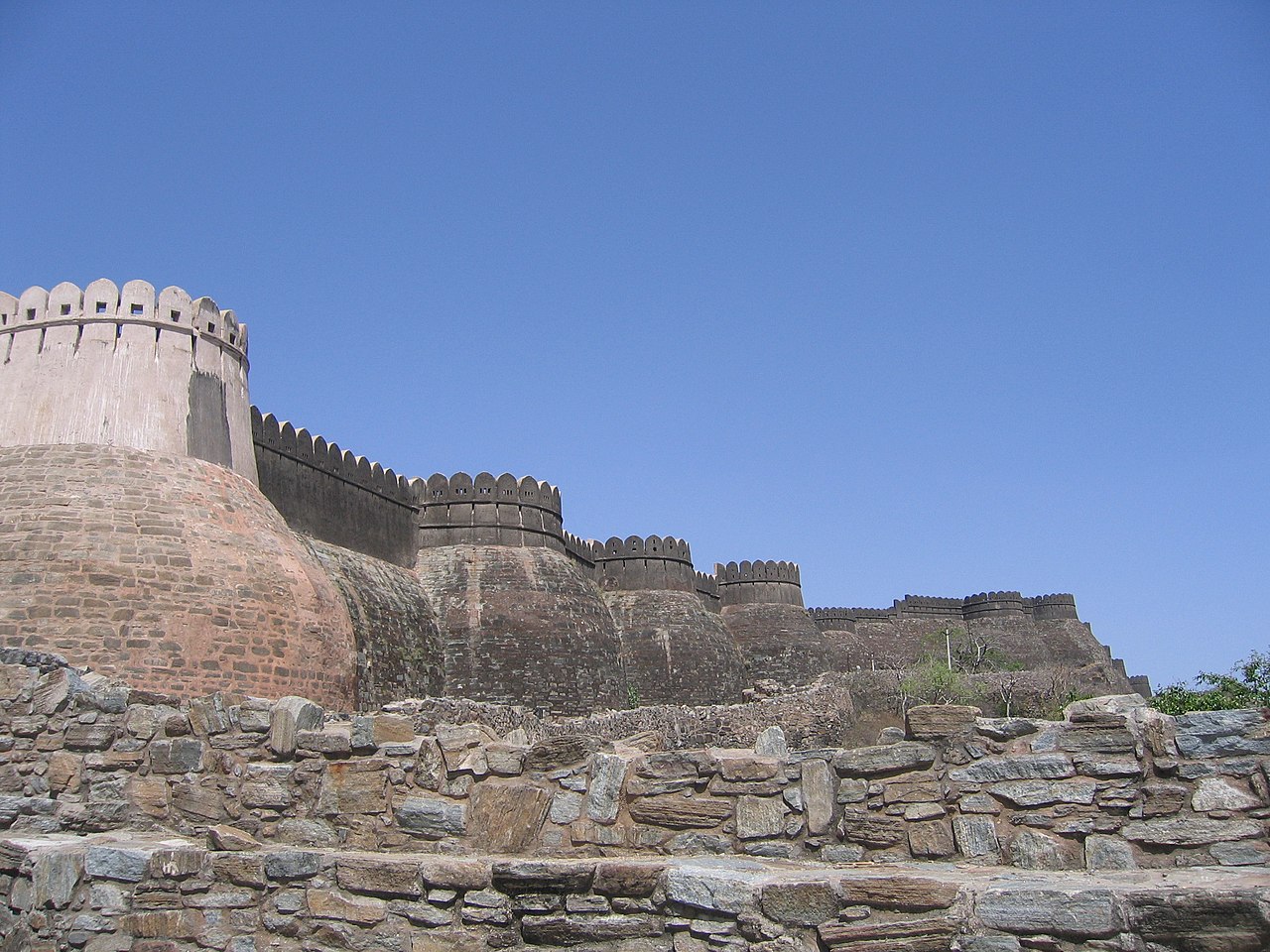
The fort is renowned for its massive defensive walls, which reach heights of up to 36 meters and thickness of 21 meters. These formidable walls enclose a complex of palaces, temples, and courtyards, accessed through a series of seven gates. Each gate has its own historical significance and architectural character.
The gates of Mehrangarh
- Jayapol: The main gate, constructed by Maharaja Man Singh in the early 19th century, commemorates his victories over the armies of Jaipur and Bikaner. It is a symbol of martial pride and features intricate carvings and robust defensive mechanisms.
- Fatehpol: Built by Maharaja Ajit Singh in 1708, this gate celebrates his triumph over the Mughal forces. Fatehpol exemplifies Rajput military architecture with its strategic design for defense and ceremonial use.
- Lohpol: Unlike the victory gates, Lohpol serves as a functional entry point, named after the iron used in its construction.
- Iron Gate: This gate is notable for the poignant handprints of the royal women who performed sati, the ritual self-immolation on their husbands' funeral pyres. The handprints, preserved in red powder and silver, have become a revered symbol of loyalty and sacrifice.
Palaces and interior buildings
Inside the fort, visitors encounter a series of exquisitely decorated palaces, each with distinct architectural and artistic features. These palaces now serve primarily as museum spaces, showcasing the heritage of the Rathore rulers of Jodhpur.
Moti mahal (pearl palace)
The Moti Mahal is famous for its five alcoves along the western wall, originally designed to hold oil lamps, creating a luminous ambiance. The ceilings are adorned with glass and gold paint tiles, reflecting the opulence of the royal court.
Phool mahal (flower palace)
Phool Mahal served as the venue for royal entertainment and traditional dance performances. Its ceiling is richly gold-plated and decorated with portraits of various Maharajas of Jodhpur, painted by a single artist whose untimely death left some works incomplete. The palace's colored glass windows enhance the glittering effect of the gold leaf, creating a mesmerizing interior.
Sukh mahal (pleasure palace) and umaid mahal
Sukh Mahal and Umaid Mahal are notable for their intricate glass tile work and lac paintings, reflecting the artistic tastes of the period. Umaid Mahal, in particular, shines with its decorative glass tiles, while Sukh Mahal was designed as a leisure retreat for the royal family.
Zhanki mahal and zenana mahal
The Zhanki Mahal holds historical significance as the nursery for the newborn princes, including Maharaja Thakhat Singh. Nearby, the Zenana Mahal features magnificent latticework halls adorned with over 150 paintings, showcasing the domestic and artistic life of the royal women.
Other notable structures
Additional palaces such as Rang Mahal, Chandan Mahal, and the throne room each contribute to the fort's grandeur with their elaborate decorations and historical importance.
Temples and memorials
Within the fort complex, visitors can explore religious and memorial sites that add spiritual depth to the fortress.
Chhatri sodha kirit singh
The cenotaph of Kirit Singh, located near the main entrance, honors a brave soldier who sacrificed his life defending Jaipur's army. This memorial is a poignant reminder of the martial valor associated with the fort.
Chamunda devi temple
At the southern end of the fort stands the Chamunda Devi Temple, dedicated to the fierce goddess Durga in her wrathful form. The temple is an important site of worship and reflects the religious traditions of the Rajput rulers.
Views and cultural significance
A walk along the ramparts offers breathtaking panoramic views of Jodhpur's old city, famous for its sea of blue-painted houses. Historically, the blue color was reserved for Brahmins, but today it is widely used across the city, believed to bring freshness and ward off the desert heat's monotony.
Mehrangarh fortress stands not only as a military stronghold but also as a cultural emblem of Rajasthan's rich history, architectural ingenuity, and royal traditions. Its well-preserved structures, extensive museums, and legends continue to attract scholars, tourists, and heritage enthusiasts worldwide.
Frequently asked questions (FAQ)
- How do I get to Mehrangarh Fortress?
- Mehrangarh Fortress is located in Jodhpur, India, and can be easily reached by taxi, auto-rickshaw, or public transport from various parts of the city. The fortress is situated on a hill, providing stunning views of the city and is well-signposted for visitors. It is advisable to check local transport schedules for the best options.
- What is the historical significance of Mehrangarh Fortress?
- Mehrangarh Fortress is one of the largest forts in India and was built in 1459 by Rao Jodha, the founder of Jodhpur. It has witnessed numerous battles and events throughout history, making it a symbol of the Rajput heritage and culture. The fort houses a museum that showcases artifacts and exhibits reflecting the rich history of the region.
- When was Mehrangarh Fortress built?
- Mehrangarh Fortress was constructed in 1459, making it over 560 years old. The fort's construction was initiated by Rao Jodha, and it has been expanded and modified over the centuries. Its architecture reflects the grandeur and strength of the Rajput rulers.
- Can I take photographs inside the fortress?
- Yes, photography is allowed inside Mehrangarh Fortress, with certain restrictions in specific areas such as the museum. Visitors are encouraged to capture the stunning architecture and panoramic views of Jodhpur. However, it is advisable to respect the guidelines provided by the fortress management.
- Why is the architecture of Mehrangarh Fortress unique?
- The architecture of Mehrangarh Fortress is a stunning example of Rajput and Mughal styles, characterized by intricate carvings, expansive courtyards, and impressive palaces. The fort's design reflects its defensive purpose while also showcasing the artistic sensibilities of its time. Each section of the fort has its own unique features that illustrate the craftsmanship of the era.
- Is it possible to explore Mehrangarh Fortress on foot?
- Yes, visitors can explore Mehrangarh Fortress on foot, and there are well-marked paths and steps leading through the fort. The walking experience allows visitors to appreciate the intricate details of the fort's architecture and enjoy the breathtaking views. However, comfortable footwear is recommended due to uneven surfaces and steep climbs.
- What are the opening hours of Mehrangarh Fortress?
- Mehrangarh Fortress is open to visitors daily from 9 AM to 5:30 PM. Extended hours may apply during peak tourist seasons, so it’s a good idea to check in advance. Arriving early can help you avoid crowds and enjoy a more leisurely experience.
- What are the ticket prices for Mehrangarh Fortress?
- As of now, the ticket prices for Mehrangarh Fortress are approximately INR 600 for Indian adults and INR 100 for children, while foreign tourists can expect to pay around INR 1,200. These prices may vary, so it’s advisable to check the official website for the most up-to-date information. Tickets usually include access to the museum and various sections of the fort.
- What is the best time to visit Mehrangarh Fortress?
- The best time to visit Mehrangarh Fortress is between October and March when the weather is cooler and more pleasant for exploring. During these months, you can enjoy comfortable temperatures and clear skies. Monsoon season, from July to September, may bring heavy rainfall, which can affect your visit.
- Are there any nearby attractions to visit?
- Yes, there are several attractions near Mehrangarh Fortress, including the Jaswant Thada, a beautiful marble cenotaph built in memory of Maharaja Jaswant Singh II, and the Umaid Bhawan Palace, which is now a luxury hotel and museum. Exploring these sites can enrich your experience of Jodhpur's cultural heritage and history.
Photo gallery

Photo by Knowledge Seeker•Public domain
Information
Featured in
Articles on the Castlopedia blog that feature Mehrangarh Fortress.
Loading map...
Visitor reviews
No reviews yet. Been here? Write the first review and help other travelers!
Write the first reviewVisited this castle? Share your experience
Your review helps other travelers and adds first-hand knowledge to our encyclopedia.