Matsumoto Castle
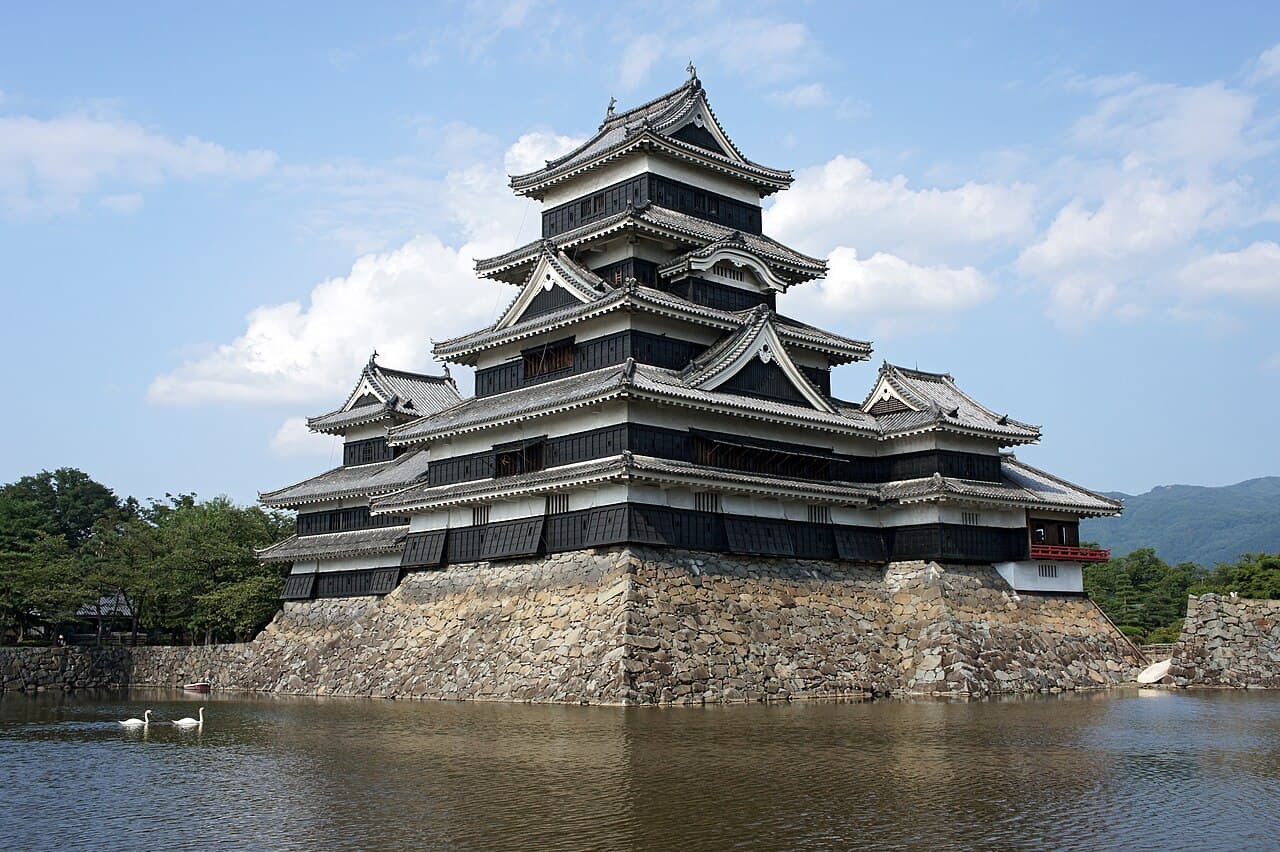
Matsumoto Castle, often called the Raven Castle due to its striking black exterior, stands as one of Japan's most iconic and historically significant fortresses. Located in the city of Matsumoto within Nagano Prefecture, this hirajiro or lowland castle is renowned for its unique architectural design and its scenic setting against the majestic backdrop of the Japanese Alps. As one of the five castles designated as National Treasures of Japan, Matsumoto Castle offers visitors a rare glimpse into the feudal era of Japan, showcasing the strategic ingenuity and aesthetic sensibilities of its time.
The castle's origins date back to the early 16th century, initially constructed as Fukashi Castle in 1504 by Shimadachi Sadanaga. This original fortress played a crucial role during the turbulent Sengoku period, witnessing numerous battles and changes of control. Notably, it was captured by the formidable warlord Takeda Shingen in 1550, marking a significant chapter in its military history. The current main keep, which has become the symbol of the castle, was built later in 1590 by Ishikawa Kazumasa and his son Yasunaga under orders from Toyotomi Hideyoshi after the decisive Odawara campaign. This reconstruction transformed Matsumoto into a formidable stronghold and a center of governance for the eastern provinces.
Architectural features and design
Matsumoto Castle is celebrated for its distinctive black wooden exterior, which contrasts sharply with the white plaster walls typical of many Japanese castles. This dark coloration earned it the nickname "Raven Castle" and contributes to its imposing and elegant appearance. The castle's main keep, or tenshu, is a rare example of a six-story structure with five visible floors, including a hidden floor used for defense and storage. This complex design reflects the advanced military architecture of the late Sengoku period.
The main keep is surrounded by smaller towers and interconnected by a series of corridors and gates, forming a complex defensive system. The castle features moats, stone walls, and battlements designed to repel attackers. Unlike many other Japanese castles built on hills or mountains, Matsumoto Castle is a lowland castle, strategically positioned on flat plains to control the surrounding region and facilitate governance and trade.
Defensive innovations
The castle's design incorporates several defensive innovations. The hidden floors within the main keep allowed defenders to launch surprise attacks or store weapons safely. The curved stone walls and steep moats made it difficult for enemies to approach or scale the walls. Additionally, the placement of arrow slits and gun ports in strategic locations enabled defenders to cover all angles effectively.
Historical significance and legacy
Matsumoto Castle's history is deeply intertwined with Japan's feudal past and the power struggles of the Sengoku and early Edo periods. After its capture by Takeda Shingen, the castle became a key military base. Later, under Ishikawa Kazumasa's stewardship, it was expanded and fortified to serve as a regional administrative center. The castle remained an important seat of power until the Meiji Restoration, when many castles were dismantled or abandoned. Matsumoto Castle was preserved and restored, allowing it to survive as one of the best-preserved castles in Japan.
Today, the castle stands as a symbol of Japanese heritage and architectural mastery. Its preservation allows visitors to explore the wooden interiors, steep staircases, and narrow corridors that reflect the lifestyle and defensive needs of samurai-era Japan. The surrounding grounds are famed for their seasonal beauty, with cherry blossoms in spring and maple trees in autumn creating picturesque settings that enhance the castle's allure.
Visitor experience and cultural importance
Visitors to Matsumoto Castle can tour the interior, climbing the steep wooden staircases to reach the upper floors of the main keep. The castle's museum exhibits provide insights into its history, architecture, and the samurai culture. The surrounding park is a popular spot for viewing seasonal foliage and enjoying panoramic views of the Japanese Alps.
The castle also hosts cultural events and festivals throughout the year, celebrating traditional Japanese arts and history. Its designation as a National Treasure underscores its importance as a cultural and historical landmark, drawing scholars, tourists, and architecture enthusiasts from around the world.
Accessibility and location
Situated in the heart of Matsumoto city, the castle is easily accessible by public transportation and is a central attraction in the region. The castle grounds are open year-round, with peak visitation during the cherry blossom season in spring and the vibrant autumn foliage period. Facilities around the castle cater to tourists, including guided tours, souvenir shops, and local cuisine.
Frequently asked questions (FAQ)
- What is Matsumoto Castle known for?
- Matsumoto Castle, also known as "Crow Castle," is celebrated for its stunning black exterior and picturesque setting against the backdrop of the Japanese Alps. It is one of Japan's most important cultural treasures and is designated as a National Historic Site, showcasing traditional Japanese castle architecture.
- When was Matsumoto Castle built?
- Construction of Matsumoto Castle began in 1504 and was completed in 1594. The castle has undergone various renovations and restorations over the centuries, preserving its historical significance and architectural integrity.
- What are the opening hours for Matsumoto Castle?
- Matsumoto Castle is typically open from 9:00 AM to 5:30 PM, with extended hours during the summer months. It is advisable to check the official website for any seasonal changes or special holiday hours before your visit.
- Can I access the interior of Matsumoto Castle?
- Yes, visitors can access the interior of Matsumoto Castle, where they can explore the various floors and learn about its history through informative displays. However, be prepared for steep staircases and narrow passages as you navigate through the historic structure.
- Is it possible to take photographs inside Matsumoto Castle?
- Photography is generally allowed inside Matsumoto Castle, but be mindful of any specific restrictions on certain displays or areas. The stunning architecture and views from the top make it an ideal spot for capturing memorable photos.
- What is the best time to visit Matsumoto Castle?
- The best time to visit Matsumoto Castle is during the spring when cherry blossoms bloom, creating a breathtaking scene around the castle grounds. Autumn is also a popular time, with vibrant fall colors enhancing the picturesque landscape.
- How much are the ticket prices for Matsumoto Castle?
- As of the latest information, adult tickets are priced at around 610 yen, while discounts are available for students and seniors. It's recommended to check the official site for any updates or special promotions before your visit.
- What nearby attractions can I visit while at Matsumoto Castle?
- While visiting Matsumoto Castle, you can also explore the Matsumoto City Museum of Art, which features works by local artist Yayoi Kusama, and the picturesque Nakamachi Street, known for its traditional wooden buildings and shops. The nearby Alps Park offers beautiful hiking trails and scenic views of the surrounding mountains.
- How do I get to Matsumoto Castle?
- Matsumoto Castle is conveniently located within walking distance from Matsumoto Station, which is accessible by train from major cities like Tokyo and Nagano. Local buses and taxis are also available for those who prefer not to walk.
Photo gallery

Information
Featured in
Articles on the Castlopedia blog that feature Matsumoto Castle.
Sources & official resources
Verify the information above using these authoritative references.
Loading map...
Visitor reviews
No reviews yet. Been here? Write the first review and help other travelers!
Write the first reviewVisited this castle? Share your experience
Your review helps other travelers and adds first-hand knowledge to our encyclopedia.