Close your eyes and picture a Disney castle. You can see it, right? White turrets, blue rooftops, flags snapping in the wind, and that unmistakable silhouette that opens every single studio film. But have you ever stopped to wonder where that vision actually came from? Here's the part most articles skip: not one of Disney's castles was invented out of thin air. Every single one is a patchwork of real, stone-and-mortar buildings that have been standing in Europe for centuries, quietly watching tourists walk by, with absolutely no idea they'd one day become the template for the most recognizable logo in family entertainment.
This isn't another piece recycling the same three facts about Neuschwanstein. We're going deeper – digging into the archives, tracing Walt Disney's 1935 European trip, and showing that behind every one of these fairytale fortresses sits a specific story, a specific ruler, and often a surprisingly dark or downright funny anecdote. Ready for the real tour? Castle by castle, here we go.
Neuschwanstein – the mad king's castle that conquered America's imagination
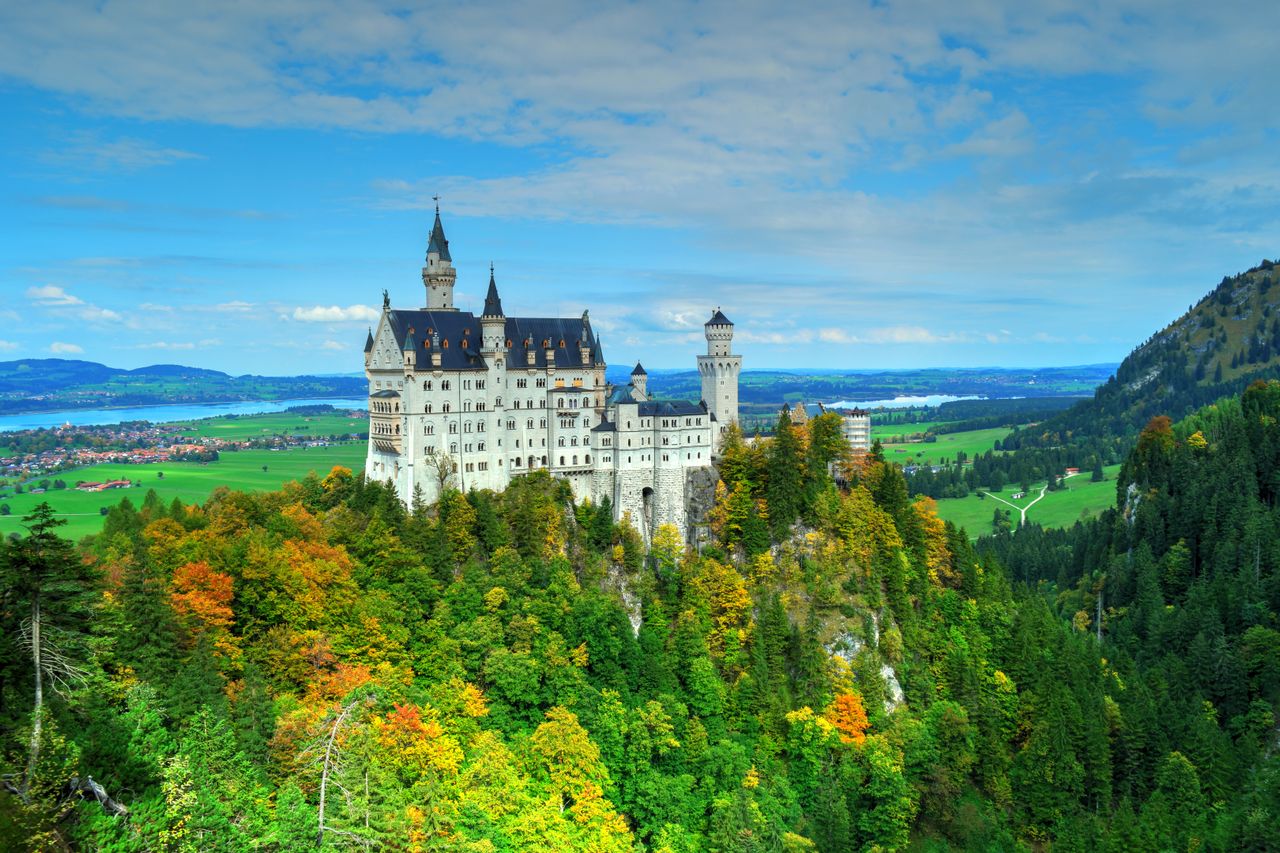
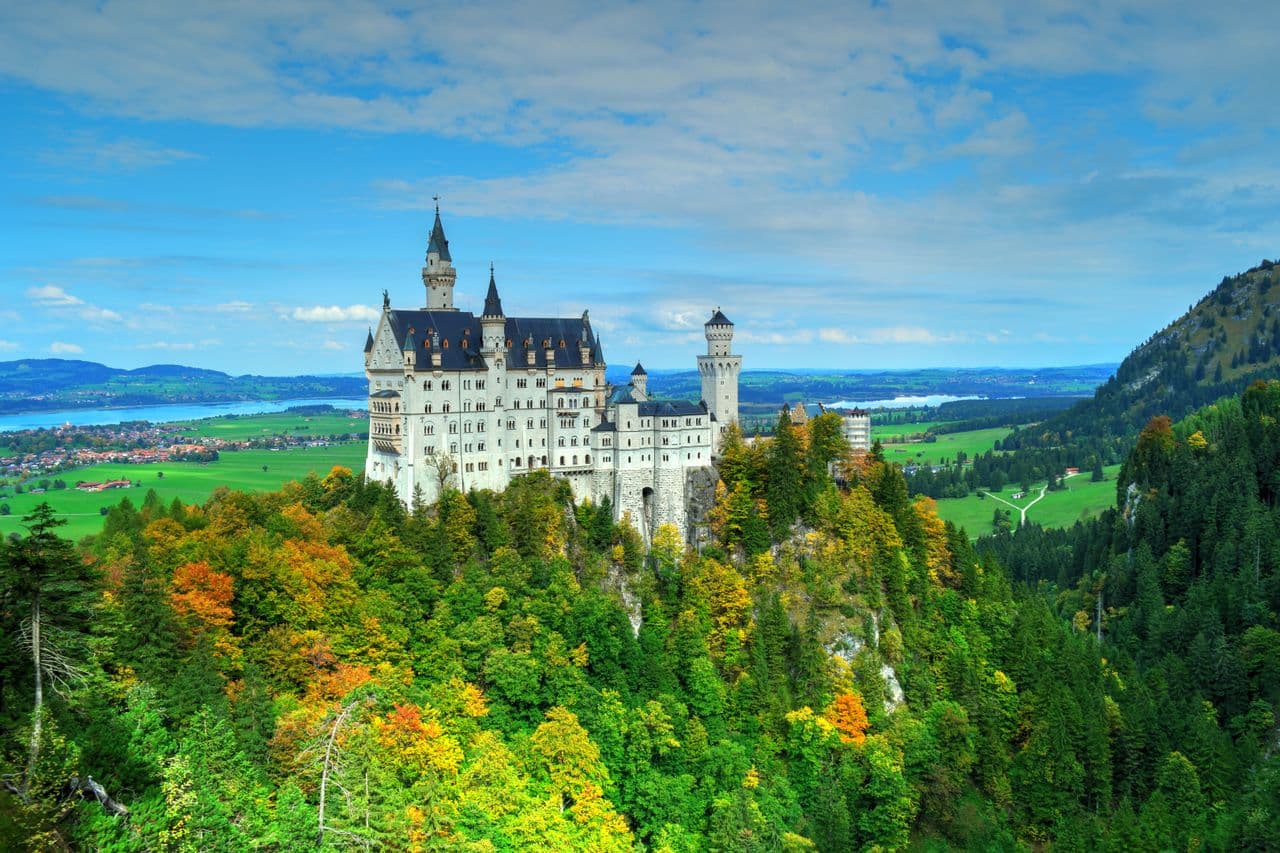
Let's start with the classic, because without it this story wouldn't even exist. Neuschwanstein – a name that trips up tourists from every corner of the globe – rises from a rocky outcrop in the Bavarian Alps, right above the village of Hohenschwangau. It was built by King Ludwig II of Bavaria, a ruler historians still describe with two wildly different nicknames: the "Fairytale King" or the "Mad King." As usual, the truth probably sits somewhere in between.
Ludwig took the throne at just nineteen and, to put it gently, never quite settled into the whole business of running a country and managing a budget. Instead, he buried himself in Romantic literature and opera – above all, the work of Richard Wagner, his fellow German and the object of an almost boyish fascination. Ludwig began building Neuschwanstein in 1869 explicitly as a tribute to the composer. The third and fourth floors are basically a stage set lifted straight out of Wagner's operas – dragons, knights, swans, motifs woven into every last decorative detail.
And here's where the Disney connection kicks in. In 1935 – twenty years before the first Disneyland ever opened – Walt Disney took his family on a two-month tour of Europe, visiting Austria and Bavaria along the way. According to the most widely told version of this story, that's when he saw Neuschwanstein with his own eyes, and something clicked. Twenty years later, in 1955, a 77-foot castle with white towers and pointed spires went up in Anaheim, California, its silhouette bearing an unmistakable resemblance to the Bavarian original. It was called Sleeping Beauty Castle.
One thing worth stressing here: this is not a copy. Disney and his team of imagineers didn't replicate Neuschwanstein brick for brick – they took its silhouette, its dramatic hilltop position, its almost theatrical baroque excess, and translated all of that into the language of animation and theme-park architecture. Neuschwanstein itself, incidentally, wasn't even designed by an architect in the traditional sense – it was designed by Christian Jank, a theatrical set painter, which pretty much explains why the building looks more like an opera backdrop than a functional fortress. It never was one, either – no king ever defended it from an enemy, because Ludwig built it purely as a private hideaway, an escape from his court duties in Munich.
The king's own fate, for what it's worth, is just as dramatic as any Disney plot – minus the happy ending. In 1886, mere weeks after doctors officially declared him mentally unfit to rule, Ludwig II died under still-unexplained circumstances in Lake Starnberg. The castle that was supposed to be his private sanctuary was never fully finished – and yet today it pulls in over 1.3 million visitors a year, making it Germany's most-visited castle. There's something almost poetic about that: a king who spent his life avoiding people ended up, after death, becoming one of the biggest tourist draws on the planet. Ironic? You could say that.
Château de Chambord – the Renaissance mansion that woke the Beast
Now we head to France, to the Loire Valley, where a building stands that's every bit as majestic as Neuschwanstein but entirely different in character. Château de Chambord is a true Renaissance giant – the largest château in the entire Loire Valley, with over four hundred rooms and nearly three hundred fireplaces. Yes, you read that right: three hundred fireplaces. It was built in 1519 by King Francis I, France's young and ambitious ruler, as something like a hunting lodge – though "lodge" barely does justice to a structure this size.
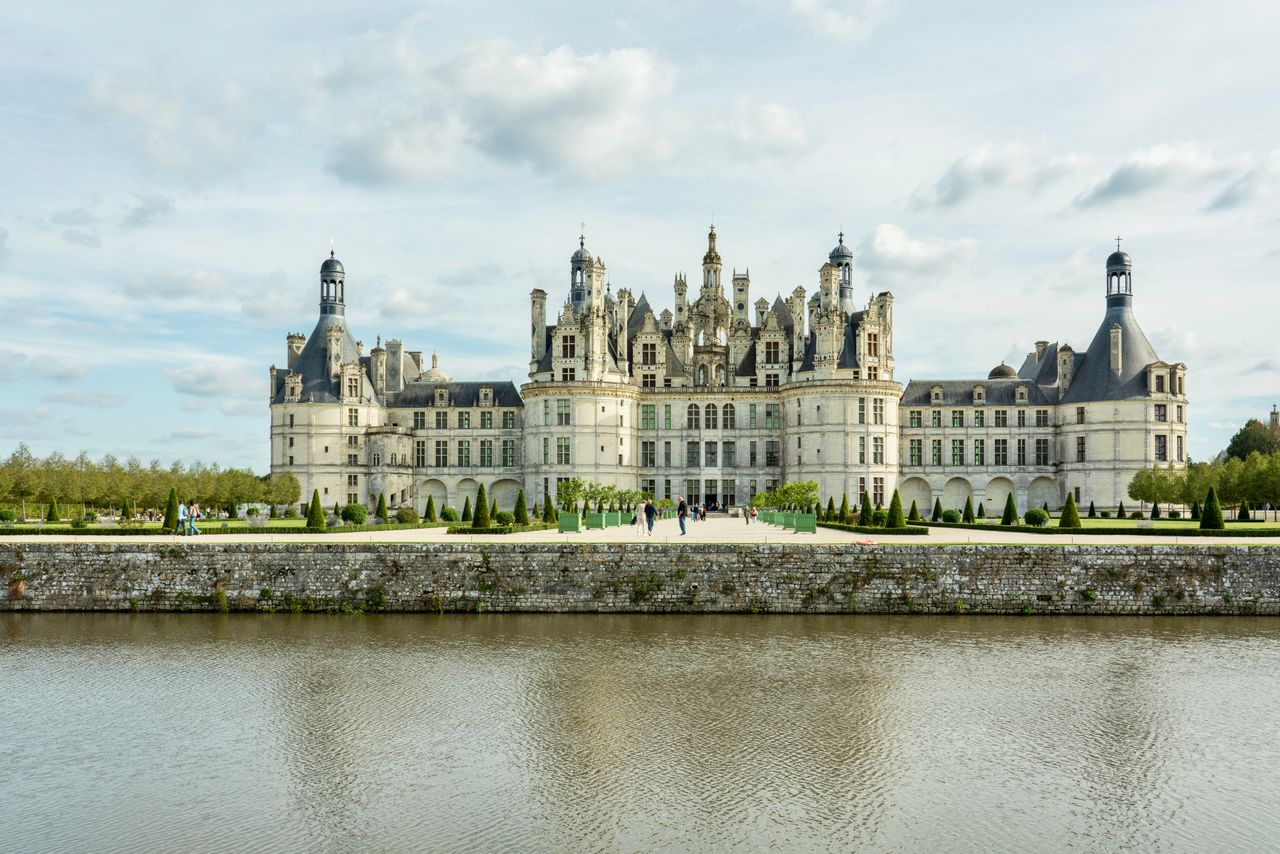
Interestingly, Francis I spent a grand total of a few months at Chambord over his entire reign. The château existed mostly to make an impression – on foreign dignitaries, on rival monarchs, on the whole of Europe. Historians still argue over who actually designed it, since no construction records ever survived. One thing is certain: Chambord's architecture blends medieval defensive logic – round bastions, an enclosing wall, a central keep – with pure, Italian-inflected Renaissance ornament. That collision of two eras in a single building makes a genuinely striking impression on anyone who stands in front of its façade.
Chambord's real showstopper is its double-helix spiral staircase, tucked right into the heart of the building. Legend has it the design was inspired by Leonardo da Vinci himself, who spent his final years living nearby at the court of Francis I. Two people can climb and descend the staircase at the same time, spiraling around the same central axis, never crossing paths or even seeing each other – a bit like a double helix of DNA, except carved in stone five centuries before anyone discovered DNA in the first place. Pretty clever, right?
Now let's connect the dots to Disney. When the animation team was working on "Beauty and the Beast" in 1991, they took a research trip to the Loire Valley. Animator Glen Keane, who was responsible for designing the Beast himself, visited Chambord with his team and drew directly from it for the design of the castle where the enchanted Prince Adam lives out his lonely, spellbound years. The pointed turrets, the dramatic rooftop silhouette against the sky, the sheer architectural excess – all of it made it onto the screen. Some visitors even claim they can spot an echo of Cogsworth, the talking clock, in Chambord's own clock tower. Deliberate nod or happy coincidence? We'll probably never know for sure, but hunting for those little details is half the fun.
What's even more interesting is that Chambord reportedly influenced not just the 1991 animated film but the 2017 live-action remake as well, though for that second production the filmmakers also cited Versailles as an influence, presumably to push the opulence even further. As you can see, one château can inspire filmmakers across decades, in several completely different movies.
The Alcázar of Segovia – the Spanish fortress that became the Queen's Castle
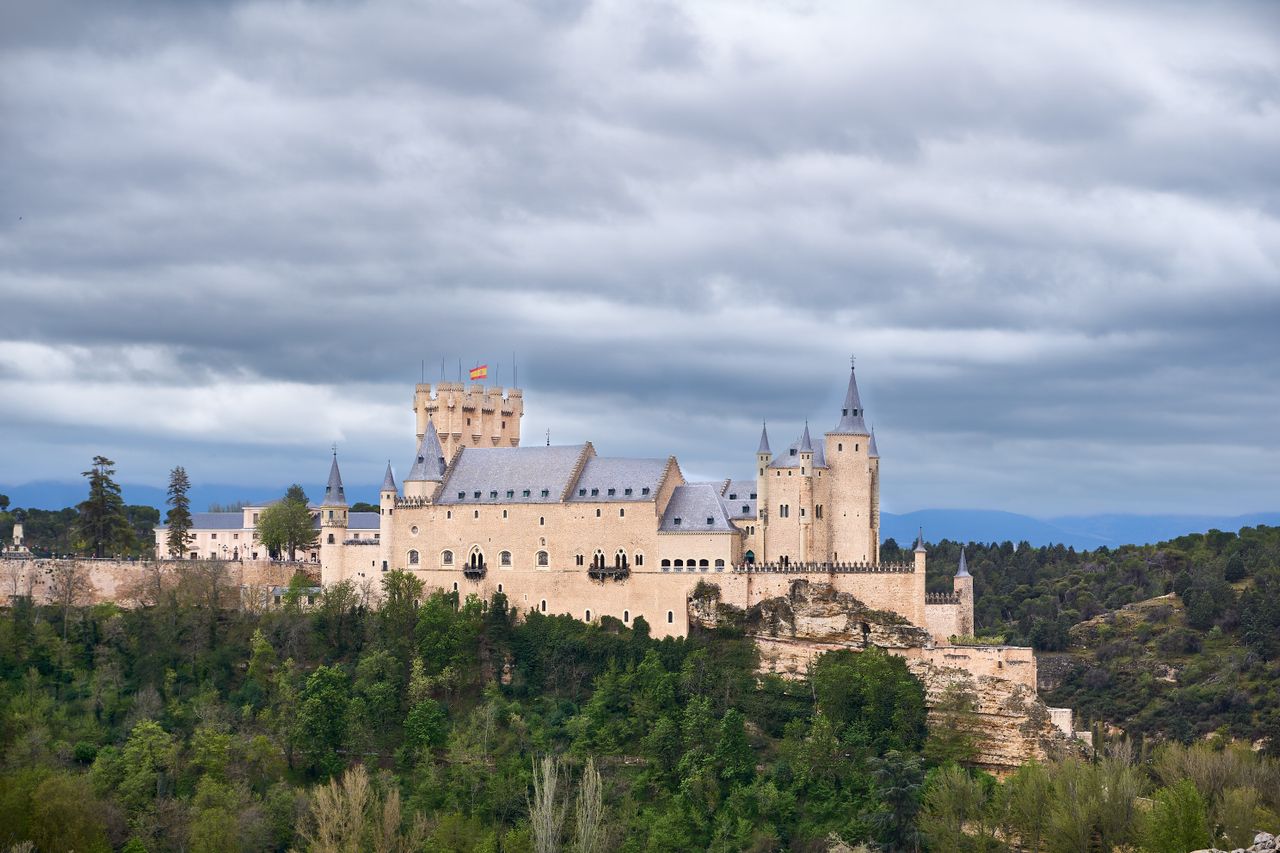
Here's where things get genuinely interesting, because almost nobody realizes that Disney's very first animated feature – "Snow White and the Seven Dwarfs," from 1937 – also had a real architectural blueprint. That would be the Alcázar of Segovia, a Spanish fortress towering over the city where two rivers meet, in the Castile and León region.
The word "Alcázar" comes from the Arabic al-qasr, meaning fortress – which gives away a chunk of the building's history right there. The structure dates back to the Moorish era before being rebuilt by Castile's Christian kings in the 14th century. It was here, in 1474, that Queen Isabella I was proclaimed ruler of Castile – an event historians regard as the symbolic birth of modern Spain. It's hard to think of a more "royal" pedigree for a castle that would later inspire a children's fairytale about a wicked queen's fortress.
The Alcázar genuinely looks unlike anything else – its main tower is shaped almost like the prow of a ship, and the slate-tiled, pointed roofs of its turrets give the whole complex a theatrical, almost storybook quality. The moat, the drawbridge, the four distinctive turrets – together they create exactly the kind of silhouette you'd imagine for the castle of an evil queen hiding deep in an enchanted forest. No surprise, then, that when Disney went looking for a visual template for the villain's stronghold in "Snow White," this building caught their eye.
And here's a fact that genuinely rarely makes it into the standard listicles: the Alcázar reappeared on Disney's radar in 2025, when it hosted the European premiere of the live-action "Snow White" remake starring Rachel Zegler. The actress performed "Waiting on a Wish" live at a special event for press and fans – bringing things full circle almost ninety years after the original film's release. The Alcázar has also served as a filming location in other productions over the decades, including Orson Welles' 1965 classic "Chimes at Midnight."
Architectural historians point out that the Alcázar of Segovia is just one of several castles that, together – not individually – shaped the look of Cinderella Castle at Walt Disney World. That same prow-shaped main tower and slate-roof palette you see in Segovia turns up again and again in the Florida castle's design. It's an important lesson here: Disney castles rarely have one single point of origin. They're really an architectural collage, a mash-up of the most photogenic elements from several real buildings at once.
Château d'Ussé – the castle that inspired the fairytale itself, long before any film existed
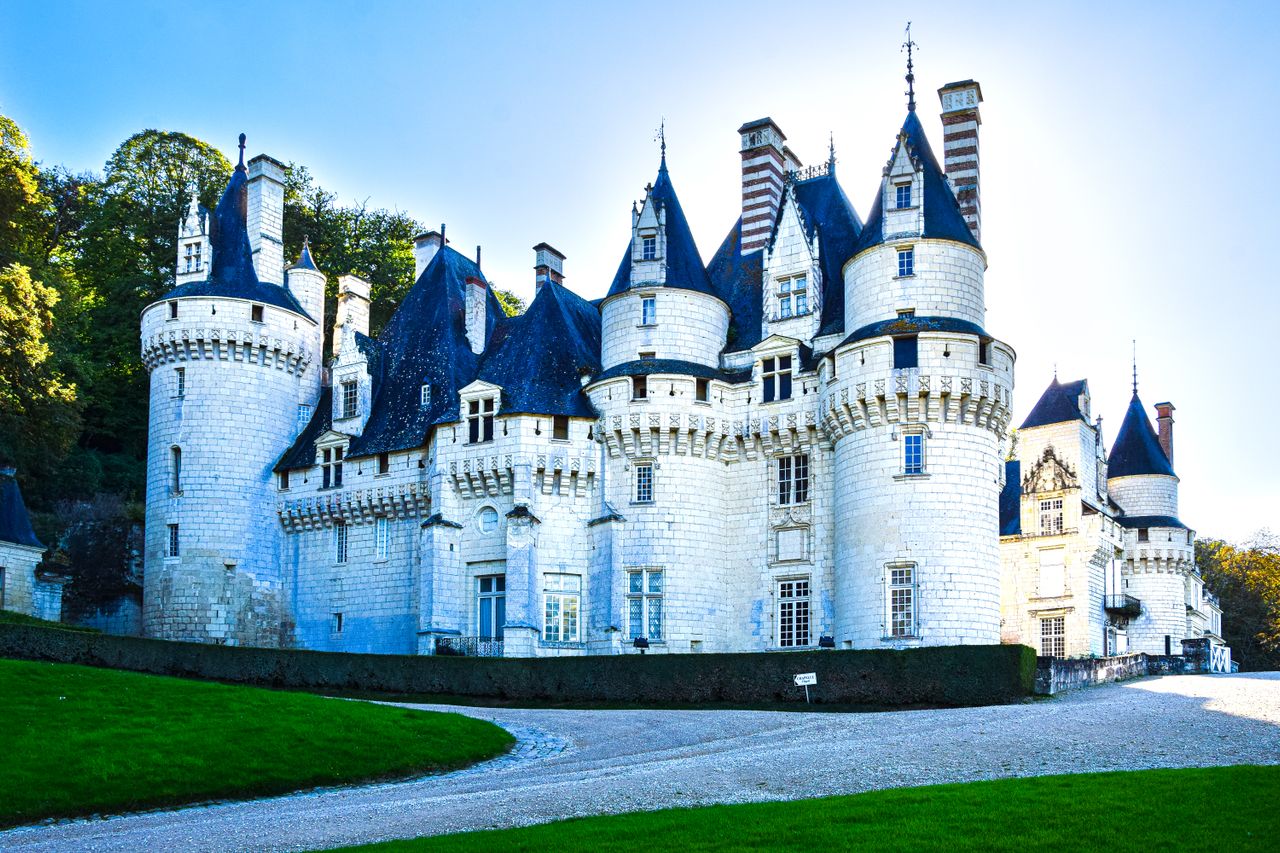
Now for something you probably won't find in a typical movie-trivia piece: before Disney ever thought about animation, before anyone dreamed of cartoons, the Sleeping Beauty fairytale itself already had its own real-world architectural muse. That's Château d'Ussé, a picturesque castle on the edge of the Chinon forest in the Loire Valley, not far from the town of Saumur.
French author Charles Perrault, who published "La Belle au bois dormant" ("The Sleeping Beauty in the Wood") in 1697 – the original source for every later version of the story, Disney's included – is said, according to Loire Valley tradition, to have gazed across the valley at Ussé's white towers and spires and seen his enchanted palace right there. One look at the place and it's easy to understand why. Renaissance turrets in pale limestone, a roofline crowded with dormers and chimneys, formal gardens designed by André Le Nôtre – the same man behind the gardens at Versailles – all of it makes Ussé look like an illustration straight out of a storybook, and this was centuries before anyone thought about animation.
There's a genuinely fascinating chain of inspiration worth pausing on here. Château d'Ussé inspired a writer, whose story two hundred and fifty years later inspired Disney to make a film whose visual style, in turn, drew on an entirely different castle – Neuschwanstein. In other words, the plot and the architecture of "Sleeping Beauty" have two completely separate, unrelated "parents" – one French, one Bavarian – who never met, who lived almost two centuries apart, and who together, quite by accident, produced one of the most recognizable pop-culture symbols of the twentieth century. Someone once said that fairytales are stories that never really have a single author – and it's hard to find better proof of that than this.
Château d'Ussé actually started life as a medieval defensive stronghold before gradually evolving into a Renaissance residence, and later a lavish family home in the 17th and 18th centuries. The story's key setting is the octagonal Knights' Keep – local legend holds that this is where the enchanted princess was said to sleep for a hundred years. Today the château is open to visitors, from the towers down to its mysterious cellars, stables, chapel, and gardens – and it's easy to see, walking through them, why this place has stirred writers' imaginations for centuries.
Norway and Akershus – how fjords and timber architecture built Arendelle
Not every Disney castle traces back to a single medieval or Renaissance building. Take "Frozen," from 2013 – one of the highest-grossing animated films of all time. The fictional kingdom of Arendelle, where Elsa and Anna grow up, is really a visual love letter to an entire country, Norway, rather than one specific structure.
The castle where the sisters live gets its exterior look from Akershus Fortress in Oslo, a building whose history stretches back to 1299, when King Håkon V ordered its construction to defend the capital. The distinctive brick pattern on the walls, the green, sloped roofs, that particular stark elegance – all of it made it into the animated version of Arendelle Castle. Curiously, though, the castle's interiors weren't modeled on Akershus at all. The team pulled from an entirely different building for that: Stiftsgården in Trondheim, one of the largest wooden residences in all of Scandinavia, built in 1778. That shows just how meticulously the Disney team worked – an exterior from one city, interiors from a completely different region of the country, and yet somehow the whole thing reads as one seamless building.
Then there's another, less obvious piece of the puzzle – the chapel where Elsa is crowned. Animators based its design on Norwegian stave churches (stavkirke), medieval wooden temples once common across northwestern Europe and now preserved almost exclusively in Norway. Even though they're built entirely of timber, these buildings have a genuinely majestic quality – soaring, tiered roofs that look almost like dragon scales, richly carved doorways. No wonder that kind of architecture slotted so perfectly into the film's fairytale atmosphere.
And while we're at it – the fjord surrounding Arendelle isn't a random invention either; it's a direct nod to Nærøyfjord, one branch of Norway's longest fjord, Sognefjord, which is itself a UNESCO World Heritage site. The town's overall landscape, meanwhile, is widely linked to both the Austrian town of Hallstatt and the Norwegian city of Bergen – two places that share a similar setting, tucked at the base of mountains right on the water. So really, Arendelle is a true architectural mash-up – a castle exterior from one city, interiors from another, a chapel drawn from an entirely different building tradition, and a landscape borrowed from a third region altogether. And despite all that scattered inspiration, the whole thing feels completely cohesive, because the filmmakers genuinely did their homework before ever picking up a pencil.
Overlooked but essential: Craigievar, Mont Saint-Michel, and other fairytale originals
Now that we know Disney castles are really a group effort of many European buildings, it's worth spending a few paragraphs on some less obvious – but no less important – sources of inspiration.
Let's start with Craigievar Castle in Aberdeenshire, Scotland – a modest, salmon-pink 17th-century tower house that architectural historians regularly cite as one of the inspirations behind Cinderella Castle's tall, slender silhouette. It's from tower houses like this one that Disney's artists borrowed that distinctive verticality – the sense that a tower reaches far higher into the sky than realistic architecture would ever allow. Craigievar is also sometimes linked to Castle DunBroch from Pixar's "Brave," which shows just how far this small Scottish building's influence has traveled.
Craigievar has its own oddly charming survival story, too. The castle has never really been rebuilt since its completion in 1626, which is genuinely unusual by Scottish standards – most comparable buildings either burned down, were demolished, or were heavily modernized over the centuries. Because of that, Craigievar has kept its original, almost storybook shape intact: a narrow, tall tower, a pinkish render on the façade, and a whole array of small turrets and battlements that no longer serve any defensive purpose – they're purely decorative at this point. It's exactly that purely aesthetic, "impractical" verticality that so appealed to designers looking for a model for Disney's slimmest, tallest castles.
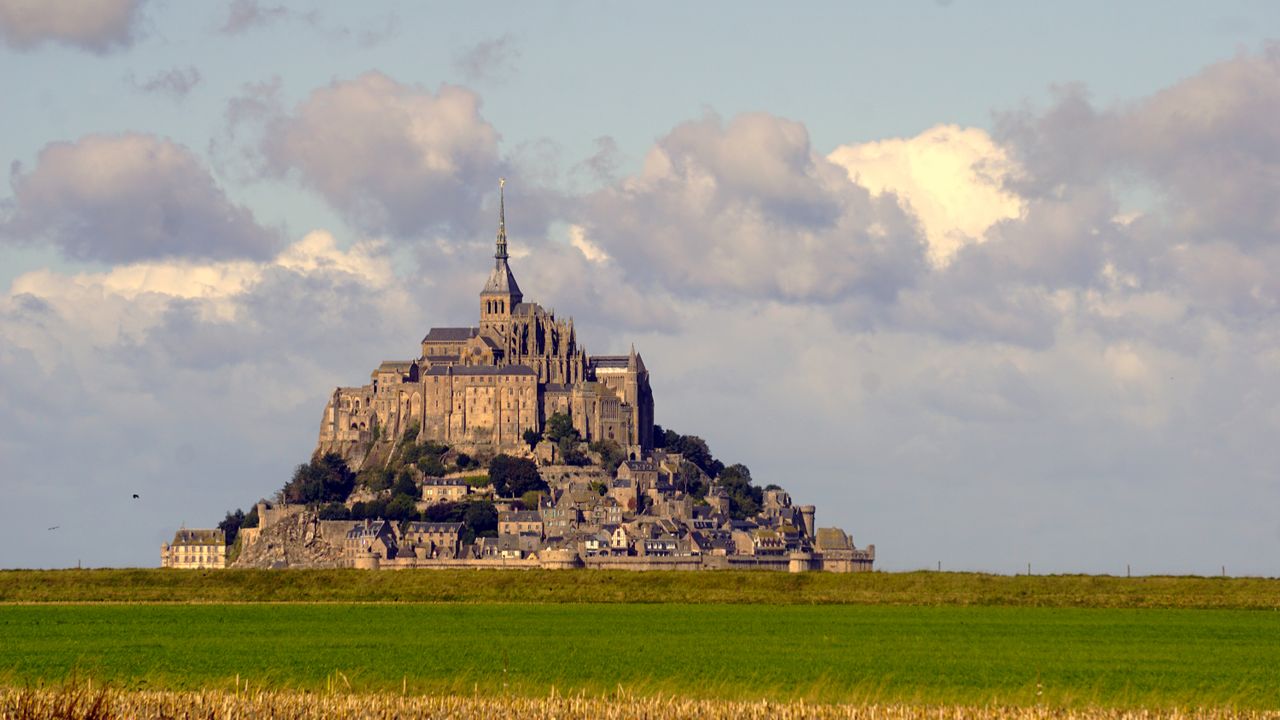
Another example is France's Mont Saint-Michel, the monastic tidal island off the coast of Normandy, which plenty of viewers connect to parts of "Tangled," from 2010 – specifically to Rapunzel's parents' castle. The island's silhouette, dramatically rising straight out of the water, ringed by defensive walls and crowned by a soaring abbey, has exactly that theatrical, almost implausible grandeur that Disney's set designers love to work with.
We also can't skip Germany's Hohenzollern Castle, perched on a hilltop in Swabia, or Poland's Moszna Castle in Upper Silesia – a building increasingly cited in international round-ups as one of the visual touchstones for Disney's aesthetic, alongside the Gothic Church of Our Lady before Týn in Prague. It all goes to show that Disney's inspiration was never confined to one country or one era – the studio's artists drew from across the map of Europe, from Spanish fortresses to German castles to Czech churches, effectively producing a visual essay on European fantasy architecture.
Moszna Castle deserves its own line, honestly, because its history is as baroque as its architecture. Originally a modest noble residence, it was expanded at the turn of the 20th century by the von Tiele-Winckler family into something almost surreal – 99 turrets, an eclectic mix of neo-Gothic, neo-Baroque, and neo-Renaissance styles, all crammed into one dense, detail-heavy structure. It's exactly that "too much" quality that leads plenty of travel bloggers and architecture fans to compare Moszna to a fairytale film set, even though the castle was never officially credited by Disney as a source of inspiration – it's more of a spontaneous association that grew up after the films' release, once tourists started visiting and spotting the resemblance themselves.
Cinderella Castle – when one original just isn't enough
It's worth pausing on Cinderella Castle at Walt Disney World in Florida, because it's probably the best proof that Disney's artists never copied a single building "one to one." Cinderella Castle, which opened in 1971, is noticeably taller and slimmer than its California predecessor at Disneyland. Why? Because this time the team decided to blend several European models at once, rather than leaning on just one.
The prow-shaped main tower and slate-roof palette echo the aforementioned Alcázar of Segovia. The overall verticality and slenderness of the whole structure is a nod to Scottish tower houses like Craigievar. The Renaissance-white stonework and decorative chimneys recall the châteaux of the Loire. And the general fairytale-fantasy vocabulary – that's straight out of Neuschwanstein. So really, Cinderella Castle is a "greatest hits" of European castle architecture, carefully stitched together by a design team that understood exactly why they were reaching for each individual piece.
That's a pattern Disney has repeated at every park built since. Every Disneyland – whether in Paris, Tokyo, Hong Kong, or Shanghai – has its own castle at the center, and each time designers reached for a slightly different set of European (and, in Shanghai's case, deliberately more international) references. It shows just how flexible and universal that original 19th-century fairytale-castle aesthetic turned out to be – it works equally well in Bavaria, in Florida, or in China.
Why these castles still capture our imagination
You might be asking: fine, but why does this actually work? Why can a five-hundred-year-old stone tower still move a three-year-old watching a cartoon? The answer, I think, is simpler than it sounds – and it's baked right into the architecture of these buildings.
Castles like Neuschwanstein or Chambord were never really fully functional defensive fortresses. They were built in an era when the real military threat to European rulers had already faded, and defensive architecture – moats, battlements, watchtowers – had become more of a symbol than an actual necessity. In other words, these castles were already a little theatrical from day one. So it's no wonder that, centuries later, they turned out to be perfect source material for the most theatrical art form there is: animated film.
There's something deeper going on here too, something that touches on the psychology of how we perceive space. A tall tower, a steep roof, a dramatic hilltop or rocky-outcrop setting – these are all signals our brains read almost instinctively as "something important, something magical, something worth looking at." Architects have understood this since the age of Gothic cathedrals, deliberately designing buildings to trigger a sense of awe and smallness in the viewer standing before them. And Disney – this is really the genius of it – simply carried that same principle onto the screen, knowing it would work just as well in a drawing as it does in stone.
Walt Disney himself is often quoted as saying something that captures the spirit of the whole enterprise perfectly: "All our dreams can come true, if we have the courage to pursue them." Looking at how an ordinary summer vacation to Bavaria in 1935 turned into a symbol recognized worldwide today, it's hard to argue with him.
There's one more piece worth mentioning – color. Most of the real castles described here are actually nowhere near as snow-white as their animated counterparts. Stone darkens over time, picking up patina, moss, and decades of rain streaking down the façade. Disney's artists deliberately "bleached" their designs, brightening the palette and sharpening the contrast so the buildings would read better on screen and under the California or Florida sun. It's the exact same trick used today by video-game and concept artists – reality is the starting point, but the final result always passes through the filter of imagination, and it has to "work" visually, not just match the history books.
Scale matters too. Real European castles can be surprisingly compact when you actually stand in front of them – plenty of first-time visitors to Neuschwanstein admit they expected something much bigger. Disney's theme-park castles play with that impression in the opposite direction, using a trick called forced perspective: the upper sections of the building are deliberately built smaller, which makes the whole structure look far taller from the ground than it actually is. Real castles obviously never used that trick, but thanks to their hilltop or clifftop locations, they achieved a similar optical "exaggeration" all on their own – and that's precisely the quality Disney's set designers found so appealing.
Planning your own trip to see the real Disney castles
Now that you know where to look for the real originals, maybe you're tempted to see them for yourself. That's absolutely worth doing, though it pays to plan ahead.
Neuschwanstein sits near Munich – the train ride takes under two hours, and from there you'll need a bus or a short hike from the village of Hohenschwangau. Book tickets in advance, especially during summer and on weekends, because the lines can get seriously long – after all, this is the most-visited castle in all of Germany.
If the Loire Valley is calling, Château de Chambord and Château d'Ussé sit fairly close to each other and work well as either a day trip from Paris or the anchor of a longer stay in the region. The Alcázar of Segovia, meanwhile, makes a great day trip from Madrid – the town of Segovia itself, with its famous Roman aqueduct, is worth a few hours of wandering on its own. And if you're after something more far-flung, Norway, with Akershus in Oslo and its fjords beyond, is less of a day trip and more of a week-long itinerary packed with views that Disney essentially copied straight from nature.
The bottom line: a fairytale that always had stone foundations
You'd think the world of fairytales and the world of real, documented architectural history would be two completely separate universes. As this tour across Europe shows, the truth is quite the opposite. Every Disney castle – from Sleeping Beauty to Tangled, from Snow White to Frozen – has roots in a specific, tangible place that you can visit today, touch the walls of, and stand exactly where Walt Disney or his team of animators once stood, sketching out their first ideas.
That's what makes this whole story so compelling. It's not just that fairytales draw on reality – it's that reality, when it's beautiful and strange enough, starts to look like a fairytale all on its own. Ludwig II, building a mountaintop hideaway stuffed with operatic motifs. Francis I, raising four hundred rooms just to impress guests he barely ever hosted. Charles Perrault, looking at white towers above the Loire and seeing a sleeping princess in them, centuries before anyone had even dreamed up cinema.
Next time you see that familiar Disney logo flash up before a movie, you'll know you're not looking at one castle – you're looking at the echo of dozens of real European buildings, woven together into a single, universal vision of what a "fairytale castle" is supposed to be. And honestly? That's even more impressive than the animation itself.