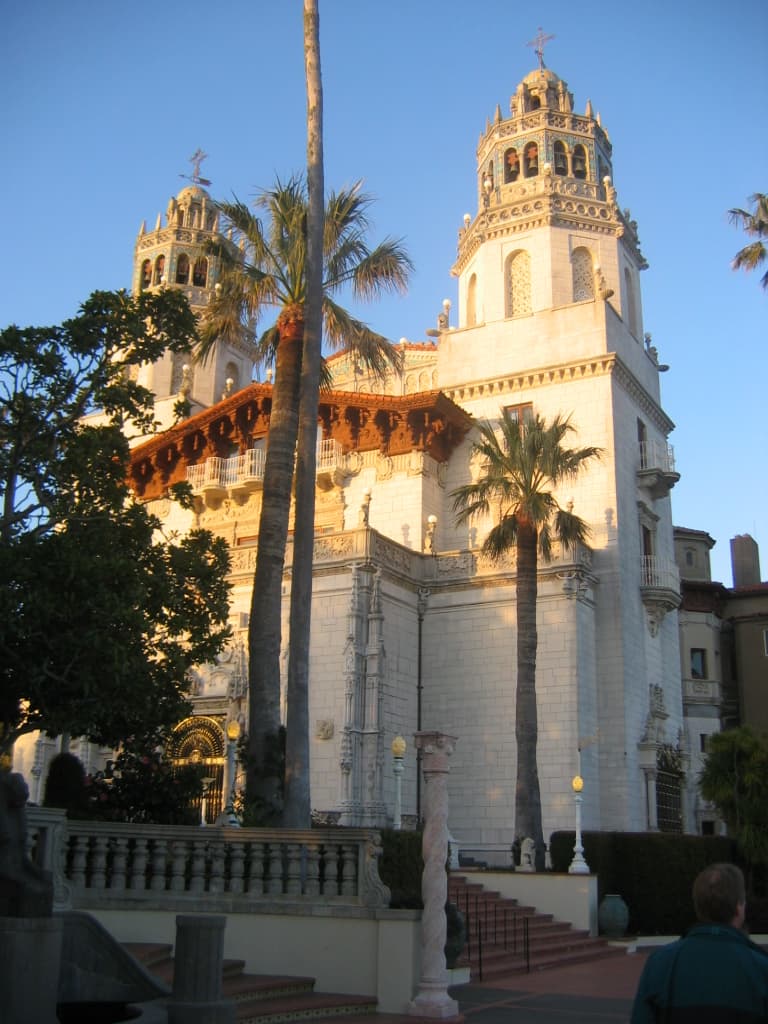
Hearst Castle
Hearst Castle, formally known as La Cuesta Encantada (Spanish for "The Enchanted Hill"), is a remarkable historic estate located in San Simeon on the Central Coast of California. Conceived by the influential publishing magnate William Randolph Hearst and designed by pioneering architect Julia Morgan, the castle was constructed over an extended period from 1919 to 1947. Today, it operates as a museum within a California State Park and holds designations as a National Historic Landmark and a California Historical Landmark.
The origins of the estate trace back to 1865 when George Hearst, William Randolph Hearst's father, acquired the original 40,000-acre property. The site known as Camp Hill served as a family camping retreat during William Randolph's youth. Following the death of his mother, Phoebe Hearst, in 1919, William Randolph commissioned Julia Morgan to create a more permanent and comfortable residence atop the hill, initiating the construction of what would become the present castle. Their collaboration spanned over two decades, with near-continuous building activity from 1920 until 1939, and a resumption after World War II until Hearst's departure in 1947.
Architectural design and style
Hearst Castle is classified as a hill castle due to its elevated position overlooking the Pacific Ocean. Its architecture is an eclectic mix, heavily influenced by European styles, particularly Spanish Revival and Mediterranean elements. The castle's design reflects the vision of Julia Morgan, one of the first prominent female architects in the United States, who integrated historic architectural components into a cohesive and grand estate.
A defining characteristic of Hearst Castle is its incorporation of over 30 architectural elements imported from Western Europe. These include medieval ceilings, doorcases, fireplaces, mantels, entire monasteries, paneling, and even a medieval tithe barn. These elements were originally shipped to Hearst's warehouses in Brooklyn before being transported to California and integrated into the castle's fabric, creating a unique synthesis of historic and contemporary construction.
Key structures and features
The estate features several notable structures, including the main building with its grand halls and living quarters, the Neptune Pool with classical statues and colonnades, and the Roman Pool, famed for its intricate tile work and vaulted ceilings. The castle also includes extensive gardens, guesthouses, and terraces that offer panoramic views of the surrounding landscape and ocean.
Historical context and significance
Originally intended as a family home for Hearst, his wife Millicent, and their five sons, the estate's social function evolved over time. By 1925, Hearst's marriage had effectively ended, and San Simeon became the residence of Hearst and his mistress, the actress Marion Davies. The castle became a hub for Hollywood's elite during the Roaring Twenties, hosting luminaries such as Charlie Chaplin, Cary Grant, the Marx Brothers, Greta Garbo, Buster Keaton, Mary Pickford, Jean Harlow, and Clark Gable. Political figures like Calvin Coolidge and Winston Churchill also visited, along with notable personalities including Charles Lindbergh, P. G. Wodehouse, and Bernard Shaw.
Hearst's passion for collecting earned him the nickname "Great Accumulator." He amassed an extensive collection of art, antiques, and architectural artifacts. His assemblage included one of the world's largest collections of ancient Greek vases. The castle was intended as a "museum of the best things" Hearst could acquire, reflecting his desire to preserve and showcase cultural treasures.
The estate's lifestyle and grandeur were famously satirized in the 1941 film Citizen Kane, directed by Orson Welles. The film's portrayal led Hearst to attempt suppression of the movie, highlighting the cultural impact and notoriety of the castle.
Preservation and public access
In May 1947, Hearst's declining health forced him and Marion Davies to leave the castle permanently. Hearst passed away in 1951, and architect Julia Morgan died in 1957. The following year, the Hearst family donated the castle and much of its contents to the State of California. It opened to the public in June 1958 as the Hearst San Simeon State Historical Monument.
Today, Hearst Castle attracts approximately 750,000 visitors annually. The family retains ownership of the larger estate, which spans over 82,000 acres. Through conservation agreements involving the California State Parks Department and the American Land Conservancy, the natural and undeveloped character of the surrounding land has been preserved. The estate's setting has been praised by Bernard Shaw, who reportedly said it was "what God would have built if he had had the money."
Visitor experience and amenities
Visitors to Hearst Castle can explore the grand rooms, extensive art collections, and beautifully landscaped gardens. Guided tours provide insights into the castle's history, architecture, and the lives of its famous inhabitants. The site includes a visitor center with educational exhibits, a café, and gift shops.
Accessibility and visiting hours vary seasonally, with tickets required for entry. The castle is a significant cultural landmark and a prime example of early 20th-century American aristocratic architecture, offering a unique glimpse into the lifestyle of one of the most powerful media figures of the era.
Frequently asked questions (FAQ)
- How do I visit Hearst Castle?
- To visit Hearst Castle, you need to purchase tickets in advance either online or at the visitor center. Guided tours are available, which provide insights into the estate's history and architecture. It's recommended to book your tickets early, especially during peak tourist seasons.
- What is the historical significance of Hearst Castle?
- Hearst Castle was built by newspaper magnate William Randolph Hearst in the early 20th century and served as his private estate. It is significant for its opulent architecture and rich history, reflecting the lifestyle of the American elite during that era. The castle is also a National Historic Landmark, showcasing an impressive collection of art and artifacts.
- When was Hearst Castle constructed?
- Construction of Hearst Castle began in 1919 and continued for nearly 28 years, with various extensions and changes made over time. The main structures were completed in the 1940s, creating a grand estate that features stunning gardens, pools, and elaborate interiors. The project was a reflection of Hearst's vision for a luxurious retreat in California.
- Can I take photographs inside Hearst Castle?
- Photography is allowed in certain outdoor areas of Hearst Castle, but inside the buildings, it is typically prohibited to preserve the integrity of the art and furnishings. Always check the specific guidelines for your tour, as they may vary. Visitors are encouraged to capture the beauty of the estate in designated areas.
- Why is Hearst Castle a popular tourist destination?
- Hearst Castle attracts visitors for its breathtaking architecture, sprawling gardens, and stunning coastal views. The estate offers a glimpse into the extravagant lifestyle of William Randolph Hearst and his guests, making it a fascinating destination for history and architecture enthusiasts alike. Additionally, its location along the scenic California coastline enhances its appeal.
- Is it possible to access Hearst Castle for individuals with disabilities?
- Yes, Hearst Castle is committed to making the estate accessible to all visitors. The visitor center and some areas of the castle are wheelchair accessible, and accommodations can be made for those with mobility challenges. It’s advisable to contact the visitor center in advance to ensure your specific needs are met during your visit.
- What is the best time to visit Hearst Castle?
- The best time to visit Hearst Castle is during the spring and fall months when the weather is mild, and the crowds are smaller. Summer is peak tourist season, so expect larger crowds and longer wait times. Visiting early in the morning or later in the afternoon can also help you avoid peak hours.
- What are the ticket prices for Hearst Castle?
- Ticket prices for Hearst Castle vary depending on the type of tour you choose, with general admission typically starting around $25 for adults. Discounts may be available for seniors, students, and children. It's best to check the official website for the most current pricing and any special promotions.
- What are the opening hours of Hearst Castle?
- Hearst Castle is generally open daily, but hours can vary seasonally. Typically, the estate opens around 9:00 AM and closes between 5:00 PM and 7:00 PM depending on the time of year. It's recommended to check the official website for specific hours during your planned visit.
Photo gallery

Photo by No machine-readable author provided. Urban~commonswiki assumed (based on copyright claims).•CC BY-SA 3.0
Information
Featured in
Articles on the Castlopedia blog that feature Hearst Castle.
Loading map...
Visitor reviews
No reviews yet. Been here? Write the first review and help other travelers!
Write the first reviewVisited this castle? Share your experience
Your review helps other travelers and adds first-hand knowledge to our encyclopedia.



