Akershus Fortress
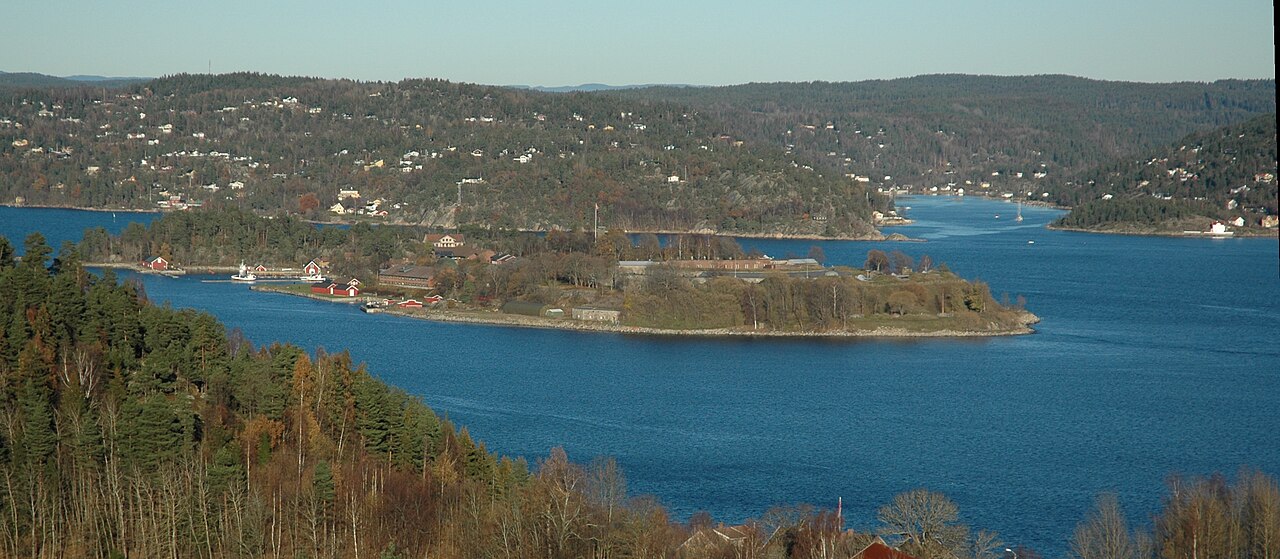
Akershus Fortress stands as a monumental medieval castle complex located on the Akersneset peninsula in Oslo, Norway. Constructed in the late 13th century, it was commissioned by King Håkon V Magnusson around the 1290s to serve as a royal residence and a strategic military stronghold protecting the capital city. The fortress's prime location near the Oslofjord made it a crucial defensive bastion, controlling access by sea and land to the heart of Norway's political power.
The fortress has a remarkable history of resilience, having withstood numerous sieges by Swedish forces throughout the Middle Ages and early modern period, including notable attacks in 1308, 1449–1450, 1502, 1523, 1567, and the famous 1716 siege led by Charles XII. Despite these challenges, Akershus Fortress was never successfully captured in active combat, underscoring its formidable defensive design and strategic importance.
Over the centuries, Akershus evolved architecturally and functionally. Originally a medieval hill castle featuring thick stone walls, towers, and a keep, it underwent significant transformation during the Renaissance period under the reign of King Christian IV in the early 17th century. Influenced by contemporary Italian military engineering, the fortress was remodeled with bastion fortifications, earthworks, and artillery batteries to adapt to the advent of gunpowder and cannon warfare. Notable engineers such as Hans van Pæschen and Hans van Steenwinkel contributed to these enhancements, which included the construction of bastions like Dronningens batteri (Queen’s Battery) and Kongens batteri (King’s Battery).
Medieval origins and royal residence
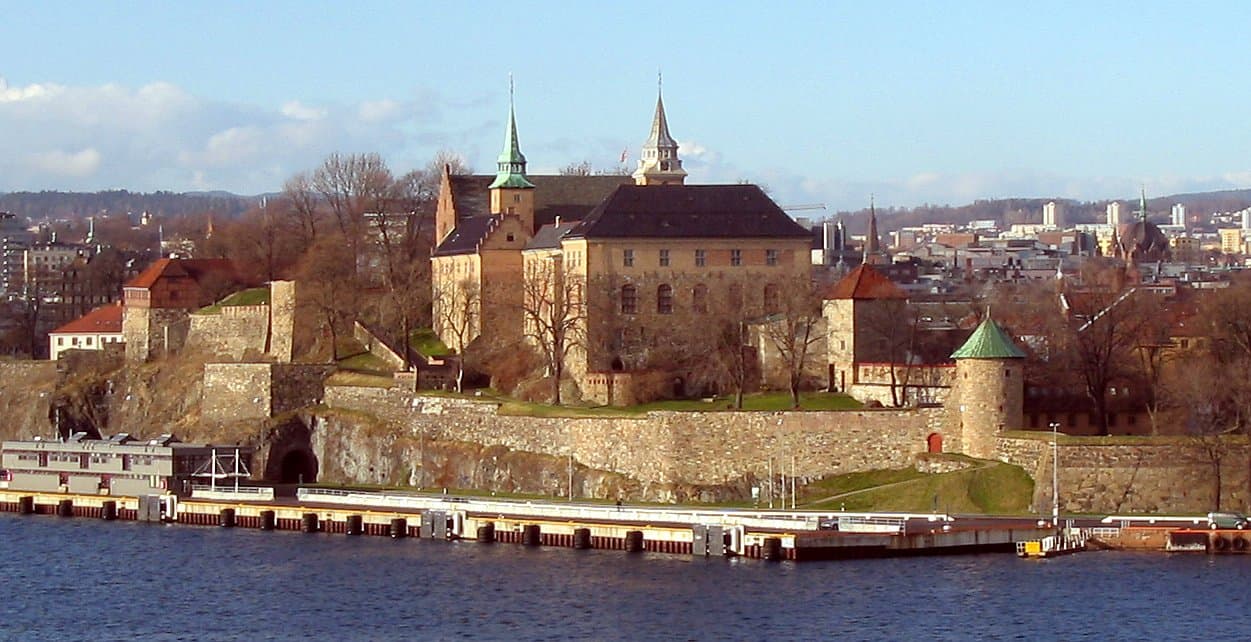
The core of Akershus Fortress is its medieval castle, built primarily of stone and brick. Key components include the Nordfløyen (North Wing) housing royal halls and chambers, the Vågehalstårnet keep tower, and the Knutstårnet defensive tower. The Sydfløyen (South Wing) contains the castle church and royal apartments, while the Romeriksfløyen served administrative and kitchen functions. The fortress also featured the Jomfrutårnet (Maiden Tower) gate tower with its original drawbridge and portcullis, emphasizing its role in access control and defense.
Strategic military importance
The fortress's proximity to the sea was vital for Norway's defense, as naval power dominated commerce and warfare. Whoever controlled Akershus controlled Oslo and, by extension, much of Norway. Its strategic importance was highlighted during the Operation Weserübung in 1940 when the fortress surrendered without combat to German forces during their invasion of Norway in World War II. Under German occupation, Akershus was used as a prison and execution site, where many resistance fighters and political prisoners were held and executed. The fortress was liberated on 11 May 1945 by the Norwegian resistance.
Prison history and notable inmates
Akershus Fortress has a long history as a prison, dating back to medieval times. It earned a reputation as Norway's strictest correctional facility in the 19th century. Famous prisoners included the outlaw and folk hero Gjest Baardsen, the thief Ole Høiland, and early Norwegian socialists associated with Marcus Thrane. The prison section known as "The Slavery" allowed prisoners to be rented out for labor in the city. After the 1852 Laestadian Sámi revolt, many rebels were imprisoned here, with some dying in captivity. Among survivors was Lars Hætta, who translated the Bible into North Sámi during his imprisonment.
Renaissance transformation and architectural features
The 16th and 17th centuries saw Akershus transformed into a Renaissance fortress with bastion fortifications designed to withstand artillery attacks. The addition of bastions such as Kronprinsens bastion (Crown Prince’s Bastion), Prins Carls Bastion, and the Hornverk (Hornwork) enhanced the defensive perimeter. The Skarpenort Bastion features a large powder tower used for storing gunpowder safely. Walls up to three meters thick and stone-faced casemates demonstrate the fortress's adaptation to evolving military technology.
Outer fortifications and military buildings
The outer area, known as Hovedtangen, includes additional bastions, earthworks, and military structures built mainly in the 18th and 19th centuries. These include stables for cavalry and artillery, barracks, arsenals, and specialized buildings like the Artilleribygningen (Artillery Building) and the Fengselskirke (Prison Church). The fortress gate, Festningsporten, completed in 1653, features a bridge and displays King Christian IV's monogram, reflecting its historical importance and architectural evolution.
Royal mausoleum and cultural significance
The castle church in the South Wing houses the royal mausoleum, where several prominent Norwegian monarchs are interred. These include King Sigurd I, King Haakon V, Queen Eufemia, King Haakon VII, Queen Maud, King Olav V, and Crown Princess Märtha. The mausoleum links the fortress intimately with Norway's royal heritage, symbolizing its role as a seat of power and national identity.
Today, Akershus Fortress remains an active military site while also serving as a cultural landmark open to the public. It hosts the Norwegian Armed Forces Museum, the Resistance Museum, and various official government events. The fortress grounds, including Kontraskjæret park and Festningsplassen parade ground, continue to be venues for ceremonies and public gatherings.
Restoration and preservation efforts
From the late 19th century through the 20th century, Akershus underwent extensive restoration led by prominent architects such as Wilhelm von Hanno, Heinrich Ernst Schirmer, Peter Andreas Blix, Holger Sinding-Larsen, Arnstein Arneberg, and Johan Adolf Gerhard Fischer. These efforts preserved the fortress's medieval and Renaissance features while adapting it for contemporary use. Archaeological research has guided the reconstruction of walls, towers, and interiors, ensuring historical accuracy and structural stability.
Despite its age, Akershus Fortress stands as a testament to Norway's medieval and modern history, military architecture, and royal legacy. Its combination of medieval stonework, Renaissance bastions, and cultural institutions make it a unique and invaluable heritage site in the heart of Oslo.
Frequently asked questions (FAQ)
- What is Akershus Fortress?
- Akershus Fortress is a medieval castle and fortress located in Oslo, Norway. It has played a significant role in the country's history since its construction in the late 1290s, serving as a royal residence, military base, and prison.
- When was Akershus Fortress built?
- Construction of Akershus Fortress began in 1299 under King Håkon V. Over the centuries, it has undergone various renovations and expansions, reflecting different architectural styles and purposes.
- What are the opening hours for Akershus Fortress?
- Akershus Fortress is generally open to the public year-round, with specific visiting hours that may vary by season. Typically, the fortress is open from 6 AM to 9 PM, but it's advisable to check the official website for the most current information.
- Can I enter Akershus Fortress for free?
- Yes, access to the grounds of Akershus Fortress is free, allowing visitors to explore its beautiful gardens and views of Oslo. However, there may be a fee for guided tours and access to certain exhibitions within the fortress.
- Is Akershus Fortress accessible for visitors with disabilities?
- Yes, Akershus Fortress is committed to accessibility. There are pathways and facilities designed to accommodate visitors with mobility challenges, including ramps and accessible restrooms.
- When is the best time to visit Akershus Fortress?
- The best time to visit Akershus Fortress is during the spring and summer months, from May to September, when the weather is pleasant and the gardens are in full bloom. Additionally, many events and guided tours are offered during this period.
- What nearby attractions can I visit while at Akershus Fortress?
- While visiting Akershus Fortress, you can also explore the nearby Norwegian Maritime Museum and the Nobel Peace Center. Both attractions are within walking distance and offer rich insights into Norway's culture and history.
- What is the historical significance of Akershus Fortress?
- Akershus Fortress has significant historical importance as a symbol of Oslo's defense and royal heritage. It has witnessed many pivotal events in Norwegian history, including battles and the signing of important treaties.
- How do I get to Akershus Fortress?
- Akershus Fortress is easily accessible by public transport. Visitors can take trams, buses, or the metro to the city center and then enjoy a short walk to the fortress, which is located near the waterfront.
Photo gallery

Photo by Photo © 2005 by Tomasz Sienicki [user: tsca, mail: tomasz.sienicki at gmail.com]•CC BY 2.5
Information
Website
Visit websiteFeatured in
Articles on the Castlopedia blog that feature Akershus Fortress.
Sources & official resources
Verify the information above using these authoritative references.
Loading map...
Visitor reviews
No reviews yet. Been here? Write the first review and help other travelers!
Write the first reviewVisited this castle? Share your experience
Your review helps other travelers and adds first-hand knowledge to our encyclopedia.