
Spain
Historical background and medieval period
Spain's castle heritage is deeply intertwined with its complex history of conquest, religious conflict, and political fragmentation. The medieval period, spanning roughly from the 8th to the 15th century, was especially formative in shaping the country's vast network of fortifications. During this era, the Iberian Peninsula was a contested land between Christian kingdoms in the north and Muslim-ruled territories in the south, leading to a proliferation of castles and defensive structures designed to control territory and assert dominance.
The Reconquista, the centuries-long Christian campaign to retake the peninsula from Muslim rulers, was a key driver for castle construction. These fortifications served both as military strongholds and administrative centers. Castles like the Alcázar of Segovia rose to prominence during this time, symbolizing power and serving as royal residences. The dynamic between Christian and Islamic architectural and military traditions gave rise to unique hybrid styles and innovations in fortification design.
Continue reading below — scroll for the full article.
Castles in Spain
Discover 189 magnificent castles across the country





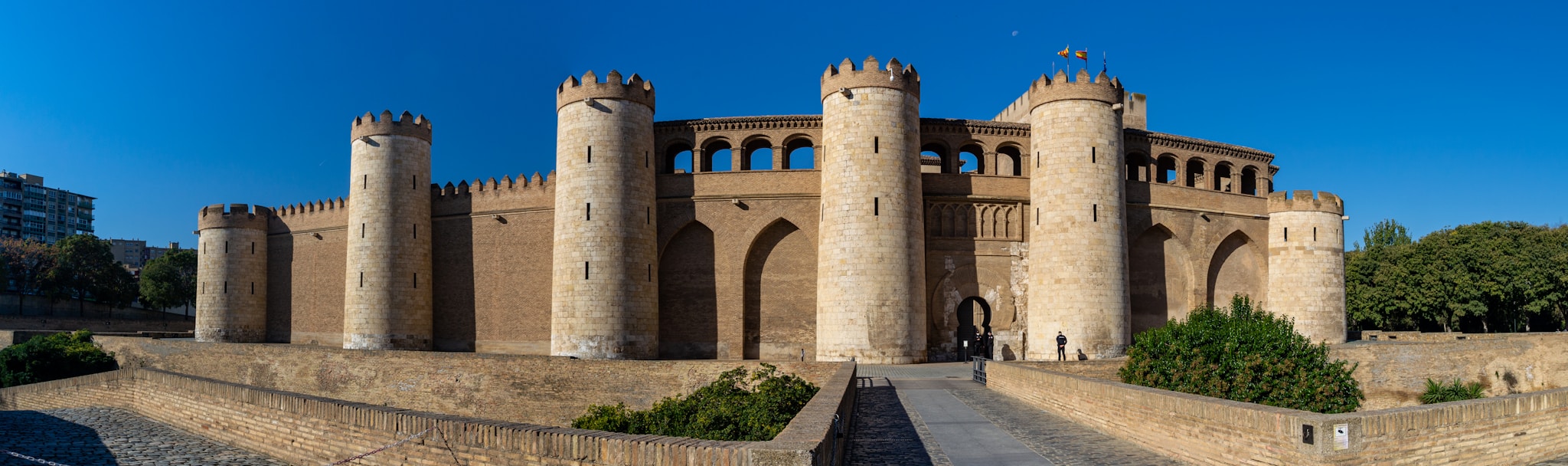

Types of fortifications in Spain
Spain's fortifications encompass a wide range of structures beyond the typical medieval castle. These include fortresses, defensive walls, watchtowers, and citadels, each adapted to local geography and strategic needs. Coastal fortifications were particularly important in protecting against maritime threats, while inland castles often controlled key trade routes and passes.
Castles
Medieval castles in Spain were primarily built for defense and residence of nobility or military commanders. Many featured thick stone walls, battlements, and towers designed to withstand sieges. The Castillo de Loarre, one of the best-preserved Romanesque castles in Europe, exemplifies early medieval military architecture with its robust construction and strategic hilltop location.
Fortresses and citadels
Fortresses in Spain often refer to larger, more complex defensive complexes. The Alcazaba of Málaga is a prime example, combining military, administrative, and residential functions within an extensive fortified enclosure. Citadels, such as the Ciudadela de Jaca, served as inner defensive cores within larger towns or fortresses, offering refuge during attacks.
Defensive walls and towers
Many Spanish cities and towns were fortified with extensive walls and towers. The walls of Ávila are among the most famous, encircling the old city with imposing ramparts and numerous towers. These walls played a crucial role in urban defense during the medieval period and reflect the importance of protecting growing population centers.
Architectural styles and influences
Spain's castle architecture reflects a confluence of cultural influences, most notably from Christian, Islamic (Moorish), and later Renaissance styles. The blending of these traditions created unique and diverse fortifications.
Roman and visigothic foundations
Many Spanish castles were built over or near earlier Roman or Visigothic sites, incorporating existing walls and foundations. This continuity influenced the layout and construction techniques used during the medieval period.
Mudejar and islamic influences
The Islamic presence introduced advanced military architecture, including horseshoe arches, intricate decorative motifs, and sophisticated water management systems within fortresses. The Alcazaba of Almería showcases typical Moorish defensive design with its multiple layers of walls and strategic positioning.
Gothic and renaissance elements
As the Reconquista progressed and the Christian kingdoms unified, Gothic architecture began to influence castle construction. Features such as pointed arches, ribbed vaults, and larger windows appeared in castles like the Castle of Coca. During the Renaissance, fortifications adapted to the introduction of artillery, leading to the development of bastions and star-shaped forts in some Spanish fortresses.
Regional variations in castle heritage
Spain's diverse geography and historical fragmentation led to distinctive regional characteristics in its castles and fortifications.
Castile and leon
This region is home to some of Spain's most iconic medieval castles, including the Alcázar of Segovia. Castles here often feature robust stone construction with imposing towers and served as royal or noble residences. The area's castles were crucial during the Reconquista as defensive bulwarks against Muslim forces.
Andalusia
Andalusia, once the heartland of Islamic Spain, has a rich legacy of Moorish fortifications. The Alcazaba of Málaga and the Alhambra in Granada combine military and palatial architecture, showcasing intricate Islamic art and advanced defensive designs. These structures illustrate the region's historical significance and cultural blending.
Catalonia and aragon
Fortifications in northeastern Spain often display adaptations to mountainous terrain, with castles like the Castle of Loarre strategically positioned on rocky outcrops. These castles played important roles in controlling border regions and trade routes.
Notable periods of castle construction
The bulk of Spain's castle building occurred between the 9th and 15th centuries, with distinct phases corresponding to political and military developments.
Early medieval fortifications
During the early Reconquista, many castles were simple wooden or stone fortresses constructed rapidly to secure newly conquered territories. These early castles laid the groundwork for more permanent stone structures.
High medieval expansion
The 11th to 13th centuries saw a wave of castle building as Christian kingdoms expanded southwards. This period produced many of the large stone castles that remain today, often featuring multiple defensive layers and complex layouts.
Late medieval and renaissance adaptations
From the 14th century onward, castles began incorporating features to resist gunpowder artillery, such as thicker walls and angled bastions. Some castles, like the Castillo de La Mota near Valladolid, were adapted to serve administrative and residential functions in more peaceful times.
Preservation and current state
Many Spanish castles have survived centuries of conflict, abandonment, and modernization. Preservation efforts by government agencies and heritage organizations have been crucial in maintaining these sites. Some castles, such as the Alcázar of Segovia and the Castillo de Loarre, have been extensively restored and are open to the public.
Despite these efforts, challenges remain due to environmental degradation, urban development, and limited funding. Ongoing restoration projects aim to balance historical accuracy with structural stability. In certain cases, castles have been repurposed for cultural events, museums, or hospitality, ensuring their continued relevance and care.
Castle tourism and accessibility
Spain's castles are major attractions for both domestic and international tourists. Many sites are well-equipped with visitor facilities and interpretive materials, making them accessible and educational destinations. The Alcázar of Segovia, with its fairy-tale appearance and central location, is particularly popular, drawing visitors interested in medieval history and architecture.
Regional tourism initiatives often promote castle routes or themed itineraries, encouraging exploration of lesser-known fortifications alongside famous landmarks. Such efforts help distribute tourism benefits and raise awareness of Spain's diverse castle heritage.
Cultural significance and heritage
Castles in Spain symbolize more than military might; they represent the country's layered history and cultural identity. These fortifications are tangible reminders of the Reconquista, the coexistence and conflict between Christian and Muslim civilizations, and the evolving political landscape of medieval Spain.
Many castles are associated with legends, royal dynasties, and historical events that continue to inspire literature, art, and popular culture. Their preservation as heritage monuments fosters a sense of national pride and offers insight into the architectural and social developments of past centuries.
Castle Locations in Spain
Explore all castle locations on an interactive map
Loading castle locations...