Aljaferia
The Aljaferia Palace stands as a remarkable example of fortified medieval Islamic architecture constructed in the 11th century during the High Medieval period within the Taifa of Zaragoza in Al-Andalus, now modern-day Zaragoza, Spain. This palace exemplifies the cultural and political splendor achieved by the independent kingdom of the taifa of Zaragoza at the height of its power.
Historical context and significance
Built in the latter half of the 11th century, the Aljaferia Palace was commissioned during a time when the Iberian Peninsula was fragmented into multiple small Muslim-ruled kingdoms known as taifas. Zaragoza was one of the most prominent taifas, and the construction of this palace symbolized the wealth and influence of its rulers. The palace is unique as it is the only surviving example of a large-scale Islamic palace from the taifa era in Spain, providing invaluable insight into the architectural and cultural developments of Al-Andalus during this period.
Architectural features and design
Fortifications and layout
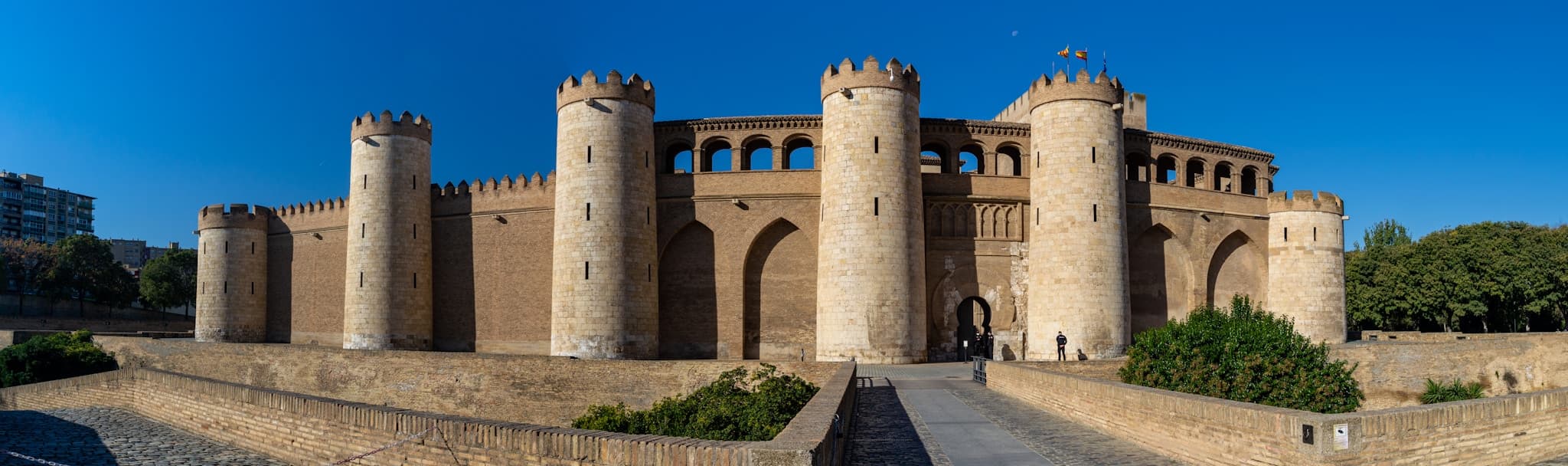
The palace is a fortified complex featuring robust defensive elements typical of the period, including thick walls and strategically placed towers. Its layout is organized around a series of courtyards, halls, and chambers that combine both residential and administrative functions. The fortifications reflect the turbulent political climate of the time, when taifa kingdoms required protection against both Christian reconquest efforts and rival Muslim factions.
Islamic artistic elements
The Aljaferia Palace is renowned for its exquisite Islamic decorative art, including intricate stucco work, horseshoe arches, and detailed geometric and vegetal motifs. The palace interiors feature muqarnas (stalactite-like ornamentation) and finely crafted wooden ceilings. These artistic features highlight the sophisticated craftsmanship and aesthetic values of the taifa period.
Influence of other architectural styles
While the palace is primarily an example of Islamic architecture, it also shows early influences that would later develop into the Mudejar style, a unique blend of Islamic and Christian architectural traditions that became prominent in Aragon and other parts of Spain. This stylistic fusion is evident in some of the palace's later additions and renovations.
Later history and adaptations
Following the Christian reconquest of Zaragoza in 1118 by Alfonso I of Aragon, the Aljaferia Palace underwent significant modifications to serve new functions. It was converted into a royal residence for the Christian monarchs and later became the seat of the Inquisition in Aragon. Over the centuries, the palace was expanded and adapted, incorporating Gothic and Renaissance elements into its fabric while retaining much of its original Islamic character.
In the modern era, the palace has been restored and preserved as a cultural monument. It currently houses the Cortes of Aragon, the regional parliament, which underscores its ongoing political and cultural importance.
Preservation and visitor experience
Today, the Aljaferia Palace is a well-preserved historical site that attracts visitors interested in medieval Islamic architecture and Spanish history. The complex offers a rich visitor experience with access to its fortified walls, ornate halls, and beautifully decorated chambers. Guided tours often highlight the palace's architectural innovations, historical transformations, and its role as a symbol of cultural coexistence and conflict in medieval Spain.
The palace's location in Zaragoza makes it accessible to tourists exploring the broader historical and cultural heritage of the Aragon region, including other medieval monuments and museums.
Frequently asked questions (FAQ)
- How do I get to Aljaferia Castle?
- Aljaferia Castle is located in Zaragoza, Spain, and is easily accessible via public transport. You can take a bus or tram that stops near the castle, or if you prefer, it's a short walk from the city center.
- What is the historical significance of Aljaferia Castle?
- Aljaferia Castle is a remarkable example of Moorish architecture and was originally built in the 11th century as a residence for Muslim rulers. It later became a royal palace for the Catholic Monarchs, reflecting the rich history of Spain's cultural and political transitions.
- When was Aljaferia Castle constructed?
- Construction of Aljaferia Castle began in the year 1065 during the reign of the Banu Hud dynasty. Over the centuries, it has undergone various renovations and expansions, showcasing different architectural styles from Islamic to Gothic influences.
- Can I take guided tours of Aljaferia Castle?
- Yes, guided tours are available at Aljaferia Castle, providing visitors with in-depth knowledge of its history and architecture. These tours typically last about an hour and are offered in several languages.
- Why is Aljaferia considered a UNESCO World Heritage Site?
- Aljaferia is recognized as a UNESCO World Heritage Site due to its outstanding architectural beauty and historical significance. It represents a unique blend of Moorish and Christian architectural styles, symbolizing the cultural coexistence in medieval Spain.
- Is it possible to visit Aljaferia Castle with a wheelchair?
- Yes, Aljaferia Castle is accessible for visitors with mobility challenges. The site provides ramps and designated pathways to ensure that everyone can enjoy the rich history and beauty of the castle.
- What are the opening hours for Aljaferia Castle?
- Aljaferia Castle is generally open to visitors from 10 AM to 8 PM, but hours may vary seasonally. It is recommended to check the official website for the most current information before planning your visit.
- What are the ticket prices for Aljaferia Castle?
- Tickets for Aljaferia Castle are reasonably priced, with discounts available for students, seniors, and children. Admission is free on certain days, so it's a good idea to check the official site for special promotions before your visit.
- What is the best time to visit Aljaferia Castle?
- The best time to visit Aljaferia Castle is during the spring and fall when the weather is mild and pleasant. Visiting during weekdays can also help you avoid the larger crowds typically seen on weekends.
- Are there any nearby attractions to Aljaferia Castle?
- Yes, Aljaferia Castle is close to several attractions such as the Basilica del Pilar and the Cathedral of La Seo. Exploring the surrounding area can enhance your visit, as Zaragoza is rich in history and culture.
Photo gallery

Photo by David Vives
Information
Website
Visit websiteSources & official resources
Verify the information above using these authoritative references.
Loading map...
Visitor reviews
No reviews yet. Been here? Write the first review and help other travelers!
Write the first reviewVisited this castle? Share your experience
Your review helps other travelers and adds first-hand knowledge to our encyclopedia.