Alfarb Castle
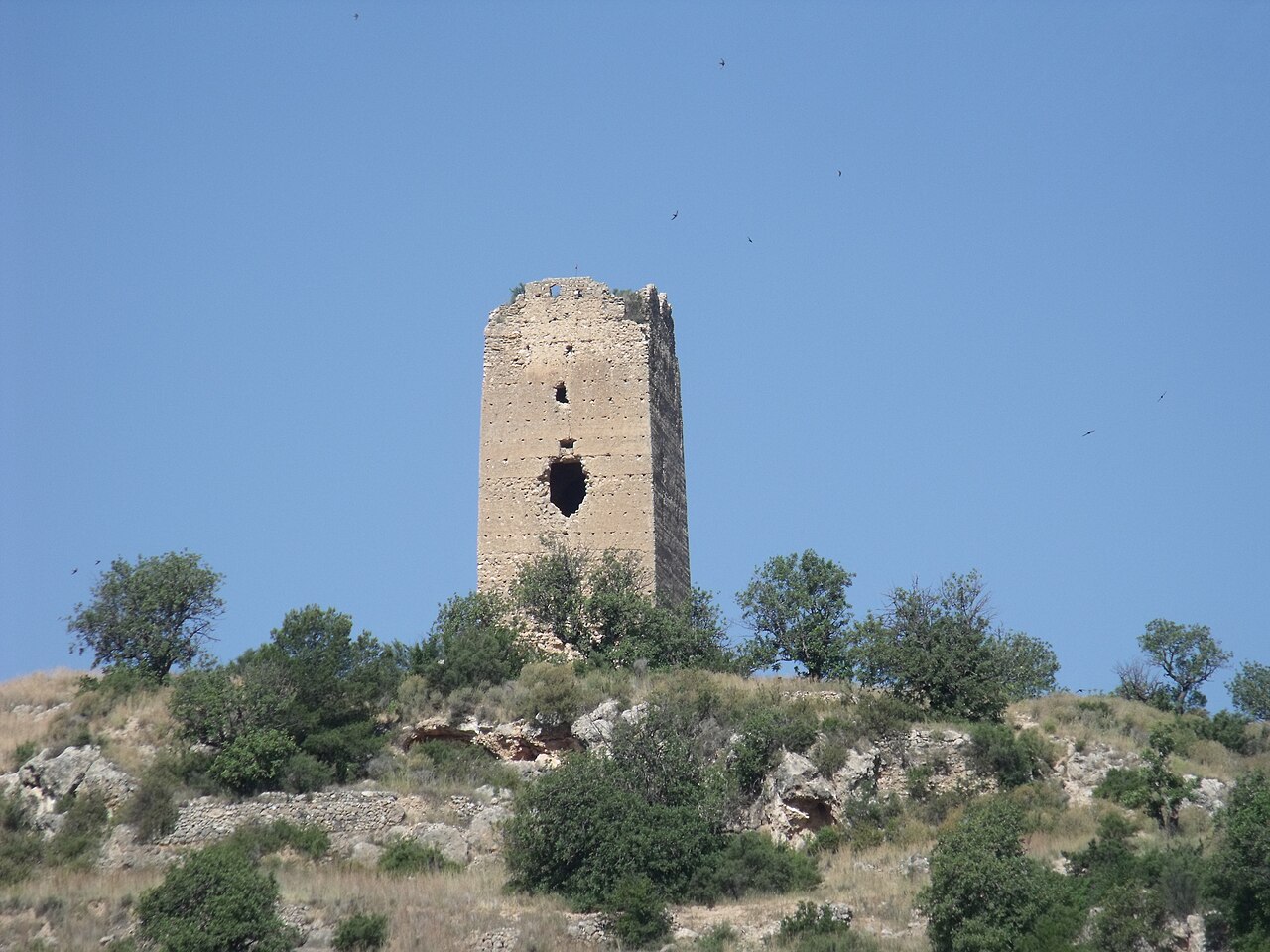
Alfarb Castle stands prominently at the highest point in the town of Alfarb, located in the province of Valencia, Spain. This hill castle has a rich history that dates back to the Islamic period, when it was originally constructed as a small military fortification. Its primary function was to defend a rural settlement known as an alqueria, a typical type of farmstead common in the region during the medieval era. The name "al-Khárb," from which Alfarb derives, suggests the site was established on or near an earlier village that had been deserted or ruined before the Islamic occupation, indicating a layered historical significance.
Medieval origins and islamic architecture
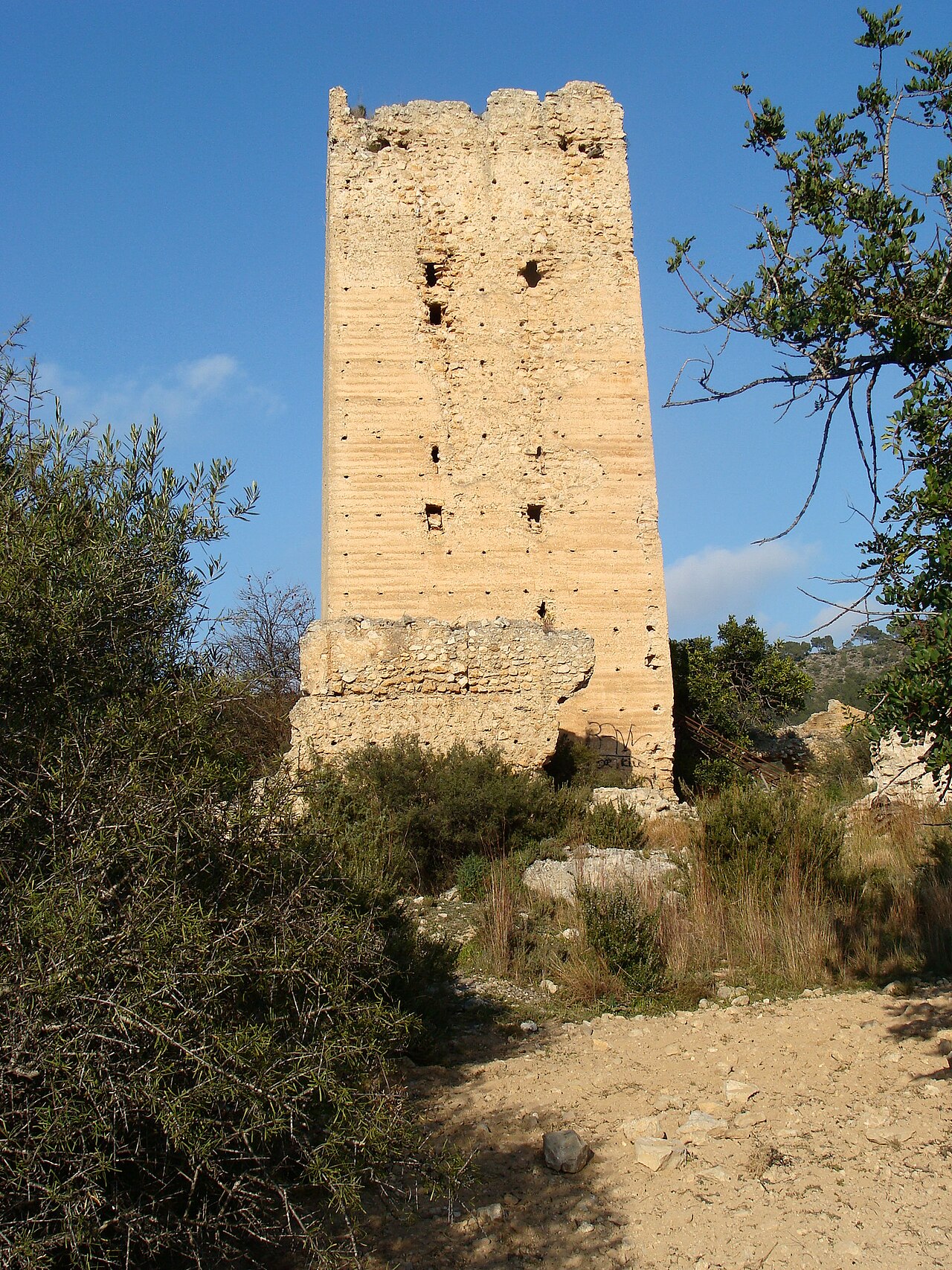
The core of Alfarb Castle is a robust rectangular tower dating from the 12th century. This tower exemplifies the use of mortar and masonry techniques characteristic of Islamic military architecture in the region. It occupies the center of a quadrangular layout, which originally included additional adjoining buildings. Some of these structures survive partially, now integrated into the surrounding urban fabric of the town. The castle's strategic placement near the Magro River highlights its defensive role in controlling and protecting the local settlement.
A remarkable feature of the tower is the incorporation of reused Roman materials at its base. Among these are several inscribed tombstones from the Roman era, including one bearing the inscription "Hercule Invicte" meaning "To the Unconquered Hercules." These stones were repurposed during the tower's construction, reflecting a common practice in medieval architecture of reusing available materials rather than indicating a direct Roman origin for the castle itself.
Transition to christian rule and feudal lordship
In the early 13th century, the castle and its surrounding territory came under Christian control as the Crown of Aragon expanded its influence during the Reconquista. On July 7, 1238, King James I of Aragon granted the site to Pere de Montagut. The Montagut family held the lordship over Alfarb for several generations, their rights reaffirmed by King Alfonso II of Valencia in 1330. Despite the family's local authority, ultimate legal control remained with the Aragonese crown.
Later, in 1358, Pere II of Valencia sold full jurisdiction over Alfarb to Pere de Centelles and his descendants, marking a significant transfer of feudal control. Subsequently, the lordship became integrated into the Marquisate of Llombai, continuing under noble administration until the abolition of feudal systems.
Cultural shifts and demographic changes
The population of Alfarb was historically composed largely of Moriscos, Muslims who converted to Christianity under pressure during the late Middle Ages. Following the expulsion of the Moriscos in the early 17th century, the town experienced significant depopulation. This demographic decline was reversed around 1611 when Christian families were resettled in the area, renewing the local population and contributing to the town's continuity.
Preservation and current condition
Today, the remains of Alfarb Castle primarily consist of the well-preserved rectangular tower, which despite being partially enclosed and obscured by modern private homes built close against its walls, retains significant architectural and historical value. The site was officially declared a Bien de Interés Cultural in 2001, a designation that recognizes its cultural interest and ensures its protection under Spanish heritage laws.
The tower and its surrounding remnants offer valuable insight into Islamic military architecture in the region as well as the complex medieval history of the Crown of Aragon's expansion. Its strategic hilltop location near the Magro River underscores its historical defensive importance. The integration of Roman materials in the tower's construction further enriches its architectural narrative, linking it to the broader historical continuum of the Iberian Peninsula.
Architectural features and significance
The castle's rectangular tower is the defining architectural feature, built with mortar and masonry techniques typical of 12th-century Islamic fortifications. The reuse of Roman tombstones as building material at the base is a distinctive characteristic, illustrating the medieval practice of spolia. The quadrangular layout suggests a compact fortification designed for both military defense and local governance.
The castle's position on a hill provided a commanding view of the surrounding landscape, an essential aspect for early warning and defense against potential invaders. Although much of the original complex has been lost or incorporated into later structures, the surviving tower remains a testament to the site's layered history and architectural evolution.
Historical context within the crown of aragon
Alfarb Castle's history is closely tied to the political and military developments of the Crown of Aragon during the medieval period. Its transition from Islamic to Christian control reflects the broader Reconquista campaigns that reshaped the Iberian Peninsula. The castle's feudal lordship under families such as the Montaguts and Centelles illustrates the typical medieval governance structures of the region.
The integration of Alfarb into the Marquisate of Llombai and its continued noble administration until the end of feudalism highlight the castle's role not only as a military site but also as a center of local authority and jurisdiction. This dual function is characteristic of many medieval castles in Spain, which served both defensive and administrative purposes.
Visitor information and cultural heritage
While Alfarb Castle is partially obscured by modern buildings, its historical significance as a 12th-century Islamic hill castle with Roman architectural elements makes it an important cultural heritage site in Valencia. The castle's designation as a Bien de Interés Cultural ensures ongoing preservation efforts.
Visitors interested in medieval military architecture and the complex history of Islamic and Christian interactions in Spain will find Alfarb Castle a fascinating subject of study. Its location within the town of Alfarb offers opportunities to explore the surrounding historical landscape and understand the region's layered past.
Frequently asked questions (FAQ)
- How do I get to Alfarb Castle?
- Alfarb Castle is located in the town of Alfarb, Valencia, Spain. It can be reached by car or local transport from Valencia city, with the castle situated on the highest hill in the town.
- What is the historical significance of Alfarb Castle?
- Alfarb Castle is significant for its origins as a 12th-century Islamic military fortification and its later integration into the Crown of Aragon's feudal system, reflecting the region's complex medieval history.
- Can I visit the interior of the castle tower?
- The castle tower is partially enclosed by modern buildings, which limits interior access. Visitors can view the exterior and appreciate the architectural features from the surrounding streets.
- When was Alfarb Castle built?
- The main tower of Alfarb Castle dates back to the 12th century, built during the Islamic period using mortar and masonry techniques typical of that era.
- Why are there Roman tombstones in the castle walls?
- Roman tombstones, including one inscribed "Hercule Invicte," were reused as building materials in the castle's tower base, a common medieval practice called spolia to repurpose durable stones.
Information
Sources & official resources
Verify the information above using these authoritative references.
Loading map...
Visitor reviews
No reviews yet. Been here? Write the first review and help other travelers!
Write the first reviewVisited this castle? Share your experience
Your review helps other travelers and adds first-hand knowledge to our encyclopedia.