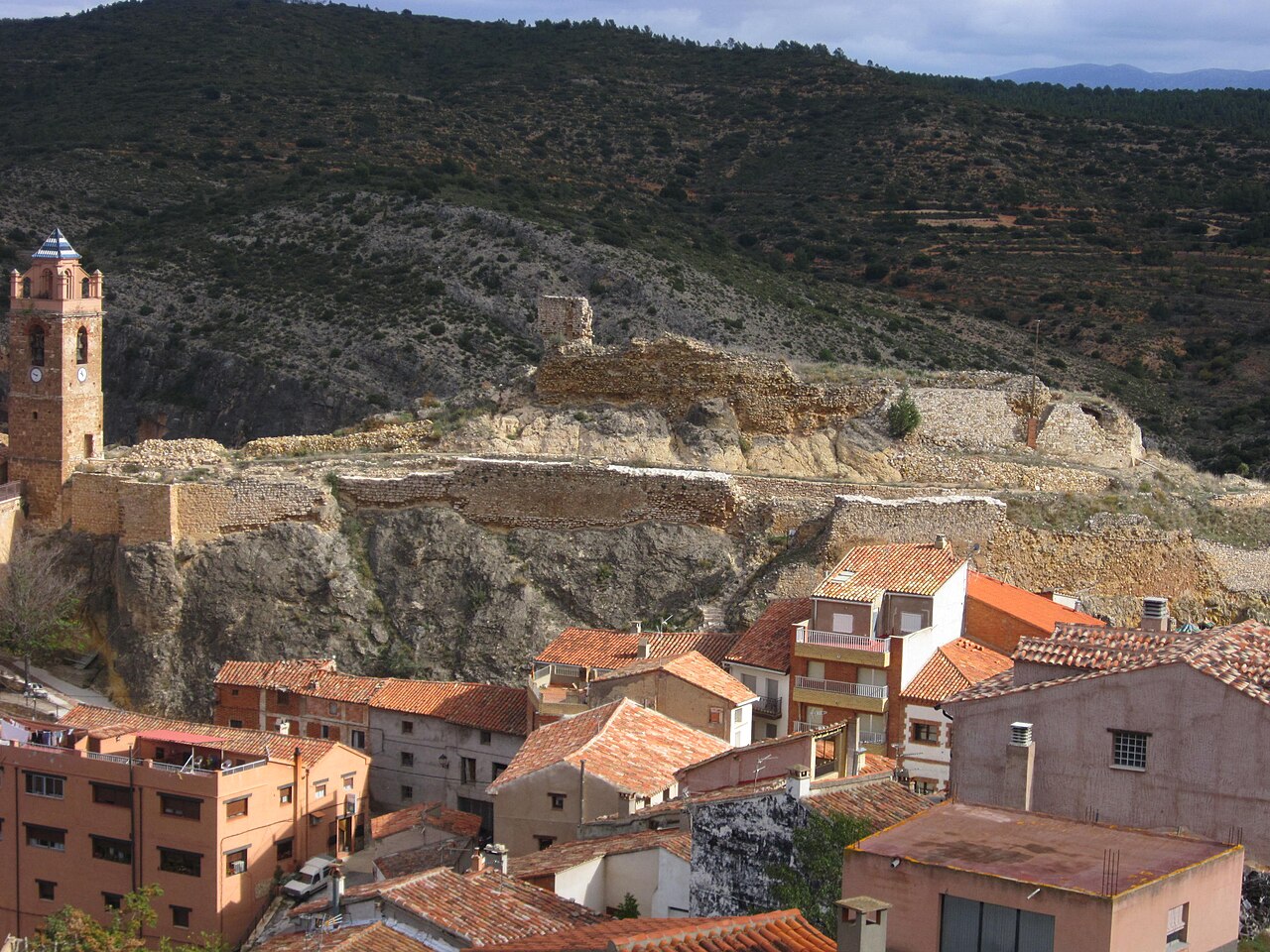
Algarra Castle stands as a testament to medieval military architecture in Spain, perched atop a rocky hill overlooking the town of Algarra. This rock castle is notable for its adaptation to the rugged terrain, utilizing the natural contours of the hill for defense. Though its precise origins remain obscure, the castle’s most significant period of activity is traced to the late Middle Ages, a time when fortifications across Spain were crucial in territorial defense and control.
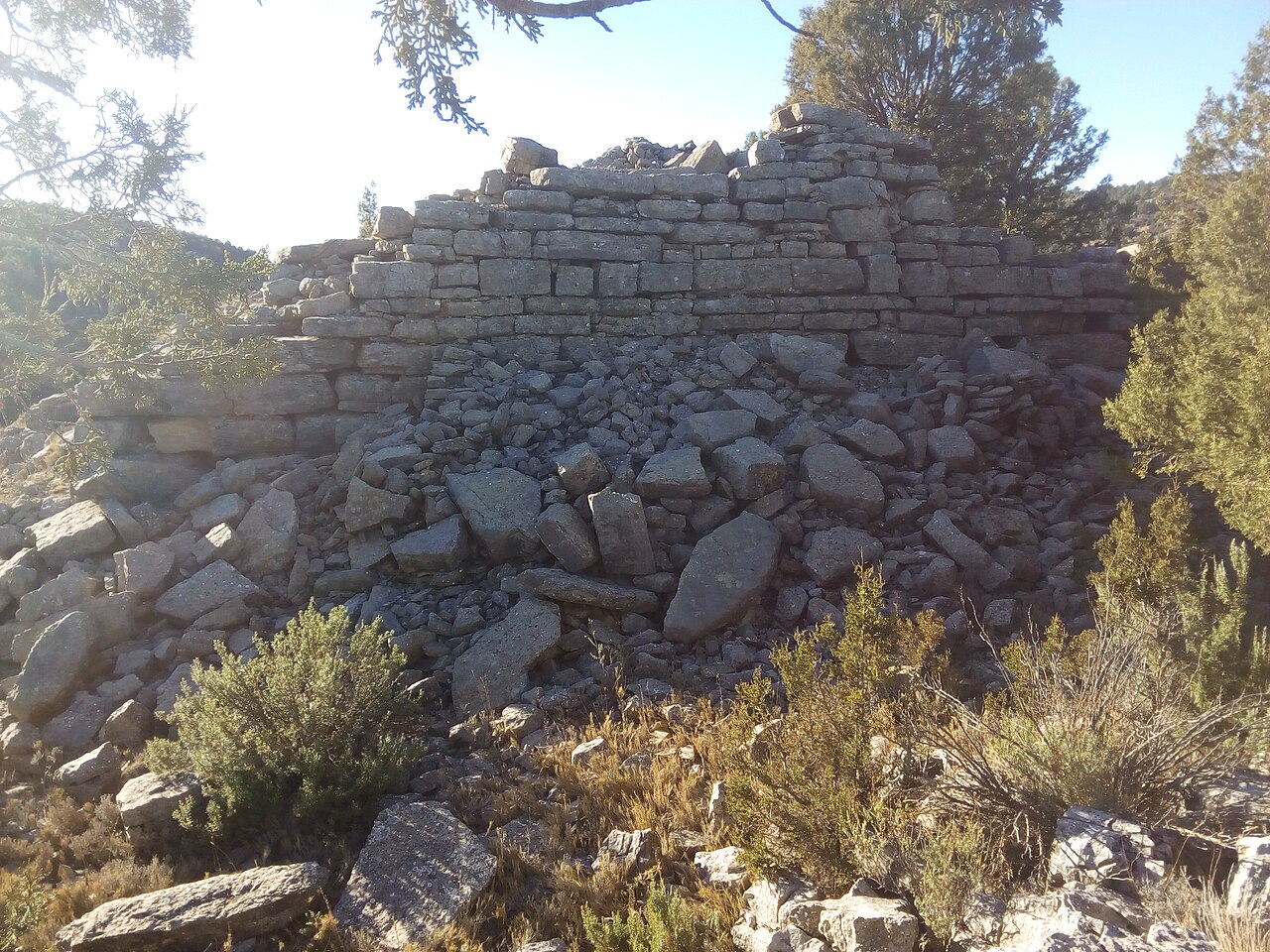
The castle’s thick and solid walls reflect construction techniques typical of the medieval period, designed to withstand sieges and assaults. Built primarily from faced stones set in lime mortar mixed with small pebbles, these robust walls still partially encircle the site, revealing the fortress’s original extent and defensive capabilities. The irregular, elongated layout of the castle closely follows the topography of the hill, a strategic choice that maximized natural defenses and visibility.
Historical context and significance
Despite its imposing structure, Algarra Castle does not appear in early 13th-century chronicles of the Christian reconquest, suggesting it was not a major strategic or political center during that era. Instead, its role was likely localized, serving as a defensive stronghold for the surrounding agricultural lands and mountain pass it guarded. This limited strategic importance may explain the relative scarcity of detailed historical records about the castle’s early use.
By the 17th century, the castle came under the control of the Marquisate of Moya, a noble title with significant territorial holdings in the region. Later, governance shifted to the Marquisate of Villena during the 18th century, when Algarra was recognized as a seigneurial villa, a town under noble jurisdiction. These changes reflect the castle’s integration into the feudal system, transitioning from a purely military installation to a symbol of noble authority and territorial administration.
By the mid-19th century, the castle had fallen into ruin, as noted in contemporary descriptions. The parish church of Algarra was then annexed to the nearby town of Alcalá de la Vega, indicating shifts in religious and administrative boundaries. The 20th century saw growing recognition of the castle’s cultural value, leading to its legal protection under Spanish heritage laws aimed at preserving its remains and preventing further deterioration.
Architectural features and layout
The castle’s location on the highest point of a rocky hill provided commanding views of the surrounding landscape, including the Algarra plain and the river sharing the town’s name. This vantage point was critical for monitoring movement along the adjacent mountain pass and protecting agricultural resources.
The surviving perimeter walls exhibit a combination of straight and curved sections, with a straight wall on the northern side and a curved section toward the northwest. At the northwestern tip, the remains of a heavily damaged structure are believed to have served as a watchtower or lookout post. This feature would have been essential for early warning and defense against approaching threats.
Within the castle’s enclosure, near the southwestern summit, lies the current parish cemetery. This cemetery includes a distinct area historically reserved for burials of individuals who died by suicide, those excommunicated, and unbaptized persons. Such burial practices reflect the religious and cultural norms of the time, offering insight into the social history connected to the site.
Another notable feature within the castle is a potable water reservoir that continues to serve the local community. The presence of this reservoir highlights the castle’s role not only as a defensive structure but also as a center for sustaining inhabitants and nearby settlements.
Strategic location and surrounding landscape
From the elevated summit, visitors can enjoy extensive views of the southwest landscape, including nearby villages such as Casas de Garcimolina and Santo Domingo de Moya, as well as the ruins of Moya fortress. The castle’s position just above a local road connecting major highways underscores its strategic importance in controlling access through the region.
The castle’s role in overseeing a mountain pass and adjacent agricultural lands emphasizes its function as a guardian of vital routes and resources. Its integration into the natural environment exemplifies medieval military architecture’s reliance on terrain for defense.
Preservation and legacy
Over centuries, many stones from Algarra Castle have been repurposed for local construction, contributing to the fragmentation of the original structure. Despite this, significant portions of the perimeter walls and defensive elements remain identifiable, providing valuable insights into the castle’s design and function.
Today, the castle is legally protected as a cultural heritage site, ensuring ongoing preservation efforts. Its ruins serve as a historical landmark that connects the community to its medieval past and the broader narrative of Spain’s feudal and military history.
Visitors to Algarra Castle can explore the remains and appreciate the blend of natural and man-made defenses that characterize this hilltop rock castle. The site offers a tangible link to the medieval era, illustrating the complexities of regional power, defense, and social customs.
Frequently asked questions (FAQ)
- How do I get to Algarra Castle?
- Algarra Castle is located in the province of Cuenca, Spain. The best way to reach the castle is by car, as it is situated in a rural area with limited public transport options. There are signs along the way that guide visitors to the castle from nearby towns.
- What is the historical significance of Algarra Castle?
- Algarra Castle dates back to the 12th century and served as a strategic military stronghold during the Reconquista. It played a vital role in the defense against Moorish invasions and is a testament to medieval military architecture in Spain. Today, it stands as a symbol of the region's rich history.
- When was Algarra Castle built?
- Construction of Algarra Castle began in the 12th century, specifically around the year 1160. It was built during a time of conflict and territorial disputes, reflecting the architectural styles and defensive needs of that era. The castle has undergone various renovations and restorations over the centuries.
- Can I visit Algarra Castle year-round?
- Yes, Algarra Castle is open to visitors year-round, although hours may vary by season. It’s advisable to check the official website or contact the local tourist office for the most current visiting hours and any potential seasonal closures. Planning your visit in advance will enhance your experience.
- Why is Algarra Castle a popular tourist attraction?
- Algarra Castle attracts visitors due to its stunning views of the surrounding landscape and its fascinating history. The castle's impressive architecture and well-preserved structures offer a glimpse into the past, making it a popular spot for history enthusiasts and photographers alike. Additionally, the serene location provides a perfect escape from urban life.
- Is it possible to take guided tours of Algarra Castle?
- Yes, guided tours are available at Algarra Castle, providing visitors with in-depth knowledge about its history and architecture. Tours typically include detailed explanations of significant features, allowing guests to appreciate the castle's cultural importance more fully. It's recommended to book in advance, especially during peak tourist seasons.
- What are the ticket prices for Algarra Castle?
- Ticket prices for Algarra Castle are generally affordable, with discounts available for students, seniors, and children. Prices may vary depending on the season and any special events that may be taking place. Always check the castle's official website for the most up-to-date pricing information.
- What is the best time to visit Algarra Castle?
- The best time to visit Algarra Castle is during the spring and fall when the weather is mild and pleasant. These seasons offer ideal conditions for exploring the castle and enjoying the surrounding natural beauty. Summer can be quite hot, while winter may bring chilly temperatures, so plan accordingly.
- Are there any nearby attractions to visit along with Algarra Castle?
- Yes, there are several nearby attractions that complement a visit to Algarra Castle, including the picturesque village of Cuenca, known for its hanging houses and historic sites. The natural parks in the area also offer excellent hiking opportunities and beautiful scenery. Exploring these attractions can enrich your experience of the region.
Information
Loading map...
Visitor reviews
No reviews yet. Been here? Write the first review and help other travelers!
Write the first reviewVisited this castle? Share your experience
Your review helps other travelers and adds first-hand knowledge to our encyclopedia.