
Lithuania
Historical background and medieval period
Lithuania's castle heritage is deeply rooted in its medieval past, reflecting the country's strategic position at the crossroads of Eastern and Western Europe. From the early Middle Ages, the region witnessed the emergence of fortified structures designed to protect local rulers and their communities from frequent invasions and conflicts. The rise of the Grand Duchy of Lithuania in the 13th century marked a significant phase in castle construction, as the need for robust fortifications grew alongside expanding political power.
During the medieval period, Lithuania was engaged in prolonged struggles with the Teutonic Order and other neighboring powers. This turbulent era spurred the development of numerous defensive structures, many of which evolved from simple wooden fortresses into complex stone castles. These castles not only served military purposes but also acted as centers of administration and symbols of noble authority.
Continue reading below — scroll for the full article.
Castles in Lithuania
Discover 11 magnificent castles across the country









Types of fortifications in lithuania
The diversity of fortifications across Lithuania encompasses castles, fortresses, defensive walls, and hillforts. Each type reflects different historical contexts, construction techniques, and strategic functions.
Castles and stone fortifications
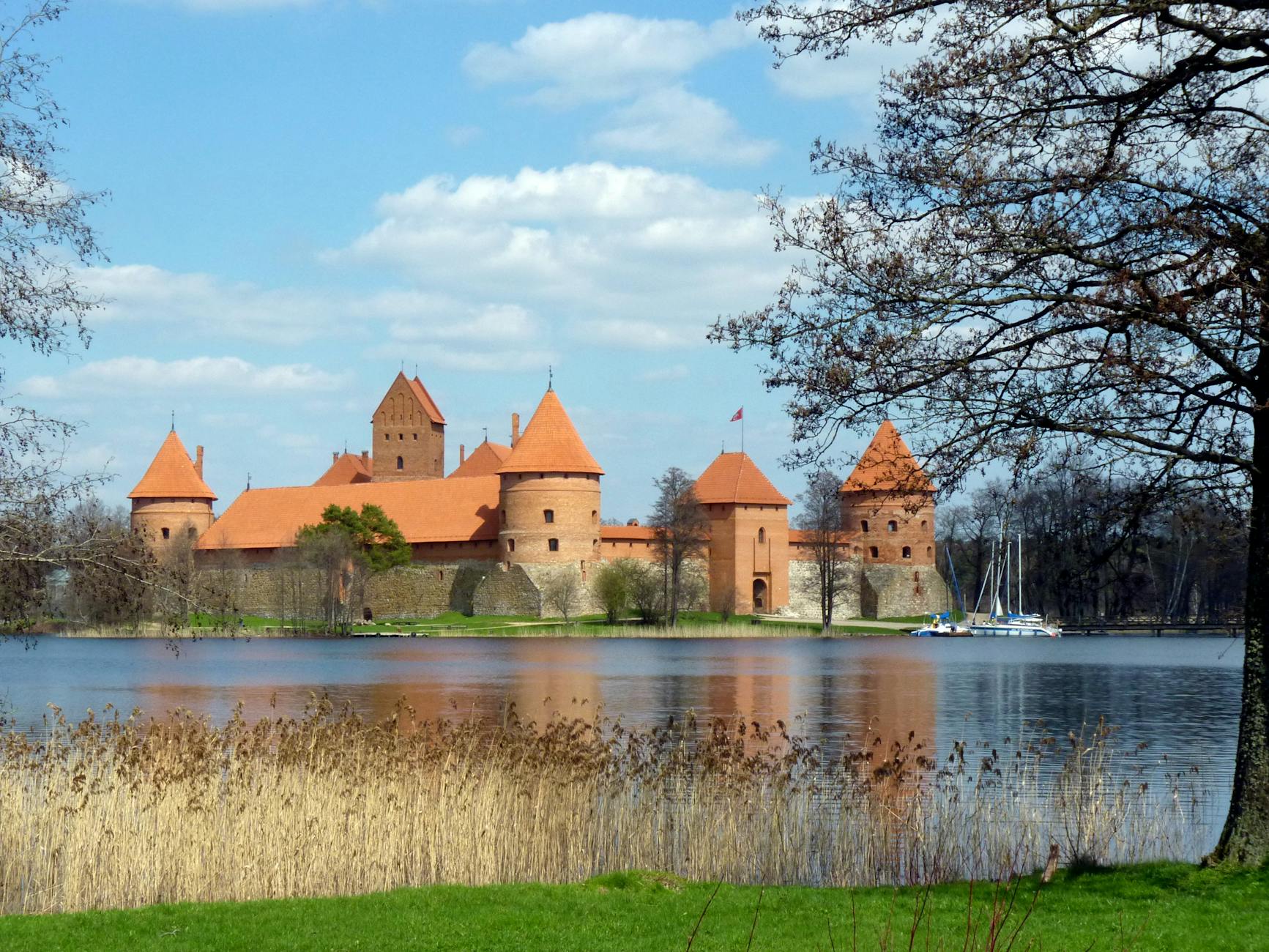
Stone castles represent the most iconic form of medieval fortification in Lithuania. These structures often featured thick walls, towers, and moats, designed to withstand sieges and artillery attacks. For example, Trakai Island Castle, situated on an island in Lake Galvė, exemplifies the traditional medieval stone castle with Gothic elements. Built in the 14th century, it served both defensive and residential purposes for the Lithuanian nobility.
Hillforts and wooden fortresses
Before the widespread use of stone, many Lithuanian fortifications were constructed as hillforts—earthen mounds topped with wooden palisades. These hillforts were strategically located on elevated terrain to maximize visibility and defense. Although many have disappeared or deteriorated, some sites like the one near Kernavė remain protected as important archaeological and cultural landmarks.
Defensive walls and city fortifications
In addition to castles, several Lithuanian towns developed defensive walls and gates to protect urban centers. The historic city of Vilnius, for instance, had fortifications that included bastions and ramparts, reflecting Renaissance military architecture. While much of these walls have been lost, their remnants highlight the evolution of urban defense in Lithuania.
Architectural styles and influences
Lithuanian castle architecture reflects a blend of indigenous traditions and external influences, shaped by political alliances, warfare, and cultural exchange. The evolution from wooden to stone fortifications marks a transition in both technology and style.
Gothic and renaissance elements
Gothic architecture had a strong impact on Lithuanian castles, especially during the 14th and 15th centuries. The pointed arches, ribbed vaults, and decorative stonework of castles like Trakai Island Castle showcase this style. Later, Renaissance influences appeared in the form of more comfortable residential quarters and refined decorative motifs, visible in some reconstructions and expansions of castle estates.
Military architectural innovations
The introduction of gunpowder and artillery in the late medieval period necessitated adaptations in castle design. Bastions, thicker walls, and angled fortifications emerged to counter new siege technologies. Lithuanian fortresses, such as the Kaunas Castle, incorporated these defensive features, blending traditional medieval forms with early modern military architecture.
Regional variations in lithuanian fortifications
Lithuania's varied geography and historical circumstances led to regional differences in castle construction and styles. The presence of numerous lakes in the central region favored island castles, while the eastern and southern areas featured more hillforts and inland fortresses.
Lake and island castles
The region around Trakai is renowned for its concentration of island castles. The natural defensive advantage of water bodies influenced the choice of sites and construction techniques. Trakai Island Castle remains the most prominent example, combining scenic beauty with formidable defense.
Hillfort regions
In areas such as Kernavė and the Aukštaitija region, hillforts dominate the landscape. These earthworks are among the oldest fortifications in Lithuania and reflect early medieval defensive strategies. Their locations often correspond with ancient trade routes and tribal centers.
Urban fortifications
In major cities like Vilnius and Kaunas, fortifications adapted to urban needs. While Vilnius developed extensive walls and bastions, Kaunas Castle served as a frontier fortress guarding trade routes. These structures illustrate the intersection of military function and urban development.
Notable periods of castle construction
The timeline of castle building in Lithuania can be broadly divided into several key periods, each corresponding to distinct political and military challenges.
Early medieval fortifications (10th–13th centuries)
This era saw the establishment of wooden hillforts that offered protection to emerging tribal communities. These fortifications laid the groundwork for later stone castles and reflect the initial stages of organized defense in the region.
Grand duchy expansion (14th–15th centuries)
The consolidation of the Grand Duchy of Lithuania triggered a wave of stone castle construction. Castles like Trakai Island Castle and Kaunas Castle were built or extensively expanded during this time to secure borders and assert political control. The use of Gothic architecture flourished in this period.
Early modern adaptations (16th–17th centuries)
The introduction of gunpowder led to modifications in fortifications, including bastions and reinforced walls. Some medieval castles were transformed into Renaissance-style residences or military strongholds. However, many castles lost military significance following changes in warfare and political structures.
Preservation and current state
Many Lithuanian castles and fortifications have survived in varying conditions, from well-preserved landmarks to ruins. Restoration efforts have been ongoing, especially since the 20th century, aiming to protect these cultural treasures and make them accessible to the public.
Trakai Island Castle stands out as one of the best-preserved and restored medieval castles in Lithuania. It functions as a museum and cultural venue, attracting visitors from around the world. Kaunas Castle has also undergone significant restoration and serves as a museum space illustrating medieval life.
Despite these successes, numerous hillfort sites and smaller fortifications face challenges related to natural decay and limited funding. Preservation programs often involve archaeological research, conservation, and public education to raise awareness of Lithuania’s rich castle heritage.
Castle tourism and accessibility
Castle tourism plays an important role in Lithuania's cultural landscape and economy. Many castles are easily accessible to visitors and offer educational exhibitions, guided tours, and cultural events.
Trakai Island Castle is a prime tourist destination, reachable by boat or foot from the town of Trakai. It hosts medieval festivals, historical reenactments, and exhibitions that bring the past to life. Similarly, Kaunas Castle is located in the city center, making it a convenient stop for tourists exploring Lithuania’s second-largest city.
Other fortification sites, such as Kernavė hillforts, are part of UNESCO World Heritage listings and provide hiking trails and interpretive signage. These sites offer visitors a glimpse into Lithuania’s ancient defensive systems amid natural landscapes.
Cultural significance and heritage
Lithuanian castles and fortifications are more than historical structures; they are symbols of national identity and resilience. They embody the story of Lithuania’s struggle for sovereignty and the cultural exchanges that shaped the nation.
The preservation and celebration of castle heritage contribute to a deeper understanding of Lithuania’s medieval past and its role in European history. Through museums, festivals, and academic research, these fortifications continue to inspire pride and foster cultural continuity.
In addition to their historical value, castles like Trakai Island Castle serve as venues for cultural activities, reinforcing their place in contemporary Lithuanian society. The integration of heritage conservation with tourism and education ensures that Lithuania’s castle legacy remains vibrant and relevant for future generations.
Castle Locations in Lithuania
Explore all castle locations on an interactive map
Loading castle locations...