Raudany
Raudany Castle, located in Raudany, Lithuania, stands as a remarkable example of a late-medieval hill castle that has undergone significant architectural transformations through the centuries. Originally established in the early 14th century, this castle reflects the turbulent history and evolving styles from medieval fortifications to Renaissance elegance and 19th-century neo-Gothic revival.
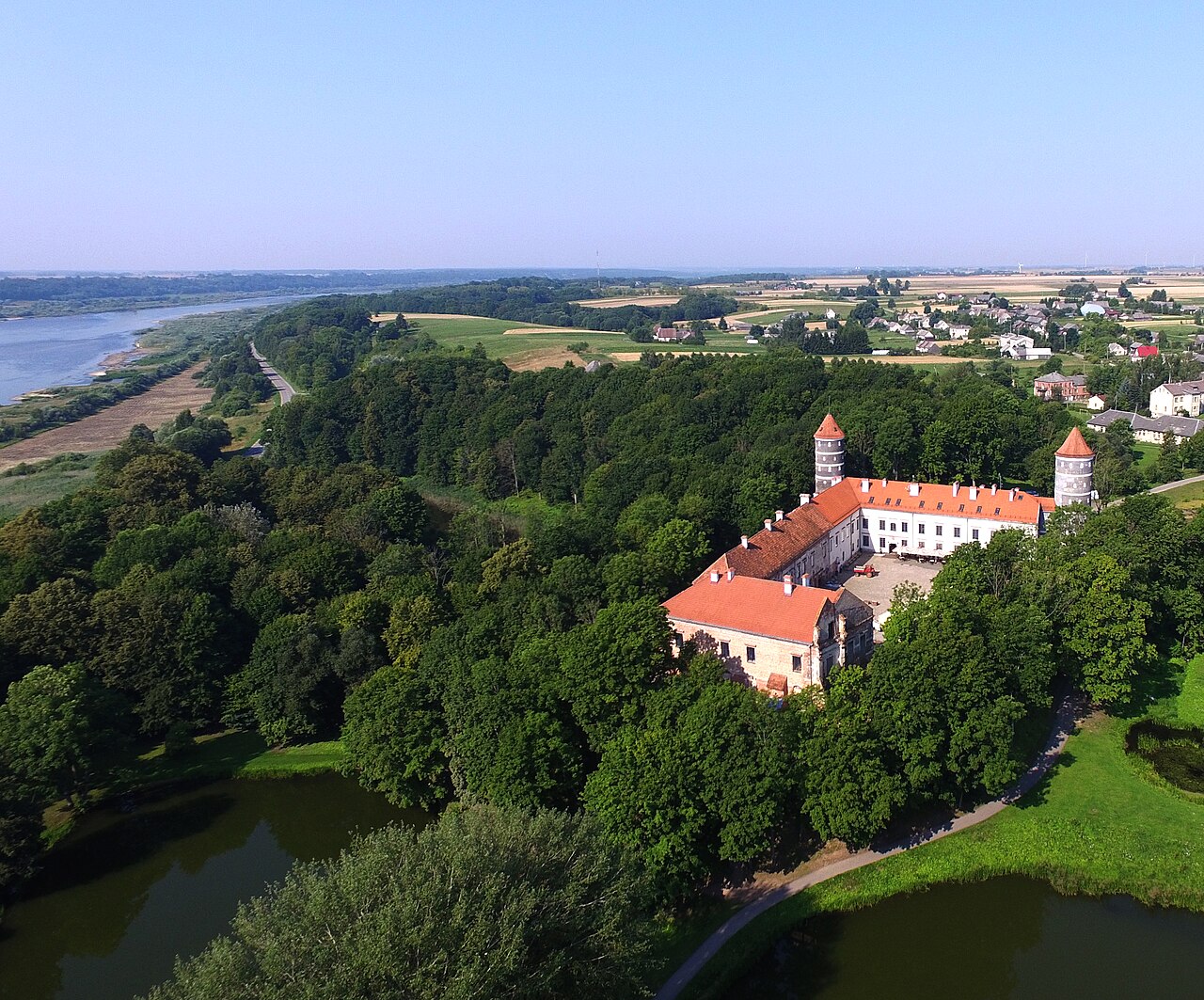
The castle's origins date back to 1337, when the first defensive structure was erected by Prince Henry of Bavaria. Positioned strategically on the edge of a steep escarpment overlooking the Neman River, it formed a crucial link in the Teutonic Knights' defensive line in Samogitia. This initial fortress was a vital military outpost in the region's contested borderlands.
In 1339, the castle was captured by Lithuanian forces, an event marked by the legendary death of the Grand Duke Gediminas during the siege, according to tradition. However, the Teutonic Knights, under the leadership of Grand Master Ludolf König von Wattzau, reclaimed the stronghold in 1343. These early conflicts highlight the castle's strategic importance during the Late Medieval period.
Renaissance transformation and architectural layout
By the mid-16th century, the castle had passed into the hands of King Sigismund II Augustus, who granted it along with the ruined fortress to Kryspin Kirszenstein. Embracing the Renaissance architectural movement, Kirszenstein initiated a comprehensive reconstruction, replacing the medieval fortress with a regular rectangular plan castle. This new design featured two main wings—the southern and northern—connected by defensive walls.
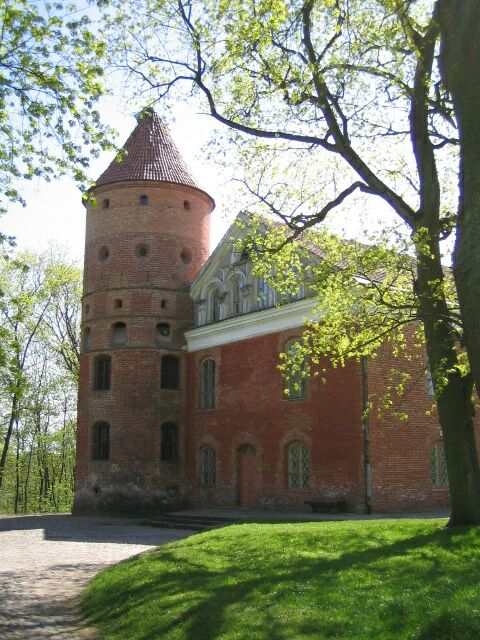
The castle's fortifications included three cylindrical towers: two situated at the corners of the northern wing and a prominent central tower on the southern wing standing at 33.5 meters tall. The western wall incorporated a gate leading into the inner courtyard, emphasizing both defense and residential function.
18th and 19th-century modifications: from fortress to neo-Gothic residence
In the first half of the 18th century, the castle's defensive character was diminished by its then-owner, the Olędzki family. The western wall and gate were demolished to open up the complex, while a new wing with a low tower and a portico was added on the eastern side facing the courtyard. These changes reflected the period's shift from military fortification to comfortable noble residence.
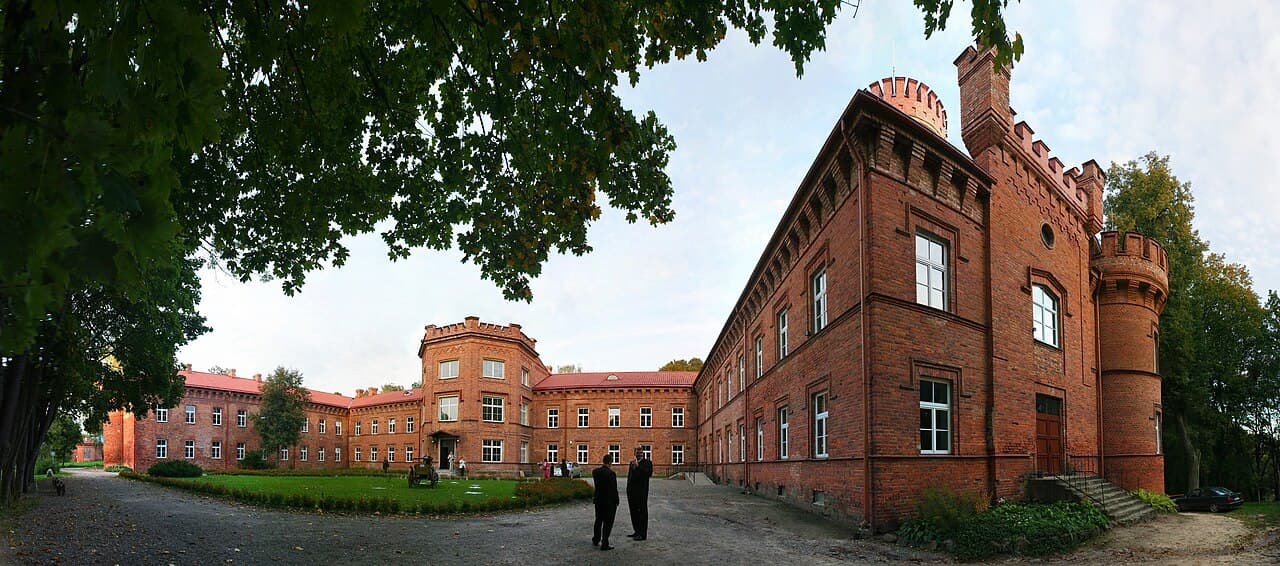
By 1810, the estate came under the ownership of Platon Zubov, a favorite of Empress Catherine the Great. Under Zubov's direction and the architectural guidance of Cesare Anichini, the castle underwent another significant transformation. The renovations embraced the neo-Gothic style, fashionable in the 19th century, which included replacing the courtyard portico with a multifaceted risalit, altering window designs, and crowning the towers with battlements (crenellations). Two additional cylindrical towers were also constructed at the southern wing's corners, enhancing the castle's picturesque silhouette.
20th-century restoration and current use
The castle suffered damage during World War II, particularly the southern wing and the main tower. Restoration efforts in the 1960s focused on rebuilding these critical elements, restoring the castle's neo-Gothic appearance and structural integrity. Today, Raudany Castle serves as a school, integrating cultural heritage with community use.
Visitors to the castle can access the main tower, which offers panoramic views of the surrounding landscape and the flowing Neman River below. This vantage point provides a unique perspective on the castle's strategic location and the natural beauty of the region.
Historical significance and cultural legacy
Raudany Castle embodies the layered history of Lithuania's borderlands, illustrating the transition from medieval military fortifications to Renaissance palatial architecture and finally to 19th-century romantic neo-Gothic revival. The castle's association with notable figures such as Prince Henry of Bavaria, Grand Master Ludolf König von Wattzau, King Sigismund II Augustus, and Platon Zubov enriches its historical narrative.
Moreover, the castle is linked to regional legends, including the East Prussian tale of 'The White Maiden of the Bayersburg', adding a layer of folklore to its heritage. Its enduring presence and adaptive reuse underscore its importance as a cultural landmark in Lithuania.
Architectural features and layout details
Defensive elements
Despite its later transformations, the castle retains elements characteristic of its hill castle origins. The positioning on a steep escarpment provided natural defense, complemented by the original walls and towers. The cylindrical towers served both as lookout points and defensive bastions.
Renaissance and neo-Gothic stylistic elements
The Renaissance phase introduced a more regular and symmetrical plan, emphasizing residential comfort and aesthetic appeal alongside defense. The 19th-century neo-Gothic renovations added ornamental features such as crenellations and the distinctive multifaceted risalit, blending medieval motifs with romantic ideals.
These architectural layers make Raudany Castle a compelling study in the evolution of castle design, reflecting broader European trends and local adaptations.
Frequently asked questions (FAQ)
- When was Raudany Castle originally built?
- Raudany Castle was originally constructed in 1337 by Prince Henry of Bavaria as a defensive fortification on the edge of a steep escarpment overlooking the Neman River.
- What architectural styles are represented in Raudany Castle?
- Raudany Castle showcases a blend of late-medieval defensive architecture, Renaissance design from the 16th century, and 19th-century neo-Gothic renovations, reflecting its complex history.
- Can visitors access the castle tower?
- Yes, visitors can climb the main tower of Raudany Castle, which offers panoramic views of the surrounding landscape and the Neman River.
- Who were some notable owners of Raudany Castle?
- Notable owners include Prince Henry of Bavaria, King Sigismund II Augustus, the Olędzki family, and Platon Zubov, a favorite of Empress Catherine the Great.
- What happened to the castle during World War II?
- Raudany Castle suffered damage during World War II, particularly to its southern wing and main tower, but was restored in the 1960s to preserve its neo-Gothic appearance.
Photo gallery

Photo by Juliux•Public domain
Information
Loading map...
Visitor reviews
No reviews yet. Been here? Write the first review and help other travelers!
Write the first reviewVisited this castle? Share your experience
Your review helps other travelers and adds first-hand knowledge to our encyclopedia.