Troki
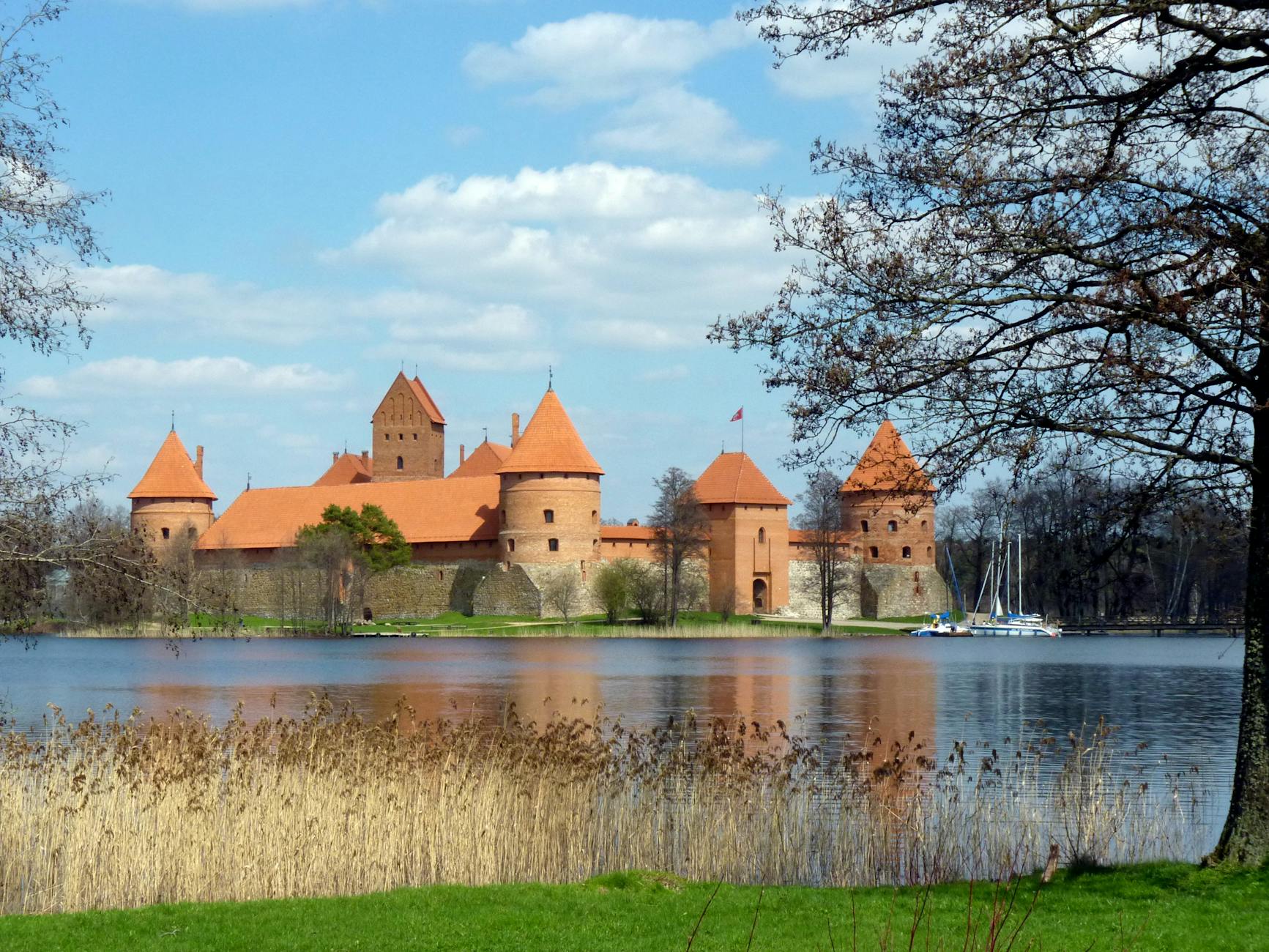
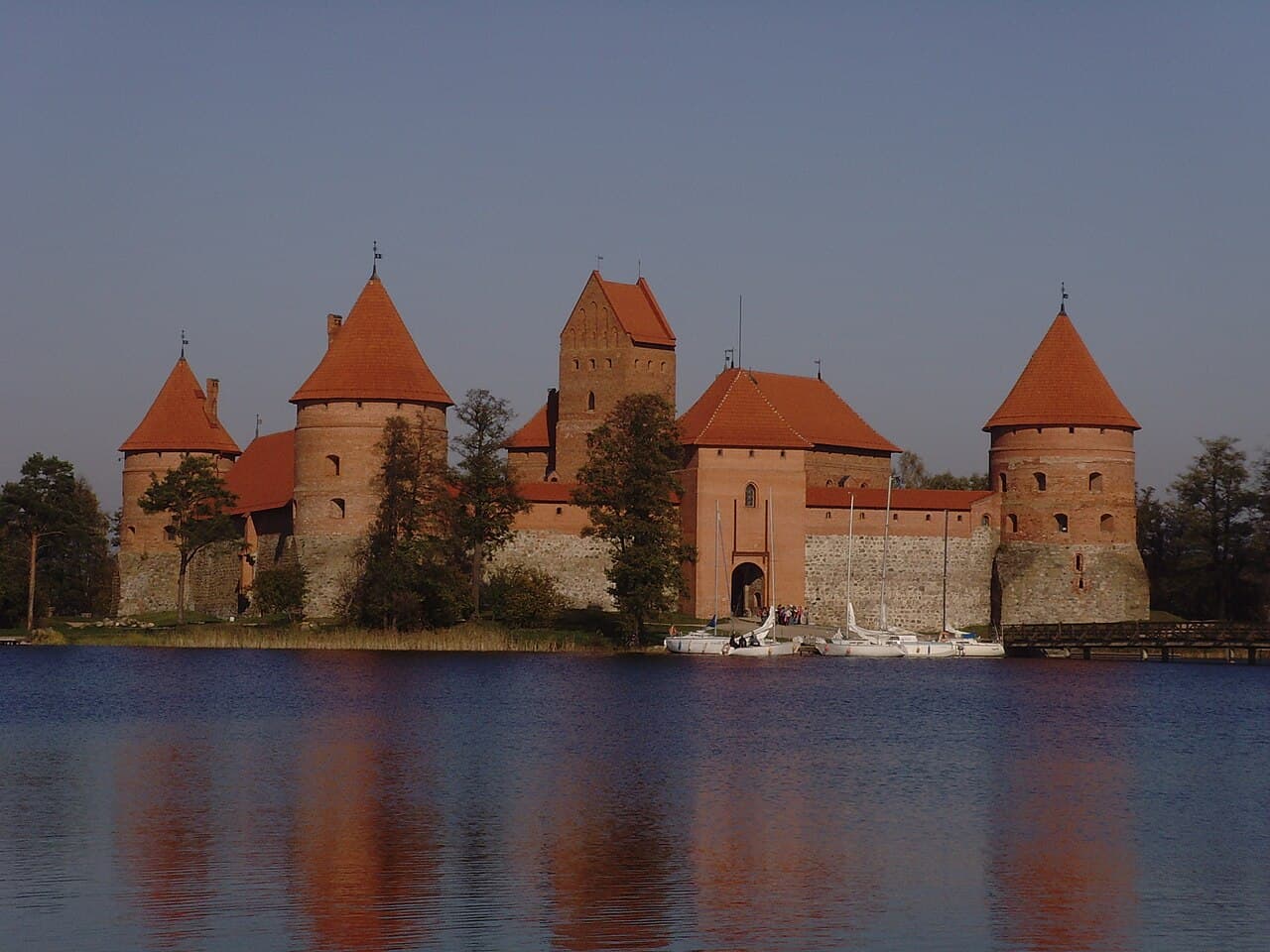
Trakai Island Castle, located on an island in Lake Galvė near the historic town of Trakai, Lithuania, is one of the most remarkable examples of medieval defensive architecture in the Baltic region. Constructed primarily in the 14th century during the late medieval period, the castle served as a strategic fortress, ducal residence, and later a royal summer palace. Its rich history, architectural evolution, and scenic location make it a prominent cultural landmark and a major tourist attraction in Lithuania.
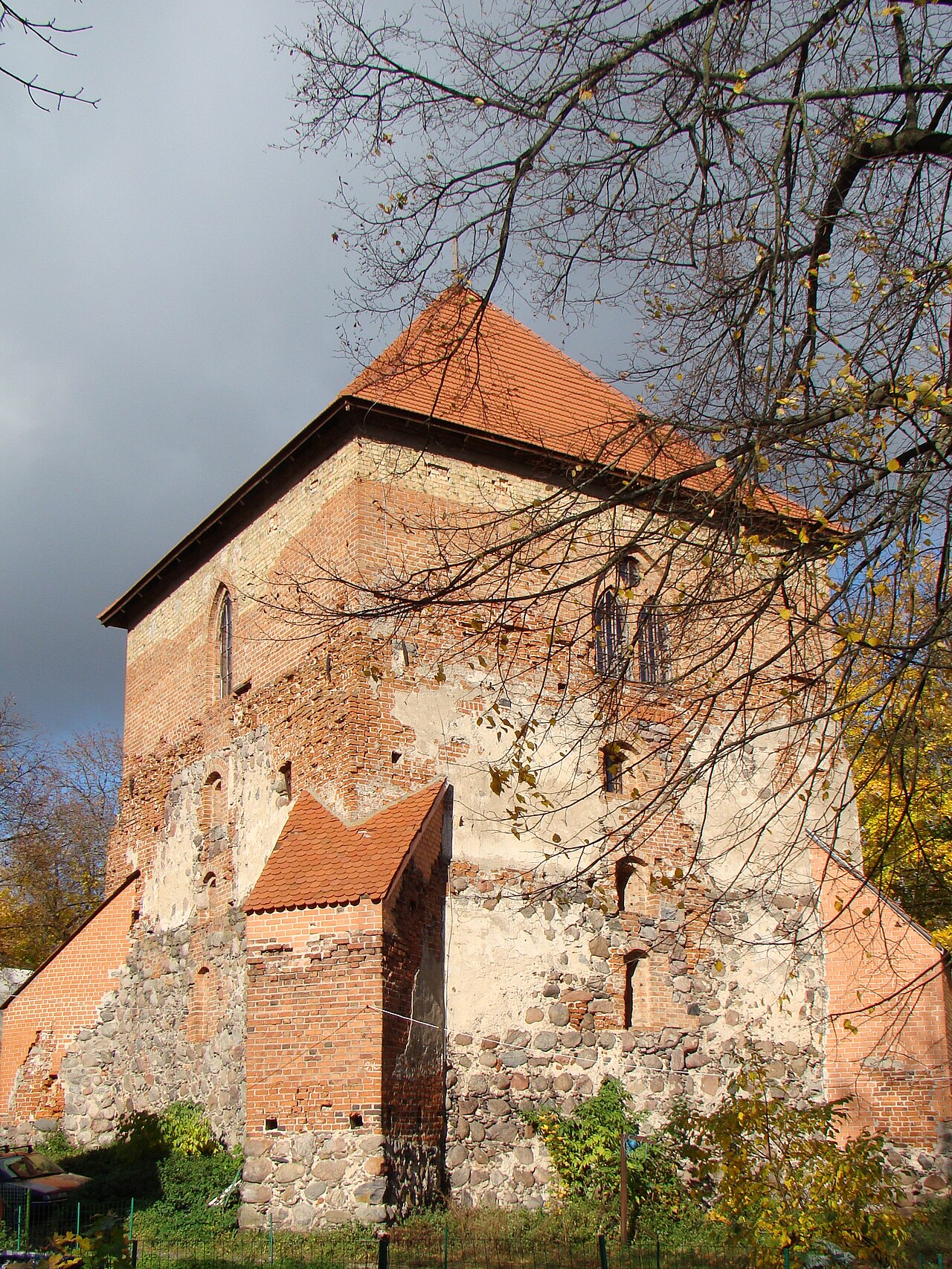
The castle's origins trace back to the mid-14th century when Grand Duke Kęstutis initiated the construction of a stone fortress on the largest island of Lake Galvė. This was part of a broader effort to strengthen the defenses of the Grand Duchy of Lithuania against the Teutonic Knights and other regional threats. The castle was initially built to complement the older Peninsula Castle located on a nearby peninsula, which had been the original seat of Kęstutis' principality established in the mid-14th century.
Early construction and strategic significance
The first phase of construction took place in the second half of the 14th century. The castle was severely damaged during a 1377 siege by the Teutonic Knights, reflecting the intense military conflicts of the era. Following this, the castle underwent significant repairs and expansions under the leadership of Vytautas the Great, son of Kęstutis, who played a pivotal role in completing the fortress by around 1409. Vytautas used the castle as his main residence and treasury, emphasizing its importance within the political and military landscape of the Grand Duchy.
The castle's strategic importance diminished after the 1410 Battle of Grunwald, a decisive victory for the Polish-Lithuanian alliance against the Teutonic Order, which ended the threat of frequent raids. Subsequently, Trakai Island Castle transitioned from a military fortress to a noble residence and administrative center, reflecting the changing political climate.
Architectural features and layout
Castle design and fortifications
Trakai Island Castle is a classic example of a hill castle built on a natural rise within an island, surrounded by water and a broad moat up to 12 meters wide. Its defensive walls reach approximately 7 meters in height and are about 3.5 meters thick, constructed from a combination of red bricks and large fieldstones. The castle's fortifications include three main defensive towers positioned at key corners of the complex, with the southwestern tower historically serving as a prison.
The ducal palace and donjon
The heart of the castle is the two-winged ducal palace, built with Gothic bricks and stone. The southern wing houses the Duke's Hall, a grand chamber measuring roughly 10 by 21 meters, notable for its impressive star-vaulted ceiling and size second only to the Upper Palace in Vilnius Castle Complex. The palace is connected to a six-story donjon tower rising 35 meters high. The donjon served multiple purposes, including defense, residential quarters, and a chapel. A drawbridge separated the donjon from the forecastle, enhancing security.
Courtyards, galleries, and support structures
The castle's inner courtyard was enclosed by walls and featured wooden galleries that allowed movement between rooms without exposure to the elements. The forecastle, or outer bailey, was protected by thickened walls with firing galleries and three additional defensive towers. These towers were equipped with embrasures adapted for firearms, reflecting advancements in military technology. The castle also included essential support buildings such as stables, kitchens, and guardhouses within the outer courtyard.
Historical evolution and cultural significance
Political history and notable events
Trakai Island Castle was central to the power struggles of the Grand Duchy of Lithuania in the late 14th and early 15th centuries. After Kęstutis's death in 1382, a civil conflict between his son Vytautas the Great and Jogaila ensued, during which the castle was besieged multiple times. The reconciliation between these cousins allowed Vytautas to complete the castle's major construction phase.
Vytautas the Great died in the castle in 1430, underscoring its status as a ducal seat. The castle hosted foreign emissaries and served as a treasury, reflecting its administrative importance. Later, during the reign of Sigismund Augustus in the 16th century, the castle was renovated in the Renaissance style and functioned briefly as a royal summer residence.
Decline and restoration efforts
The castle suffered significant damage during the 17th century wars with Muscovy and the Swedish "Deluge," leading to its abandonment and gradual ruin. In the late 17th century, a Dominican monastery was established near the Peninsula Castle, indicating a shift in the area's use.
Conservation efforts began in the 19th century, with artists documenting the remaining frescoes and archaeological investigations initiated by the Imperial Archaeological Commission. Partial restorations were undertaken by Russian authorities in the early 20th century, and German specialists made attempts during World War I.
The most extensive restoration occurred after World War II, from the early 1950s to 1961, reconstructing the castle to reflect its 15th-century Gothic appearance. Today, Trakai Island Castle is a well-preserved historic monument and museum, attracting visitors worldwide and symbolizing Lithuanian medieval heritage.
Visitor experience and cultural heritage
The castle is accessible by a pedestrian bridge connecting the island to the mainland, offering stunning views of Lake Galvė and the surrounding landscape. Inside, visitors can explore the restored halls, including the Duke's Hall with its star-vaulted ceiling and preserved frescoes depicting scenes from the lives of Lithuanian grand dukes.
The castle houses a museum showcasing medieval artifacts, weapons, and historical exhibits related to the Grand Duchy of Lithuania. Seasonal cultural events, reenactments, and festivals are held on the castle grounds, enhancing its role as a vibrant center of Lithuanian history and culture.
Trakai Island Castle remains one of Lithuania's most photographed and visited landmarks, celebrated for its architectural beauty, historical depth, and picturesque setting.
Frequently asked questions (FAQ)
- How do I get to Troki Castle?
- Troki Castle is easily accessible by public transport from Vilnius, with regular buses and trains running to Trakai. If you prefer to drive, there are parking facilities available nearby, and the scenic route offers beautiful views of the surrounding lakes.
- What is the historical significance of Troki Castle?
- Troki Castle, built in the 14th century, was a key defensive stronghold for the Grand Duchy of Lithuania. It played a crucial role in the region’s military history and served as a residence for Lithuanian dukes, showcasing the cultural and political importance of Trakai.
- When was Troki Castle constructed?
- Construction of Troki Castle began in the late 14th century, around 1400, under the order of Grand Duke Vytautas the Great. Its strategic location and impressive architecture reflect the power and influence of the Grand Duchy during this period.
- Can I visit Troki Castle year-round?
- Yes, Troki Castle is open to visitors throughout the year, though the opening hours may vary by season. It's advisable to check the official website for the latest information on visitor hours and any seasonal events.
- Why is Troki Castle a popular tourist attraction?
- Troki Castle is renowned for its picturesque setting on an island in Lake Galvė, combined with its rich history and stunning Gothic architecture. The castle also hosts various cultural events and exhibitions, making it a vibrant part of Lithuania’s heritage.
- Is it possible to take guided tours of Troki Castle?
- Yes, guided tours are available and provide an in-depth look at the castle's history, architecture, and the surrounding area. These tours are often led by knowledgeable guides who can share fascinating stories and insights about the castle.
- What are the ticket prices for Troki Castle?
- Ticket prices for Troki Castle vary based on age and group size, with discounts available for students and seniors. It’s recommended to check the official website for the most current pricing and any special offers.
- What are the best times to visit Troki Castle?
- The best times to visit Troki Castle are during the spring and early autumn when the weather is pleasant, and the surrounding landscape is beautiful. Summer can be crowded, while winter offers a unique experience with fewer tourists and a charming snowy backdrop.
- Are there nearby attractions to visit along with Troki Castle?
- Yes, nearby attractions include the Trakai Historical National Park, the charming wooden houses of the Karaim community, and the picturesque lakes surrounding the area. These sites offer visitors a deeper understanding of the local culture and history.

Information
Website
Visit websiteSources & official resources
Verify the information above using these authoritative references.
Loading map...
Visitor reviews
No reviews yet. Been here? Write the first review and help other travelers!
Write the first reviewVisited this castle? Share your experience
Your review helps other travelers and adds first-hand knowledge to our encyclopedia.