
Greece
Historical background and medieval period
Greece's rich castle heritage is deeply intertwined with its complex history of conquests, trade, and strategic military importance. From antiquity through the medieval period, the region served as a crossroads between East and West, influencing the development of its fortifications. Many of the castles and fortresses in Greece date back to the Byzantine era and the subsequent Venetian and Ottoman occupations, reflecting a layered history of defense and power.
The medieval period, spanning roughly from the 5th to the 15th century, was a time of intense fortification building in Greece. The fragmentation of the Byzantine Empire after the Fourth Crusade in 1204 led to the establishment of various Latin and Frankish principalities, which heavily invested in castle construction. These fortifications were vital for controlling territory and trade routes, especially in strategically important locations such as the Peloponnese, the Aegean islands, and mainland strongholds.
Continue reading below — scroll for the full article.
Castles in Greece
Discover 30 magnificent castles across the country





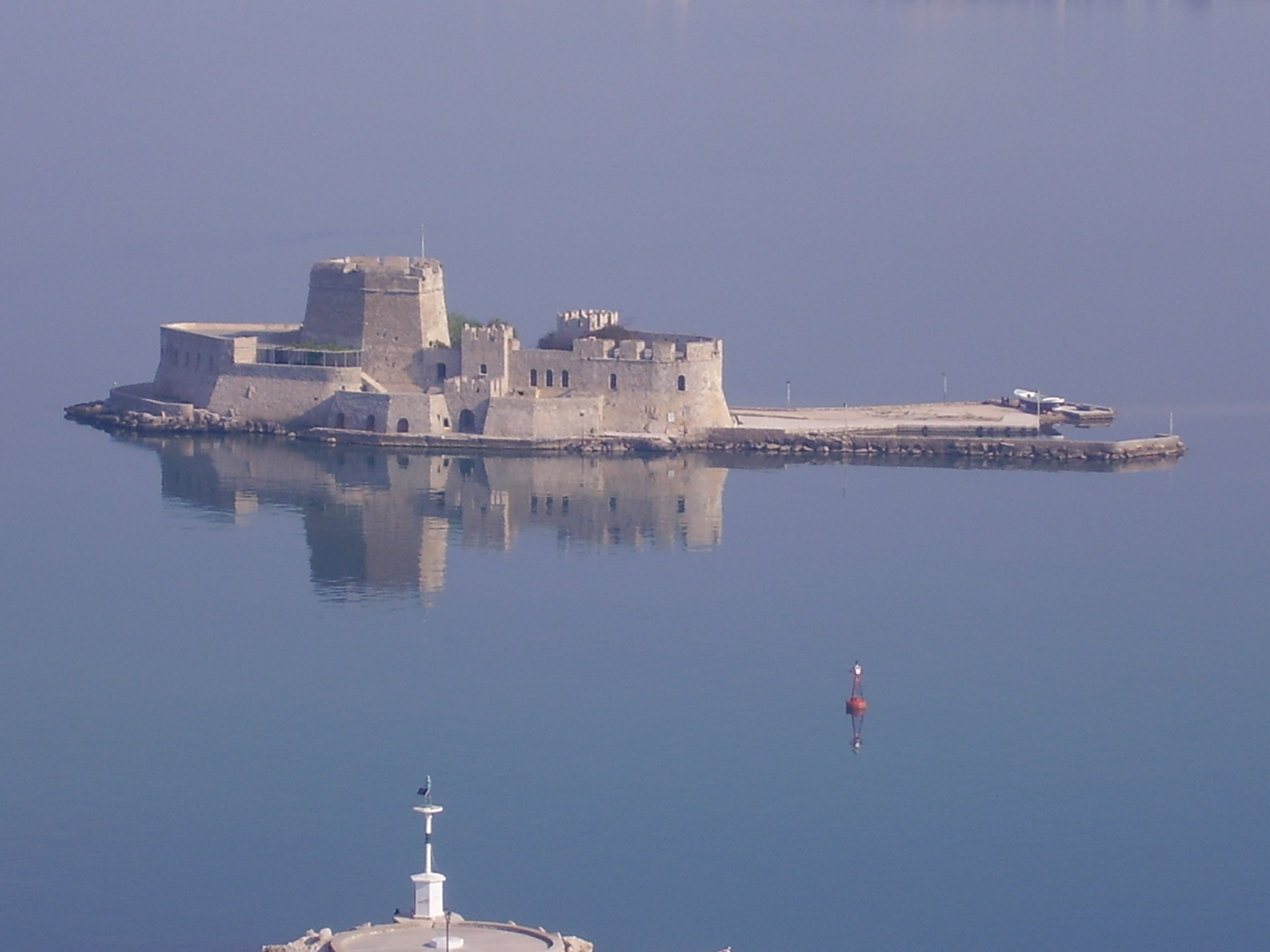


Types of fortifications in Greece
The landscape of Greek fortifications is diverse, encompassing castles, fortresses, defensive walls, and fortified towns. Each type served a specific military and administrative purpose, often adapted to the local terrain and political circumstances.
Castles and fortresses
Greek castles are typically large, heavily fortified structures designed to withstand sieges and serve as administrative centers. Fortresses, often located on elevated ground, provided strategic oversight of surrounding areas. Notable examples include the Castle of Mystras, a fortified town built on a steep hilltop in the Peloponnese, which served as a Byzantine administrative center and offers a remarkable example of layered medieval architecture.
Defensive walls and city fortifications
Many Greek cities were protected by extensive defensive walls, some dating back to ancient times but frequently rebuilt or enhanced during the medieval period. The walls of Rhodes, constructed by the Knights Hospitaller in the 14th and 15th centuries, stand as some of the most impressive examples of military engineering in the Mediterranean. These walls combined bastions, towers, and gates to defend the city against Ottoman and other invaders.
Architectural styles and influences
The architecture of Greek fortifications reveals a blend of Byzantine, Western European, and Ottoman influences. This fusion reflects the succession of powers that controlled the region and the evolving military technologies over centuries.
Byzantine military architecture
Byzantine fortifications emphasized thick walls, rounded towers, and strategic use of natural terrain. The Castle of Mystras showcases typical Byzantine features such as layered walls, narrow gates, and internal courtyards. The use of brick and stone masonry with decorative elements was common, blending functionality with aesthetic considerations.
Western european and venetian influences
The arrival of Western European crusaders and Venetian rulers introduced new defensive concepts, including angular bastions designed to deflect cannon fire. The Venetian Castle of Methoni in the southwestern Peloponnese exemplifies this style, with its massive stone walls, moats, and bastions adapted for artillery defense. Venetian fortifications often incorporated elaborate gatehouses and residential quarters within the castle walls.
Ottoman modifications
Following the Ottoman conquest, many castles were modified to suit new military technologies and administrative uses. Ottoman fortifications often included rounded towers and the addition of gunpowder artillery bastions. The Castle of Chania in Crete, originally Venetian, was extensively rebuilt under Ottoman rule, blending Islamic architectural elements with existing fortifications.
Regional variations in castle heritage
Greece's varied geography and political history have resulted in distinct regional characteristics in its castles and fortifications. Coastal areas, islands, and mountainous inland regions each exhibit unique defensive strategies and architectural adaptations.
Peloponnese and mainland greece
The Peloponnese peninsula features numerous castles and fortifications reflecting its role as a Byzantine and Frankish stronghold. Mystras remains a highlight, while the Castle of Monemvasia demonstrates how fortified towns utilized natural rock formations for defense. Mainland Greece also includes remnants of ancient city walls, often incorporated into medieval structures.
The aegean islands
The Aegean islands, with their strategic maritime positions, hosted fortifications primarily built or enhanced by the Venetians and Knights Hospitaller. The Castle of Rhodes, a UNESCO World Heritage site, dominates the island with its extensive walls and fortresses, representing one of the best-preserved medieval fortification systems in Europe. Similarly, castles on islands like Kos and Chios exhibit Venetian and Byzantine influences shaped by the islands’ role in naval defense and trade.
Crete and the eastern mediterranean
Crete’s castle heritage reflects its long Venetian occupation followed by Ottoman control. Fortresses like the Castle of Heraklion combine thick Renaissance-style walls with Ottoman modifications, illustrating the island’s strategic importance in controlling eastern Mediterranean trade routes. These fortifications also served as administrative centers and hubs of military resistance.
Notable periods of castle construction
Castle building in Greece occurred primarily during several key historical phases, each associated with specific political and military contexts.
Byzantine era
During the Byzantine period, fortifications were constructed to defend against barbarian invasions, Slavic incursions, and later Arab raids. The emphasis was on creating strongholds that could function independently. Mystras, developed in the 13th and 14th centuries, is a prime example of this period’s fortification efforts.
Crusader and frankish period
Following the Fourth Crusade, Latin rulers established numerous castles to secure their territories. This era saw the introduction of Western European military architecture. The Castle of Monemvasia was fortified substantially during this time to serve as a commercial and military hub.
Venetian period
The Venetians, aiming to control maritime trade routes, invested heavily in modern fortifications equipped to withstand gunpowder artillery. Their construction techniques emphasized thick, angled walls and bastions. The castles of Methoni and Koroni in the Peloponnese, along with the fortifications of Rhodes, were extensively developed during this period.
Ottoman period
Under Ottoman rule, many fortresses were adapted and expanded to meet new military needs. The Ottomans also added administrative buildings within castle complexes. Their modifications are visible in the castles of Chania and Heraklion, where Islamic architectural elements blend with earlier Byzantine and Venetian structures.
Preservation and current state
Many of Greece’s castles and fortifications remain remarkably well-preserved, protected by national heritage laws and international recognition. However, preservation efforts vary depending on location, funding, and tourism impact.
The Castle of Rhodes, for instance, benefits from extensive conservation work and attracts millions of visitors annually. Conversely, some inland castles, like those in remote mountainous areas, face challenges from natural decay and limited maintenance.
Archaeological initiatives and restoration projects continue to enhance understanding of these structures, while sustainable tourism development aims to balance heritage protection with public access. The integration of these castles into cultural landscapes ensures their survival as monuments to Greece’s layered history.
Castle tourism and accessibility
Castle tourism plays a significant role in Greece’s cultural tourism sector. Many castles are accessible to visitors, offering insights into medieval fortification architecture and historical narratives. Guided tours, museums, and cultural events held within castle grounds enrich the visitor experience.
The Castle of Mystras, located near Sparta, is open to the public and includes well-preserved churches and palatial ruins within its walls. Similarly, the fortified city of Rhodes offers extensive walking tours of its walls, gates, and bastions, making it a key destination for heritage tourists.
Accessibility varies, with some castles located in urban centers or on popular islands, while others require hiking or travel to remote areas. Efforts to improve infrastructure and visitor facilities continue, enhancing the appeal of these historical sites for both domestic and international travelers.
Cultural significance and heritage
Castles and fortifications in Greece are more than military structures; they are symbols of the country’s cultural identity and resilience. These monuments encapsulate centuries of conflict, diplomacy, and cultural exchange, narrating stories of empire, trade, and local communities.
Many castles have become focal points for festivals, historical reenactments, and educational programs, fostering a deeper appreciation of Greece’s medieval heritage. Their preservation contributes to national pride and serves as a tangible link to the past.
Moreover, the architectural innovations and adaptations seen in Greek fortifications have influenced broader European military architecture. The fusion of Byzantine, Venetian, and Ottoman styles within these structures highlights Greece’s role as a bridge between civilizations.
Castle Locations in Greece
Explore all castle locations on an interactive map
Loading castle locations...