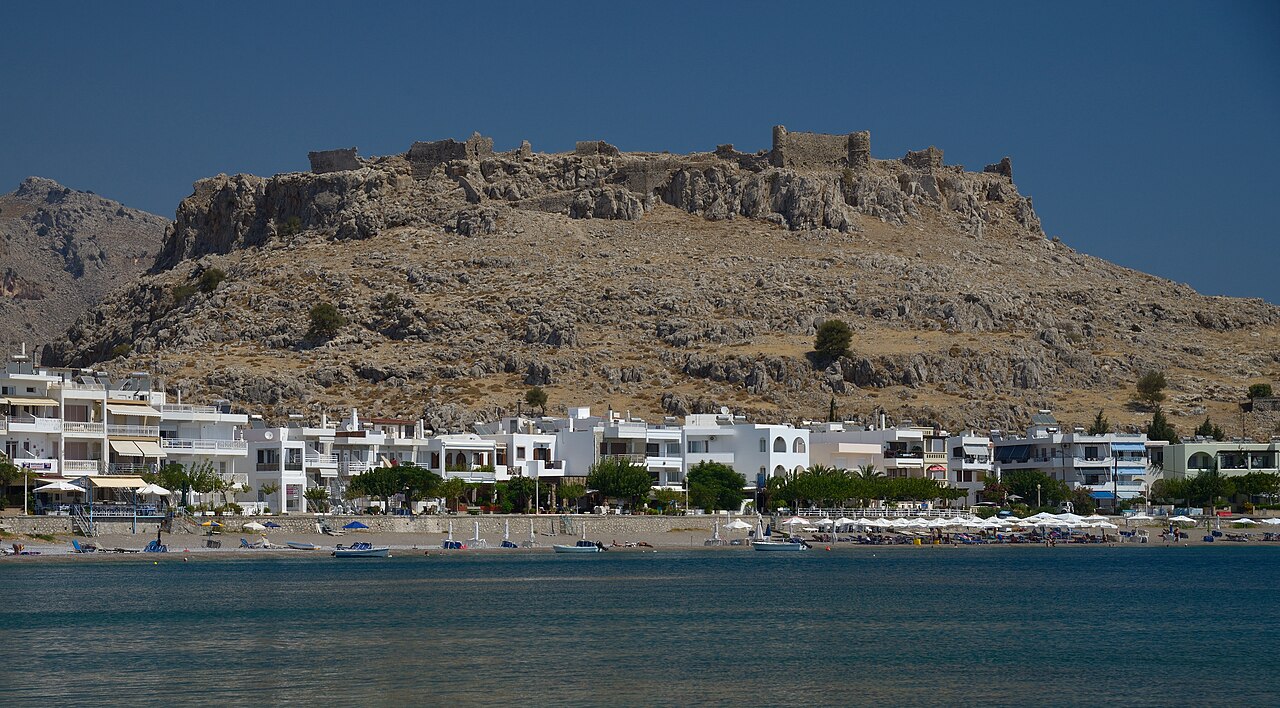
Archanggelos
Archanggelos Castle stands as a significant relic of the late medieval period on the island of Rhodes, Greece. Built in 1453 by the Knights Hospitaller after the fall of Constantinople, this hill castle was strategically constructed to defend the eastern coast of Rhodes against the rising threat of the Ottoman Empire. Perched atop a hill at an elevation of 216 meters above sea level, the castle's ruins today offer a glimpse into the military architecture and turbulent history of the 15th century Eastern Mediterranean.
Historical context and strategic importance
The construction of Archanggelos Castle was initiated by the Grand Master Jacques de Milly of the Knights Hospitaller, a military order that had controlled Rhodes since 1309. The fortress was a direct response to the Ottoman conquest of Constantinople in 1453, which dramatically heightened the threat of invasion to Rhodes. The castle's primary role was to serve as a defensive stronghold guarding the eastern coastline of Rhodes and to provide refuge for the local population in times of attack.
Throughout the latter half of the 15th century, the castle was an integral part of the island's defensive network. Subsequent Grand Masters such as Piero Raimondo Zacosta and Giovanni Battista Orsini undertook efforts to reinforce and repair the fortress, especially following damage inflicted by repeated Turkish raids. By 1479, the castle had suffered significant damage, forcing the inhabitants of Archanggelos to seek shelter in the nearby Feraklos Castle during another major attack.
The castle's military importance diminished after the Ottoman capture of Rhodes in 1522, during which it sustained heavy damage. Today, only the perimeter walls, the main gate with a small round tower on the northwest side, and the remains of a rectangular tower near the gate survive. The rectangular tower is believed to predate the castle itself, hinting at earlier fortifications on the site.
Architectural features and layout
Archanggelos Castle was constructed on a triangular plan covering approximately 0.3 hectares. The castle's walls stretch around 240 meters in circumference. The design incorporates pointed triangular bastions at the corners, a defensive feature that allowed for effective flanking fire against attackers. This architectural detail reflects the adaptation of medieval fortifications to the evolving demands of artillery warfare in the 15th century.
The castle's main entrance is fortified with a gatehouse accompanied by a small round tower positioned to the northwest, providing a vantage point for defenders. Adjacent to the gate are the remains of a rectangular tower, likely of earlier origin, which suggests the site had strategic significance even before the Knights Hospitaller's construction.
Inside the castle walls, a small chapel is located in the northern corner, serving spiritual needs of the garrison and local inhabitants seeking refuge. The compact size of the fortress indicates it was primarily a defensive refuge rather than a large residential complex.
The castle's role in the defense of rhodes
As part of the Knights Hospitaller's extensive fortification system on Rhodes, Archanggelos Castle played a crucial role in monitoring and defending against Ottoman incursions from the sea and land. Its elevated position allowed for early warning of enemy movements along the eastern coast. The castle's design reflects the military engineering principles of the late medieval period, emphasizing strong walls, strategic bastions, and a secure refuge for civilians.
Despite its robust construction, the castle was repeatedly tested by Ottoman attacks. The damage sustained in the late 15th century and the eventual fall of Rhodes in 1522 marked the end of its active military use. Nevertheless, the ruins stand as a testament to the Knights Hospitaller's defensive efforts during a pivotal era of Mediterranean history.
Present condition and visiting information
Today, Archanggelos Castle exists as ruins, with only the outer walls, the gate with its round tower, and parts of the rectangular tower remaining visible. The site offers visitors a chance to explore the remnants of a 15th-century hill fortress and to appreciate the strategic importance of Rhodes in the late medieval period.
The castle is located approximately 2 kilometers east of the town of Archanggelos, near the coast. Its elevated position provides scenic views of the surrounding landscape and the Aegean Sea. While the ruins are not extensively restored, they convey the historical atmosphere of a Knights Hospitaller fortress built in response to the Ottoman threat.
Accessibility and visitor tips
Visitors should be prepared for a moderate hike up the hill to reach the castle ruins. The terrain is rugged, and there are no formal visitor facilities on site. It is advisable to wear sturdy footwear and bring water, especially during the hot summer months. The best time to visit is during spring or autumn when the weather is milder.
Nearby attractions
Nearby, visitors can explore the town of Archanggelos, known for its traditional Greek character and local crafts. The Feraklos Castle, another Knights Hospitaller fortress, lies within reachable distance and offers further insight into the island's medieval fortifications.
Frequently asked questions (FAQ)
- When was Archanggelos Castle built and by whom?
- Archanggelos Castle was built in 1453 by the Knights Hospitaller under Grand Master Jacques de Milly, following the fall of Constantinople.
- What is the architectural layout of Archanggelos Castle?
- The castle has a triangular plan with pointed bastions at the corners and includes a gatehouse with a small round tower and a chapel inside.
- How can visitors reach Archanggelos Castle?
- The castle is located about 2 kilometers east of Archanggelos town on a hill 216 meters above sea level. Visitors should be prepared for a moderate hike on rugged terrain.
- What remains of Archanggelos Castle today?
- Today, only the perimeter walls, the main gate with a round tower, and the remains of a rectangular tower and a small chapel survive.
- Why was Archanggelos Castle built?
- It was built to defend Rhodes' eastern coast and provide refuge to locals against the Ottoman threat after the fall of Constantinople in 1453.
Information
Loading map...
Visitor reviews
No reviews yet. Been here? Write the first review and help other travelers!
Write the first reviewVisited this castle? Share your experience
Your review helps other travelers and adds first-hand knowledge to our encyclopedia.