Castle of Geraki
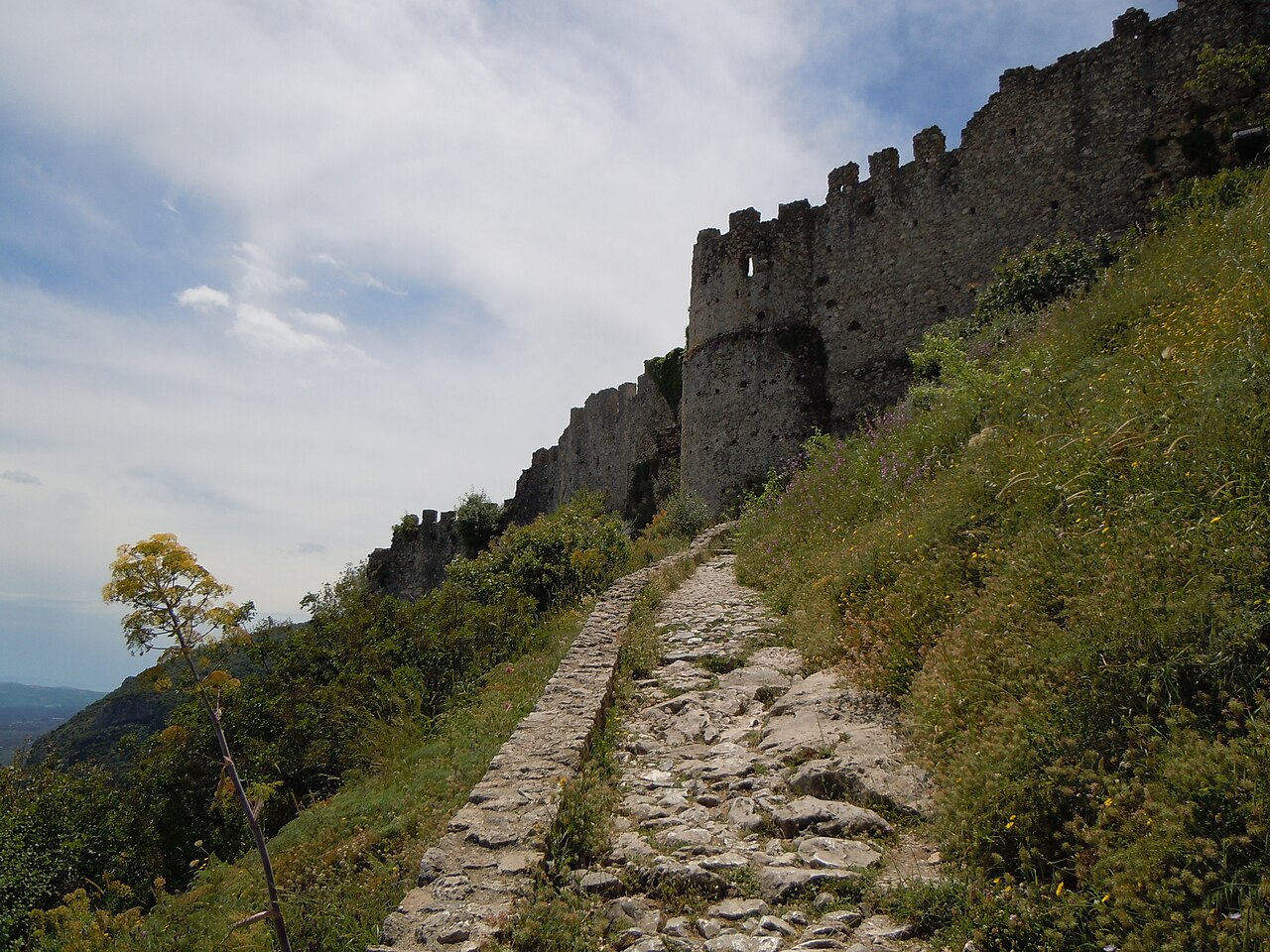
The Castle of Geraki stands as a remarkable example of a high medieval hill castle located near the village of Geraki in the Evrotas region of Greece. Constructed beginning in 1209 by the French baron Guy de Nivelet on the ancient Mycenaean acropolis of Geronthi, this fortress was strategically positioned to control the surrounding territory and assert Frankish dominance in the Peloponnese following the Fourth Crusade. Its elevated site atop the Palaiókastro hill, part of the Parnonas mountain range, rises approximately 400 meters above sea level, with the castle perched on the northern summit about 100 meters above the surrounding land, providing commanding views and a strong defensive position.
The castle's origins are closely tied to the establishment of the Barony of Geraki, a feudal domain within the Principality of Achaea. The fortress served as the administrative and military center for the barony, reflecting the typical Frankish practice of constructing fortified seats to consolidate control over newly conquered lands. The castle complex includes the remains of defensive walls and towers built with local stone, designed to maximize the natural defensive advantages of the hilltop. Below the main fortress lies a fortified lower town extending down the slopes, illustrating a well-planned settlement structure that integrated military and civilian functions.
Historical transitions and cultural layers
After its initial Frankish occupation, the Castle of Geraki underwent significant political and cultural changes. In 1262, the fortress was surrendered to the Byzantine Empire, marking a pivotal shift in control during the turbulent medieval period. Under Byzantine rule, Geraki became part of the Despotate of the Morea, a semi-autonomous province that flourished in the late Byzantine era. This period saw a dramatic growth in the area’s religious and cultural life, evidenced by the construction and decoration of numerous churches within and around the castle precincts.
The Byzantine influence is especially visible in the rich collection of ecclesiastical architecture and art scattered across the site. The castle and its environs contain the ruins of approximately thirty churches, dating from the 11th to the 15th centuries. These churches display a variety of architectural styles and layouts, including cross-roofed and monocline designs, and feature significant mural paintings that provide valuable insight into medieval religious art and iconography.
Notable churches and religious art
Among the most important religious structures are the church of Saint Sozon and the church of Saint Athanasius, both notable for their historical and artistic value. The cross-roofed church of Saint Paraskevi stands out for its well-preserved 13th-century murals arranged in three levels, illustrating biblical scenes with vivid colors and intricate detail. The monocline church of Zoodochos Pigi is renowned for its striking white murals, considered some of the most beautiful in the region.
Other significant churches include the church of Taxiarchs located on the castle's second peak, which contains a rare mural depicting the biblical fall of Jericho by Jesus of Navi. The Temple of Agios Georgios, dating to the 11th century and situated at the highest point of the hill, exhibits notable Frankish architectural features combined with Byzantine elements. This church also houses a unique marble shrine adorned with heraldic and chivalric symbols, reflecting the castle's Frankish heritage.
Venetian and ottoman periods
The castle's strategic importance continued through the late medieval and early modern periods. In the mid-15th century, the Ottoman Empire expanded into the Peloponnese, capturing Geraki in 1460. Venetian forces briefly controlled the fortress between 1463 and 1468, and again from the late 17th century until 1715, before the Ottomans reclaimed it. These shifts in control reflect the broader geopolitical struggles in the region between the Ottomans and the Venetian Republic.
Following these turbulent centuries, the castle was eventually abandoned as a military stronghold. The local population moved back to the ancient acropolis of Geronthrai, near the foot of the hill, giving rise to the modern village of Geraki. Despite its decline in military use, the castle area remained a significant cultural and religious site, as evidenced by the numerous churches and chapels that continued to be used or preserved.
Architectural features and preservation
The Castle of Geraki is characterized by its integration with the natural topography of the hill, utilizing steep slopes and rocky outcrops to enhance its defenses. The fortress walls and towers, though now largely in ruins, demonstrate typical Frankish military architecture adapted to the Greek landscape. The complex layout includes two main summits connected by a narrow ridge, creating a compact fortified area that dominated the surrounding countryside.
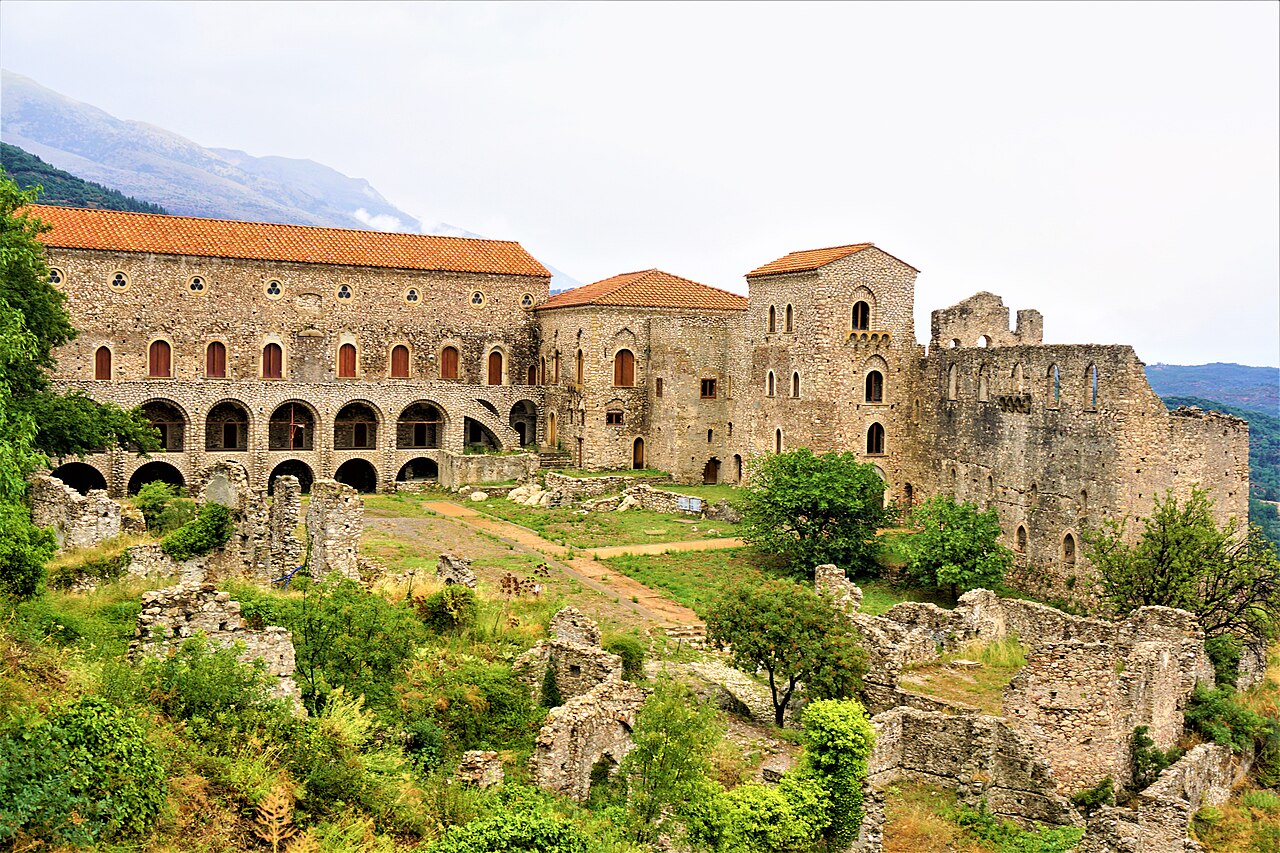
Within the castle and on the surrounding slopes, the remains of numerous churches provide a unique open-air museum of Byzantine religious architecture. These structures vary in size and style but collectively illustrate the rich spiritual life of the medieval community. Restoration efforts have focused on stabilizing the ruins and preserving the mural paintings, allowing visitors to appreciate the site's historical depth and artistic heritage.
The castle's domed gates, narrow alleys, and stone manors evoke the mystique of medieval times, offering a tangible connection to the past. The presence of chivalric symbols and heraldic decorations in some churches highlights the fusion of Frankish and Byzantine cultural elements unique to this region.
Visitor experience and cultural significance
Today, the Castle of Geraki functions as an open-air Byzantine museum, attracting visitors interested in medieval history, architecture, and religious art. The site’s numerous churches, each with distinctive murals and architectural details, provide a rich tapestry of cultural heritage. Visitors can explore the ruins of the fortress, walk through the narrow alleys, and admire the panoramic views from the hilltop.
The castle and its churches stand as a testament to the complex history of the Peloponnese, reflecting layers of Frankish, Byzantine, Venetian, and Ottoman influence. Its preservation and presentation contribute significantly to understanding the medieval period in Greece and the interactions between Western European and Byzantine traditions.
Frequently asked questions (FAQ)
- How do I get to the Castle of Geraki?
- The Castle of Geraki is located in the picturesque village of Geraki, Greece. It is accessible by car, and there is parking available nearby. Public transport options are limited, so driving or arranging a taxi is recommended for convenience.
- What is the historical significance of the Castle of Geraki?
- The Castle of Geraki dates back to the Byzantine period and played a crucial role in the region's defense against invasions. It reflects the architectural styles of its time and has witnessed various historical events that shaped the area. The castle is an important landmark, showcasing the rich heritage of the region.
- When was the Castle of Geraki built?
- The construction of the Castle of Geraki began in the 13th century, during the Frankish occupation of Greece. It was strategically built on a hill to oversee the surrounding plains and protect the local population. Over the centuries, it underwent several modifications and restorations.
- Can I visit the Castle of Geraki year-round?
- Yes, the Castle of Geraki is open to visitors throughout the year, although the best time to visit is during the spring and fall when the weather is pleasant. However, it's advisable to check local conditions and any potential seasonal closures before planning your visit.
- Why is the architecture of the Castle of Geraki unique?
- The architecture of the Castle of Geraki combines Byzantine and medieval styles, featuring robust stone walls and impressive towers. Its strategic design not only served defensive purposes but also reflects the artistic influences of the time. The castle's layout offers stunning views of the surrounding landscape, enhancing its historical charm.
- Is it possible to explore the interior of the Castle of Geraki?
- Yes, visitors can explore certain areas of the Castle of Geraki, including its towers and outer walls. Guided tours may be available to provide insights into the castle's history and architecture. It’s a great opportunity to immerse yourself in the rich past of this historical site.
- What are the opening hours for the Castle of Geraki?
- The Castle of Geraki typically opens daily from 9:00 AM to 6:00 PM, but hours may vary seasonally. It is recommended to check the official website or local tourist information for the most accurate and current opening times before your visit. This will ensure you have ample time to explore the castle.
- Are there any ticket prices to enter the Castle of Geraki?
- Yes, there is a nominal entrance fee to access the Castle of Geraki, which helps support its maintenance and preservation. Ticket prices may vary for adults, students, and children, so it's advisable to check in advance. Discounts may be available for groups or special events, making it an affordable visit.
- What nearby attractions can I visit after exploring the Castle of Geraki?
- After visiting the Castle of Geraki, you can explore the charming village of Geraki, known for its traditional architecture and local cuisine. Additionally, nearby attractions include the ancient site of Mystras and the beautiful landscapes of the Taygetus mountains. These sites offer a rich cultural experience and stunning natural beauty.
Information
Website
Visit websiteSources & official resources
Verify the information above using these authoritative references.
Loading map...
Visitor reviews
No reviews yet. Been here? Write the first review and help other travelers!
Write the first reviewVisited this castle? Share your experience
Your review helps other travelers and adds first-hand knowledge to our encyclopedia.