Church of the Virgin Mary
Kalamata Castle, located on a commanding hilltop overlooking the city of Kalamata in Greece, is a site of profound historical and architectural significance. This castle, with origins tracing back to the Byzantine period, stands as a testament to the region's turbulent history and cultural evolution. At the heart of the castle complex lies the Church of the Virgin Mary, which has played a pivotal role in the identity of Kalamata, lending its name to the city itself through the famed icon known as "Kalomata" or "Beautiful Eyes."
The castle's strategic position on a hillside above the Nedon River, near the Messenian Gulf, has ensured its importance from antiquity through the medieval and early modern periods. The site originally hosted the ancient city of Pharae, and its fortifications have evolved through Byzantine, Frankish, Venetian, and Ottoman influences. The current structure primarily dates from the 13th century, when the Franks rebuilt and expanded the fortress following the Fourth Crusade and the establishment of the Principality of Achaea.
Early foundations and religious significance
The earliest known fortifications at Kalamata date to the Byzantine era, with the site initially serving both defensive and religious functions. In the 6th century, a small church dedicated to the Blessed Virgin Mary was constructed within the fortress walls. This church housed an icon of the Virgin Mary renowned for its striking black eyes, which captivated many worshippers and became known as "Kalomata" (meaning "beautiful eyes" in Greek). This icon's fame was so profound that it influenced the renaming of the ancient city of Pharae to Kalamata, intertwining the religious and civic identities of the region.
Frankish reconstruction and medieval fortifications
Following the Fourth Crusade in 1205, the castle was rebuilt by the Franks, who sought to consolidate their control over the Peloponnese. The castle was granted by William Champlitte to Geoffrey I Villehardouin, a prominent member of the Villehardouin family that founded the Principality of Achaea. Geoffrey expanded and fortified the castle substantially, adapting it to the military needs of the time. The castle served as the administrative center for the Barony of Kalamata and was a residence for notable figures, including William II of Villehardouin, who was both born and died within its walls.
During the late 13th century, the castle faced multiple sieges and attacks, including a notable assault by Slavic forces in 1293, who briefly captured the donjon through a daring infiltration. The Frankish rulers quickly retook the fortress and reinforced its defenses to prevent further breaches. The castle remained a key Frankish stronghold until the mid-15th century.
Venetian and ottoman periods
In 1428, the castle came under the control of the Byzantine Despotate of the Morea before falling to the Ottomans between 1458 and 1460. Over the subsequent centuries, Kalamata Castle changed hands multiple times, reflecting the ongoing power struggles in the region. The Venetians intermittently occupied the castle, notably capturing it during the Morean War in 1685. During their retreat, the Ottomans destroyed the castle's ammunition stores, causing significant damage. The Venetians subsequently dismantled parts of the fortifications but rebuilt sections of the outer walls, marked by the Lion of Saint Mark above the main gate.
By the 18th century, the castle had lost its military significance and was largely abandoned. It suffered further damage during the Greek War of Independence in 1825 when Ibrahim Pasha's forces attacked Kalamata. Despite this, the site transitioned into a cultural landmark in the 20th century, with the establishment of a public park and an open-air theater within its grounds.
Architectural features and remains
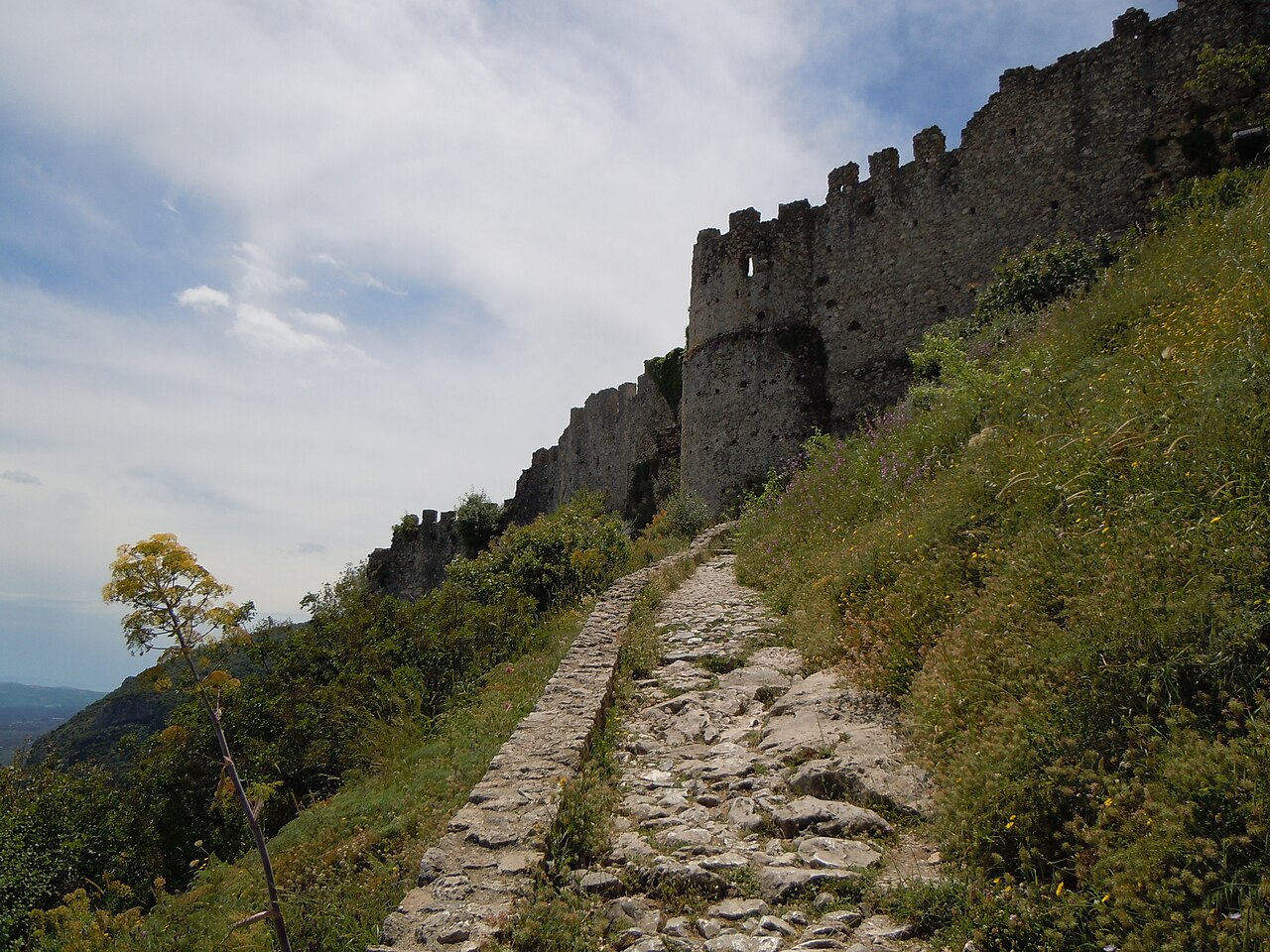
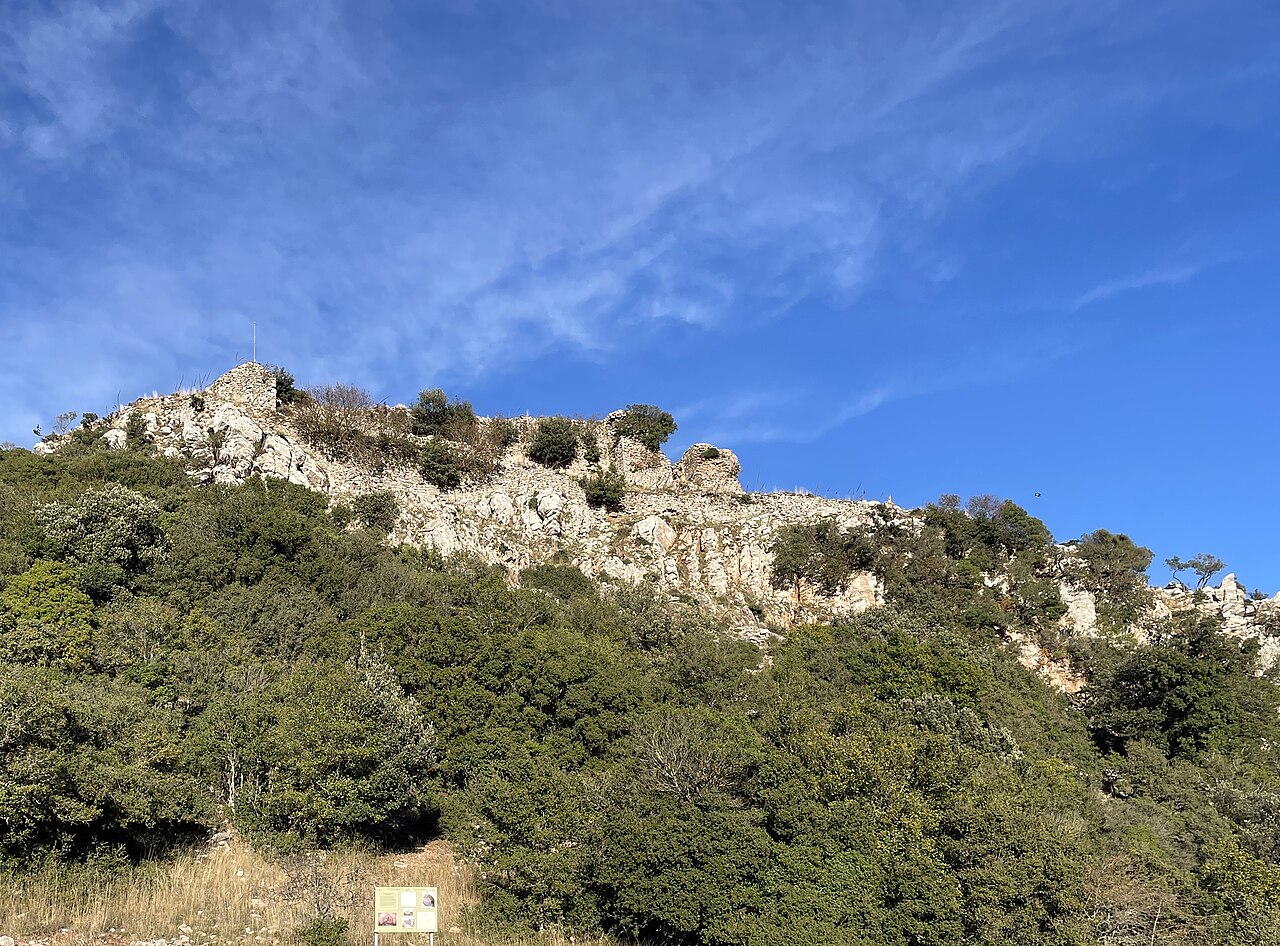
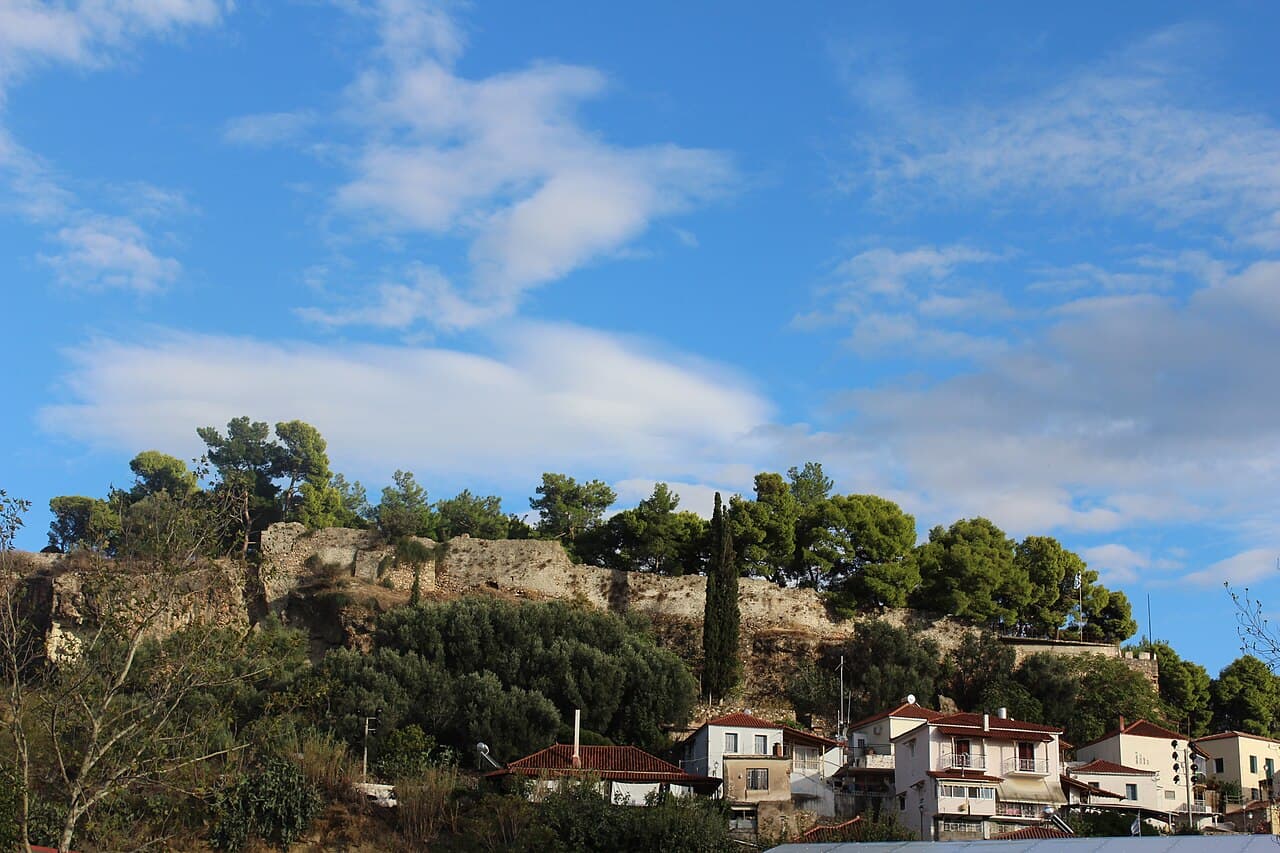
Kalamata Castle occupies an elongated terrace on a hilltop, with fortifications that follow the natural contours of the terrain. The inner enclosure includes a prominent donjon or main tower, measuring approximately 12 by 18 meters, with a western annex containing a cistern for water storage. This cistern incorporates stone blocks repurposed from earlier ancient Pharae fortifications, illustrating the site's layered history.
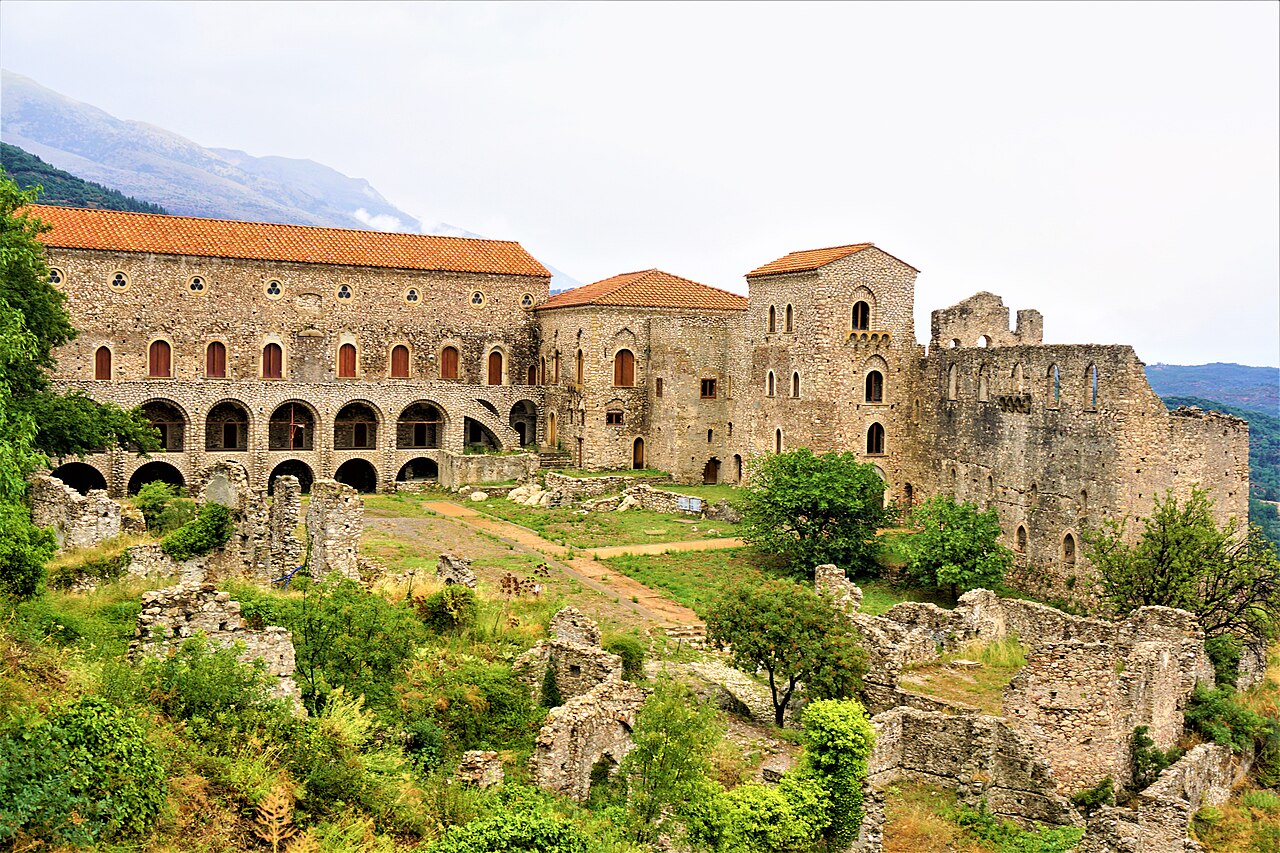
The remains of the katholikon church from the Byzantine monastery survive within the donjon, highlighting the continuity of religious use alongside military functions. The castle's eastern walls feature a small square tower and a southeastern bastion that guards the sole entrance, which is flanked by a redan defensive projection. Although much of the inner walls have been reduced to foundations, these remnants provide insight into the castle's defensive design.
The outer enclosure walls extend along the hill's eastern slope, incorporating additional towers and gates. Architectural elements from the Byzantine period are embedded in the southeastern gate area, reflecting the complex construction phases. Over time, much of the castle's stone was removed for local building projects, leaving the site fragmented. Earthworks that may have once complemented the stone defenses are no longer visible.
Following damage from a 1986 earthquake, some upper areas, including the citadel and cistern ruins, have been deemed unsafe for visitors. Nonetheless, the site remains a protected historic monument and a venue for cultural events, linking its rich past with contemporary community life.
Cultural legacy and modern use
In the 20th century, under the guidance of Zacharias Papantoniou, the castle grounds were transformed into a public park, integrating the historic ruins with recreational and cultural functions. The addition of an open-air theater in 1950 within the castle's southern area provides a space for performances and community gatherings, celebrating Kalamata's heritage.
Today, Kalamata Castle and the Church of the Virgin Mary stand as prominent symbols of the city's historical depth and architectural heritage. The enduring legacy of the "Kalomata" icon continues to resonate, underscoring the intertwined spiritual and civic identity that has shaped the region for over a millennium.
Frequently asked questions (FAQ)
- What is the historical significance of the Church of the Virgin Mary?
- The Church of the Virgin Mary in Kalamata is a significant historical landmark, known for its association with the Greek War of Independence. Built in the 19th century, it serves as a symbol of national pride and resilience for the local community.
- When was the Church of the Virgin Mary built?
- The Church of the Virgin Mary was constructed in the early 19th century, specifically between 1820 and 1825. It was established during a pivotal time in Greek history, reflecting the architectural styles and cultural influences of that era.
- What are the opening hours for visitors to the Church of the Virgin Mary?
- The Church of the Virgin Mary is typically open to visitors from 8 AM to 7 PM daily. However, it's advisable to check for any seasonal changes in hours or special events that may affect accessibility.
- Can I take photographs inside the Church of the Virgin Mary?
- Yes, visitors are generally allowed to take photographs inside the Church of the Virgin Mary. However, it's respectful to avoid using flash and to be mindful of any worshippers present during your visit.
- Is it possible to access the Church of the Virgin Mary with a wheelchair?
- Yes, the Church of the Virgin Mary is accessible for visitors with mobility challenges. Ramps and designated pathways are available to ensure that everyone can enjoy the historical and architectural beauty of the church.
- What is the best time to visit the Church of the Virgin Mary?
- The best time to visit the Church of the Virgin Mary is during the spring and fall, when the weather is mild. Additionally, visiting during weekdays can help you avoid larger crowds typically present on weekends.
- Are there any nearby attractions to visit after the Church of the Virgin Mary?
- Yes, after visiting the Church of the Virgin Mary, you can explore the nearby Kalamata Castle, which offers panoramic views of the city. The local archaeological museum is also just a short walk away, showcasing the rich history of the region.
- What are the ticket prices for visiting the Church of the Virgin Mary?
- Visiting the Church of the Virgin Mary is free of charge, making it an accessible destination for all. Donations are appreciated to help with the maintenance and preservation of this historical site.
Photo gallery

Information
Loading map...
Visitor reviews
No reviews yet. Been here? Write the first review and help other travelers!
Write the first reviewVisited this castle? Share your experience
Your review helps other travelers and adds first-hand knowledge to our encyclopedia.