
Osaka Castle
Osaka Castle, located in the heart of Osaka, Japan, stands as a monumental symbol of Japan's turbulent Renaissance period and the unification of the country under Toyotomi Hideyoshi. Constructed in 1583, this lowland castle was designed to be an impregnable fortress, showcasing advanced military architecture and strategic defensive features that made it one of the most formidable castles of its time.
From the outset, Toyotomi Hideyoshi envisioned Osaka Castle as a powerful statement of authority and military might. The castle was surrounded by a vast moat system, with a large outer moat encircling the entire complex. This moat was crossed by only two access points, one of which was a small, easily defensible bridge that could be destroyed to prevent enemy advances. The castle's inner grounds were elevated approximately three levels above the water level of the moat, providing a significant tactical advantage. Attackers faced the daunting task of scaling three imposing stone walls and breaching multiple layers of turrets (yagura) to reach the central main keep (tenshu).
Architectural design and defensive features
Osaka Castle's architecture reflects the innovative military engineering of the late 16th century. The castle's stone walls are particularly noteworthy for their massive size and intricate construction, designed to withstand siege warfare and natural disasters. The walls were built using enormous granite blocks carefully fitted without mortar, demonstrating advanced masonry skills. The castle complex included multiple gates and turrets strategically placed to maximize defensive coverage and create overlapping fields of fire against attackers.
The main keep was a multi-storied structure that served both as a command center and a symbol of Toyotomi's power. It was richly decorated and housed various living quarters, armories, and observation decks. The elevation of the keep above the surrounding grounds allowed defenders to monitor the battlefield and coordinate defense effectively.
Historical significance and key events
Osaka Castle played a central role in the power struggles of early modern Japan. After Toyotomi Hideyoshi's death, the castle became the focal point of the conflict between the Toyotomi loyalists and the rising Tokugawa shogunate. In 1615, during the Siege of Osaka, the castle fell to Tokugawa forces after a fierce battle. The fall marked the end of the Toyotomi clan's influence, and Hideyoshi's heir, Hideyori, tragically committed suicide to avoid capture.
Following the siege, the Tokugawa shogunate undertook extensive renovations from 1620, rebuilding and expanding the castle. The Tokugawa-era reconstruction included a new, larger main keep that surpassed the original in scale and grandeur, reinforcing the castle's status as a symbol of Tokugawa authority. Unfortunately, in 1665, the main keep was destroyed by lightning and fire and was not rebuilt for centuries.
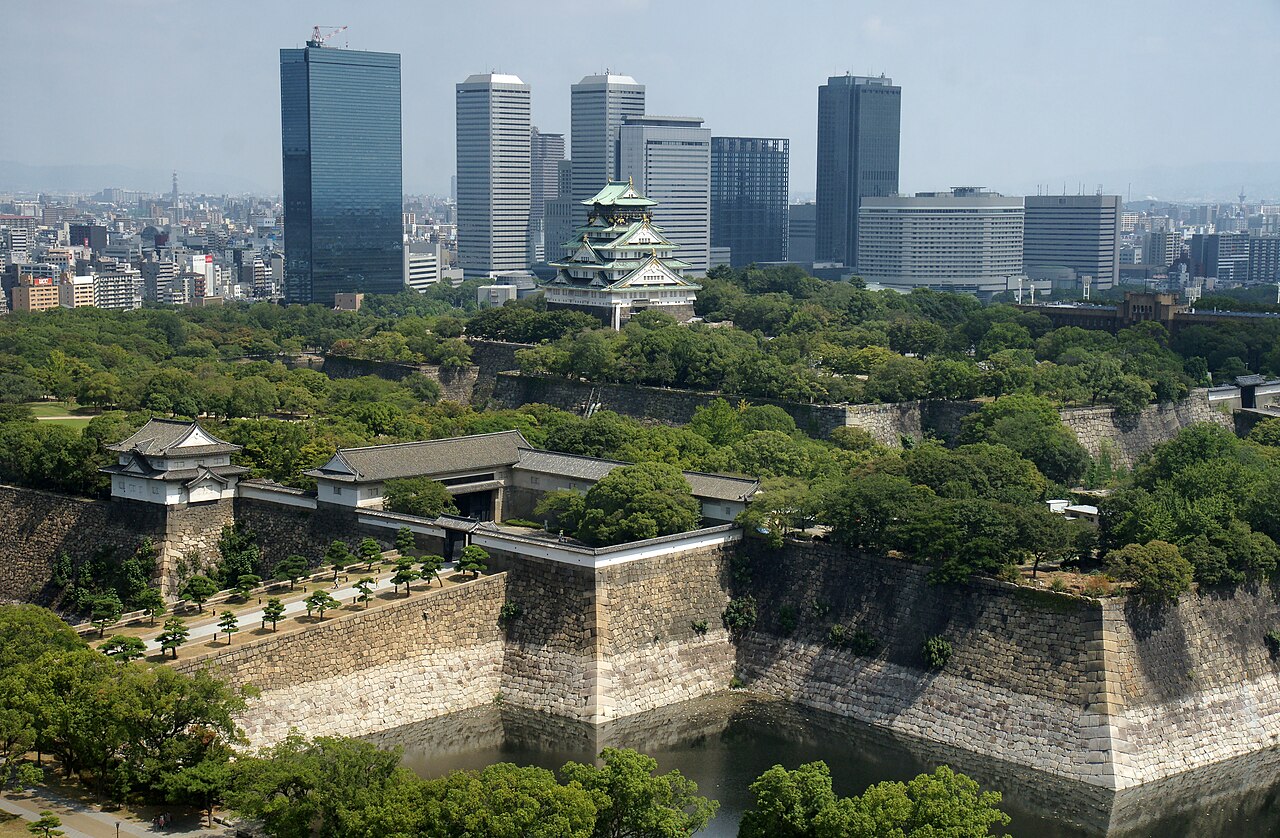
Photo by 663highland • CC BY 2.5
Modern restoration and present condition
In the 20th century, Osaka Castle underwent significant restoration efforts to preserve and celebrate its historical and cultural legacy. The current main keep is a concrete reconstruction completed in the 1930s, which houses a museum dedicated to the castle's rich history and the life of Toyotomi Hideyoshi. While the modern structure includes an elevator and modern facilities, many visitors appreciate the surrounding original elements, including several preserved gates, yagura turrets, and the impressive stone walls.
The castle grounds now form a large public park spanning approximately six hectares, cherished by locals and tourists alike, especially during the spring cherry blossom season. The park offers a peaceful retreat in the bustling city, with walking paths that showcase the castle's extensive fortifications and historic architecture.
Visitor experience and tips
Visitors to Osaka Castle are encouraged to explore beyond the main keep museum to fully appreciate the castle's historical layout and architectural grandeur. The original castle gates and turrets provide a tangible connection to the past, and the massive stone walls remain a highlight for photography and historical interest. The surrounding park is ideal for leisurely strolls, picnics, and cultural events.
While the reconstructed main keep offers valuable exhibits and panoramic views from its observation deck, some visitors prefer to experience the castle's exterior fortifications and natural setting. The site is accessible year-round, with peak visitation during spring for cherry blossoms and autumn for colorful foliage.
Accessibility and practical information
- The castle is located in central Osaka city, easily reachable by public transport.
- Opening hours typically run from morning to early evening, with seasonal variations.
- Entrance fees apply for the main keep museum, while the castle grounds and park are free to enter.
- Guided tours and informational signage enhance the visitor experience.
Cultural and heritage importance
Osaka Castle remains a powerful emblem of Japan's Renaissance era and the country's unification under Toyotomi Hideyoshi. It represents the pinnacle of lowland castle design in Japan, combining aesthetic grandeur with formidable military engineering. The castle's layered history—from its original construction, through destruction and Tokugawa renovation, to modern restoration—reflects the dynamic political and cultural transformations of Japan over centuries.
Today, Osaka Castle is not only a major tourist attraction but also a cherished cultural asset, hosting festivals, historical reenactments, and educational programs that celebrate Japan's feudal past and architectural heritage.
Frequently asked questions (FAQ)
- What is the historical significance of Osaka Castle?
- Osaka Castle is a symbol of Osaka's rich history and played a crucial role during the unification of Japan in the 16th century. Originally built in 1583 by Toyotomi Hideyoshi, it has witnessed numerous battles and changes in power, making it a vital landmark in Japanese history.
- When was Osaka Castle built?
- Osaka Castle was originally constructed in 1583 and has undergone several reconstructions since then. The current structure, completed in 1931, reflects the architectural style of the early modern period and serves as a museum today.
- What are the opening hours for Osaka Castle?
- Osaka Castle is open to visitors daily from 9:00 AM to 5:00 PM, with last admissions at 4:30 PM. It's advisable to check the official website for any changes in hours during national holidays or special events.
- Can I visit Osaka Castle with a wheelchair?
- Yes, Osaka Castle is accessible for visitors with wheelchairs. The castle grounds are equipped with ramps and accessible restrooms, ensuring that everyone can enjoy the beautiful gardens and historical significance of the site.
- What is the best time to visit Osaka Castle?
- The best time to visit Osaka Castle is during the spring (March to May) when cherry blossoms bloom, creating a stunning landscape. Autumn (September to November) also offers beautiful foliage, making both seasons ideal for sightseeing.
- Is it possible to take guided tours at Osaka Castle?
- Yes, guided tours are available at Osaka Castle, providing in-depth insights into its history and architecture. These tours can enhance your experience by offering historical context and interesting anecdotes about the castle's past.
- How much do tickets cost for Osaka Castle?
- Admission to the main keep of Osaka Castle costs 600 yen for adults, while entry is free for children under 15 years old. Discounts may apply for groups, so it's a good idea to check the official site for any special offers.
- What nearby attractions can I visit while at Osaka Castle?
- Nearby attractions include the beautiful Osaka Castle Park, which is perfect for a leisurely stroll or picnic. Additionally, the Osaka Museum of History and the vibrant shopping district of Namba are just a short distance away, making it easy to plan a full day of exploration.
Photo gallery

Information
Opening hours
Main Keep museum open 9am-5pm; 600 yen; Closed Dec 28-Jan 1
Website
Visit websiteSources & official resources
Verify the information above using these authoritative references.
Loading map...
Visitor reviews
No reviews yet. Been here? Write the first review and help other travelers!
Write the first reviewVisited this castle? Share your experience
Your review helps other travelers and adds first-hand knowledge to our encyclopedia.