Picture a landscape straight out of a fairy tale — a river shimmering in the golden afternoon light, while along its banks, mighty towers, slender turrets, and intricately carved balustrades emerge from lush greenery. No, this isn't a Disney set or a film location. This is the Loire Valley — one of the most enchanting places on Earth, drawing kings, artists, and ordinary travelers hungry for beauty for centuries.
The castles of the Loire Valley aren't just tourist attractions. They're living museums of French history, places where the Renaissance spirit still drifts between stone columns, where every corridor hides a courtly intrigue, a romance, or a political conspiracy. And although several centuries have passed since the days of Francis I or Catherine de' Medici, these buildings can still quite literally take your breath away. Did you know that the Loire Valley has been a UNESCO World Heritage Site since 2000? And not without good reason.
In this article, I'm taking you on a journey through the most famous Loire Valley châteaux — their history, architecture, secrets, and why you absolutely must visit them. Ready? Let's go!
The Loire Valley – "The Garden of France" and the cradle of the Renaissance
Before we dive into specific castles, it's worth pausing for a moment to consider the context. Why here? Why is it along the Loire — France's longest river — that such a dense network of royal residences and noble estates grew up?
The answer is simple, yet multifaceted. First — geography. The Loire Valley is gentle, fertile terrain with easy access to water, ideal both for living and for defense. Second — politics. In the 15th and 16th centuries, when Paris was still relatively dangerous and cold, France's kings preferred to stay here, in the valley officially dubbed "The Garden of France." Third — fashion. When Charles VIII returned from his Italian campaign in 1495, he brought back not only war spoils but above all Italian architects, artists, and the idea of the Renaissance. And it was along the Loire that this idea blossomed in stone.
Over the following century, castles rose here like mushrooms after rain. Every king, every nobleman wanted his own residence, his own calling card, his own proof of power and taste. The result? Over 300 castles and residences scattered across the valley, dozens of which are genuine gems of European architecture. This is a place where you can cycle from château to château for an entire week and never see the same roofline twice.
"The Loire Valley is almost an encyclopedia of European castle architecture — from austere medieval fortresses to light, fantastical Renaissance residences," historians of architecture are fond of saying, and it's hard to disagree.
Château de Chambord – a monument to the ambition of Francis I
If you could only see one Loire Valley castle, let it be Chambord. That's what everyone who's visited it says. And honestly? They're right.
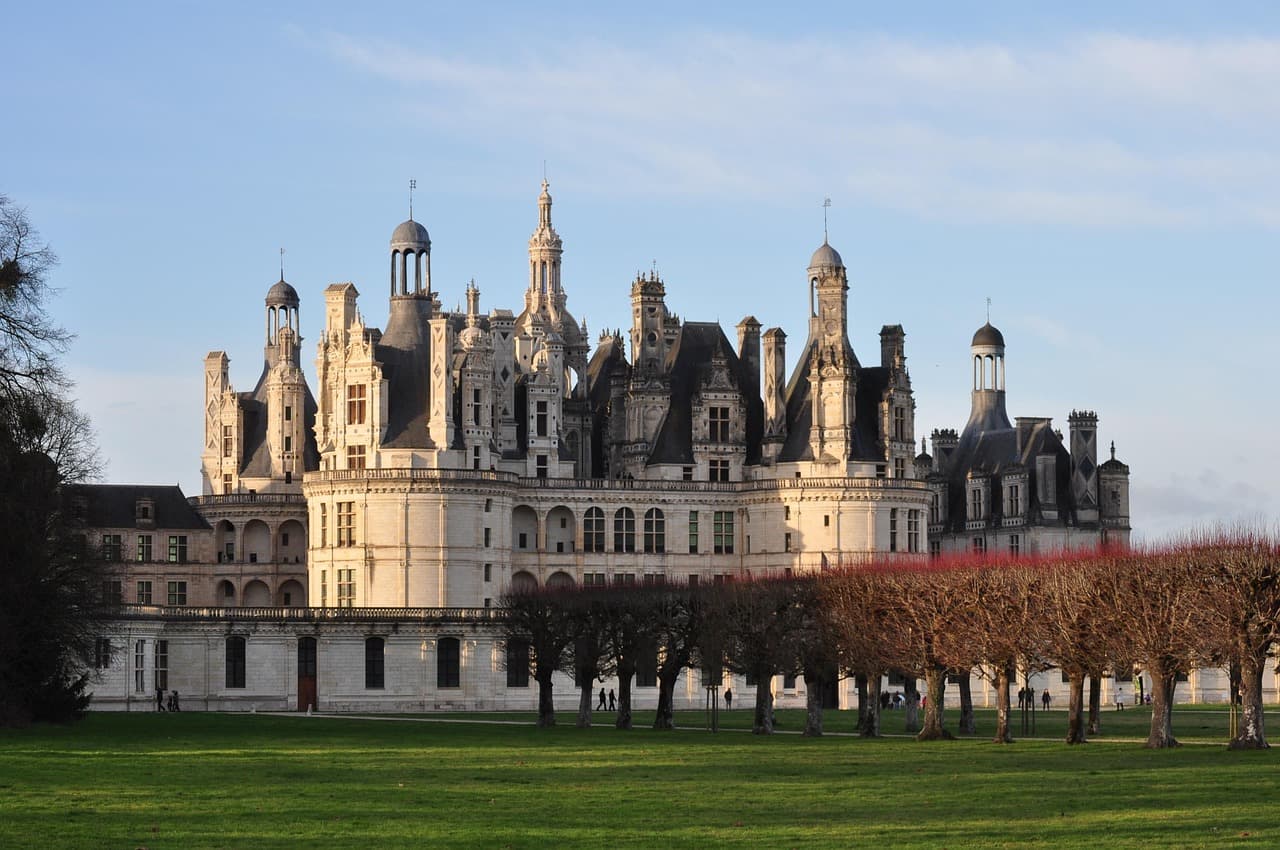
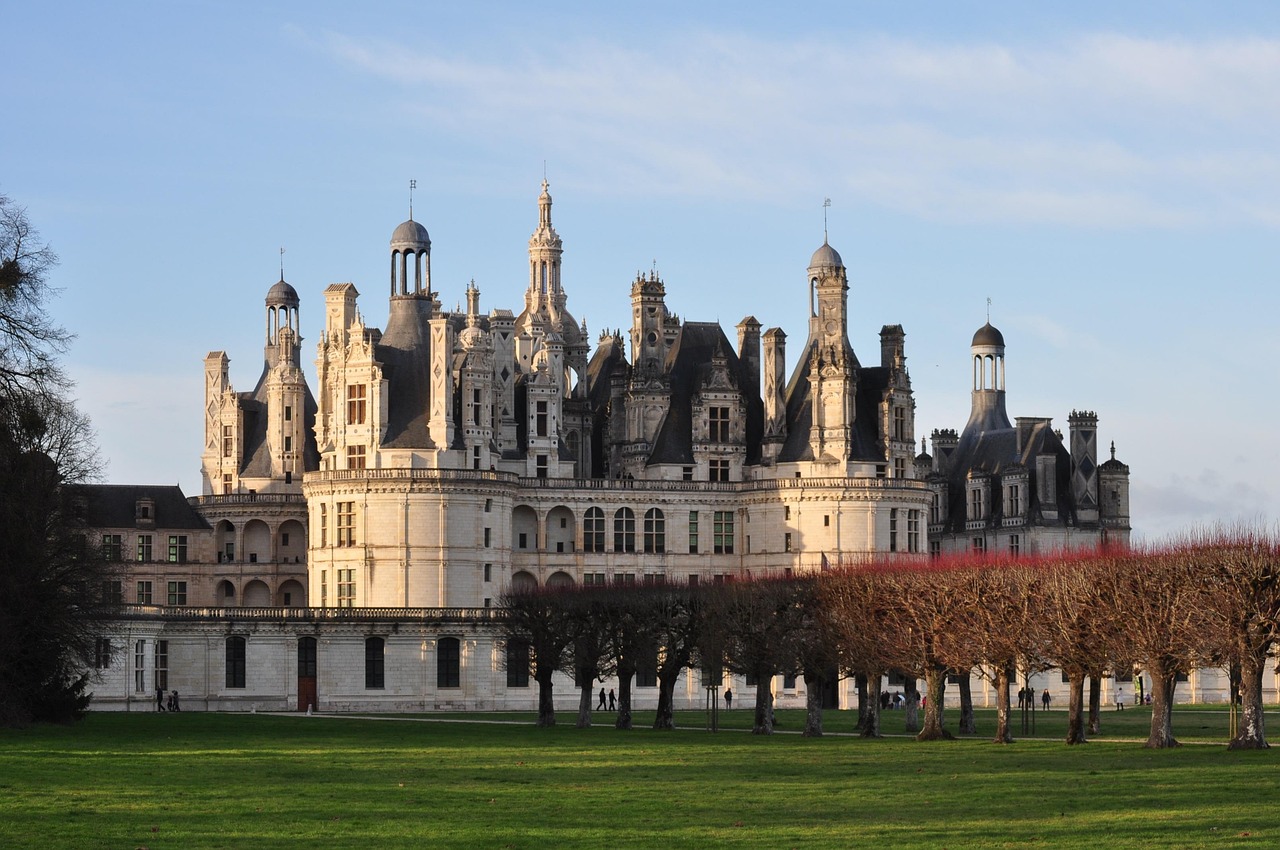
Château de Chambord is something more than a castle. It's an architectural manifesto, proof that one man can change the face of an entire landscape through sheer will and ego. Francis I, King of France, commissioned Chambord in 1519 — and although it was officially meant to be a modest pavillon de chasse, a hunting lodge, the end result is anything but modest.
The castle has 440 rooms, 282 fireplaces, and 84 staircases. Its silhouette — especially at sunset — resembles an oriental city full of minarets and domes. In reality, those "minarets" are chimneys and turrets, and the oriental magic is the effect of Renaissance architectural fantasy drawing from Gothic, Italian, and purely French motifs.
But the true star of Chambord is the double helix staircase — one of the most enigmatic architectural elements in history. Two spirals wind around the same axis but never meet. You can go up and come back down without ever crossing the path of another person using the same staircase. For centuries, speculation has swirled that this design came from the hand of Leonardo da Vinci himself, who spent his final years nearby — at the Château du Clos Lucé in Amboise. There's no hard evidence for his authorship, but it's too good a story to dismiss.
Worth knowing: Chambord was originally a seasonal castle. Francis I spent a total of just 72 nights here over his entire lifetime. The building was more of a symbol — a display of the power, taste, and ambition of a king who wanted to rival the Italian rulers. Today the castle welcomes over 800,000 tourists a year and is one of France's most popular tourist destinations.
If you visit Chambord, be sure to climb up to the terrace — the view from there across 54 chimneys and the surrounding forest park of 5,440 hectares (the largest enclosed forested area in Europe!) is truly breathtaking. And in the evening, when the son et lumière show is running, the castle transforms into a scene from another world entirely.
Château de Chenonceau – the castle of the ladies and bloody intrigues
If Chambord is the symbol of royal power, then Château de Chenonceau is the symbol of feminine elegance and clever politics. This castle has one of the most extraordinary histories in the entire Loire Valley — and one of its most beautiful settings.
Chenonceau was built at the turn of the 15th and 16th centuries on the piers of a mill, literally spanning the River Cher. This aquatic foundation gives the building an unrivaled character — as if the castle floats on water. But its true fame was brought by the women who governed it through the centuries.
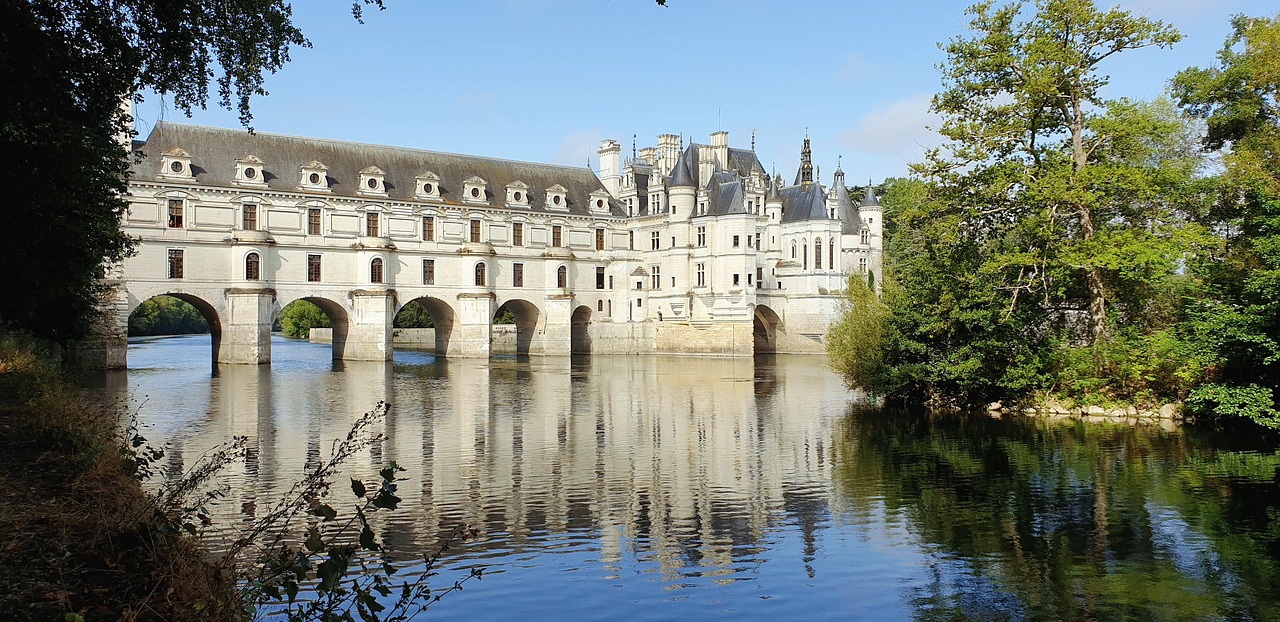
The story begins with Diane de Poitiers, mistress of Henry II. The king gave her Chenonceau, and she extended it with a bridge connecting the castle to the opposite bank of the Cher. Diane was an intelligent woman of exquisite taste — she created one of France's most beautiful gardens here and for years was the château's de facto ruler.
But when Henry II was killed in a jousting tournament in 1559, his wife — Catherine de' Medici — immediately reclaimed Chenonceau. With feminine grace (and iron determination), she ousted Diane and took over the château herself. Catherine added a magnificent gallery with 18 windows above the bridge, which to this day is the heart of the castle. She organized legendary feasts and performances here, competing with Diane even beyond the rivalry's end.
"Chenonceau is proof that the most beautiful architecture is born not from command, but from love — whether for a man or for the place itself," one art historian wrote, and it's hard to argue with that.
Over the centuries the castle passed from hand to hand — successive female owners (hence its unofficial nickname "The Castle of the Six Ladies") each left their mark on it. During the First World War, the gallery served as a military hospital. During the Second — the castle lay exactly on the border between the occupied zone and free France: the northern entrance was under German control, while the southern one was free. Apparently, Chenonceau was used to smuggle refugees and Jews escaping the Holocaust.
Today Chenonceau is one of France's most visited castles — drawing over a million visitors a year. You don't need to book tickets a year in advance, but in spring and summer the queues can be long. Make sure you stay a little longer than planned — the gardens of Diane and Catherine, each in a different style, are worth just as much as the castle itself.
Château d'Amboise – where Leonardo da Vinci died
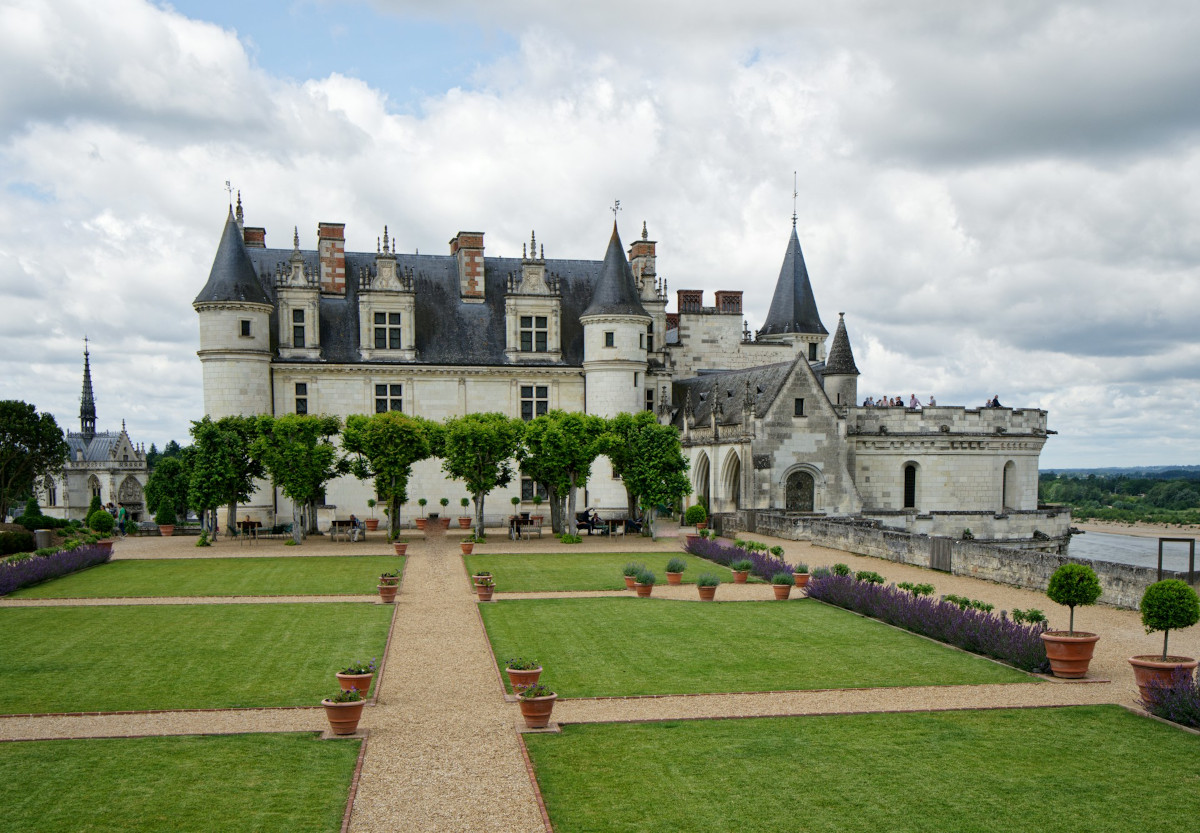
Amboise is one of those places that quite literally smells of history. The castle rises above the town of the same name, high on a cliff above the Loire, visible from afar — majestic, somewhat austere, full of dignity.
It was here that Charles VIII grew up, here that Francis I was born, and here — just a few steps from the castle, at the residence of Clos Lucé — that Leonardo da Vinci spent the last three years of his life. The artist, scientist, and visionary came to Amboise at the invitation of Francis I around 1516 and lived here until his death in 1519. According to legend, the king himself held his hand at the moment of death — though historians are divided on this.
The Château d'Amboise was once more than twice its current size — a significant portion of the structure collapsed or was demolished in the 19th century. What remains still impresses: the Tour des Minimes with its enormous spiral ramp (designed so a horse and carriage could be driven to the top!), the Chapelle Saint-Hubert with its beautiful Gothic ribbed vaults — and reportedly Leonardo da Vinci himself rests there, though the authenticity of his burial remains a subject of scholarly debate.
From the castle's terrace, a view unfolds that genuinely stops time — the Loire panorama, the town below, gardens full of apple and hawthorn trees. In spring, when everything blooms, it's a scene straight from an Impressionist painting.
Clos Lucé, where Leonardo lived, is today a museum dedicated to his genius. You can see models of machines designed by Leonardo, reconstructed from his notebooks. A helicopter, a tank, a rotating bridge — all conceived here, in a small château above the Loire, five hundred years ago.
Château de Villandry – a gardener's paradise and a labyrinth of greenery
Not every great castle seeks fame through architecture. Château de Villandry is proof that true art can grow from the ground — literally.
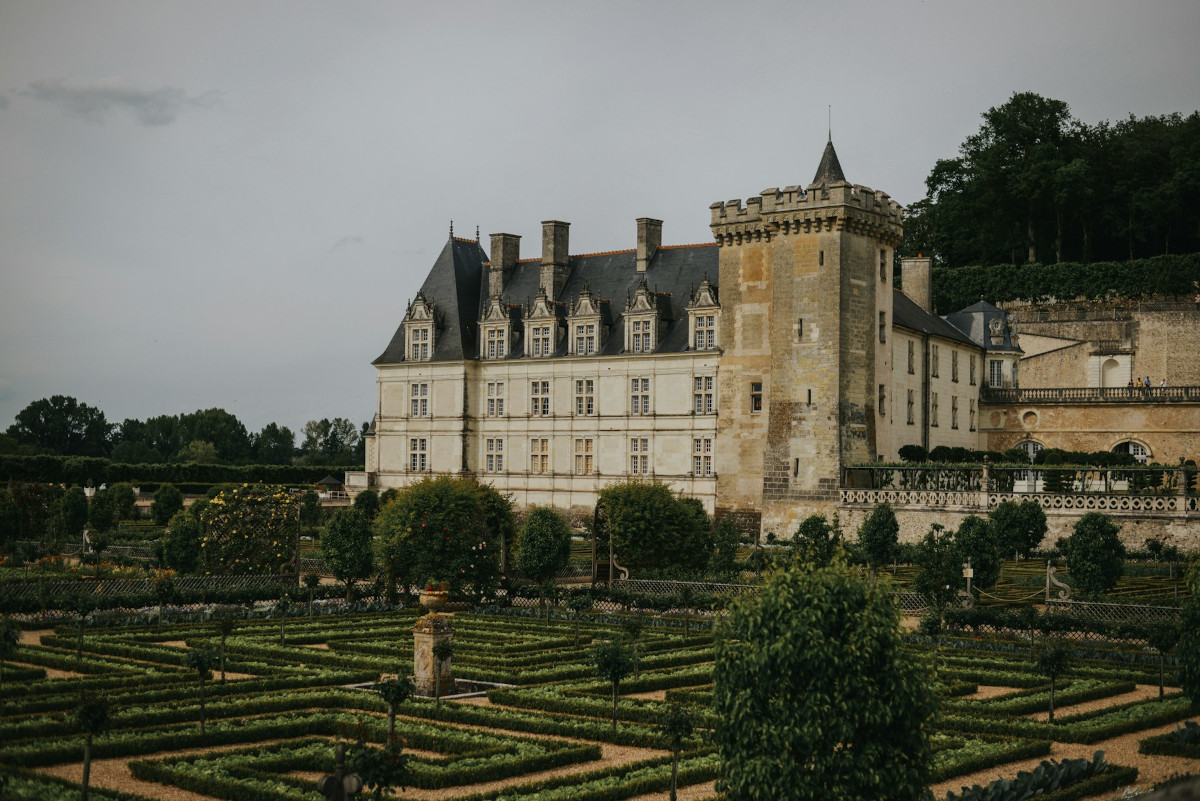
The castle itself is beautiful — built in Renaissance style in the 16th century, belonging through the centuries to various nobles, until in 1906 Joachim Carvallo, a Spanish physician, bought it and decided to restore it to its former glory. But it's the gardens of Villandry that made the castle a legend.
The gardens cover 6 hectares and are divided into several terraced levels. The Garden of Love, with geometric parterres symbolizing different varieties of feeling — passionate, treacherous, tragic, and faithful love. The Kitchen Garden — yes, you read that right — where vegetables and herbs are planted in geometric patterns that simultaneously form an edible work of art. The Cross Garden with its religious motifs, and finally the Maze Garden, where you can get delightfully lost for an entire afternoon.
Villandry looks most beautiful in spring and early summer — when everything blooms and the colors are almost painfully vivid. But even in autumn, when pumpkins and red cabbages dominate the kitchen garden parterres, the garden has its own undeniable charm.
"The gardens of Villandry are proof that order and symmetry can be just as beautiful as natural wildness — and that humans can create something as awe-inspiring as nature itself," a French writer once said, and he hit the nail on the head.
Château d'Azay-le-Rideau – a jewel of early Renaissance
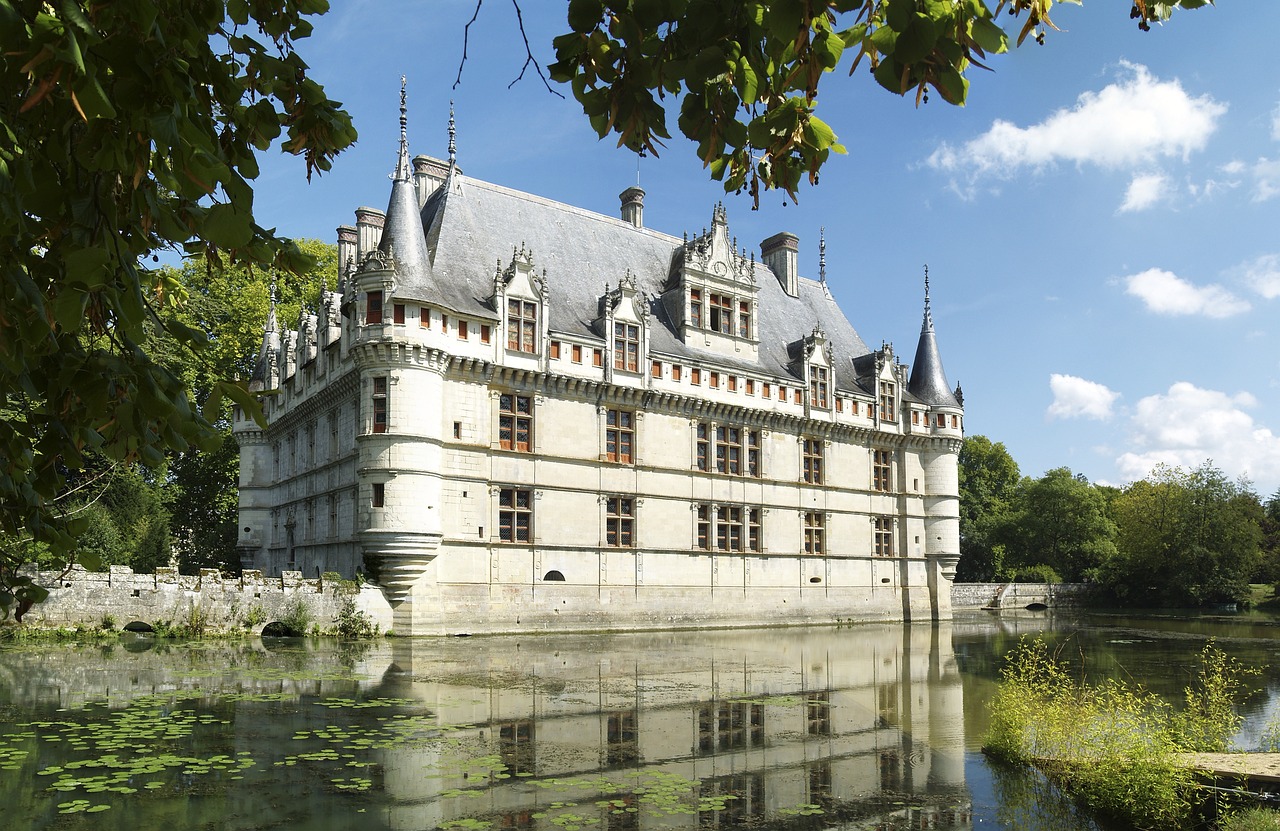
Small, but absolutely enchanting — that's how you might describe Château d'Azay-le-Rideau in a single sentence. This castle, built on an island in the middle of the River Indre (a tributary of the Loire), is often called one of the finest examples of early Renaissance architecture in France.
Construction began in 1518 by Gilles Berthelot — treasurer general of Francis I — and his wife Philippa Lesbahy, who reportedly supervised the building with a passion and precision that many architects might envy. The castle was completed in just a few years and immediately captivated everyone who saw it.
But it wasn't long before peace was disturbed. Francis I, returning from one of his campaigns, stopped here — and apparently liked it a little too much. When it emerged that Berthelot was involved in certain financial irregularities (to put it mildly), the king confiscated the castle. Like so many other jewels of the Loire Valley, Azay-le-Rideau became royal property — and remained so for several centuries.
The reflections of the castle mirrored in the waters of the Indre are one of those sights that simply... stay with you. Especially in the evening, when striking lighting is switched on and the castle seems to float between sky and water. Fun fact: the son et lumière at Azay-le-Rideau is famous for being a show you can watch while walking around the castle — each side tells a different chapter of the story.
Château de Blois – four centuries of architecture in one place
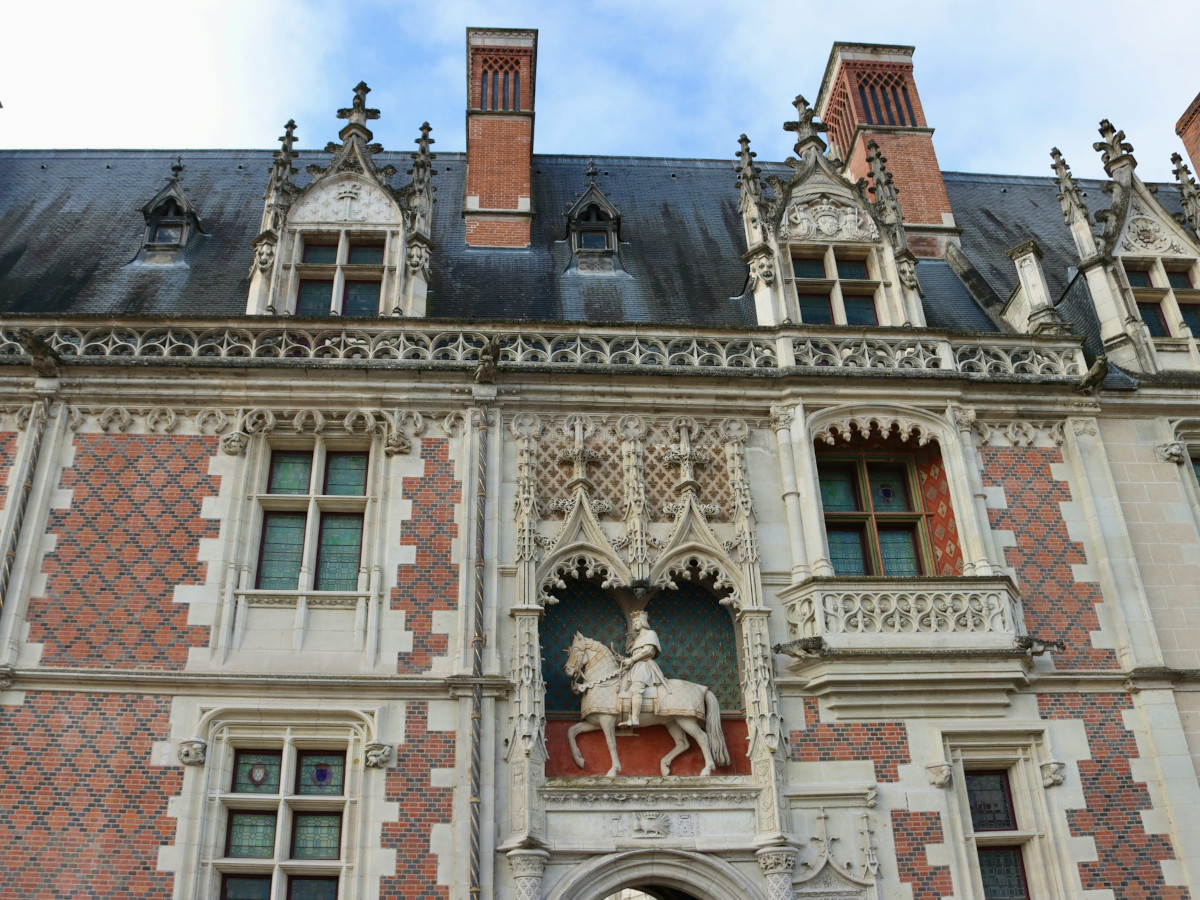
Want to see the entire history of French architecture in a single place? Go to Blois. This castle is literally a textbook of art history contained within four wings.
Each wing represents a different era and different style:
- The Louis XII Wing (turn of the 15th/16th c.) — Gothic mixed with early Renaissance influences, brick and stone, pointed arches
- The Francis I Wing (1515–1524) — full Renaissance with a characteristic external staircase in the form of a spiral loggia — this is where you absolutely must stop
- The Gaston d'Orléans Wing (17th c.) — Baroque classicism, austere and elegant in equal measure
- The Gothic Hall of the Estates-General — the oldest part, from the 13th century
Blois was for a long time a royal seat — Louis XII was born here, Francis I ruled here, Catherine de' Medici intrigued here. And it was here that one of the most dramatic scenes in French history unfolded: in 1588, Henry III ordered the assassination of the Duke of Guise — the leader of the Catholic League who had grown too powerful. The murder was carried out in the king's private chambers. Today you can visit those rooms and feel — if you're sensitive to such things — the weight of that night.
The town of Blois is itself well worth exploring — it's one of the few urban centers in the Loire Valley with its own well-developed character. The old town, the bridges over the Loire, the many restaurants serving regional Centre-Val de Loire cuisine — all of this makes it worth planning a longer stop here.
Château de Cheverny – the real Tintin castle
Do you know Tintin? That Belgian reporter with the tuft of hair and the white fox terrier? If so, Château de Cheverny will feel like a place from your dreams. Literally.
Hergé, the creator of Tintin, modeled the famous Château de Moulinsart (known in English as Marlinspike Hall) on Cheverny. The castle has an almost identical white facade, symmetrical wings, and a distinctive silhouette that immediately evokes the adventures of the lovable journalist.
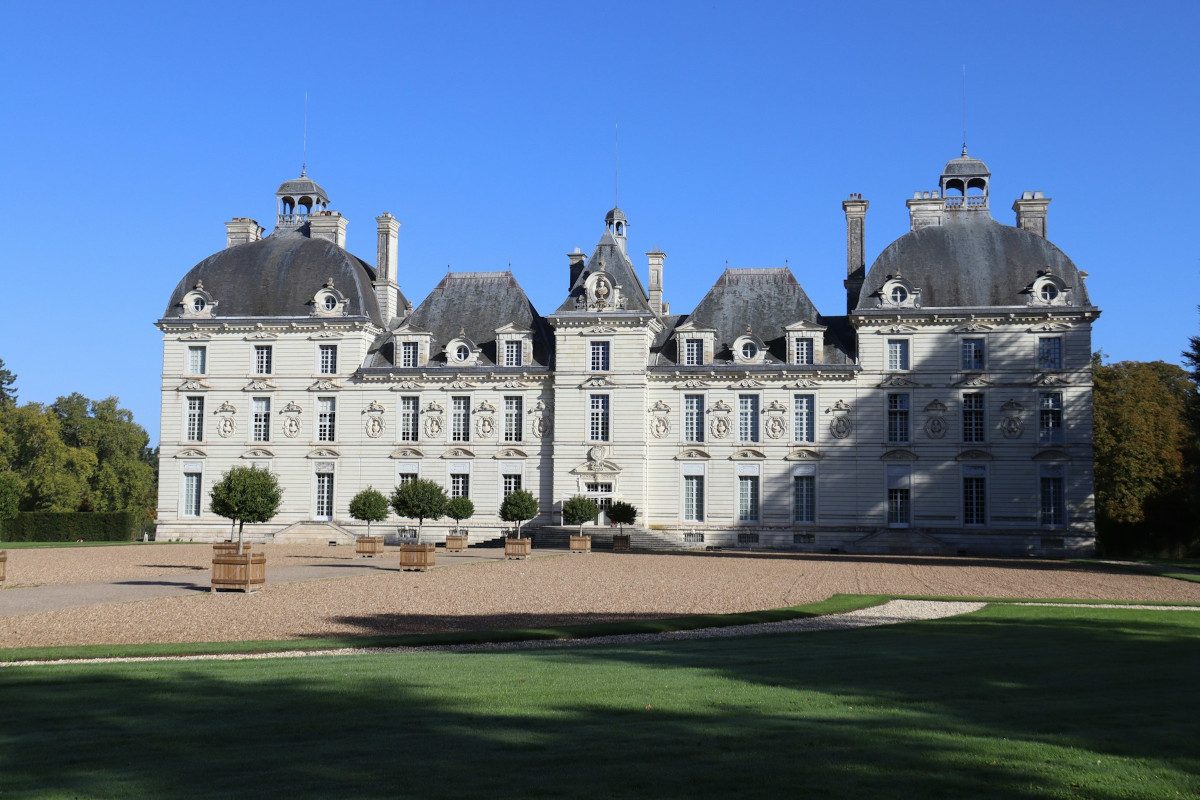
But Cheverny is more than just pop culture. It's one of the rare Loire Valley castles that has belonged to the same family — the Huraults — for centuries, and is still inhabited by them today. The interiors are authentically furnished, the paintings on the walls are original, and the storerooms smell of history. This isn't a museum — it's a home that simply allows you to come and visit.
One of Cheverny's greatest attractions is its pack of hunting dogs — the castle maintains a kennel of over 100 greyhounds and hounds, which are fed daily in a grand ritual that visitors can watch as a tourist spectacle. Sounds odd? Maybe. But when you see those lithe, elegant creatures running in one direction, you'll understand it's a sight like no other.
How to plan your visit – a practical guide
All right, the theory is one thing — but how do you actually make this work logistically? The Loire Valley stretches over 200 kilometers along the river. You can't see everything in a single day. Here are a few tips:
When to go? Definitely best in spring (April–June) or early autumn (September–October). In summer the castles are besieged by tourists, temperatures can be oppressive, and accommodation prices spike. Spring means blooming gardens and mild weather — the ideal combination.
How to get around? The bicycle is the absolute king of the Loire Valley. La Loire à Vélo — a cycling route running along the river — is one of Europe's most popular cycling trails. You can ride from château to château at a relaxed pace, stopping at roadside signs and little wine shops along the way. If cycling isn't your thing, a car is the second-best option. Public transport works, but can be unreliable between the smaller castles.
Where to stay? Several castles offer accommodation — yes, you can sleep literally inside a château. It's more expensive, but an unforgettable experience. If you're looking for a base — Blois, Tours, and Amboise are excellent options with good transport links.
How much time do you need? A minimum of 4–5 days to see the key castles without rushing. A week is a comfortable pace. Two weeks — to truly feel the region, settle into its rhythm, eat well (the regional cuisine is superb!) and discover the smaller, lesser-known châteaux.
How much does entry cost? Ticket prices range from roughly €7 to €15 per adult. There is a Passeport Châteaux that allows you to visit several castles at a reduced price — worth considering for a longer stay. Children up to ages 7–8 typically enter free or for a token fee.
The cuisine of the Loire Valley – because a journey is more than just castles
To be completely honest — the Loire Valley isn't only about stone and history. It's also one of the finest gastronomic destinations in France, which already sets a remarkably high bar.
The region is renowned above all for its wine — this is where the famous Muscadet, Vouvray, Sancerre, and Chinon are produced. Loire Valley white wines have that wonderful, mineral freshness that pairs perfectly with a summer afternoon on a castle terrace.
Alongside the wine, the regional cuisine: rillettes de Tours (a slow-cooked pork paste), tarte Tatin (an upside-down apple tart, supposedly invented by accident by the Tatin sisters from the Loire area), andouillette (a tripe sausage — a specialty for the adventurous), and of course the region's goat cheese heritage — Crottin de Chavignol and Selles-sur-Cher are cheeses that have been made here for centuries.
The best way to sample regional flavors is to visit local markets — every town has at least one a week, and it's there, between stalls of cheese, wine, and ripe plums, that you can truly feel the spirit of the Loire Valley.
Hidden gems of the Loire Valley – discover what the guidebooks miss
The famous castles are beautiful — but the Loire Valley hides dozens of lesser-known places that can charm you just as powerfully, without the crowds and with a far more authentic atmosphere.
Château de Montsoreau — a castle standing at the very confluence of the River Vienne with the Loire, one of the few castles built literally at the water's edge. Today it houses a contemporary art museum.
Château du Rivau — a fairytale little castle with gardens full of plants from Arthurian legend. Every corner of the garden references a different story — from Merlin to Sleeping Beauty.
Château de Saumur — a Gothic castle on a hilltop, visible from afar, beautifully lit at night, with sweeping views over the valley.
Troglodyte wine cellars — not castles, but one of the region's unique curiosities: entire villages, cellars, and even homes carved into the soft tufa rock. Exploring underground wineries is an experience unlike anything else.
Loire Valley castles in culture – from the Renaissance to pop culture
The Loire Valley châteaux have always attracted artists, writers, and filmmakers. Rabelais was born near Chinon. Balzac — the great 19th-century novelist — spent many years in the region and set many of his novels here. Leonardo da Vinci ended his life here. And in the 20th century — Agatha Christie visited the region, while Henry James described it in his essays as the perfect combination of history and elegance.
Today the Loire Valley is a popular location for film and television productions — its castles have appeared in historical and fantasy productions, though they've never achieved quite the same global fame as Neuschwanstein or Dubrovnik. Perhaps that's precisely why they've retained something more valuable than fame — authenticity.
"The Loire Valley is what all of France should be — beautiful, complex, full of history, and surprisingly accessible to anyone willing to discover it," wrote one British traveler in his diary from a European journey.
Why You should go right now
The Loire Valley is one of those regions that is difficult to describe in a way that truly captures its charm — because words always fall slightly short. Chambord dazzles with its scale and visionary architecture. Chenonceau enchants with its elegance and the turbulent history of the women who shaped it. Amboise evokes the spirit of Leonardo. Villandry proves that a garden can be a work of art. Blois tells the entire history of France through the lens of its four wings. And Cheverny blends living aristocratic tradition with the magic of a comic-book legend.
Together they form a unique, irreplaceable cultural landscape — inscribed on the UNESCO list, captivating millions of tourists a year, yet still vast and varied enough for everyone to find their own corner within it.
Plan your trip, hop on a bike (or into a car), roll down the windows, and let the Loire Valley do what it does best — take you on a journey you won't want to come back from.
Still not convinced? I understand — France is a big country and the Loire Valley is just one of its many regions. But I'll be honest with you: if I had to recommend one place that combines history, beauty, cuisine, wine, and atmosphere in a way unavailable anywhere else in Europe — it would be the Loire Valley.
This is a place where history isn't locked behind museum glass but lives in every stone, every garden parterre, every bottle of local Vouvray. Where you can feel as if you're at a Renaissance court — and then sit in the sunshine a moment later with a coffee and croissant, being an ordinary person in an ordinary little town.
The châteaux of the Loire Valley are not monuments. They are living places that still tell their story — and that still invite you to become part of it.