Amboise Castle
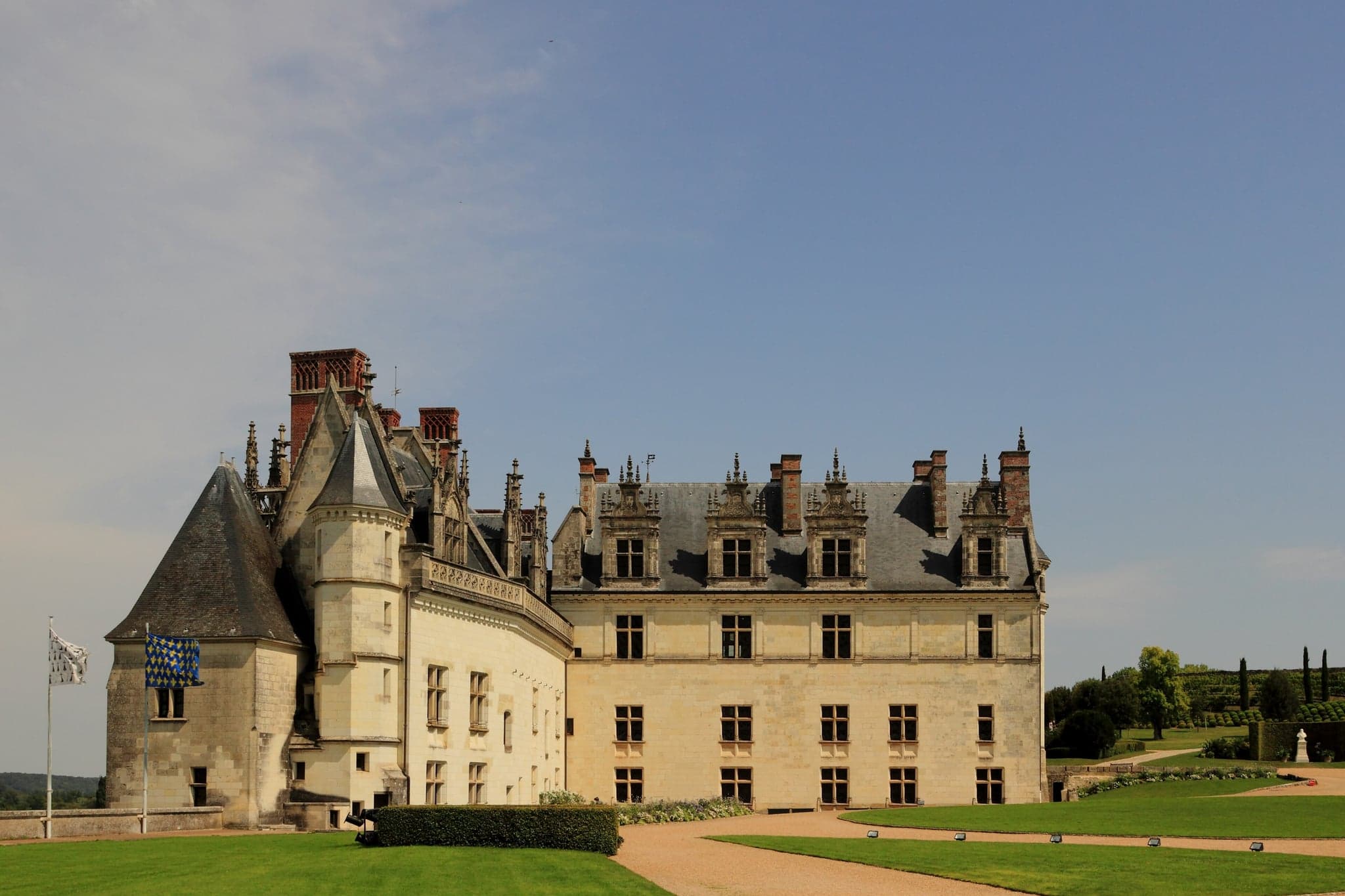
Amboise Castle, also known as the Royal Château d'Amboise, is an iconic historic fortress and royal residence located in the town of Amboise in the Centre-Val de Loire region of France. Perched on a rocky plateau overlooking the majestic Loire River, the castle is a striking example of the architectural evolution from late medieval Gothic to early Renaissance styles. It is one of the most significant and well-preserved castles in the celebrated Loire Valley, an area renowned for its concentration of royal châteaux.
The site of Amboise Castle has been occupied since ancient times, originally serving as a fortified Gallic oppidum before becoming a Roman castellum known as Ambacium. The strategic location on a riverside rock made it a key defensive and administrative center throughout history. The castle's medieval origins date back to the 11th century when it was rebuilt in stone by the influential Count of Anjou, Fulk Nerra. Over the centuries, the fortress was expanded and transformed, becoming a royal residence favored by several French monarchs from the 15th to the 16th centuries.
Historical development and royal significance
Amboise Castle was initially a medieval stronghold, controlled by the powerful House of Amboise until 1434. After a conspiracy against the crown, King Charles VII seized the castle, marking the beginning of its transformation into a royal palace. The castle reached its architectural and cultural zenith under King Charles VIII, who undertook extensive rebuilding starting in 1492. His renovations introduced the French late Gothic Flamboyant style combined with early Renaissance decorative motifs, influenced by Italian artisans such as Domenico da Cortona and Fra Giocondo.
Charles VIII also commissioned the creation of the first Italian-style Renaissance garden in France at Amboise, designed by the Italian priest Pacello da Mercogliano. This garden laid the groundwork for the later development of the French formal garden tradition. Subsequent monarchs, including Louis XII and Francis I, further expanded the château, adding galleries, apartments, and decorative elements that blended Gothic and Renaissance styles.
The castle was not only a royal residence but also a center of political intrigue and historical events. It was the birthplace of Charles VIII in 1470 and hosted important figures such as Leonardo da Vinci, who spent his final years nearby at the Clos Lucé and was buried in the castle's Saint-Hubert Chapel. The château was the site of the Amboise Conspiracy in 1560 during the French Wars of Religion, where Huguenot leaders plotted against the ruling House of Guise. The subsequent brutal suppression led to the execution and public display of hundreds of Protestants, forcing the royal court to abandon the town temporarily.
In 1563, the Edict of Amboise was signed at the château, granting limited religious freedoms to Protestants and marking a significant moment in the religious conflicts of France. However, after the 16th century, the castle's importance declined. It served as a military garrison, a prison for notable figures such as Nicolas Fouquet and Abd el-Kader, and suffered partial demolition during the French Revolution and Napoleonic era.
Architectural features and layout
Fortifications and towers
The castle occupies a roughly triangular plateau of about 24,000 square meters, with steep cliffs overlooking the Loire River. Its defensive structures include four large round towers at the corners of the plateau, notable for their massive walls up to four meters thick and numerous arrow slits. The Minimes Tower and Heurtault Tower are remarkable for their wide spiral ramps, designed to allow horses and carts to ascend to the upper terraces—a rare architectural feature in French castles inspired by Italian design.
The Garçonnet Tower, built between 1466 and 1468, features a wide spiral staircase with 90 steps, originally rising through multiple floors and crowned by battlements. The Tour Pleine on the western side is partially demolished but was once part of the castle's formidable defensive perimeter. The main entrance, the Lion Gate, is accessed via a stone arch bridge spanning a wide dry moat and flanked by a 13th-century tower with machicolations for defense.
Residential wings and royal apartments
The castle's principal surviving residential structure is the Logis Royal, a two-winged building combining Gothic and Renaissance architectural elements. One wing, constructed by Charles VIII, showcases the Flamboyant Gothic style with its brick and Tuffeau stone construction, steep slate roofs, triangular gables, and fleur-de-lis motifs. The adjoining wing, traditionally attributed to Louis XII but likely begun by Charles VIII, exhibits early French Renaissance features such as pilasters, sculpted window surrounds, and heraldic decorations.
Inside, the Logis Royal contains several notable rooms, including the Salle des Gardes Nobles with its elegant Gothic fan vault supported by a single central column, the Salle des Tambourineurs, and the expansive Great Hall (Salle des États or Salle du Conseil), which measures 176 square meters and is divided by slender columns adorned with royal emblems. The Louis XII wing houses Renaissance-style apartments like the Chambre Henri II, furnished with period tapestries and a large Renaissance bed, and the Salle de l’Échanson, known for its rich wood carvings and Aubusson tapestries.
Chapels and gardens
The Saint-Hubert Chapel, built between 1491 and 1496 by Flemish artists under Charles VIII's patronage, is a late Gothic oratory constructed from white Tuffeau stone. Its cruciform plan and richly sculpted portals make it a masterpiece of Gothic art. The chapel houses the tomb of Leonardo da Vinci, adding to the castle's cultural significance.
The castle originally featured a formal Italian Renaissance garden, the first of its kind in France, designed by Pacello da Mercogliano. This garden included parterres, galleries, and fruit trees, embodying the Renaissance ideals of order and harmony with nature. Although the original garden has been lost, it has been replaced by landscaped gardens featuring Mediterranean plants and a modern Oriental garden commemorating Abd el-Kader and his companions.
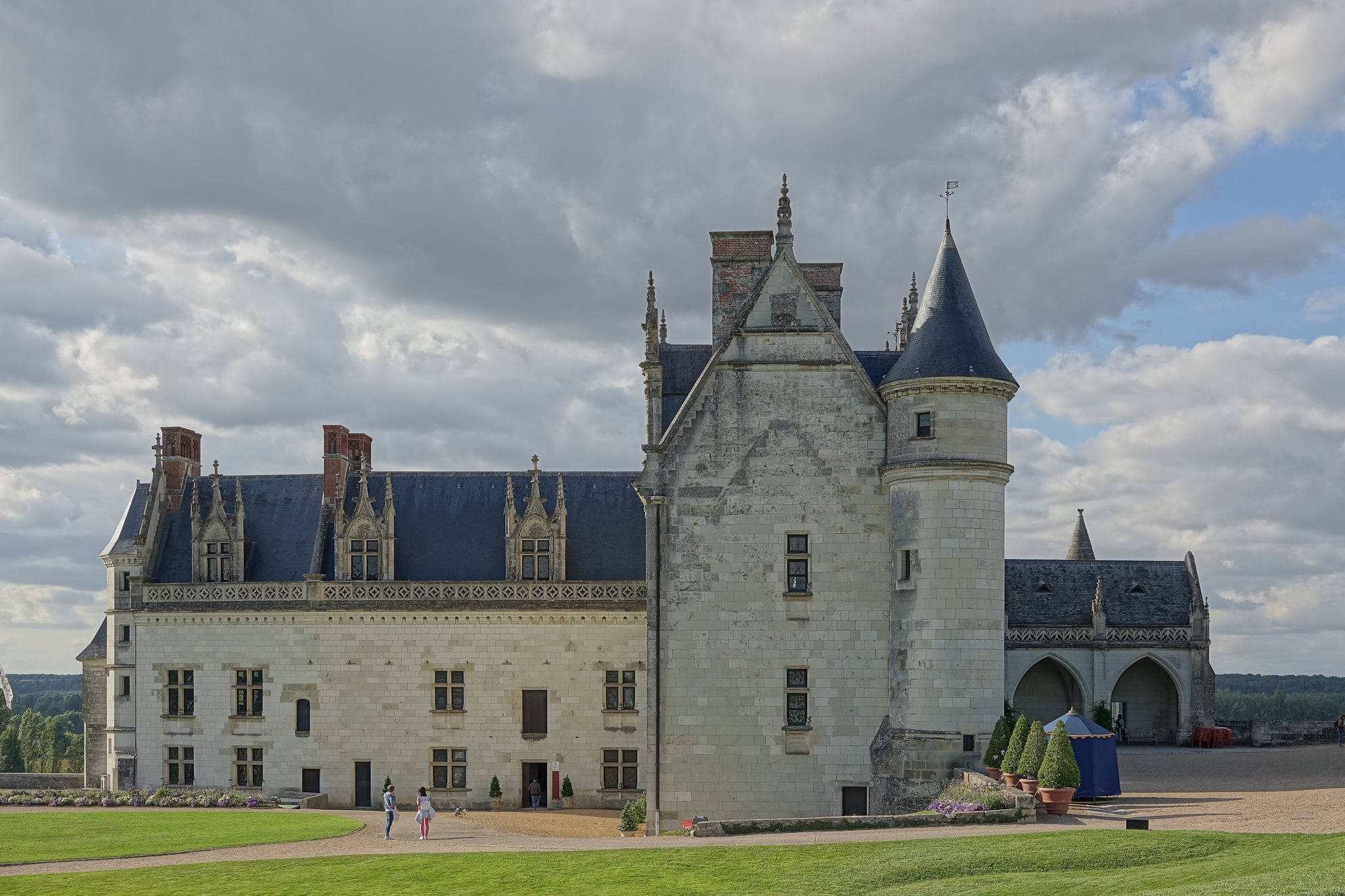
Photo by Gzen92 • CC BY-SA 4.0
Later history and preservation
After falling out of royal favor in the 17th century, Amboise Castle was repurposed as a prison and military garrison. It housed notable prisoners such as Nicolas Fouquet, the disgraced finance minister under Louis XIV, and Emir Abd el-Kader during the 19th century. The castle suffered significant damage during the French Revolution and the Napoleonic era, with large sections demolished due to structural concerns.
Restoration efforts began in the 19th century under architects like Pierre-François-Léonard Fontaine and Victor Ruprich-Robert. King Louis-Philippe initiated repairs, but political upheavals interrupted progress. The château was listed as a Monument historique in 1840, recognizing its cultural and historical importance. Further restoration continued throughout the 20th century, including repairs after damage sustained during World War II.
Today, Amboise Castle is managed by the Fondation Saint-Louis and remains open to the public year-round. Visitors can explore its extensive grounds, richly decorated interiors, and panoramic views of the Loire Valley. The castle stands as a testament to the evolution of French royal architecture and the cultural exchanges between France and Italy during the Renaissance.
Frequently asked questions (FAQ)
- What is the historical significance of Amboise Castle?
- Amboise Castle is a significant landmark in French history, known for being a residence for several French kings, including Charles VIII and Francis I. It played a crucial role during the Renaissance and is associated with notable figures such as Leonardo da Vinci, who spent his last years nearby.
- When was Amboise Castle built?
- The origins of Amboise Castle date back to the 9th century, although it underwent significant renovations during the 15th and 16th centuries. The castle's architecture reflects the transition from medieval to Renaissance styles, showcasing its long and storied history.
- Can I visit Amboise Castle year-round?
- Yes, Amboise Castle is open to visitors throughout the year, but opening hours may vary by season. It is advisable to check the official website for the most current visiting times and any seasonal events that may enhance your experience.
- Is it possible to access Amboise Castle with limited mobility?
- Amboise Castle strives to be accessible to all visitors, with facilities in place for those with limited mobility. However, some areas may have steep paths and stairs, so it is recommended to inquire in advance about specific accessibility options.
- What are the ticket prices for Amboise Castle?
- Ticket prices for Amboise Castle vary depending on age and group type, with discounts available for children, students, and seniors. It is best to purchase tickets online in advance to secure the best rates and avoid long lines at the entrance.
- What is the best time to visit Amboise Castle?
- The best time to visit Amboise Castle is during the spring and early autumn when the weather is mild, and the gardens are in full bloom. During peak tourist season in July and August, the castle can be crowded, so visiting early in the day or later in the afternoon may enhance your experience.
- What nearby attractions can I explore after visiting Amboise Castle?
- After visiting Amboise Castle, you can explore other nearby attractions such as the Château d'Chenonceau, known for its stunning architecture and gardens, or the charming town of Amboise itself, which offers restaurants and shops. Additionally, the nearby Loire Valley is famous for its vineyards and picturesque landscapes.
Photo gallery


Information
Website
Visit websiteFeatured in
Articles on the Castlopedia blog that feature Amboise Castle.
Sources & official resources
Verify the information above using these authoritative references.
Loading map...
Visitor reviews
No reviews yet. Been here? Write the first review and help other travelers!
Write the first reviewVisited this castle? Share your experience
Your review helps other travelers and adds first-hand knowledge to our encyclopedia.