
Slovenia
Castle heritage in slovenia: an introduction
Slovenia, with its rolling hills and strategic location at the crossroads of Central Europe and the Mediterranean, boasts a rich and diverse castle heritage. The country’s landscape is dotted with hundreds of castles and fortifications, many of which date back to the medieval period. These structures not only served as military strongholds but also as centers of administration and culture.
The legacy of Slovenian castles reflects the region’s complex history, influenced by the Roman Empire, the Holy Roman Empire, the Habsburg Monarchy, and neighboring Slavic and Italian cultures. Today, these castles stand as prominent symbols of national heritage, offering insight into the architectural styles and defensive strategies that evolved over centuries.
Continue reading below — scroll for the full article.
Castles in Slovenia
Discover 13 magnificent castles across the country







Historical background and medieval period
The medieval period marked the beginning of extensive castle construction in the territory of modern-day Slovenia. From the 11th century onwards, feudal lords and bishops began erecting fortifications to secure their lands and assert control over trade routes. The region’s position along important alpine passes made it a hotspot for military and political activity.
Many castles were initially built as wooden fortifications before being replaced by stone structures, designed to withstand sieges and attacks. The turbulent medieval era, marked by frequent conflicts such as Ottoman incursions and internal noble disputes, stimulated the development of increasingly sophisticated defensive designs.
Types of fortifications in slovenia
Castles and manor houses
Castles in Slovenia typically served as fortified residences for nobility and clergy. These ranged from simple hilltop keeps to sprawling complexes with multiple defensive layers. Manor houses, often attached to or near castles, combined residential comfort with moderate defense.
For example, the well-preserved Predjama Castle is a remarkable example of a castle integrated into natural rock formations, combining residential and defensive functions uniquely.
Fortresses and defensive walls
Besides castles, Slovenia features several fortresses and city walls constructed to protect key towns and trade centers. Ljubljana Castle, perched above the capital, evolved from a medieval fortress into a symbol of the city’s resilience and authority. Defensive walls around Ljubljana and other towns, though mostly dismantled, played vital roles in urban defense during the late medieval and early modern periods.
Watchtowers and hill forts
Smaller fortifications such as watchtowers and hill forts served as early warning systems and territorial markers. These structures were often strategically positioned to monitor approaches and communicate signals across valleys and ridges, complementing the larger fortresses and castles.
Architectural styles and influences
The architecture of Slovenian castles reflects a blend of regional and international styles shaped by centuries of cultural exchange. Early medieval castles often featured Romanesque elements, characterized by thick walls and narrow windows designed for defense.
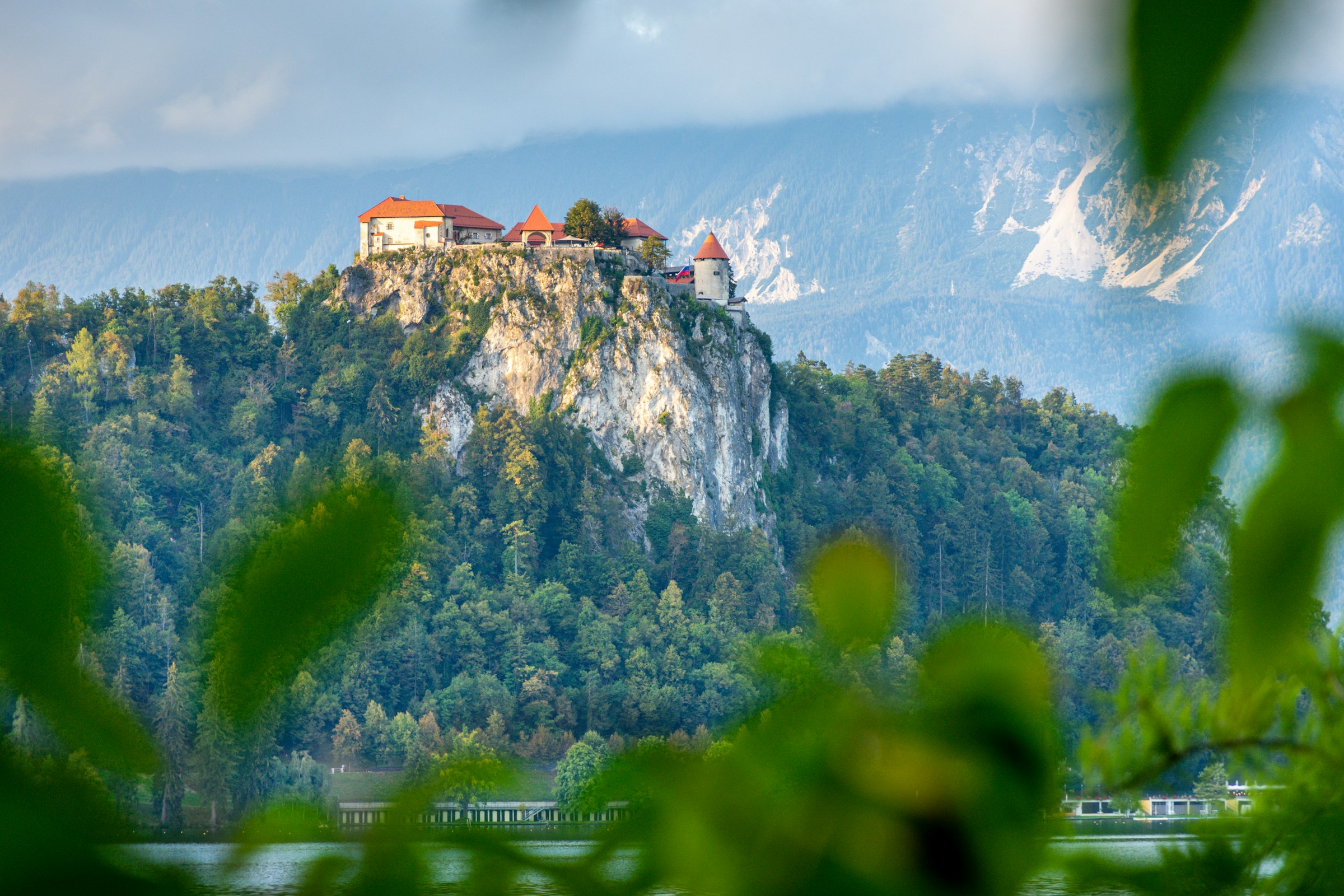
Gothic architecture became prominent in the 13th to 15th centuries, introducing pointed arches, ribbed vaults, and more elaborate stonework. The imposing towers of Bled Castle illustrate Gothic defensive design combined with residential comfort.
During the Renaissance, many castles underwent significant renovations, incorporating more ornate facades, larger windows, and improved living quarters. Italian Renaissance influences are evident in the elegant arcades and decorative details of castles such as Celje Castle.
Baroque modifications in the 17th and 18th centuries brought further changes, emphasizing aesthetics and comfort over purely military considerations, as seen in some castle chapels and interior redesigns.
Regional variations in castle architecture
Slovenia’s diverse geography and historical provinces have led to regional differences in castle design and construction. In the Alpine north, castles often feature robust stone construction with steep roofs adapted to heavy snowfall, while in the Pannonian east, fortifications tend to be more expansive with extensive courtyards.
The Karst region near the Italian border exhibits castles that blend Mediterranean influences, with lighter stonework and open terraces. Coastal fortifications in the Slovenian Littoral reflect Venetian architectural traits and were often part of integrated coastal defense systems.
For instance, Predjama Castle in the Karst region uniquely exploits natural cave formations, whereas Ljubljana Castle in the central region exemplifies a more traditional hilltop fortress adapted over centuries to local conditions.
Notable periods of castle construction
The initial wave of castle building in Slovenia occurred during the High Middle Ages, roughly between the 11th and 13th centuries, coinciding with the consolidation of feudal territories. Many early stone castles were constructed during this time to replace earlier wooden fortifications.
The 14th and 15th centuries saw significant expansion and reinforcement of castles in response to external threats such as Ottoman raids. This era led to the development of concentric defenses, thicker walls, and the addition of artillery bastions in some cases.
The Renaissance period, from the 16th to early 17th centuries, introduced a shift from purely military structures to more comfortable noble residences. Many castles were modernized with decorative elements and enhanced living spaces, reflecting changing social and political dynamics.
Preservation and current state of slovenian castles
Today, many Slovenian castles remain well-preserved or have been restored, serving as important cultural landmarks. Some, like Bled Castle and Ljubljana Castle, have been adapted for tourism, hosting museums, exhibitions, and events. These sites receive ongoing conservation efforts to maintain their historical integrity.
However, numerous castles are in various states of ruin due to centuries of neglect, war damage, and natural decay. Organizations and local communities actively promote preservation initiatives to protect these heritage sites. The balance between restoration and preserving original features remains a key challenge.
Castle tourism and accessibility
Slovenia’s castles attract visitors interested in history, architecture, and scenic beauty. Many sites are accessible to the public, offering guided tours, cultural programs, and educational activities. Bled Castle, with its panoramic views over Lake Bled, is among the most popular destinations.
Efforts to improve accessibility include infrastructure development, multilingual information, and integration with hiking and cycling routes. Castle tourism contributes to local economies while raising awareness of Slovenia’s rich heritage.
Cultural significance and heritage
Slovenian castles are more than architectural relics; they embody the nation’s historical identity and cultural memory. These fortifications tell stories of medieval power struggles, artistic achievements, and social evolution. They also serve as venues for traditional festivals, concerts, and historical reenactments, connecting past and present.
Preserving these castles sustains a tangible link to Slovenia’s multifaceted history, fostering pride and continuity. Their enduring presence in the landscape highlights the importance of heritage in shaping national and regional identities.
Castle Locations in Slovenia
Explore all castle locations on an interactive map
Loading castle locations...