Ptuj
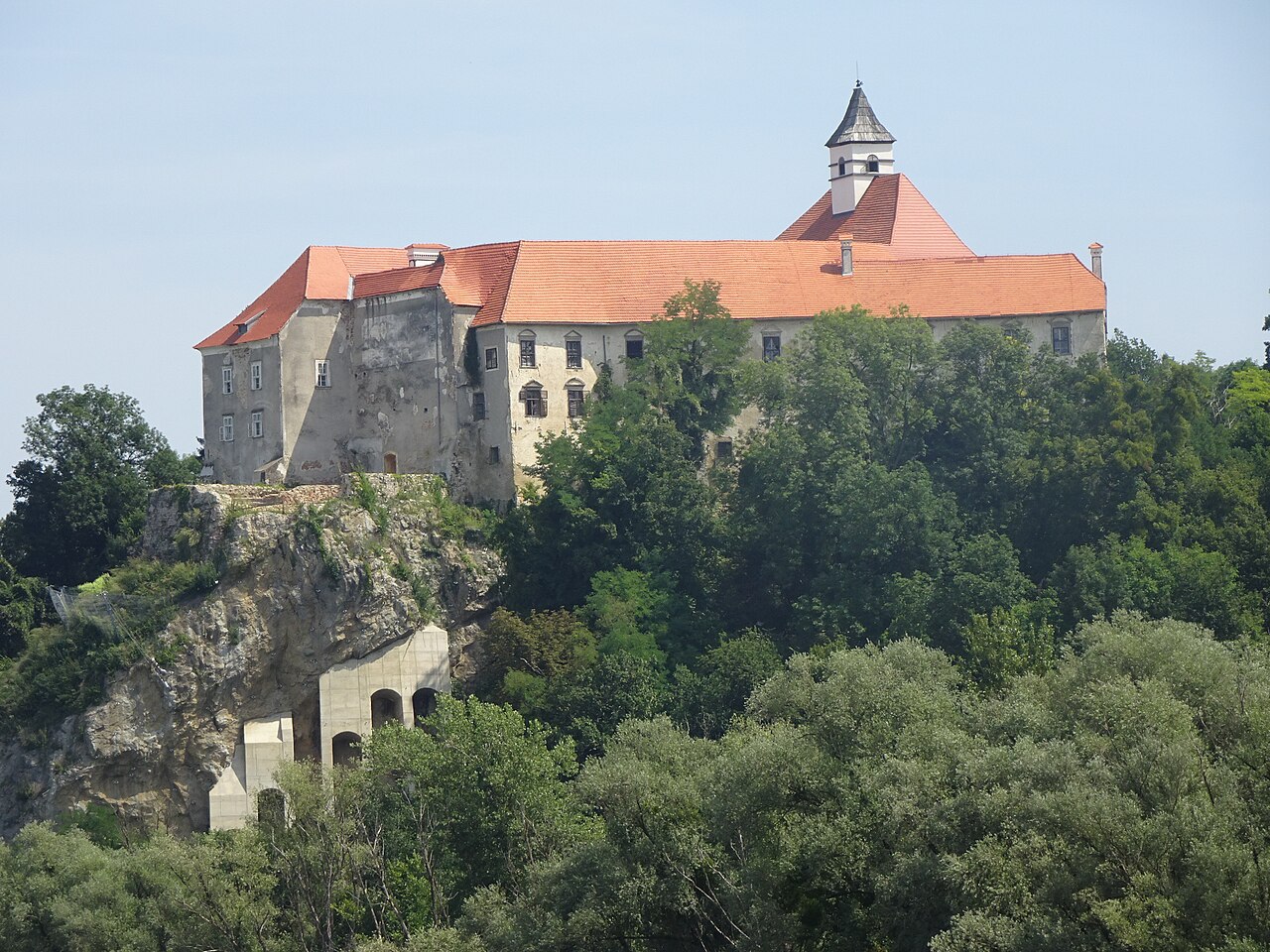
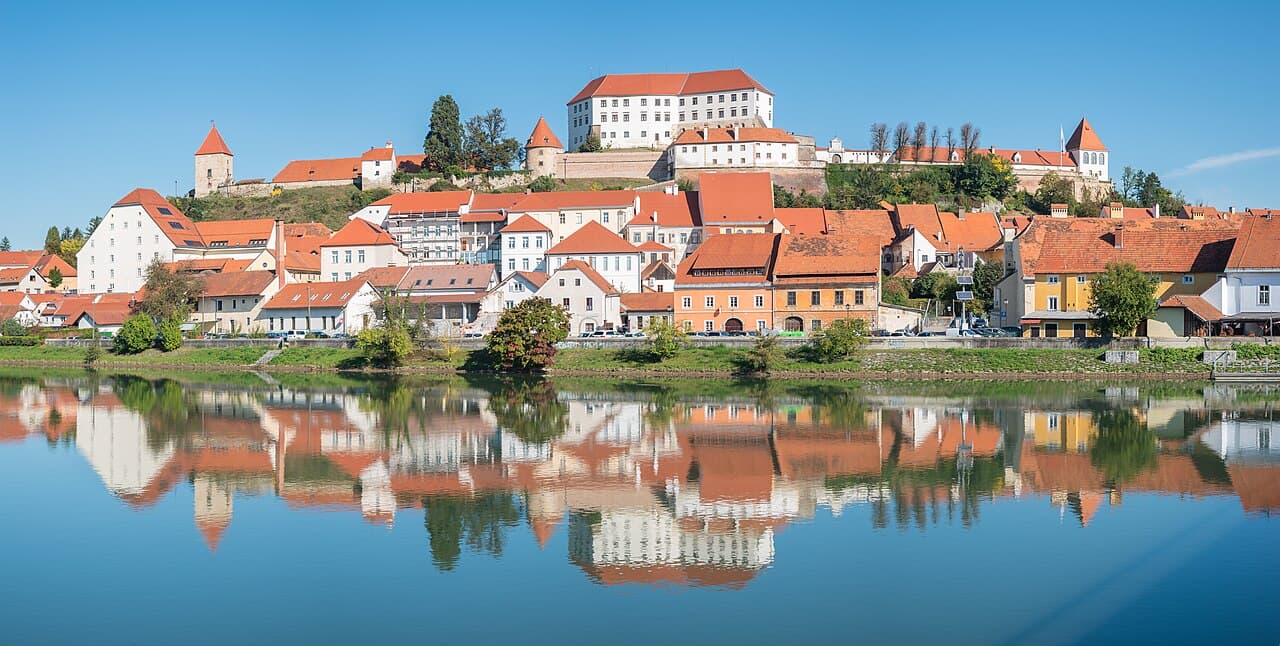
Ptuj Castle stands as a prominent hill castle in the town of Ptuj, Slovenia, with a rich history dating back to the High Medieval period. Archaeological excavations have revealed that the castle hill was inhabited since the Stone Age, with fortified settlements existing around 1000 BCE. During the Roman era, defensive fortifications occupied the site, highlighting the strategic importance of this elevated position overlooking the Drava River. The natural defensive advantages of the hill were also recognized by the Slavs upon their arrival in the region.
The first written record of Ptuj Castle appears in documents from the early 12th century, specifically from the tenure of Archbishop Konrad I of Salzburg (1106–1147). The chronicler noted that the archbishop ordered a new castle to be built on the site of an older fortification. Architectural analysis suggests that a stone tower dating from the 9th or 10th century survived as part of the original structure, likely serving as a border defense against Hungarian incursions. This tower remains one of the oldest surviving elements of the castle complex.
Medieval origins and architectural development
In the 12th century, the central part of the hill featured a complex including a Romanesque residential house and a fortified tower. Over subsequent centuries, the castle underwent significant expansions, evolving into a three-part complex with agricultural buildings and a western bailey. By the 14th century, the castle walls were integrated with the town's fortifications, creating a unified defensive system. The main castle layout took the form of a horseshoe plan with two-story buildings enclosing the courtyard.
Defensive features and fortifications
Ptuj Castle was a key border fortress, guarding the southern Styrian frontier against Turkish invasions during the late medieval and early modern periods. The castle's defensive system included ramparts, curtain walls, towers, and gatehouses. Notably, the west tower and several southern and northern towers date from before the 16th century. In response to the growing threat of Ottoman forces, the castle underwent extensive fortification upgrades in the 16th century, incorporating bastions and artillery defenses designed by Italian military engineers skilled in adapting medieval fortresses for gunpowder warfare.
Ownership and renovations through the centuries
The castle was originally owned by the archbishops of Salzburg, who granted it to a noble family that took the name Ptuj. The Ptuj family held the castle until 1438, when the last male heir, Friedrich IX, died. His red marble tombstone, brought from a ruined Dominican church, is preserved on the castle's ground floor.
From 1480 to 1490, the castle was controlled by the Kingdom of Hungary under King Matthias Corvinus. In 1490, the castle passed to Emperor Maximilian I of Habsburg, who retained it until 1511 before pledging it back to the Salzburg archbishops. The property changed hands several times in the 16th and 17th centuries, including ownership by the Eggenberg and Thaunhausen families, the Jesuits of Zagreb, and finally the Scottish general Walter Leslie in 1656.
Following the decline of the Turkish threat, Leslie transformed Ptuj Castle from a fortress into a Baroque residence, removing many defensive features and adding a new eastern wing with a tower housing stables. The oldest stone tower was dismantled during this period. The 18th century saw further additions, including an administrative building along the southern wall and a granary on the western bailey.
The castle remained with the Leslie family until 1802, then passed to the Dietrichstein family until 1864. After complex inheritance issues, Countess Terezia Herberstein purchased the castle in 1873 and undertook extensive renovations that preserved the structure and restored its interiors. The Herberstein family owned Ptuj Castle until it was nationalized in 1945.
Architectural highlights and current use
Due to numerous reconstructions, few Gothic elements remain visible today. However, visitors can admire the knights' hall and a remarkable two-story castle chapel, both located in the northern wing. The chapel's vertical grandeur and the hall's historic significance stand out as key features of the castle's interior.
Today, Ptuj Castle houses the Regional Museum of Ptuj, showcasing a rich collection of cultural and historical artifacts that narrate the castle's extensive past. The castle was declared a national cultural monument in 1999, highlighting its importance in Slovenian heritage.
Archaeological significance
The castle hill's continuous occupation from prehistoric times through Roman and medieval periods makes it a site of great archaeological interest. Excavations have uncovered remnants of early fortifications and settlements, providing valuable insights into the region's long-term strategic role.
Visitor experience
Visitors to Ptuj Castle can explore the well-preserved sections of the fortress, including the historical halls and chapel, as well as the museum's exhibits. The castle's elevated position offers panoramic views of Ptuj and the surrounding Drava valley, enhancing its appeal as a cultural and tourist destination.
Frequently asked questions (FAQ)
- What is the historical significance of Ptuj Castle?
- Ptuj Castle is one of the oldest and most significant castles in Slovenia, dating back to the 9th century. It has played a vital role in the region's history, serving as a fortress, residence, and now a cultural landmark showcasing the rich heritage of Ptuj.
- When was Ptuj Castle built?
- The construction of Ptuj Castle began in the late 12th century, with significant modifications and expansions occurring over the centuries. Its architecture reflects various styles, showcasing the evolution of building techniques and artistic influences from different historical periods.
- Is it possible to visit Ptuj Castle?
- Yes, Ptuj Castle is open to visitors year-round, offering guided tours that provide insights into its history and architecture. Guests can explore the castle's museum, which features exhibitions on local history, art, and culture.
- What are the opening hours of Ptuj Castle?
- Ptuj Castle typically opens daily from 10 AM to 6 PM, but hours may vary during the off-season or holidays. It is advisable to check the official website for the most current information before planning your visit.
- Can I purchase tickets online for Ptuj Castle?
- Yes, tickets for Ptuj Castle can be purchased online, which is recommended to avoid long queues during peak tourist seasons. There are also options for group discounts and family tickets available for those traveling with children.
- What is the best time to visit Ptuj Castle?
- The best time to visit Ptuj Castle is during the spring and early autumn when the weather is pleasant and the surrounding landscapes are particularly beautiful. Additionally, this timing allows visitors to enjoy local festivals and events that often take place in the area.
- How accessible is Ptuj Castle for visitors with mobility issues?
- Ptuj Castle is located on a hill, which can make access challenging for visitors with mobility issues. However, there are designated paths and ramps that assist in reaching the main areas of the castle, and staff are available to provide assistance when needed.
- Are there any nearby attractions to visit after exploring Ptuj Castle?
- Yes, after visiting Ptuj Castle, you can explore the charming old town of Ptuj, known for its medieval architecture and vibrant atmosphere. Other nearby attractions include the Ptuj Wine Cellar, the oldest wine cellar in Slovenia, and the scenic Drava River, perfect for a relaxing stroll.
- What are the ticket prices for visiting Ptuj Castle?
- Ticket prices for Ptuj Castle are generally affordable, with discounts available for students, seniors, and children. It's best to check the official website for the latest pricing details and any special promotions that may apply during your visit.
Photo gallery

Information
Loading map...
Visitor reviews
No reviews yet. Been here? Write the first review and help other travelers!
Write the first reviewVisited this castle? Share your experience
Your review helps other travelers and adds first-hand knowledge to our encyclopedia.