Lendava
Lendava castle, located in the town of Lendava, Slovenia, is a remarkable example of a bastioned fortress with a history stretching back to the 12th century. The castle's strategic position atop a steep hill 266 meters above sea level provided natural defensive advantages that were enhanced over centuries of construction and fortification. First documented in 1192, the castle was originally owned by the noble Hahót-Buzád family, whose origins trace back to German Thuringia or Graz in Austria. This family held numerous castles, and Lendava became the seat of one of their branches.
Medieval origins and early fortifications
The core of the medieval stone castle was constructed in the late 13th century, featuring a residential tower, a chapel, and an encompassing curtain wall. These elements formed the defensive heart of the fortress, designed to withstand threats such as Tatar invasions and attacks from King Ottokar II of Bohemia. Continuous expansions and reinforcements were undertaken to adapt the castle to evolving military challenges. Notably, under the initiative of István Alsólendvai I (István Hahót I), significant enhancements were made to strengthen the fortress.
The banffy family era
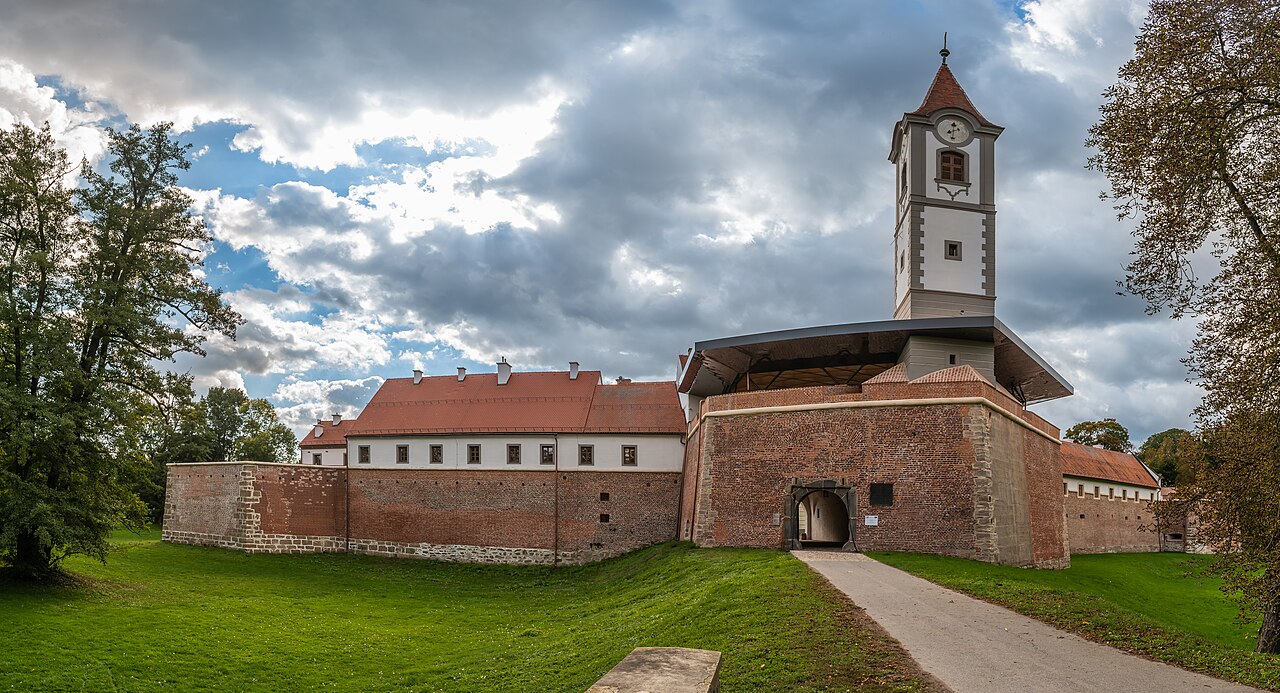
The Bánffy family, descendants of the Hahót line who adopted the Bánffy name, governed Lendava for three centuries and were among the most prestigious Hungarian noble families. One of the most distinguished members, János Bánffy VI, was appointed palatine by King John Zápolya. During this period, the castle's defenses were modernized to include gunpowder artillery bastions, reflecting the growing threat from the Ottoman Empire. By the 16th century, the fortress expanded to cover the entire hill, with an inner courtyard surrounded by buildings and a multi-storey tower facing the town, which still stands today.
Sieges and military significance
Lendava castle played a crucial role as a strategic stronghold during the turbulent times of Ottoman expansion into Central Europe. Despite several attempts, the Turks never succeeded in capturing the fortress. A particularly dramatic defense occurred in 1603, when a garrison of 800 soldiers, supported by 300 townspeople, successfully repelled a siege. The castle's robust fortifications and strategic location made it a formidable obstacle to invaders.
Baroque transformation and later ownership
Following the death of the last male Bánffy in 1645, ownership of Lendava passed briefly to the Nádasdy family. However, due to Ferenc Nádasdy's involvement in a conspiracy, the castle was confiscated by the state in 1671. Shortly thereafter, it was acquired by Palatine Pál Esterházy, who undertook extensive renovations to transform the fortress into a Baroque residence. Between 1690 and 1707, the castle was rebuilt with mansard roofs, arcaded corridors, and spiral Baroque staircases, adopting an L-shaped layout symbolizing loyalty to Emperor Leopold I. The castle became a showcase of Baroque architecture, with restored wings and a central tower enhanced with mansard roofing.
20th-century uses and preservation
In the late 19th century, before a school was built in Lendava, the castle's rooms served as classrooms. After World War I, it was used as barracks by the Yugoslav army and later reverted to educational use following World War II. Unfortunately, in 1947, large portions of the castle's damaged walls were dismantled to provide building materials. Since 1972, the castle has housed a museum dedicated to the cultural heritage of the Lendava region and the Hungarian minority in Slovenia, as well as an art gallery. The museum features permanent archaeological, historical, and ethnological exhibitions, along with a memorial room honoring the renowned sculptor György Zala. The gallery preserves the artistic legacy of Lendava's international artistic community.
Architectural features and significance
Lendava castle is characterized by its massive two-storey structure with a prominent mansard roof and robust walls supported by large buttresses. The south-west façade is accentuated by a central tower, a surviving element from the medieval fortress. The castle's evolution from a medieval stronghold to a Baroque residence reflects the changing military, political, and cultural landscape of the region over several centuries. It stands today as a well-preserved monument embodying the rich history and architectural heritage of the Prekmurje region.
Frequently asked questions (FAQ)
- How do I get to Lendava Castle?
- Lendava Castle is easily accessible by car and public transport. If you're traveling by car, there is parking available nearby. For those using public transport, check local bus schedules for routes to Lendava.
- What is the historical significance of Lendava Castle?
- Lendava Castle, built in the 12th century, has a rich history that reflects the region's diverse cultural influences. It served as a defense structure and a residence for various noble families over the centuries. Today, it stands as a symbol of Lendava's heritage and history.
- When was Lendava Castle last renovated?
- The most significant renovations of Lendava Castle occurred in the 20th century, particularly in the 1990s. These restoration efforts aimed to preserve the castle's architectural integrity and enhance its attractiveness for visitors. The castle remains a well-maintained site that showcases its historical charm.
- Can I take guided tours at Lendava Castle?
- Yes, guided tours are available at Lendava Castle, providing visitors with in-depth knowledge about its history and architecture. These tours are offered in multiple languages, making it easier for international visitors to appreciate the castle's significance. It's recommended to book in advance during peak tourist seasons.
- Why is Lendava Castle a popular tourist attraction?
- Lendava Castle is a popular tourist attraction due to its stunning views of the surrounding landscape and its well-preserved architecture. Visitors are drawn to its fascinating history and the beautiful park that surrounds the castle. Additionally, it often hosts cultural events and exhibitions, further enriching the visitor experience.
- Is it possible to host events at Lendava Castle?
- Yes, Lendava Castle is available for hosting various events, including weddings, conferences, and cultural gatherings. The picturesque setting and historical ambiance make it an ideal location for memorable occasions. It's best to contact the castle management for specific details and availability.
- What are the opening hours for Lendava Castle?
- Lendava Castle is open to visitors from Tuesday to Sunday, with varying hours depending on the season. Typically, the castle opens at 10 AM and closes in the late afternoon. Be sure to check the official website for any seasonal changes or special holiday hours.
- What are the ticket prices for visiting Lendava Castle?
- Ticket prices for Lendava Castle are quite affordable, with discounts available for students and seniors. Children under a certain age often enter for free. For the most accurate and updated pricing, it's recommended to check the castle's official website before your visit.
- What are some nearby attractions to Lendava Castle?
- In addition to Lendava Castle, visitors can explore the charming town of Lendava itself, which features beautiful parks and local shops. Nearby attractions include the Lendava Cultural Center and the Vinarium Tower, which offers panoramic views of the region. These sites make for a well-rounded visit to the area.
Information
Website
Visit websiteSources & official resources
Verify the information above using these authoritative references.
Loading map...
Visitor reviews
No reviews yet. Been here? Write the first review and help other travelers!
Write the first reviewVisited this castle? Share your experience
Your review helps other travelers and adds first-hand knowledge to our encyclopedia.