Cannonball House
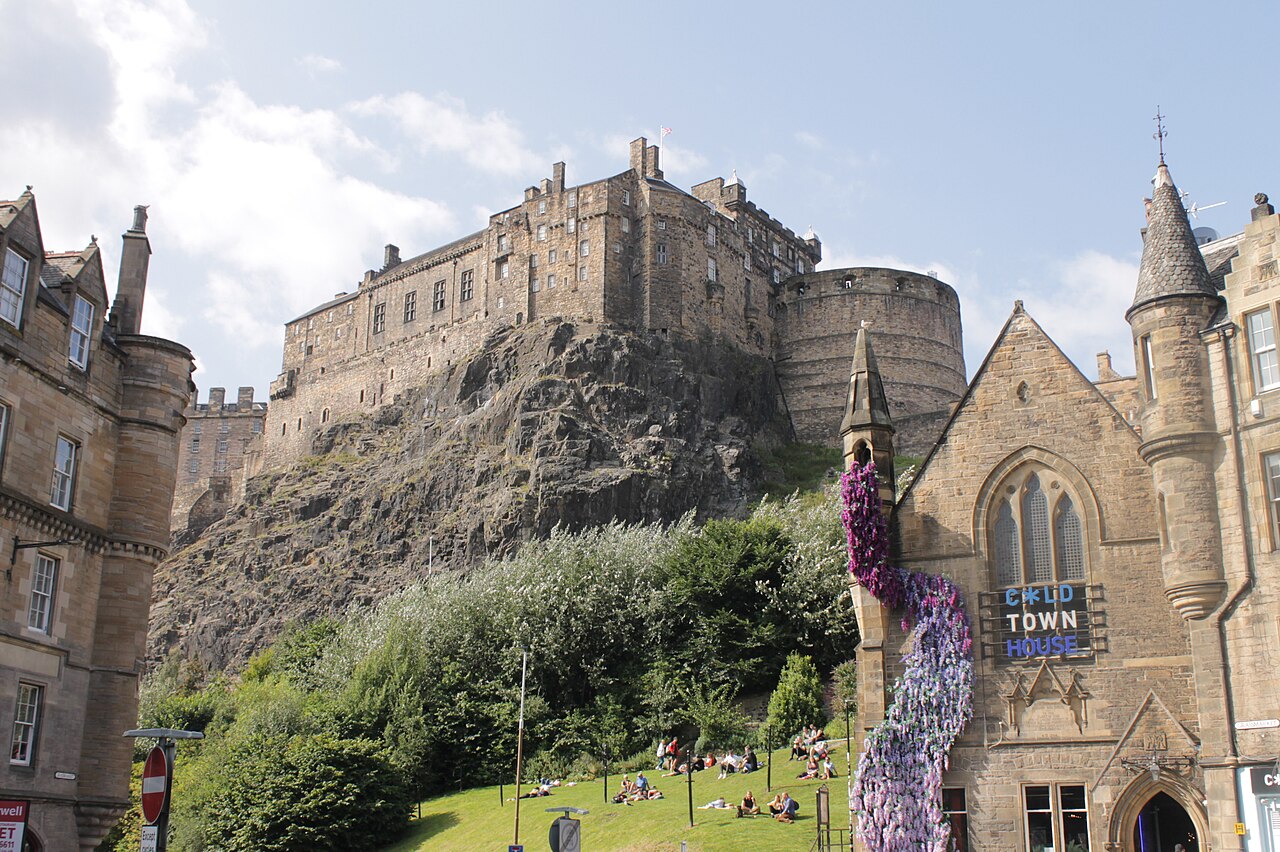
Cannonball House is a distinctive historical building located adjacent to the Edinburgh Castle Esplanade in Edinburgh, Scotland. While many visitors are drawn to the curious circular metal orb embedded in its stone wall, often told to be a cannonball fired during one of the numerous sieges of Edinburgh Castle, the reality behind this feature is rooted in practical urban engineering rather than military conflict.
Edinburgh Castle, perched atop Castle Rock, has witnessed a remarkable history of warfare and defense, with at least 23 documented sieges across centuries. The city itself, growing around the fortress, was fortified with stone barricades and defensive walls to protect its inhabitants from invaders. These fortifications, while essential for defense, created challenges for the city's infrastructure, particularly in ensuring a reliable supply of fresh water to residents.
Historical context of edinburgh's fortifications
During the medieval and early modern periods, Edinburgh was a strategic stronghold of Scotland, necessitating robust defensive measures. The city's walls and barricades were designed to withstand attacks, but they also restricted access to natural water sources such as wells and springs located beyond the fortifications. This presented a significant public health and logistical problem, especially during times of siege when the city's population was vulnerable to shortages.
The cannonball feature: plumbing innovation rather than warfare
The metal orb embedded in the wall of Cannonball House is often mistaken for a projectile from the castle's artillery. However, this feature is actually part of an ingenious solution to maintain water supply during conflict. The orb serves as a pressure release valve or inspection port for the city's water pipes, which were routed through the defensive walls. This allowed engineers to monitor and regulate water flow without compromising the fortifications or exposing the supply lines to enemy interference.
This practical adaptation highlights the intersection of military architecture and urban utility infrastructure. It reflects the challenges faced by medieval city planners in balancing the need for security with the essential requirements of daily life.
Architectural features of cannonball house
Cannonball House itself is a stone building characteristic of Edinburgh's historic Old Town architecture. Its robust masonry walls are typical of structures designed to withstand the harsh Scottish climate and the demands of urban defense. The embedded metal orb is a rare surviving example of functional elements integrated into defensive architecture to support civic utilities.
The building's location next to the castle esplanade places it within a historically significant precinct that has been central to Edinburgh's military and civic life for centuries. Visitors to the site can appreciate not only the architectural solidity of the house but also the intriguing story behind the seemingly martial artifact.
Cultural significance and visitor experience
Today, Cannonball House serves as a reminder of Edinburgh's rich history, blending military heritage with the evolution of urban infrastructure. It offers a unique perspective on how cities adapted to the dual demands of defense and daily living. Tour guides often use the cannonball story to engage visitors, providing an entry point into deeper discussions about the city's past.
Exploring the area around Cannonball House and Edinburgh Castle allows visitors to immerse themselves in a landscape where medieval fortifications, architectural ingenuity, and historical narratives converge. The site exemplifies how seemingly minor architectural details can reveal much about the social and technological history of a place.
Preservation and current status
Cannonball House is well-preserved and remains an integral part of Edinburgh's historic fabric. Its condition allows for ongoing public appreciation and scholarly study. The building's integration of functional and defensive elements makes it a valuable subject for those interested in the history of castle architecture and urban planning.
Frequently asked questions (FAQ)
- What is the true origin of the cannonball embedded in Cannonball House?
- The metal orb is not a fired cannonball but a functional part of the city's water supply system, serving as a pressure release or inspection point for pipes routed through the defensive walls.
- Can visitors see the cannonball feature at Cannonball House?
- Yes, the metal orb is clearly visible embedded in the stone wall next to Edinburgh Castle Esplanade and is a popular point of interest for tourists.
- Why was it important to maintain water supply through the city walls?
- Maintaining water supply was crucial during sieges and conflicts to ensure the city's inhabitants had access to fresh water despite the defensive barricades limiting access to natural sources.
- Is Cannonball House open to the public for tours?
- Cannonball House itself is a private property and not generally open for interior tours, but visitors can view and photograph the exterior and the embedded metal orb from the public esplanade.
- How does Cannonball House relate to Edinburgh Castle's military history?
- While adjacent to Edinburgh Castle, Cannonball House reflects the practical challenges of urban defense rather than direct military engagement, illustrating how infrastructure was adapted to support the fortress and city.
Information
Loading map...
Visitor reviews
No reviews yet. Been here? Write the first review and help other travelers!
Write the first reviewVisited this castle? Share your experience
Your review helps other travelers and adds first-hand knowledge to our encyclopedia.