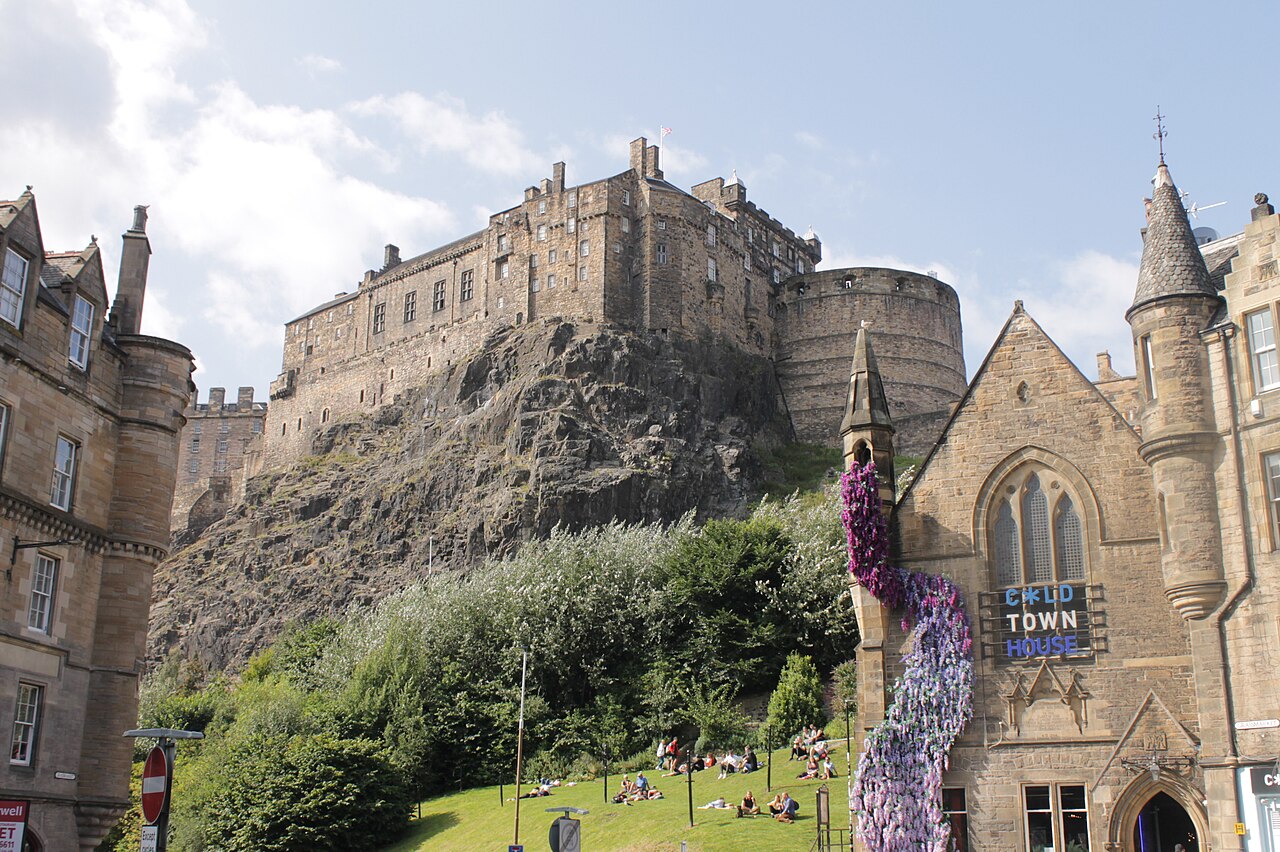
Edinburgh Old Town
Edinburgh Old Town is a remarkable historic district that retains much of its medieval street plan and a wealth of Reformation-era architecture. The area is anchored by the famous Royal Mile, a historic thoroughfare that extends from the imposing Edinburgh Castle perched atop an ancient volcanic crag down to the Palace of Holyroodhouse and the ruins of Holyrood Abbey. This main artery, running west to east on a steep slope, forms the spine of the Old Town and is lined with narrow closes and wynds—tight alleyways that descend sharply to the north and south, reflecting the medieval urban fabric.
Geological and urban formation
The Old Town's unique layout is shaped by the crag and tail landform, a geological feature created during the last ice age. Glaciers carved the landscape, leaving behind a hard volcanic rock crag on which the Edinburgh Castle stands, while softer soil was pushed aside to form a tapering ridge or 'tail' extending eastwards. This natural defensive advantage was exploited in the city's early development, with the castle established as a fortress on the crag and the settlement growing along the tail. The surrounding terrain included marshlands to the south and the Nor Loch, a man-made lake to the north, which further enhanced the defensibility of the site.
Medieval fortifications and street layout
The Old Town was originally enclosed by city walls with several gates controlling access along the main road. Although only fragments of these walls remain today, their impact on the urban form is still evident. The linear nature of the Royal Mile with its narrow side alleys is characteristic of northern European medieval towns. The street network was compact and vertical, with buildings tightly packed along the ridge, maximizing the use of limited space.
Architectural landmarks and notable buildings
Among the significant structures in the Old Town are St. Giles' Cathedral, known for its distinctive crown steeple and historical role in the Scottish Reformation. The General Assembly Hall of the Church of Scotland reflects the area's religious heritage. Educational and cultural institutions such as the Old College of the University of Edinburgh and the National Museum of Scotland contribute to the district's rich architectural tapestry. The modern Scottish Parliament Building represents a contemporary addition, blending with the historic fabric.
Underground vaults and hidden passages
The Old Town is notable for its extensive network of underground vaults and hidden passages, remnants of earlier construction phases and expansions. These subterranean spaces were used for various purposes over the centuries, including storage, workshops, and housing. They add a layer of mystery and historical depth to the urban environment and are a point of interest for visitors exploring the city's past.
Urban development from the 18th century onwards
From the late 18th century, the Old Town saw significant changes in its street pattern with the introduction of wider north-south routes such as the North Bridge and South Bridge, later complemented by George IV Bridge. These new thoroughfares improved connectivity and facilitated urban growth beyond the medieval confines. The mid-19th century brought more organic street forms with the creation of Cockburn Street, designed by architects Peddie and Kinnear in 1856 to provide better access between the Royal Mile and the rebuilt Waverley Station. This blend of rectilinear and serpentine streets illustrates the evolving urban fabric adapting to modern needs while respecting historic context.
World heritage status and cultural significance
Edinburgh Old Town is part of the UNESCO World Heritage Site designation known as "The Old and New Towns of Edinburgh," inscribed in 1995. This recognition highlights the district's outstanding universal value as an exceptionally well-preserved medieval core with layers of architectural and historical significance. The Old Town continues to be a vibrant area, balancing its role as a living neighborhood, a cultural hub, and a major tourist destination.
Visiting Edinburgh Old Town
Visitors to Edinburgh Old Town can explore a diverse range of attractions, from the imposing Edinburgh Castle with its military history and panoramic views, to the atmospheric closes and wynds that evoke the medieval past. The area's museums, churches, and government buildings offer insights into Scotland's history, culture, and governance. Walking tours often include the underground vaults, providing a unique perspective on the city's layered development.
Frequently asked questions (FAQ)
- What is the historical significance of Edinburgh Old Town?
- Edinburgh Old Town is a UNESCO World Heritage Site that showcases the historical development of Scotland's capital from the medieval period. It is known for its narrow alleys, distinctive architecture, and its role in the Scottish Reformation and Enlightenment.
- When was Edinburgh Old Town established?
- Edinburgh Old Town was established in the 12th century, with many of its buildings and streets dating back to the 16th and 17th centuries. The Old Town developed around the Royal Mile, which has been a central thoroughfare since the city’s early days.
- What are the opening hours for visiting Edinburgh Old Town?
- Edinburgh Old Town is open to visitors year-round, but specific attractions may have varying hours. Generally, the area is accessible at all hours, though individual sites typically open between 9:00 AM and 10:00 AM and close by 5:00 PM or 6:00 PM.
- Is it possible to access Edinburgh Old Town with mobility aids?
- While Edinburgh Old Town is historic and features cobblestone streets, many areas are accessible for those with mobility aids. However, some attractions and narrow alleys may present challenges, so it's advisable to plan your route in advance.
- Can I find nearby attractions to visit in Edinburgh Old Town?
- Yes, there are numerous attractions near Edinburgh Old Town, including the Edinburgh Castle, St Giles' Cathedral, and the Palace of Holyroodhouse. The area is rich in history and culture, making it a perfect base for exploring the city's heritage.
- What are the ticket prices for attractions in Edinburgh Old Town?
- Ticket prices for attractions in Edinburgh Old Town vary; for example, entry to Edinburgh Castle costs around £17 for adults. Many attractions offer discounts for students, seniors, and families, so be sure to check individual sites for the latest pricing information.
- When is the best time to visit Edinburgh Old Town?
- The best time to visit Edinburgh Old Town is during the late spring and early autumn months, from May to September, when the weather is mild and the city hosts various festivals. However, if you prefer fewer crowds, consider visiting during the shoulder seasons of late autumn or early spring.
- How do I get to Edinburgh Old Town?
- Edinburgh Old Town is easily accessible by public transport, with several bus routes serving the area. Additionally, it is within walking distance of Waverley Station, the main train station in Edinburgh, making it convenient for visitors arriving by train.
Information
Loading map...
Visitor reviews
No reviews yet. Been here? Write the first review and help other travelers!
Write the first reviewVisited this castle? Share your experience
Your review helps other travelers and adds first-hand knowledge to our encyclopedia.