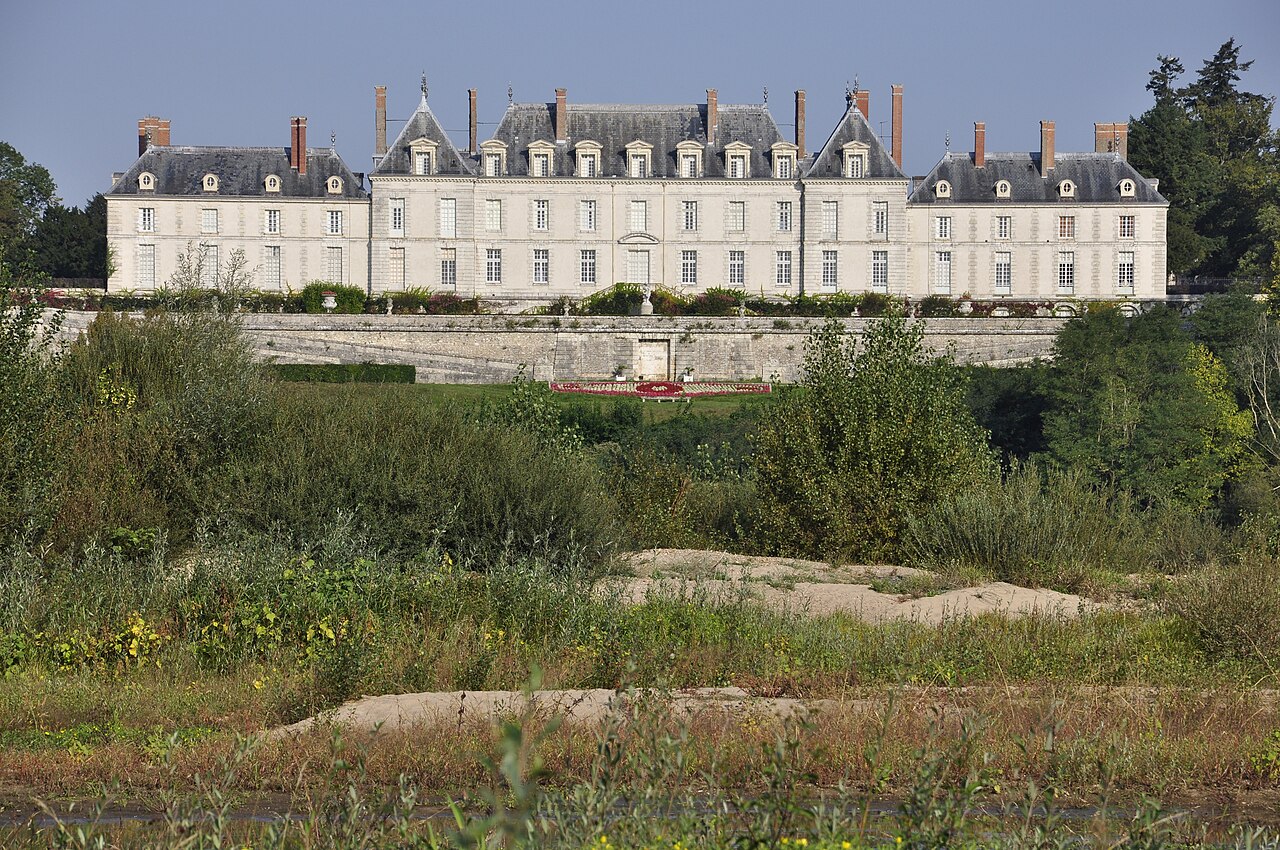
Château de Menars
Château de Menars stands as a notable historic castle situated on the banks of the Loire River in Menars, France. Its history is closely tied to prominent figures of French aristocracy, most famously Madame de Pompadour, the influential mistress of King Louis XV. The château exemplifies a harmonious blend of 17th- and 18th-century architectural styles and landscaping, reflecting the tastes and ambitions of its successive owners.
Early history and construction
The château was originally constructed around 1646 by Guillaume Charron, a figure whose vision established the core structure of the estate. This initial phase featured a main building flanked by two pavilions, embodying the restrained elegance typical of early renaissance country houses in the Loire Valley. The design emphasized symmetry and classical proportions, setting a foundation for later expansions.
In 1669, Guillaume's son, Jean-Jacques Charron, undertook significant enlargement of the château. This period coincided with the château's elevation to a marquisate under Louis XIV in 1676, marking its rising status within the French nobility. The architectural enhancements during this time maintained the château's overall simplicity while expanding its functional and representational capacity.
Royal connections and ownership changes
In 1725, the château passed into royal hands when Louis XV gifted the estate to the parents of Queen Marie Leszczyńska. They resided there until 1736, further cementing the château's association with the French crown. This period did not see major architectural changes, but the château's prestige grew through its royal connections.
Madame de pompadour's transformative renovations
The most significant alterations to Château de Menars occurred after Madame de Pompadour acquired it in 1760. Recognizing the château's potential, she commissioned the renowned architect Ange-Jacques Gabriel to undertake extensive expansions and renovations. Gabriel added two new wings and several distinctive pavilions, including the Pavilion of the Clock and the Pavilion of the Meridian. These additions introduced a refined elegance and enhanced the château's spatial complexity.
Inside, the renovations included elaborate new woodwork and the creation of subterranean passages connecting various parts of the château, a feature that added both practical convenience and an element of intrigue. Madame de Pompadour's vision modernized the château while respecting its original architectural language.
Following her death in 1764, her brother, the Marquis de Marigny, continued the work. He introduced French-style roofs and expanded the side court, further enhancing the château's grandeur. His contributions also included refinements to the interior, such as the mahogany dado in the library, which remain notable features today.
Architectural features and style
Despite the successive additions and modifications, Château de Menars retains a 17th-century simplicity in its overall appearance. The château exemplifies the restrained elegance of the renaissance architectural style, characterized by balanced proportions and classical detailing. The main building is distinguished by a large gallery, ornate woodwork, and a prominent stone staircase that serves as a focal point of the interior.
The château's architectural evolution reflects the tastes of its owners, blending functional design with aesthetic refinement. The additions by Gabriel and Marigny introduced elements of the French classical style, visible in the roofing and spatial organization, while maintaining harmony with the original structure.
Gardens and landscape design
The château's gardens have undergone significant transformations, paralleling changes in ownership and architectural style. Initially designed with formal parterres, canals, and avenues, the grounds reflected the ordered geometry typical of French formal gardens.
Under the direction of the Marquis de Marigny, the gardens were reimagined to incorporate an English garden style, introducing a more naturalistic and picturesque aesthetic. Marigny added a grotto and various follies, whimsical architectural features designed to enhance the garden's charm and variety.
Additional landscaping included a terrace for displaying sculptures, extensive trellises, hedges, and a kitchen garden, which contributed both beauty and utility to the estate. Among the garden's key features are the Rotunda of Abundance, a nymphaeum designed by the architect Soufflot, and a Chinese-style kiosk by Charles De Wailly, reflecting the 18th-century fascination with exotic motifs.
Later history and current status
In 1830, the château entered a new phase when Joseph, Prince de Caraman-Chimay, established a school on the estate. This development involved constructing additional buildings and even a gas works, indicating the château's adaptation to changing social needs and technological advances.
Today, Château de Menars remains a significant cultural and architectural landmark. Its well-preserved state allows visitors to appreciate the layered history of French aristocratic life and architectural evolution from the renaissance through the 18th century. The château's combination of structural elegance and thoughtfully designed gardens offers insight into the tastes and lifestyles of its notable inhabitants.
Frequently asked questions (FAQ)
- When was Château de Menars originally built?
- Château de Menars was originally constructed around 1646 by Guillaume Charron, establishing its Renaissance foundation.
- Who was the most famous owner of Château de Menars?
- Madame de Pompadour, mistress of King Louis XV, is the château's most famous owner, responsible for major 18th-century renovations.
- What architectural style characterizes Château de Menars?
- The château primarily reflects Renaissance architecture with later French classical influences introduced during the 18th century.
- What are some notable features of the château's gardens?
- The gardens include formal parterres, an English garden, a grotto, follies, a Rotunda of Abundance, a nymphaeum by Soufflot, and a Chinese-style kiosk by Charles De Wailly.
- Can visitors explore the interior and gardens of Château de Menars?
- While specific visiting hours vary, the château and its gardens are significant cultural sites often accessible to the public for tours and events.
Information
Architect
Ange-Jacques Gabriel
Loading map...
Visitor reviews
No reviews yet. Been here? Write the first review and help other travelers!
Write the first reviewVisited this castle? Share your experience
Your review helps other travelers and adds first-hand knowledge to our encyclopedia.