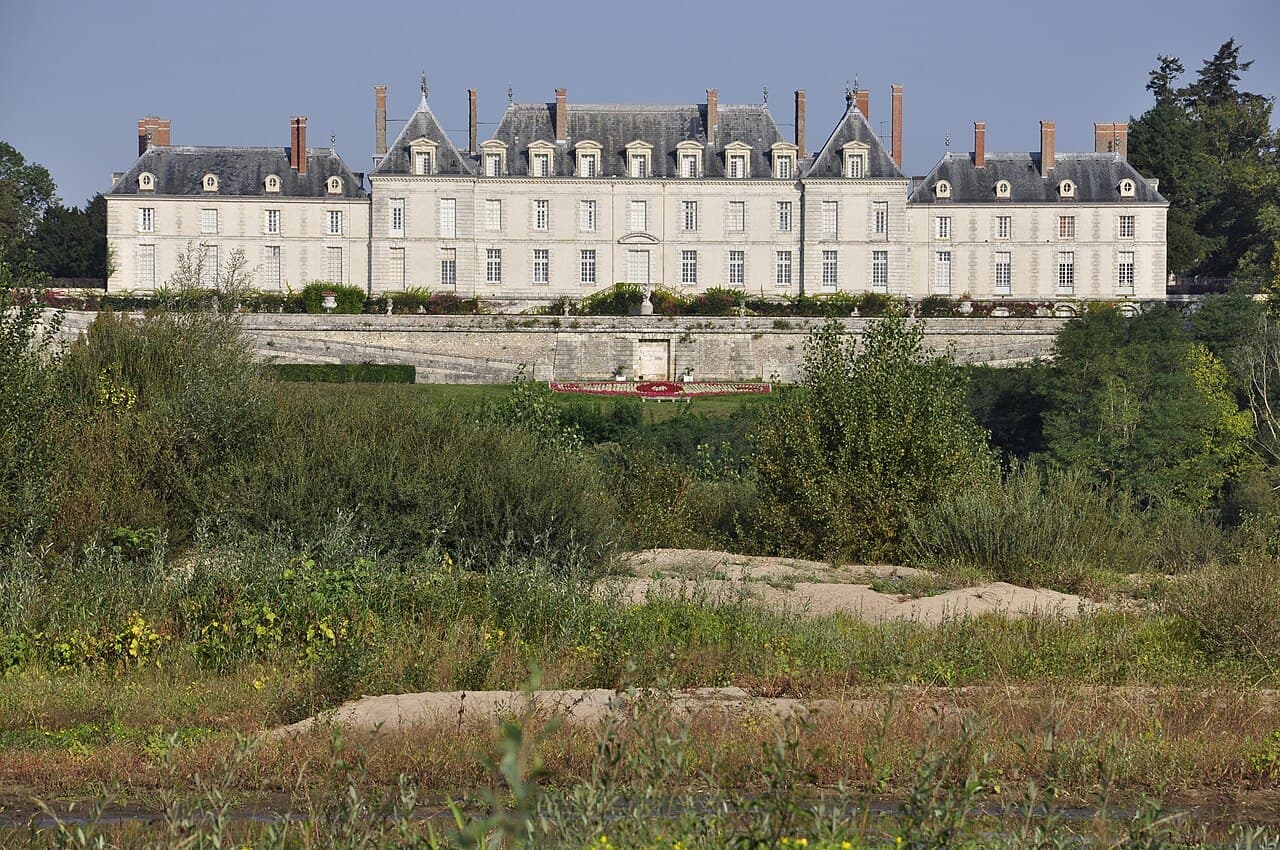
Castle of Menars — France castle

Castle of Menars

Castle of Menars
Menars, Centre-Val de Loire, France
Renaissance (15th–17th c.)
Well Preserved

The Castle of Menars, located on the banks of the Loire River in Menars, France, is a distinguished example of 17th-century Renaissance architecture. This elegant chateau is notably associated with Madame de Pompadour, the official chief mistress of King Louis XV, who played a significant role in its history and development. The castle's refined design and historical connections make it an important cultural landmark in the Loire Valley.

Historical background and significance

The origins of the Castle of Menars date back to the early 1600s when it was constructed as a country residence for French nobility. Its location along the Loire River was strategic, offering both scenic beauty and access to important waterways. Over the centuries, the castle changed hands among prominent families, each contributing to its architectural evolution and landscape.

In the mid-18th century, the castle gained fame through its association with Madame de Pompadour, who acquired the estate in 1760. As a powerful figure in the French court, she commissioned improvements to the chateau and its grounds, enhancing its status as a symbol of aristocratic refinement and royal favor.

Architectural features and style

Renaissance design elements

The Castle of Menars exemplifies Renaissance architectural principles characterized by symmetry, proportion, and classical detail. The building features a balanced façade with orderly windows and pilasters, reflecting the influence of Italian Renaissance aesthetics adapted to French tastes. The use of stone masonry and elegant decorative motifs highlight the craftsmanship of the period.

Layout and structural components

The chateau is arranged around a central courtyard, a common feature in Renaissance residences, providing an intimate outdoor space sheltered from the surrounding landscape. The structure includes tall chimneys, steeply pitched roofs, and dormer windows that add vertical emphasis and light to the upper floors. The interiors were designed to accommodate both formal receptions and private living quarters, with richly decorated salons and chambers.

Gardens and landscape design

The grounds of the Castle of Menars are an integral part of its heritage, featuring formal gardens that align with the Renaissance ideal of harmony between architecture and nature. The gardens include geometrically arranged flower beds, tree-lined avenues, and carefully manicured lawns that extend towards the Loire River, creating picturesque views and a serene environment.

Madame de Pompadour's influence is evident in the enhancement of the gardens, which were designed to impress visitors and reflect the cultural sophistication of the estate's owner. The integration of water features and sculptural elements further enriches the landscape experience.

Legacy and current status

Today, the Castle of Menars stands as a well-preserved monument to French Renaissance architecture and aristocratic history. Although it remains privately owned, the chateau is recognized for its cultural significance within the Loire Valley, a region renowned for its concentration of historic castles and gardens.

Visitors and scholars alike appreciate the castle for its architectural beauty and its connection to Madame de Pompadour, whose patronage left a lasting imprint on the estate. The castle's preservation allows insight into the lifestyle and artistic preferences of the French nobility during the 17th and 18th centuries.

Visiting information and accessibility

While the Castle of Menars is primarily a private residence, it occasionally opens its doors for special tours and cultural events. Visitors interested in exploring the Loire Valley's rich heritage often include Menars in their itinerary to experience its architectural charm and historical ambiance.

Nearby attractions include other renowned Loire chateaux, offering a comprehensive understanding of the region's architectural evolution and noble heritage. Prospective visitors should check local tourism resources for current opening times and access details.

Frequently asked questions (FAQ)

How do I get to the Castle of Menars?
The Castle of Menars is located in Menars, France, and is easily accessible by car. Public transportation options may include local buses that connect to nearby towns. For a more scenic route, consider cycling through the beautiful countryside.
What is the historical significance of the Castle of Menars?
The Castle of Menars was built in the 18th century and is renowned for its connection to the famous French architect Claude Nicolas Ledoux. Its design reflects the ideals of the Enlightenment and serves as a remarkable example of neoclassical architecture. The castle has also played a role in various historical events throughout its history.
When was the Castle of Menars constructed?
Construction of the Castle of Menars began in 1770 and was completed in 1775. The castle was commissioned by the Duke of Choiseul, a prominent figure in French history. Its architecture and design have since made it a significant cultural landmark.
Can I take guided tours of the Castle of Menars?
Yes, guided tours of the Castle of Menars are available, offering visitors an in-depth look at its history and architectural features. Tours typically provide access to both the interior and the beautiful grounds surrounding the castle. It is recommended to check the official website for tour schedules and availability.
Why is the architecture of the Castle of Menars noteworthy?
The architecture of the Castle of Menars is noteworthy due to its neoclassical style, characterized by symmetry and grandeur. Designed by Claude Nicolas Ledoux, the castle features intricate details and harmonious proportions that reflect the Enlightenment ideals of beauty and reason. Its design has influenced many other structures in France.
Is it possible to host events at the Castle of Menars?
Yes, the Castle of Menars offers options for hosting private events, such as weddings and corporate gatherings. The picturesque setting and historical ambiance make it an attractive venue. Interested parties should contact the castle management for details on rental availability and services.
What are the opening hours for the Castle of Menars?
The Castle of Menars is typically open to visitors from April to October, with specific hours varying by season. It is advisable to check the official website or contact the castle for the most current opening hours. Special events or holidays may also affect the schedule.
What are the ticket prices for visiting the Castle of Menars?
Ticket prices for the Castle of Menars vary depending on age and the type of tour selected. Generally, adults can expect to pay a standard admission fee, while discounts may be available for students and seniors. It is best to visit the official website for the latest pricing information and any special promotions.
When is the best time to visit the Castle of Menars?
The best time to visit the Castle of Menars is during the spring and early fall when the weather is pleasant, and the gardens are in full bloom. These seasons also see fewer crowds, allowing for a more enjoyable experience. Be sure to check for any special events or exhibitions that may be taking place during your visit.
Are there nearby attractions to explore when visiting the Castle of Menars?
Yes, there are several nearby attractions worth exploring, including the scenic Loire Valley and other historic châteaux. Visitors can also enjoy local vineyards and charming villages in the area. Combining your visit to the Castle of Menars with these attractions makes for a delightful day trip.

Photo gallery

Castle of Menars
Click to view

Photo by Chatmouettes•CC BY-SA 3.0

1 photo • Click any image to view in full screen

Information

Lowland Castle

Sources & official resources

Verify the information above using these authoritative references.

Loading map...

Visitor reviews

No reviews yet. Been here? Write the first review and help other travelers!

Write the first review

Visited this castle? Share your experience

Your review helps other travelers and adds first-hand knowledge to our encyclopedia.

Write a review

(5/5)

0/2000 characters

Your review will be visible after admin approval

Nearby castles

0.3 km

Château de Menars

Menars, France

Château de Menars stands as a notable historic castle situated on the banks of the Loire River in Menars, France. Its history is closely tied to prominent figures of French aristocracy, most famously Madame de Pompadour, the influential mistress of King Louis XV. The château exemplifies a harmonious blend of 17th- and 18th-century architectural styles and landscaping, reflecting the tastes and ambitions of its successive owners. Early history and construction The château was originally constructed around 1646 by Guillaume Charron, a figure whose vision established the core structure of the estate. This initial phase featured a main building flanked by two pavilions, embodying the restrained elegance typical of early renaissance country houses in the Loire Valley. The design emphasized symmetry and classical proportions, setting a foundation for later expansions. In 1669, Guillaume's son, Jean-Jacques Charron, undertook significant enlargement of the château. This period coincided with the château's elevation to a marquisate under Louis XIV in 1676, marking its rising status within the French nobility. The architectural enhancements during this time maintained the château's overall simplicity while expanding its functional and representational capacity. Royal connections and ownership changes In 1725, the château passed into royal hands when Louis XV gifted the estate to the parents of Queen Marie Leszczyńska. They resided there until 1736, further cementing the château's association with the French crown. This period did not see major architectural changes, but the château's prestige grew through its royal connections. Madame de pompadour's transformative renovations The most significant alterations to Château de Menars occurred after Madame de Pompadour acquired it in 1760. Recognizing the château's potential, she commissioned the renowned architect Ange-Jacques Gabriel to undertake extensive expansions and renovations. Gabriel added two new wings and several distinctive pavilions, including the Pavilion of the Clock and the Pavilion of the Meridian. These additions introduced a refined elegance and enhanced the château's spatial complexity. Inside, the renovations included elaborate new woodwork and the creation of subterranean passages connecting various parts of the château, a feature that added both practical convenience and an element of intrigue. Madame de Pompadour's vision modernized the château while respecting its original architectural language. Following her death in 1764, her brother, the Marquis de Marigny, continued the work. He introduced French-style roofs and expanded the side court, further enhancing the château's grandeur. His contributions also included refinements to the interior, such as the mahogany dado in the library, which remain notable features today. Architectural features and style Despite the successive additions and modifications, Château de Menars retains a 17th-century simplicity in its overall appearance. The château exemplifies the restrained elegance of the renaissance architectural style, characterized by balanced proportions and classical detailing. The main building is distinguished by a large gallery, ornate woodwork, and a prominent stone staircase that serves as a focal point of the interior. The château's architectural evolution reflects the tastes of its owners, blending functional design with aesthetic refinement. The additions by Gabriel and Marigny introduced elements of the French classical style, visible in the roofing and spatial organization, while maintaining harmony with the original structure. Gardens and landscape design The château's gardens have undergone significant transformations, paralleling changes in ownership and architectural style. Initially designed with formal parterres, canals, and avenues, the grounds reflected the ordered geometry typical of French formal gardens. Under the direction of the Marquis de Marigny, the gardens were reimagined to incorporate an English garden style, introducing a more naturalistic and picturesque aesthetic. Marigny added a grotto and various follies, whimsical architectural features designed to enhance the garden's charm and variety. Additional landscaping included a terrace for displaying sculptures, extensive trellises, hedges, and a kitchen garden, which contributed both beauty and utility to the estate. Among the garden's key features are the Rotunda of Abundance, a nymphaeum designed by the architect Soufflot, and a Chinese-style kiosk by Charles De Wailly, reflecting the 18th-century fascination with exotic motifs. Later history and current status In 1830, the château entered a new phase when Joseph, Prince de Caraman-Chimay, established a school on the estate. This development involved constructing additional buildings and even a gas works, indicating the château's adaptation to changing social needs and technological advances. Today, Château de Menars remains a significant cultural and architectural landmark. Its well-preserved state allows visitors to appreciate the layered history of French aristocratic life and architectural evolution from the renaissance through the 18th century. The château's combination of structural elegance and thoughtfully designed gardens offers insight into the tastes and lifestyles of its notable inhabitants.

Renaissance (15th–17th c.)
Details
2.4 km

Château de Saint-Denis-sur-Loire

Saint-Denis-sur-Loire, France

Château de Saint-Denis-sur-Loire is a significant medieval castle located in the commune of Saint-Denis-sur-Loire in France. Its origins trace back to the early Middle Ages, with substantial enlargement occurring around the 13th century. The castle was notably acquired in 1341 by Philippe Hurault, a prominent figure whose family has maintained ownership through the centuries, preserving its historical legacy. Architectural evolution and medieval significance The castle's initial structure from the early medieval period was expanded and fortified during the High Medieval era, reflecting the architectural trends of that time. The modifications included strengthening defensive walls and adding residential quarters suitable for nobility. While specific architectural details from the original construction are limited, the castle's layout and surviving elements suggest a typical hill castle design, optimized for both defense and habitation. Ownership by the Hurault family The acquisition by Philippe Hurault in the 14th century marked an important chapter in the castle's history. The Hurault family played a vital role in maintaining and restoring the castle through successive generations. Their stewardship ensured the preservation of the castle's medieval character while adapting it to the needs of later periods. Thermal mineral water resort and royal connections Beyond its military and residential functions, Château de Saint-Denis-sur-Loire is renowned for its thermal mineral water springs, which have been exploited for over a thousand years. The thermal baths became a celebrated destination, attracting notable visitors such as Catherine de Medici and Marie de Medici, queens of France, during the 16th century. Their visits underscored the castle's importance as a health and leisure resort in addition to its defensive role. Development of the baths and spa facilities The thermal baths underwent significant restoration in the 18th century, enhancing their facilities and accessibility. Later, in 1851, the baths were restored again, marking a revival of the spa's popularity. During this period, the mineral water was bottled and distributed to Paris, extending the castle's influence beyond its immediate region. Architectural style and preservation The castle exhibits architectural features typical of the High Medieval period, with later modifications reflecting 18th-century restoration styles. Although some original medieval elements remain intact, the castle has undergone various restoration phases to preserve its structure and adapt it for modern use. The current condition can be described as well preserved, maintaining much of its historical integrity. Structural components Key architectural features include fortified walls, residential chambers, and spa-related structures connected to the thermal springs. The castle's design integrates defensive elements with the comfort and functionality required for a noble residence and a health resort. Cultural and historical importance Château de Saint-Denis-sur-Loire holds a unique place in French history due to its dual role as a fortified medieval castle and a longstanding thermal spa resort. Its continuous ownership by the Hurault family adds to its historical continuity. The castle's association with French royalty and its contribution to the development of mineral water therapy highlight its cultural significance. Tourism and heritage status Today, the castle attracts visitors interested in medieval architecture, French history, and spa culture. It stands as a testament to the enduring appeal of thermal mineral waters and the historical layers embodied in its walls. The site offers insights into medieval fortifications as well as the evolution of health resorts in France.

High Medieval (11th–13th c.)
Details
8 km

Castle of Beauregard

Cellettes, France

The Castle of Beauregard, located in the commune of Cellettes near Blois in the Loire Valley, is a distinguished example of Renaissance architecture in France. This château is renowned for its harmonious blend of military fortification elements with elegant Renaissance refinements, reflecting the transition from medieval defensive structures to more comfortable and decorative noble residences during the 16th century. Originally constructed in the late 15th century, the castle underwent significant rebuilding and enhancements during the 16th century, firmly placing it within the Renaissance period. Despite its origins as a fortified stronghold, it evolved into a residence that balanced security with aesthetic appeal, featuring characteristic mullioned windows, steeply pitched roofs, and a prominent gallery that became a hallmark of the château. Architectural features and layout The castle's architecture is notable for retaining a large, square keep from its original medieval structure, which anchors the château and serves as a reminder of its defensive past. Surrounding this core are Renaissance additions including a gallery adorned with ornate stonework and large windows that flood the interior with natural light. The steeply sloped roofs, typical of the Loire Valley châteaux, are punctuated by elegant chimneys and dormer windows, contributing to the castle's picturesque silhouette. Defensive features such as ditches and cannon-holes are still visible, illustrating the castle's strategic importance during its early history. The gallery of portraits One of the most remarkable aspects of the Castle of Beauregard is its Gallery of portraits, decorated in the 17th century. This gallery houses an impressive collection of 327 portraits of famous historical figures, making it a unique cultural treasure within the Loire Valley. The portraits provide a fascinating glimpse into the personalities and nobility of the era, serving both as decoration and as a historical record. Historical significance and ownership The castle's strategic location near Blois and other prominent Loire châteaux such as Cheverny highlights its importance within the network of noble residences and fortifications in the region. Throughout its history, the Castle of Beauregard has been inhabited and maintained, blending its military heritage with residential comfort. In the 19th century, the castle saw adaptive reuse with the installation of a spinning mill in its chapel, reflecting changing economic and social conditions. The French state acquired the château in the 1930s and undertook restoration efforts to preserve its architectural integrity and historical value. Visitor experience and cultural heritage Today, the Castle of Beauregard remains inhabited but is open to tourists, offering visitors a chance to explore its richly decorated interiors and extensive portrait gallery. The château's setting in the Loire Valley, a UNESCO World Heritage site, situates it among some of France's most celebrated Renaissance monuments. Visitors can appreciate the castle's blend of medieval fortification and Renaissance elegance, as well as its role in the cultural and historical tapestry of the Loire region. The castle's preservation allows for an immersive experience into the architectural and artistic achievements of the Renaissance period in France. Relationship to other Loire Valley châteaux While the Castle of Beauregard is often overshadowed by larger neighbors such as the Château de Chambord, it holds its own unique place in the Loire Valley's architectural landscape. Chambord, famous for its monumental scale and the iconic double-spiral staircase inspired by Leonardo da Vinci, contrasts with Beauregard's more intimate yet historically rich character. Both castles exemplify different facets of Renaissance architecture and noble life in France, with Beauregard offering insight into the transition from medieval fortress to Renaissance residence, and Chambord representing the height of royal extravagance and innovation. Preservation and current condition The Castle of Beauregard is classified as well preserved, with ongoing maintenance ensuring that its architectural features and historic interiors remain intact. The state ownership since the 1930s has facilitated conservation efforts, allowing the castle to retain its historical authenticity and continue welcoming visitors. Its continued habitation also contributes to the upkeep and living heritage of the site, distinguishing it from many other Loire châteaux that function solely as museums or ruins.

Renaissance (15th–17th c.)
Details

