Alcázar of Segovia
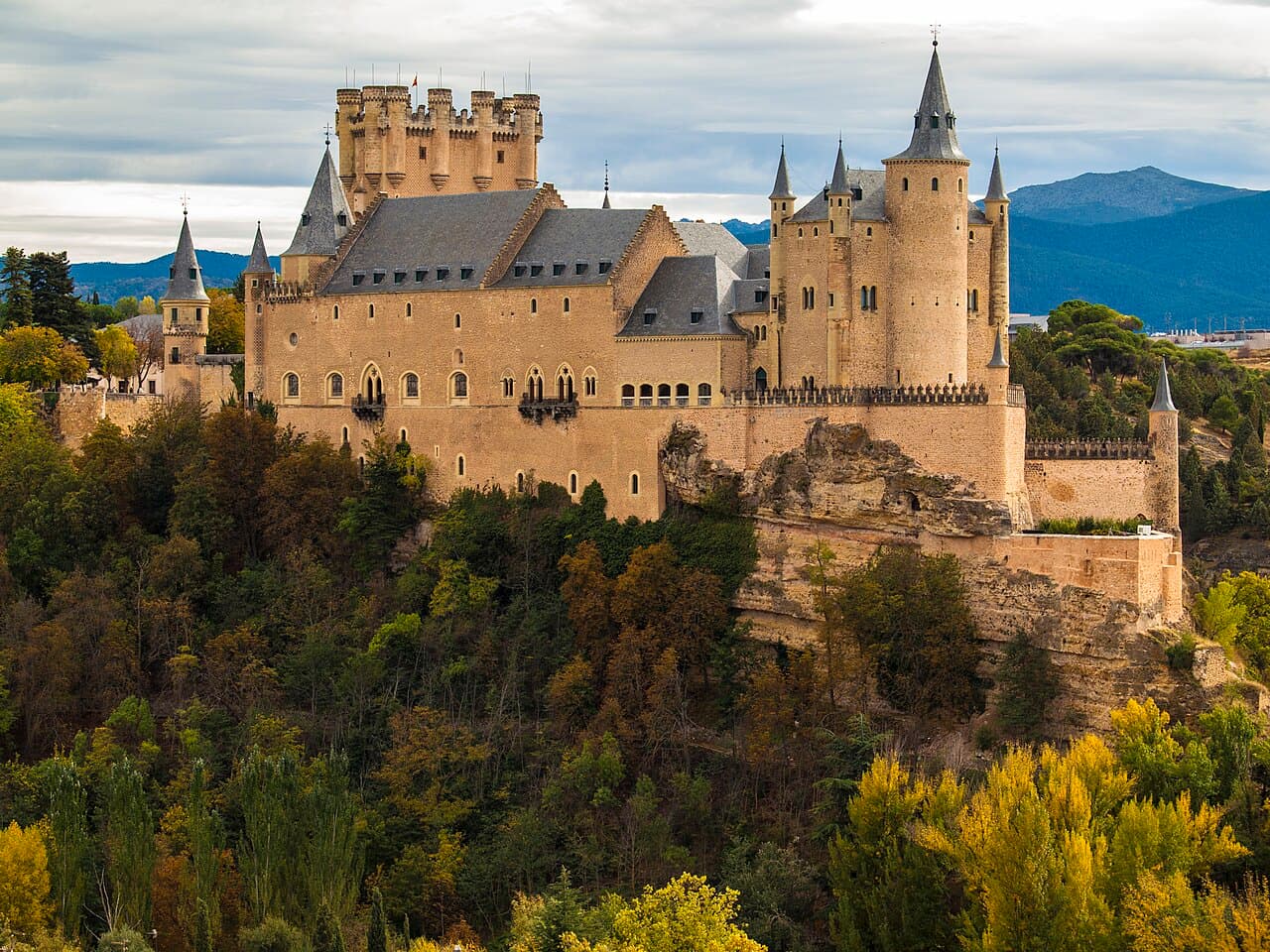
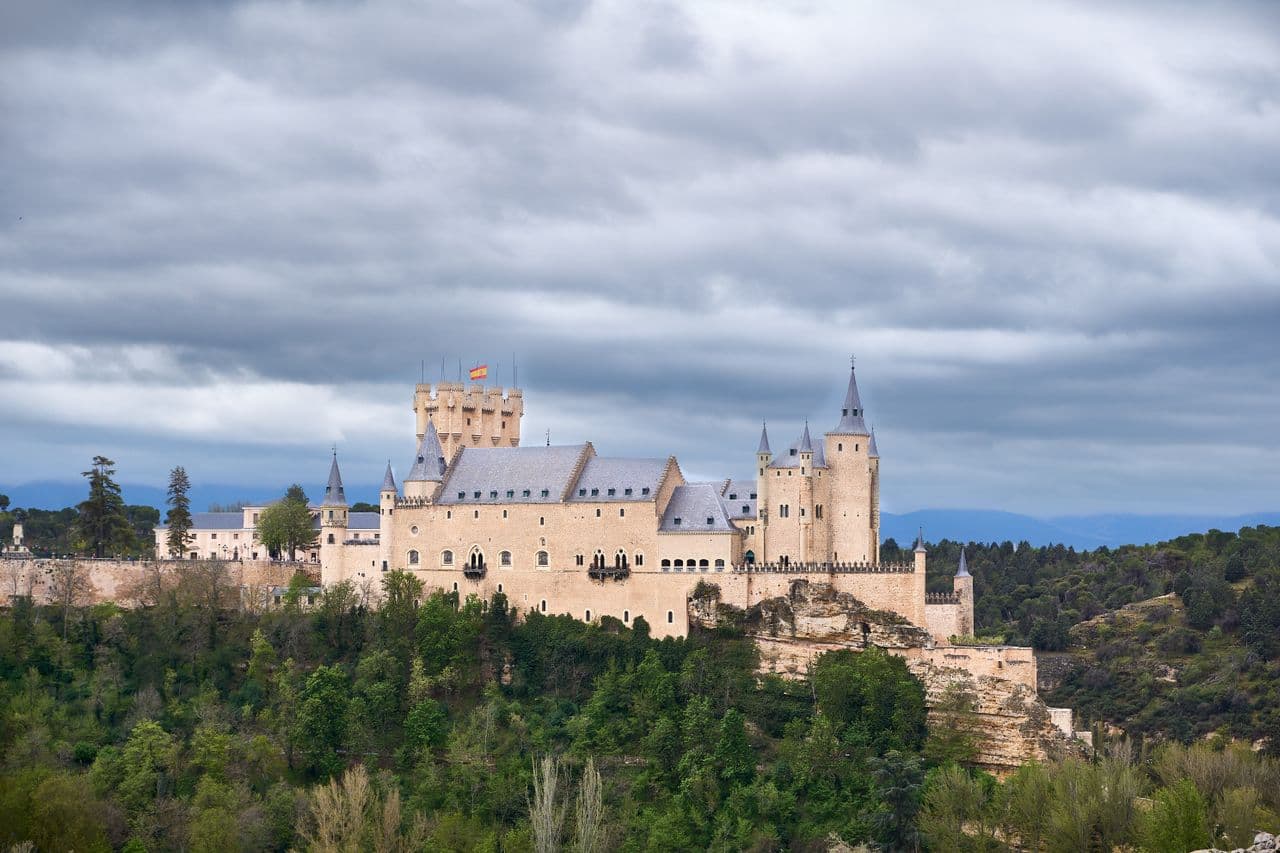
The Alcázar of Segovia stands as one of Spain's most iconic castles, renowned for its distinctive shape resembling the bow of a ship and its rich historical significance. Located in the walled city of Segovia, within the region of Castilla y León, this majestic castle-palace has served multiple roles throughout its existence, from a royal residence to a military academy and state prison. Its strategic position atop a rocky crag at the confluence of the Eresma and Clamores rivers near the Guadarrama mountains has made it a formidable fortress since Roman times.
Early origins and medieval foundations
The site of the Alcázar was originally fortified during the Roman era as a military castrum, a fact that laid the groundwork for its enduring military importance. Successive fortifications by the Visigoths and Moors further enhanced its defensive capabilities. The earliest documented reference to the fortress dates to 1122, shortly after King Alfonso VI of León and Castile reclaimed Segovia during the Christian Reconquest. Initial constructions were likely wooden, evolving into stone fortifications under King Alfonso VIII and his wife, Eleanor of England, in the 12th century. This period marked the transformation of the Alcázar from a military stronghold into a royal residence, known as the "Palacio Mayor."
Architectural evolution through the high and late medieval periods
The castle's most prominent medieval features, including the great keep with its semicircular sentry boxes, were developed during the 13th and 15th centuries. King Alfonso X played a pivotal role in laying out much of the current structure and convened the first Cortes of Castile within its walls in 1256. The reigns of Juan II and Enrique IV saw significant expansions, notably the construction of the Tower of Juan II, a soaring Gothic keep approximately 80 meters tall with five turrets and a spiral staircase offering panoramic views.
The castle's exterior features a unique 14th-century esgrafiado decoration, a protective lime plaster technique with black dots derived from smithy slag, unique to Segovia. This decorative style contributes to the castle's distinctive appearance and is linked to local sayings emphasizing its importance.
Royal residence and political significance
Throughout the Middle Ages, the Alcázar served as the favored residence of many Castilian monarchs, including King Ferdinand III and King Enrique IV. It was the site of significant events such as the proclamation of Queen Isabella I of Castile in 1474, a momentous occasion that cemented the castle's place in Spanish history. The castle also hosted the first meetings of the Cortes of Castile, underscoring its role as a political and administrative center.
The Alcázar housed the royal treasury, archives, and armory, safeguarding the kingdom's wealth and documents. Its Homage Tower was the repository for the Crown of Castile's treasure, which notably financed Christopher Columbus's first voyage to the Americas. The castle also witnessed the marriage of King Philip II to Anna of Austria in its chapel, strengthening the alliance between the Habsburgs and the Spanish monarchy.
Interior spaces and artistic heritage
The interior of the Alcázar is richly decorated with Mudéjar plasterwork, frescoes, and stained glass windows depicting Castilian monarchs and historical scenes. Notable rooms include the Hall of the Kings, adorned with 52 intricate raised portraits of Castilian rulers forming a golden frieze, and the Throne Room, featuring 16th-century Flemish tapestries and original Mudéjar door decorations. The Chapel and the Royal Chamber also boast exquisite decorations reflecting the castle's royal status.
Military use and transformation
From the 17th century onward, the Alcázar's role shifted towards military and penal functions. It served as a state prison for prominent detainees and later became the home of the Royal Artillery College, founded by King Charles III in 1762. The college symbolized the city's progress in military education and housed a large chemistry laboratory led by the renowned chemist Joseph Luis Proust, who formulated the Law of Definite Proportions here.
A devastating fire in 1862 destroyed many of the ceilings and interiors, but thanks to detailed engravings by José María Avrial from 1839, the castle was meticulously restored to its former grandeur. Since then, it has functioned as a museum and cultural site, preserving its military heritage and royal legacy.
Architectural features and layout
The Alcázar's irregular layout adapts to the rocky hilltop, combining Gothic, Mudéjar, and Renaissance architectural influences. The castle is arranged around two main courtyards and includes the Herrerian-style courtyard, a dry defensive moat approximately 26 meters deep, and a stone bridge replacing the original drawbridge. The Tower of John II is the tallest structure, offering visitors breathtaking views of Segovia and the surrounding countryside.
The castle's exterior is characterized by granite construction and slate roofing, the latter introduced by King Philip II, inspired by Flemish designs. The defensive moat, deepened over centuries, historically served multiple purposes, including holding bears and quarrying stone.
Cultural impact and modern significance
The Alcázar of Segovia has inspired various cultural works, most notably influencing Walt Disney's design for the castles in Snow White and the Seven Dwarfs and Cinderella. Its dramatic silhouette and hilltop position have made it a popular filming location for films such as Orson Welles's Chimes at Midnight and the musical Camelot.
Today, the castle is state-owned and open to the public as a museum and cultural center. Visitors can explore its noble rooms, climb the Tower of Juan II, and enjoy panoramic views. The Alcázar remains a symbol of Spain's medieval heritage, royal history, and architectural grandeur, attracting tourists from around the world to the historic city of Segovia.
Visiting information and recommendations
Visitors to the Alcázar can explore its richly decorated interiors, including the Hall of the Kings, Throne Room, and chapel. The climb up the Tower of Juan II offers spectacular views of Segovia and the surrounding landscape. The castle is located in Plaza de la Reina Victoria Eugenia, near the historic center of Segovia, making it easily accessible for tourists.
The city of Segovia itself is renowned for its historic monuments, including the Roman Aqueduct, and offers a rich cultural experience. Exploring the Alcázar provides insight into Spain's medieval past and architectural evolution, making it a must-visit destination for history and architecture enthusiasts.
Frequently asked questions (FAQ)
- How do I get to the Alcázar of Segovia?
- The Alcázar of Segovia is located in the Plaza de la Reina Victoria Eugenia, within Segovia's historic center. It is easily accessible by foot from the city center and well-served by local transportation.
- What are the opening hours for visiting the Alcázar?
- The Alcázar is generally open to visitors daily, with typical hours from 10:00 to 18:00, though it is advisable to check current schedules before planning your visit.
- Is there an admission fee to enter the Alcázar?
- Yes, there is an admission fee to visit the Alcázar. Prices vary, with discounts available for children, students, and seniors. It is recommended to check the official website for the latest ticket information.
- Can visitors climb the Tower of Juan II?
- Yes, visitors can climb the Tower of Juan II. The tower features a spiral staircase with 152 steps leading to panoramic views of Segovia and the surrounding countryside.
- What architectural styles are present in the Alcázar of Segovia?
- The Alcázar showcases a blend of Gothic, Mudéjar, and Renaissance architectural styles, reflecting its long history and various phases of construction and renovation.
- Why is the Alcázar of Segovia historically significant?
- The Alcázar has been a royal residence, military fortress, and political center. It hosted the proclamation of Queen Isabella I and housed the royal treasury that financed Columbus's voyage, making it central to Spanish history.
- Is the Alcázar accessible for visitors with mobility issues?
- While some areas of the Alcázar are accessible, the climb to the Tower of Juan II involves stairs and may not be suitable for visitors with mobility challenges. It is advisable to inquire locally about accessibility options.
Photo gallery

Information
Current owner
State museum
Website
Visit websiteAddress
Plaza de la Reina Victoria Eugenia, Segovia, Spain
Featured in
Articles on the Castlopedia blog that feature Alcázar of Segovia.
Sources & official resources
Verify the information above using these authoritative references.
Loading map...
Visitor reviews
No reviews yet. Been here? Write the first review and help other travelers!
Write the first reviewVisited this castle? Share your experience
Your review helps other travelers and adds first-hand knowledge to our encyclopedia.